What's the difference?
You could argue that no brand is more synonymous with luxury than Mercedes-Benz, but what happens with a standard GLS SUV just isn’t exclusive enough for your tastes?
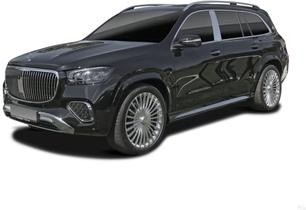
Enter the Mercedes-Maybach GLS 600, which builds on the brand’s large SUV offering with extra helpings of opulence and lavishness.
This thing screams money like Louis Vuitton or Cartier, only it has four wheels and will transport passengers in nearly unrivalled levels of refinement and comfort.
But is it more than just a showpiece? And can it handle the rigours of day-to-day life without losing its shiny, jewel-like lustre? Let’s go for a drive and find out.
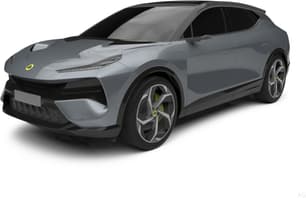
This is a Lotus - but it’s not like any Lotus you’ve ever known.
In fact, forget everything you know about Lotus, the British brand previously famous for small, lightweight sports cars is now evolving into something very different. Very, very different.
Under the control of Chinese automotive giant Geely since 2017, Lotus will shed its past and focus its future on all-electric, luxury vehicles like the Eletre we’re testing here.
The Eletre is a full-size luxury electric SUV designed to take on the likes of the Audi SQ8 e-tron, BMW iX and Mercedes-AMG EQE on the electric side, while also trying to lure buyers away from the likes of the Bentley Bentayga and Lamborghini Urus.
So, how does this radically different Lotus measure up to the brand’s reputation and stack up against its would-be competitors? Read on to find out…
It’s big, it’s bold and totally baller, but that’s kind of the point.
The Mercedes-Maybach GLS 600 might not win over many fans with its in-your-face design or its sky-high price tag, but there is definitely an appeal here.
Taking luxury to another level is no easy feat, especially in a Mercedes, but the attention to detail, lavish second row and butter-smooth V8 engine combine to turn the already-good GLS into this exquisite Maybach.
Note: CarsGuide attended this event as a guest of the manufacturer, with accommodation and meals provided.
So, how does this radically different Lotus measure up to the brand’s reputation and stack up against its would-be competitors in the final summation? It doesn’t reset the benchmark in any area or stand out head and shoulders above its competition, but crucially for Lotus (and its overlords at Geely) it doesn’t feel behind its rivals.
For the Lotus diehards this is an unrecognisable addition to the brand’s legacy of great sports cars. But this new version of the brand is looking to reach fresh customers and the Eletre will likely grab their eye with its dramatic looks.
It’s a highly competitive luxury, performance SUV that should have anyone considering a similar sized Bentley, BMW, Mercedes, or even the Lamborghini taking it for a test drive. It has both elements - luxury and performance - that will appeal to those looking for something special.
If you have wealth, why not flaunt it? I reckon that might be the philosophy of the Maybach designers back at HQ, and it kind of shows!
The styling of the Maybach GLS might be the most controversial thing about it. But honestly, I love it!
The liberal lashings of chrome, the three-pointed star hood ornament, and especially with the optional two-tone paintwork, it’s all just so over the top and in your face that it brings out a smile.
From the front, the Maybach is also distinguished by an imposing grille that gives it serious presence on the road, while the profile is characterised by massive 23-inch multi-spoke wheels – better park well clear of any gutters!
You’ll also notice the Maybach eschews the usual black-plastic cladding around the wheelarches and underbody found on lesser/cheaper SUVs in favour of body-coloured and gloss-black panels.
There is also a little Maybach badge on the D-pillar, which is a nice attention-to-detail touch. From the rear, there’s more chrome, while the dual exhaust outlets hint at the performance on offer. But it’s inside where you really want to be.
Everything in there is just a sea of soft-touch and premium materials, from the dashboard to the seats and even the carpet under your feet.
Though the layout of the interior mirrors the GLS, the extra detailing, like the Maybach-stamped pedals, unique multimedia surround and woodgrain steering wheel, elevates the cabin into something truly special.
And if you opt for the comfort rear seats, well they wouldn’t look out of place on a private jet.
The second-row seats also feature contrast stitching on the headrests, cushions, console and doors for that add a touch of class.
I can see the Maybach GLS might not be to everyone’s tastes, but it certainly stands out from the sea of samey-looking luxury SUVs out there.
The design of an electric SUV is, by its very existence, interesting as it’s something a Lotus has never been before. This is the brand’s new flagship SUV, designed to take on the likes of everything from the Bentley Bentayga to the BMW iX and even the Lamborghini Urus, so it needs to make a statement.
The design is influenced by the Evija electric hypercar, which Lotus built to kick-start its Geely era, but goes a step further with its angular design. It certainly looks more closely related to the Lamborghini SUV than any Lotus you’ve seen before.
It’s different, it looks special and will likely turn heads, but to be blunt, if you’re a Lotus lover who has an affection for the Elise, Exige and the like then this really isn’t for you.
This is a modern evolution for Lotus, created to appeal to new customers with its edgy exterior design, utterly modern interior look and premium finish.
One disappointment is the way the plethora of safety sensors and cameras can disturb the lines of the car, making it look like an unfinished prototype from some angles.
The Maybach GLS is based on Mercedes’ largest SUV offering to date, which means there is plentiful room for occupants and cargo.
The front row feels positively palatial, with heaps of head-, leg- and shoulder-room for six-foot (183cm) tall adults.
Storage options include generous door pockets with room for large bottles, two cupholders, a smartphone tray that doubles as a wireless charger, and an underarm storage cubby.
But the rear seats are where you want to be, especially with these second-row comfort seats fitted.
It’s rare when there is more room in the rear than the front, but it does makes sense for a car like this, especially when you consider the GLS this car is based on is a three-row vehicle.
The removal of seats six and seven mean there is more room in the second row, especially with the comfort seats fitted, allowing you to recline fairly flat and to get into a comfortable position.
Storage is also plentiful in the second row, with a bespoke centre console in our test car, the aforementioned drinks fridge, backseat storage and a nice door bin.
Open the boot and you will find 520 litres (VDA) of volume, which is plenty for golf clubs and holiday luggage.
However, if you opt for the rear seat refrigerator, the cooler box will eat into boot space.
The modern and premium design carries over into the cabin, with the model we were testing finished in grey leather and Alcantra with gold highlights. Which, along with the fact there’s leather and carpet inside, makes this feel more polished and luxurious than any previous Lotus.
But once you look beyond that you notice it’s not quite as practical as such a large SUV could be. Yes, there are a couple of cupholders in the centre console, but one is quite small and not practical for most cups/bottles.
There’s a small shelf for the wireless smartphone charging pad and the centre console box, but aside from that, there’s no other significant storage space in the front.
On the plus side the seats are comfortable and supportive, which is also true of those in the rear. The space in the rear is excellent, with plenty of head and knee room that will allow four adults to travel in comfort (adding a fifth to the middle seat would be a squeeze).
Those in the back also get access to the small screen that allows them to adjust not only the climate control but also the front seats. The rear seats also recline and there’s a pair of cupholders and USB-C ports.
The Lotus Eletre has a generous 688-litre boot, which is wide and deep. However, it comes at the expense of a spare tyre, with only a puncture repair kit provided.
The best things in life might come free, but the most luxurious things certainly come at a cost.
Wearing a price tag of $378,297, before on-road costs, the Mercedes-Maybach GLS 600 is probably out of the reach for most mere mortals, but there’s no denying Mercedes has thrown in a lot for the spend.
And with it positioned nearly $100,000 north of the Mercedes-AMG GLS 63 ($281,800) – with which it shares its platform, engine and transmission – you’d want to get a bit of bang for your buck.
Standard features include keyless entry, push-button start, Nappa leather interior trim, a head-up display, a sliding glass sunroof, power-closing doors, heated and cooled front and rear seats, and interior ambient lighting.
But, as the epitome of Mercedes’ luxury SUVs, the Maybach also scores 23-inch wheels, a heated woodgrain and leather steering wheel, open-pore wood trim and five-zone climate control – one for each passenger!
Handling multimedia duties is Mercedes’ 'MBUX' 12.3-inch touchscreen display, complete with satellite navigation, Apple CarPlay/Android Auto support, digital radio, a premium sound system and wireless smartphone charger.
Rear seat passengers are also treated to an entertainment system with TV tuner so you can keep up with the Kardashians from the road, as well as a bespoke MBUX tablet with functions for climate, multimedia, satellite navigation input, seat controls, and more.
Sadly, the Samsung-branded tablet glitched out a few times while we were using different functions and required a reset.
No doubt, a software update can fix some connection issues, but it's still something that shouldn’t be happening in a high-dollar, ultra-lux SUV.
Options with the Maybach GLS are surprisingly limited, with buyers able to choose between different exterior colours and interior trims, second-row comfort seats (as fitted on our test car), and a rear champagne chiller box.
Look, nearly $400,000 for an SUV might seem like a lot, but you really are wanting for nothing with the Maybach GLS, and it's comparable in price to other high-end SUVs like the Bentley Bentayga and Range Rover SV Autobiography.
The Eletre is one of many electric vehicles to fall victim to the fluctuating market, receiving an enormous price cut before it officially went on sale in Australia.
The range was meant to start at $239,000, but the decision makers changed their minds and slashed it by a whopping $49,100 so the ‘entry-level’ Eletre is priced from $189,900, plus on-road costs.
The Eletre S, which is the subject of this review, also received a major price cut, dropping to $229,990 from its original $269,000, while the range-topping Eletre R is now priced from $279,990 rather than $315,000 as first announced by the brand.
As for what you get for that money, the Eletre comes standard with a range of premium equipment, befitting Geely’s aspirations for the Lotus brand. This includes matrix LED headlights, two-tone paint with a black contrasting roof, 20-inch alloy wheels, air suspension, keyless entry and start, a key card with NFC (Near-Field Communication) function, four-zone climate control, eight-way power adjustable front seats and heated front seats.
There’s also a KEF premium sound system, in-built eSIM card with 5G capability, a wireless charging pad as well as a 12.6-inch digital instrument panel and a 15.10-inch OLED central multimedia screen.
Stepping up to the Eletre S adds more goodies including 22-inch 10-spoke alloy wheels, an 'Active Aero Pack', 64-colour ambient lighting, automatic parking assist and a 23-speaker KEF 3D surround sound system.
At the top of the range, the Eletre R gets a more potent dual-motor powertrain, two-speed transmission, unique 22-inch alloys and a 'Quartz' interior theme.
Powering the Mercedes-Maybach is a 4.0-litre twin-turbo petrol V8 – the same engine you will find in many AMG products like the C 63 S and GT coupe.
In this application, the engine is tuned to produce 410kW and 730Nm, which is admittedly less than you get in something like the GLS 63, but the Maybach isn’t designed to be an outright powerhouse.
With drive sent to all four wheels via a nine-speed automatic transmission, the Maybach SUV will accelerate from 0-100km/h in just 4.9 seconds – also helped by a 48-volt mild-hybrid 'EQ Boost' system.
Though not designed for outright grunt, the Maybach GLS’s engine is nicely tuned to deliver smooth power and seemless shifting
The Maybach is more than a match for rivals such as the Aston Martin DBX (405kW/700Nm), Bentley Bentayga (404kW/800Nm) and Range Rover P565 SV Autobiography (416kW/700Nm).
As mentioned earlier, there are three Eletre models, with the base model and S sharing the same powertrain, while the R gets a unique set-up.
The Eletre and Eletre S punch out a very healthy 450kW/710Nm from the dual motors that provide all-wheel drive traction. Despite being a full-size SUV, the two 450kW models are able to run 0-100km/h in only 4.5 seconds.
The Eletre R gets more powerful motors that make a staggering 675kW/985Nm, and crucially also get a two-speed transmission, which helps with acceleration. Lotus claims it has enough performance for the Eletre R to launch from 0-100km/h in just 2.9 seconds, a hugely impressive time for such a big and luxurious vehicle.
Official fuel consumption figures for the Mercedes-Maybach GLS 600 are pegged at 12.5 litres per 100km, and it’s recommended to fill up with 98 RON premium unleaded, so be prepared for a big fuel bill.
This is despite the 48-volt mild-hybrid tech that lets the Maybach coast without using fuel in certain conditions, and extends start-stop functionality.
In our brief time in the car, we managed to get 14.8L/100km. Why is the Maybach so thirsty? That’s simple, it’s weight.
All the cool features like Nappa leather interior, woodgrain trim and 23-inch wheels add weight to the overall package, and the Maybach GLS tips the scales at nearly three tonnes. Ouch.
Despite the different powertrains, all three Eletre models have the same 111kWh battery but the driving range varies across each one.
The entry-grade model has a claimed WLTP range of between 535-600km, the Eletre S drops to 490-535km and the Eletre R can travel between 410-450km on a single charge.
On test we found those claims to be optimistic, certainly on the higher end, and especially if you head out of the urban environment and don’t maximise the regenerative braking to keep the battery topping up.
While you might not find many owners of the Maybach GLS in the driver’s seat, it’s nice to know it can hold its own in the driving dynamics department.
Don’t get me wrong, this won’t give the AMG-blessed GLS 63 a run for its money, but the Maybach SUV is far from dull.
And the engine plays a large part in this. Sure, it’s not as savage as some AMG models, but there is still plenty of grunt to come out of corners with enthusiasm.
The tune of the engine is obviously weighted towards smoothness and comfort, but with 410kW/730Nm on tap there is enough there to make things feel urgent.
The nine-speed automatic transmission also has to be called out, as it is calibrated in such a way that the shifts are imperceptible. There’s none of that mechanical jerkiness and clunkiness involved in swapping cogs, and it just makes the Maybach GLS feel that much more luxurious.
The steering, while straying a towards numb, still offers plenty of feedback so you know what’s happening underneath, but it’s the active body control that works to keep this hefty SUV in check in the bends.
The best bit, though, has to be the air suspension, which floats the Maybach GLS over bumps and uneven roads like a cloud.
The front-facing camera can also read the terrain ahead and set-up the suspension for incoming speed bumps and turns, taking comfort up to a whole new level.
All this is to say, yeah, the Maybach might look like a boat, and cost as much as a boat, but it doesn’t actually feel like a boat behind the wheel.
But really, are you buying this car because you want to be the driver? Or are you buying one because you want to be driven?
In the second row, it’s as close as you’ll get to a first-class flight on the road, and the seats are genuinely plush and cosy.
It’s eerily quiet and supremely comfortable in the second row, leaving you free to carry on with important business like drinking your champagne or uploading to the 'gram.
And while I usually suffer from a bout of motion sickness within minutes of looking at a phone in a car, I didn’t feel such ill effects in the Maybach GLS.
Even after about 20 minutes scrolling through Facebook and emails while being driven around, there was no sign of a headache or queasiness, which is all thanks to how well the suspension is tuned and the active anti-roll technology doing its thing.
The challenge for Lotus, and its competitors, is to make its cars stand out from the pack despite the increasing similarities in performance brought on by electric powertrains.
Whereas in the past we could have assessed the difference between a Lotus-built V8 compared to a BMW manufactured V8 or even a Mercedes-Benz V12, these days all the electric models produce the same quiet, effortless punch.
So, it creates a generic driving experience in some regards, when what you’re hoping for at this end of the market is something special and different. And it’s important to note I don’t use the term ‘generic’ in a negative sense, but simply the Eletre has similar driving characteristics to the electric models from BMW, Mercedes-AMG and others.
Where it does give a hint to Lotus’ heritage is in its handling, where the combination of the air suspension with adaptive dampers, torque vectoring (by braking) and the British brand’s decades of experience combine to create a surprisingly direct and responsive SUV.
You won’t mistake it for an Emira, Exige or Elise, but the Eletre does have dynamic ability a cut above your average luxury SUV.
The Mercedes-Maybach GLS 600 has not been tested by ANCAP or Euro NCAP, and therefore doesn’t wear a safety assessment rating.
Despite this, the safety equipment found on the Maybach is comprehensive. As standard, there are nine airbags, a surround-view camera system, autonomous emergency braking (AEB), tyre pressure monitoring, traffic sign recognition, front and rear parking sensors, rear cross-traffic alert, and automatic high beams.
Mercedes’ 'Driving Assistance Package Plus' is also included, bundling adaptive cruise control, lane-keep assist and blind-spot monitoring.
The 'Urban Guard' suite also adds an alarm, tow-away protection, parking damage detection, and an interior motion sensor, which can send notifications to your 'Mercedes Me' app.
Another major change for this new era is massive upgrades in terms of safety technology. The Eletre is packed with an array of cameras and sensors to help you avoid an accident.
There are 34 in total - four Lidar, six radar, seven HD cameras and 12 ultrasonic sensors. This all feeds a raft of features, including 'Highway Assist', which makes the Eletre the first Lotus to drive itself.
However, as part of the price cut, the Lidar hardware is removed from the entry-level model from the MY25 built examples onwards. However, if you option the Highway Assist package, they are fitted again in order for the system to work.
Standard on all Australian models is the 'Lotus Pilot Pack' which includes all the safety items that have become so common in recent years, including adaptive cruise control, autonomous emergency braking, rear cross-traffic alert, blind-spot monitoring, driver monitoring and traffic sign information.
Neither ANCAP nor Euro NCAP have tested the Eletre, as the safety authority rarely tests such expensive vehicles.
The airbag count is seven - front, front side, side curtain and far side (front centre) - and there are three top tether point and two ISOFIX positions for child seats across the second row.
Like all new Mercedes models sold in 2021, the Maybach GLS 600 comes with a five-year/unlimited kilometre warranty with roadside assist over that period.
This is class-leading in the premium segment, with only Lexus, Genesis and Jaguar able to match the warranty period, while BMW and Audi serve up assurance periods lasting only three years.
Scheduled servicing intervals are every 12 months or 20,000km, whichever occurs first.
While the first three services will cost owners $4000 ($800 for the first, $1200 for the second and $2000 for the third service), buyers can opt to save some money with a pre-paid service plan.
Under the service plan pricing, three years of maintenance will cost $3050, while four- and five-year plans are on offer at $4000 and $4550 respectively.
As for its ownership credentials, Lotus doesn’t offer capped price servicing, so you’ll need to discuss the on-going maintenance costs for your Eletre.
On the plus side, the new model is covered by a five-year/150,000km warranty for the car, with an eight-year/200,000km warranty for the battery.