What's the difference?
Well into its second generation, the Mercedes-Benz GLE remains a key player in the luxury large SUV space.
Though it lags well behind the BMW X5 in terms of sales, by about half in fact, the GLE still aims to exude status and luxury, helped by a facelift in 2023.
In its category, there are however plenty of badges with the power to lure buyers away: Audi, Porsche and Range Rover. Even non-Euros like Genesis and Lexus.
Despite the facelift, the category is moving on with big screens and more tech, where the GLE still has to rely on some traditional charm to win over wallets - especially in our big diesel ‘450d’ guise.
A week behind the wheel around and out of the city should reveal whether the GLE still has a strong-enough USP in 2025.
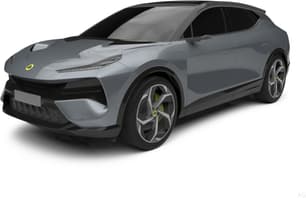
This is a Lotus - but it’s not like any Lotus you’ve ever known.
In fact, forget everything you know about Lotus, the British brand previously famous for small, lightweight sports cars is now evolving into something very different. Very, very different.
Under the control of Chinese automotive giant Geely since 2017, Lotus will shed its past and focus its future on all-electric, luxury vehicles like the Eletre we’re testing here.
The Eletre is a full-size luxury electric SUV designed to take on the likes of the Audi SQ8 e-tron, BMW iX and Mercedes-AMG EQE on the electric side, while also trying to lure buyers away from the likes of the Bentley Bentayga and Lamborghini Urus.
So, how does this radically different Lotus measure up to the brand’s reputation and stack up against its would-be competitors? Read on to find out…
If you can get past the relatively steep asking price, the design appeals to you, and its slightly last-gen ergonomics work for you, then there’s a lot to like about the GLE. It’s a big, capable and comfortable cruiser, but given there are cheaper and more efficient options around, it would be a decision of the heart rather than the head.
So, how does this radically different Lotus measure up to the brand’s reputation and stack up against its would-be competitors in the final summation? It doesn’t reset the benchmark in any area or stand out head and shoulders above its competition, but crucially for Lotus (and its overlords at Geely) it doesn’t feel behind its rivals.
For the Lotus diehards this is an unrecognisable addition to the brand’s legacy of great sports cars. But this new version of the brand is looking to reach fresh customers and the Eletre will likely grab their eye with its dramatic looks.
It’s a highly competitive luxury, performance SUV that should have anyone considering a similar sized Bentley, BMW, Mercedes, or even the Lamborghini taking it for a test drive. It has both elements - luxury and performance - that will appeal to those looking for something special.
The GLE hasn’t changed massively since 2019, but sleeker lights and some tweaks around the face have helped it age relatively gracefully. As much as a 2.4-tonne SUV can be graceful.
There are still references to the original ML-Class the GLE succeeded, like the ‘coupe’ shape of the C-pillar that betrays the true SUV shape of the GLE.
The reshaped front-end has less black plastic on show, and its grille stays true to the pre-facelift design.
Inside, it’s just the steering wheel that’s new, everything else holds up well in terms of a design that’s also practical, though some would say it looks outdated given the many physical controls.
The design of an electric SUV is, by its very existence, interesting as it’s something a Lotus has never been before. This is the brand’s new flagship SUV, designed to take on the likes of everything from the Bentley Bentayga to the BMW iX and even the Lamborghini Urus, so it needs to make a statement.
The design is influenced by the Evija electric hypercar, which Lotus built to kick-start its Geely era, but goes a step further with its angular design. It certainly looks more closely related to the Lamborghini SUV than any Lotus you’ve seen before.
It’s different, it looks special and will likely turn heads, but to be blunt, if you’re a Lotus lover who has an affection for the Elise, Exige and the like then this really isn’t for you.
This is a modern evolution for Lotus, created to appeal to new customers with its edgy exterior design, utterly modern interior look and premium finish.
One disappointment is the way the plethora of safety sensors and cameras can disturb the lines of the car, making it look like an unfinished prototype from some angles.
The GLE is very easy to use because of those physical controls.
Save for the trackpad in the centre console that can be used like a laptop’s control mat - it’s a little fiddly - everything is easy to locate and adjust and the controls feel nice. The switches along the climate control row all feel nice and clicky, buttons in the centre console are big and obvious, and even the steering wheel’s haptic buttons are laid out sensibly.
The touchscreen’s software has been updated since launch during the facelift and it’s easy to navigate, but wireless Android Auto or Apple CarPlay are a good workaround.
The front seats, as well as being comfortable, are adjustable to an impressive degree for finding your driving position and there’s plenty of room and light to make the cockpit feel airy.
Storage isn’t at a premium, there’s plenty of space in door cards, the central storage bin, and the cupholders and phone charger can be hidden away.
Behind the front row, rear seat space is ample, though if you opt for seven seats the second row can be moved to accommodate a third row of passengers when needed.
In our test car, that isn’t the case, so the GLE’s cavernous 630 litres of boot storage is available. The second row can split 40/20/40, which is convenient for loading long items while four passengers are present.
Oh, but under the boot floor, despite some extra room for bits and pieces, no spare tyre. Big marks down for a car that absolutely has the space for one.
The modern and premium design carries over into the cabin, with the model we were testing finished in grey leather and Alcantra with gold highlights. Which, along with the fact there’s leather and carpet inside, makes this feel more polished and luxurious than any previous Lotus.
But once you look beyond that you notice it’s not quite as practical as such a large SUV could be. Yes, there are a couple of cupholders in the centre console, but one is quite small and not practical for most cups/bottles.
There’s a small shelf for the wireless smartphone charging pad and the centre console box, but aside from that, there’s no other significant storage space in the front.
On the plus side the seats are comfortable and supportive, which is also true of those in the rear. The space in the rear is excellent, with plenty of head and knee room that will allow four adults to travel in comfort (adding a fifth to the middle seat would be a squeeze).
Those in the back also get access to the small screen that allows them to adjust not only the climate control but also the front seats. The rear seats also recline and there’s a pair of cupholders and USB-C ports.
The Lotus Eletre has a generous 688-litre boot, which is wide and deep. However, it comes at the expense of a spare tyre, with only a puncture repair kit provided.
It’s not a strong start for the GLE. Our top-spec (non-AMG) GLE 450d 4Matic variant starts from $154,900, before on-road costs, while our test car has $3800 of option boxes ticked.
So, $158,700 before on-roads as-tested, the GLE is this borderline prohibitively expensive for what it offers.
If the car you’re after must be diesel, the options are still many in terms of rivals… especially if you’d like to save a few dollars.
Moving on from the big Mazdas and VW Touaregs to the proper premium badges, and there’s the $136,815 Audi Q7 50 TDI (if we exclude the $120,530 base Q7 TDI) or the BMW X5 30d for $138,600. Even a Range Rover Sport D300 comes in under the GLE at $159,481.
For a seven-ish year old luxury SUV, the GLE does a decent job of hiding its age in some ways, but there are gaps.
The twin 12.3-inch screens for multimedia and driver display have aged well, plus there’s electrically adjustable leather front seats with heating, though the leather in our new test car needs some softening up. Perhaps over time.
The new steering wheel comes thanks to newer models in Merc’s line-up, though haptic controls can be accidentally bumped (as opposed to buttons).
Wireless phone charging, wireless Android Auto and Apple CarPlay, a head-up display, a huge sunroof, LED interior lighting, adaptive high beam headlights, a power tailgate and surround-view parking cameras are all standard.
Optionally, there’s a set of 21-inch wheels as pictured on our test car. They’re $2400 and you’d probably be better off with standard 20-inch wheels for the extra comfort.
The illuminated running boards are a $1400 option, and they’re also probably not necessary. But I’m not your mum, go for it if you want.
Oh, and you can also have the GLE in seven-seat form, but our test car is a luxuriously spacious five-seater.
The Eletre is one of many electric vehicles to fall victim to the fluctuating market, receiving an enormous price cut before it officially went on sale in Australia.
The range was meant to start at $239,000, but the decision makers changed their minds and slashed it by a whopping $49,100 so the ‘entry-level’ Eletre is priced from $189,900, plus on-road costs.
The Eletre S, which is the subject of this review, also received a major price cut, dropping to $229,990 from its original $269,000, while the range-topping Eletre R is now priced from $279,990 rather than $315,000 as first announced by the brand.
As for what you get for that money, the Eletre comes standard with a range of premium equipment, befitting Geely’s aspirations for the Lotus brand. This includes matrix LED headlights, two-tone paint with a black contrasting roof, 20-inch alloy wheels, air suspension, keyless entry and start, a key card with NFC (Near-Field Communication) function, four-zone climate control, eight-way power adjustable front seats and heated front seats.
There’s also a KEF premium sound system, in-built eSIM card with 5G capability, a wireless charging pad as well as a 12.6-inch digital instrument panel and a 15.10-inch OLED central multimedia screen.
Stepping up to the Eletre S adds more goodies including 22-inch 10-spoke alloy wheels, an 'Active Aero Pack', 64-colour ambient lighting, automatic parking assist and a 23-speaker KEF 3D surround sound system.
At the top of the range, the Eletre R gets a more potent dual-motor powertrain, two-speed transmission, unique 22-inch alloys and a 'Quartz' interior theme.
The GLE 450d’s 3.0-litre inline six-cylinder diesel engine is turbocharged, with a healthy 270kW and a brawny 750Nm to its name. That torque peaks all the way from 1350rpm to 2800rpm, by the way. Handy.
A nine-speed automatic transmission sends drive to all four wheels ('4Matic' in Merc-talk), while a 48-volt ‘mild-hybrid' system ('EQ Boost' in Merc-talk) means take-offs and shifts are aided by a bit of electric power.
Mercedes says the GLE can dispatch the 0-100km/h sprint in just 5.6 seconds, and that feels about right.
As mentioned earlier, there are three Eletre models, with the base model and S sharing the same powertrain, while the R gets a unique set-up.
The Eletre and Eletre S punch out a very healthy 450kW/710Nm from the dual motors that provide all-wheel drive traction. Despite being a full-size SUV, the two 450kW models are able to run 0-100km/h in only 4.5 seconds.
The Eletre R gets more powerful motors that make a staggering 675kW/985Nm, and crucially also get a two-speed transmission, which helps with acceleration. Lotus claims it has enough performance for the Eletre R to launch from 0-100km/h in just 2.9 seconds, a hugely impressive time for such a big and luxurious vehicle.
Mercedes claims a 7.4L/100km combined cycle (urban/extra-urban) fuel consumption figure for the big lug, but achieving that and making the most of its large 85-litre tank is a challenge.
We averaged 8.7L/100km on test but the trip computer showed as low as 8.0L/100km at one point. Get the GLE on the highway and fuel use plummets.
Theoretically you should be able to get about 1150km from a single tank, but realistically we wouldn’t plan trips any longer than 900km between fuel stations.
Still impressive, given that’s about the distance between Melbourne and Sydney, or Sydney and Brisbane. Roughly.
Despite the different powertrains, all three Eletre models have the same 111kWh battery but the driving range varies across each one.
The entry-grade model has a claimed WLTP range of between 535-600km, the Eletre S drops to 490-535km and the Eletre R can travel between 410-450km on a single charge.
On test we found those claims to be optimistic, certainly on the higher end, and especially if you head out of the urban environment and don’t maximise the regenerative braking to keep the battery topping up.
A trip in the GLE feels like a welcome step back in time. Sure, coming in close to five metres long and two-and-a-half tonnes means it’s not a nimble steer, but the GLE strikes a nice balance of comfort and tactility that’s getting rarer.
None of it feels particularly sharp in terms of inputs or feedback, but it’s easy and predictable to a point where even winding back-roads are effortless to flow through.
The big diesel engine feels almost lazy, but it’s just so effortless in getting things moving as it strives to sit close to idle whenever possible. Because of that, there’s little noise from the engine bay even under reasonable acceleration, and the powertrain is helped by that 48-volt system which makes stop-starts from the lights super-smooth.
The mild-hybrid also helps smooth out power delivery, to the point where the only time the GLE feels clunky is the occasional lag when shifting from Drive to Reverse or vice versa.
The test car’s suspension isn’t the optional airbag set-up, but the non-adaptive steel does fine in terms of comfort and soaking up harsh surfaces. And even the big 21-inch wheels aren’t too bad over sharp bumps.
With smaller wheels (more tyre cushioning) and the air suspension, it feels like the GLE would ride gorgeously.
Its body control is predictable on smooth roads, and if you’re careful you steer the hefty SUV through tight, winding roads easily, but consistently rough surfaces can make the GLE feel unsettled for a short period of time.
There’s an overall softness to it that means gentle off-roading is possible, and the tyres are thick enough to make it comfortable. You won’t find yourself being tossed around on a flat enough gravel road.
The challenge for Lotus, and its competitors, is to make its cars stand out from the pack despite the increasing similarities in performance brought on by electric powertrains.
Whereas in the past we could have assessed the difference between a Lotus-built V8 compared to a BMW manufactured V8 or even a Mercedes-Benz V12, these days all the electric models produce the same quiet, effortless punch.
So, it creates a generic driving experience in some regards, when what you’re hoping for at this end of the market is something special and different. And it’s important to note I don’t use the term ‘generic’ in a negative sense, but simply the Eletre has similar driving characteristics to the electric models from BMW, Mercedes-AMG and others.
Where it does give a hint to Lotus’ heritage is in its handling, where the combination of the air suspension with adaptive dampers, torque vectoring (by braking) and the British brand’s decades of experience combine to create a surprisingly direct and responsive SUV.
You won’t mistake it for an Emira, Exige or Elise, but the Eletre does have dynamic ability a cut above your average luxury SUV.
There’s a lot under the skin in the GLE in terms of safety, and it doesn’t always make itself known. This is a compliment.
The GLE scored a maximum five stars in its ANCAP assessment in 2019, and though the criteria has changed significantly since then, it feels like it should still score well.
The GLE doesn’t intervene unless it needs to, but the ability is there for the big Merc to avoid incidents and employ many means to protect passengers and pedestrians alike.
A warning for the driver and a gentle seatbelt tension comes in before the car slams on the brakes, though if no action is taken before an expected collision the GLE will drop its AEB anchors.
There are nine airbags if it all goes pear-shaped, plus some well-tuned adaptive cruise control with lane keep assist and departure alert, there’s traffic sign recognition with that, too.
Blind spot warnings, front- and rear cross-traffic alert, front and rear parking sensors and driver monitoring are joined by Mercedes’ plethora of other little safety features that minimise impact and damage in a crash.
Another major change for this new era is massive upgrades in terms of safety technology. The Eletre is packed with an array of cameras and sensors to help you avoid an accident.
There are 34 in total - four Lidar, six radar, seven HD cameras and 12 ultrasonic sensors. This all feeds a raft of features, including 'Highway Assist', which makes the Eletre the first Lotus to drive itself.
However, as part of the price cut, the Lidar hardware is removed from the entry-level model from the MY25 built examples onwards. However, if you option the Highway Assist package, they are fitted again in order for the system to work.
Standard on all Australian models is the 'Lotus Pilot Pack' which includes all the safety items that have become so common in recent years, including adaptive cruise control, autonomous emergency braking, rear cross-traffic alert, blind-spot monitoring, driver monitoring and traffic sign information.
Neither ANCAP nor Euro NCAP have tested the Eletre, as the safety authority rarely tests such expensive vehicles.
The airbag count is seven - front, front side, side curtain and far side (front centre) - and there are three top tether point and two ISOFIX positions for child seats across the second row.
Servicing isn’t cheap at Mercedes, even in the context of this market segment. A three-year service plan for the GLE costs $4045, while five years is $8055. That’s $1348 or $1611 per service respectively. The later services in those five years will of course be much more expensive and bring the average up.
Intervals are every 12 months or 25,000km, but Mercedes’ five-year/unlimited-kilometre warranty means anything major that goes wrong in that time should be covered - always read the fine print.
The brand’s Australian website lists 67 Mercedes-Benz dealers that can service your car.
As for its ownership credentials, Lotus doesn’t offer capped price servicing, so you’ll need to discuss the on-going maintenance costs for your Eletre.
On the plus side, the new model is covered by a five-year/150,000km warranty for the car, with an eight-year/200,000km warranty for the battery.