What's the difference?
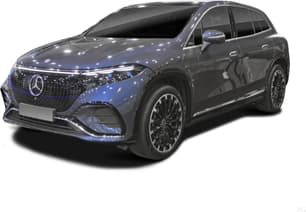
The EV revolution is bringing plenty of firsts, and this big electric behemoth is yet another one. Meet the EQS450, which Mercedes describes as its first "electric luxury full-size SUV with seven seats".
That is a bit of a mouthful though, right? So let’s shortcut that a bit, shall we?
What you really need to know is that this is one of the few proper seven-seat electric SUVs on sale in Australia, so it will — a little surprisingly — end up being compared with the increasingly premium Kia and its EV9 when it launches in November.
So what does this electric answer to a high-riding S-Class bring to the table? Well, lots of luxury, of course.
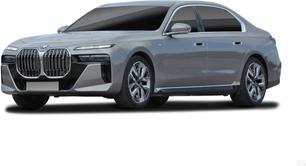
It was always going to happen - an electric version of the BMW 7-Series - but how well does the i7 handle the limousine fundamentals - comfort, power, room and style?
Well, luxury transport has been missing one major component all these years and the i7 has it.
Let me explain...
Does electrification enhance the seven-seat SUV experience? In the case of the EQS450, the answer is yes. Smoother, quieter and with plenty of easy-flowing power, the brand's family-focused luxury electric SUV behaves exactly as you might expect.
Note: CarsGuide attended this event as a guest of the manufacturer, with meals provided.
The i7 xDrive60 M Sport is close to the perfect 7 Series. From the comfort of being driven in it, to the ease of driving it, even for hours on end.
The i7's range of 625km is outstanding for an electric vehicle, but a petrol powered 740i will get you about 900km on a full tank. How many kilometres a day will you cover? Do you have time and a way to charge the i7 daily if you do cover a lot of distance?
If driving range isn't an issue, the i7 will reward you with a smooth, effortless driving experience and your passengers will have a serene journey in luxurious, high-tech surroundings. Just don't bump the door release button accidentally!
It’s a handsome SUV, and one that’s not immediately recognisable as electric — especially given there are little exhaust-pipe-mirroring design flourishes at the rear which make you look twice.
Aussie-spec cars get the AMG exterior treatment, which includes AMG alloys, aluminium-look side steps and the power-domed bonnet, but there's still nothing overly 'shouty' about the design, with the sleek, smooth body panels (accentuated by the hidden handles) making the EQS450 look smaller than it actually is.
Inside, it’s a super-comfy space to spend time, and the little fluffy pillows attached to the headrests should be standard in every car. The tech on offer is ample, too.
But it does all feel a little gigantic, with great swathes of wood panelling and massive screens, all of which make you feel bit like you’ve been shrunken down and are now living amongst the giants.
At 5.4m long and 2.2m wide the i7 xDrive60 M Sport is enormous and imposing - as a 7 Series BMW should be.
What's significantly different in the look of this latest incarnation of BMW flagship limousine is its show stopping face.
That LED-lined grille has Vegas pizazz and the pretty glittering Swarovski Crystal headlights are mesmerising. I doubt the words 'pizazz' and 'pretty' have ever been used to describe any previous generation BMW 7 Series.
Fear not, though, from every other angle the i7 looks business-like and serious… and solid as though carved from a single slab of marble.
Solid is also a good word for the i7's interior. Look at the seats in the images - they're hotel lobby sized and I'm still uncertain how they managed to fit them through the i7's doorway.
Our car had the Merino Tartufo brown leather upholstery which suited the 1970s-style futuristic design of the seats with their headrests wrapped in carbon fibre and the satin aluminium trim throughout the cabin. They look like seats from the bridge of a spaceship in a sci-fi series.
The enormous 31.3-inch screen in the rear is a show-stopper as are the tablets in the rear doors to control the screen functions along with the seat heating and adjustment.
Disappointing in comparison is the smaller media and instrument displays up front. And it's not just the lesser proportions but the styling of the screens that's a let down.
Surely this was a chance for BMW to integrate a large, flowing interactive screen over the dashboard and not something which looks propped up and an afterthought to the design of the cabin.
I also find the crystal-effect plastic that trims the dashboard and extends into the doors a little over-the-top, especially when it's backlit with LEDs.
The EQS450 stretches 5136mm in length, 1965mm in width and 1718mm in height. That's about the size of a Nissan Patrol and long enough to make it a proper seven-seater.
The middle row can be adjusted forwards or backwards, and with the front seat set to my 175cm driving position, I found I had ample head and knee room to get comfortable.
USB-A charge points abound, and there's wireless device charging, and because of the sheer size of the cabin, the storage options are plentiful. The central bin between the front seats, for example, seems styled on the Grand Canyon.
In the third row, though, things get a little tighter, but it’s perfectly good for kids. My knees were touching the seat in front, however, and it still requires some acrobatics to climb into.
At the rear, with all three seats in place, you'll find 245L of room (measured to the ceiling), growing to a maximum 1030L with the third row flat. Stow the second row, and you'll find a maximum 2020L of storage space – which, and take my word for it – is plenty.
One small quirk, though. While the second row is electric, stowing away at the touch of a button, the third row isn't. That means, when it's flat, you have to climb into the boot to pull it back up, or attack it from the rear door. Either way, it's more awkward than it needs to be.
Sure, the i7 isn't an SUV but a sedan like this needs to be roomy and comfortable, it also needs to be an ergonomic place to work for passengers in the back with laptops, and it needs to be well appointed with internet connectivity and charging outlets. A boot that can take at least two passenger's luggage is also vital.
The i7 has all of that covered with good legroom in the second row even for me at 189cm tall. I spent two hours back there writing my script for the video for this review while the i7 was charging.
As I typed away I had plenty of elbow room but I could have done with a tray table for the computer.
There's a wireless phone charger in the fold-down rear centre console, along with USB ports galore.
You'll find another wireless phone charger up front and more USB ports. The i7 also has its own internet hotspot.
The sumptuous seats in the rear are power adjustable and also heated, but lack a massaging function.
There's also rear dual-zone climate control and sun-blinds which cover the back and side windows.
Cabin storage is good with large covered areas in the front and rear centre consoles, plus there are two cupholders in the rear and another two up front, with large door pockets, as well.
The cargo capacity of the boot is a healthy 500 litres but it's quite shallow due to the electric vehicle batteries eating into the luggage space.
The automatic doors can be opened several ways from the inside.
First there's a button inside which is high on the rear door and another on the dashboard which will open them automatically while using sensors to ensure they don't hit anything.
There's another button much lower down which will pop the door open slightly for you to push it the rest of the way.
Finally there's an emergency handle which will override the electric opening.
You can open the doors from the outside automatically by pushing a button near the door handle or by using the exterior door handle normally.
Closing involves pressing the high placed button if you're inside or by tapping the exterior button on the outside door handle if you've exited the car.
We did have a door mishap twice during our week with the i7. The first was when bags placed on the front passenger seat bumped the release button and caused the door to pop open, followed quickly by me lunging across to pull it shut again. It's lucky my arms are long.
The second was when my eight-year old son bumped the door release button with his knee again popping open the door but this time at 110km/h on the motorway. He was able to close the door but it rattled both of us, understandably and I kept the child lock on for the rest of the week.
He's been in a different test vehicle every week of his life since he was born and this is the first time we've ever had a door open unintentionally like this. I've also never had a door open, just because a bag has leaned on it, either.
So, the auto door opening function might create a nice impression and make opening and closing the heavy doors easier, but I think manual doors would be more practical.
Arguably the biggest hurdle the EQS450 has to clear is its asking price, which is a considerable $194,900, before on-road costs.
Inside, you'll find leather seats and trim, a big 12.8-inch central display (and a head-up display), a 12.3-inch digital instrument display, a Burmester sound system with 15 speakers, a panoramic sunroof and cooling and heating in the front seats.
Outside, there are 21-inch alloys, flush-fitting door handles, illuminated running boards and LED lighting, which Benz calls 'Digital Lighting', and offers 1.3m pixels of light per headlight.
The BMW i7 xDrive60 M Sport sits in the middle of the 7 Series range with a list price of $306,900. That places it above the $273K 740i which is the only combustion engine variant in the line-up and below the $345K i7 M70 xDrive.
Whatever you do, don't dismiss the i7 xDrive60 M Sport as an overpriced electric version of the 740i because it has many more standard features that enhance the luxury and chauffeuring experience.
We're talking automatically opening doors, a 31.3-inch media display in the second row and control tablets for it in the rear doors.
There's a 35-speaker Bowers & Wilkins surround sound system (not the 740i's 18-speaker stereo), power adjustable and heated rear seats plus an 'Executive Lounge' console, and a BMW Individual Gran Lusso interior with a choice of Merino or Cashmere upholstery.
Our car had the Merino Tartufo brown leather upholstery and carbon-fibre M interior trim.
The i7 also rolls on larger 21-inch wheels which fill the giant wheel arches perfectly.
The rest of the standard features list is almost identical to the 740i's and includes the imposing LED-outlined grille, the Swarovski crystal headlights and the panoramic glass roof.
Inside, the double screens for media and driver instruments are also standard, there's sat nav, Apple CarPlay and Android Auto, a head-up display for the driver, front row seats are heated, massaging and power adjustable, there are also electric sun-blinds for the rear.
Our car wore the 'Oxide Grey Metallic' paint which made my videographer very happy because apparently it shows contours better than any other colour even on a bright, sunny day.
At the time we published this review BMW was also supplying as standard a charging wall box and a five-year Chargefox subscription.
There are two electric motors delivering the driving power, one at the front axle and one at the rear, which will deliver a combined 265kW and 800Nm, fed through a single-speed transmission and with all four wheels being powered.
That's enough for a sprint to 100km/h of 6.0 seconds.
The i7 xDrive 60 M Sport has two electric motors - one at the front one at the rear - making this large saloon all-wheel drive.
The combined output is outrageous. We're talking 400kW and 750Nm. That's enough oomph to fire this electric missile from 0-100km/h in 4.7 seconds.
When EVs first came out a lot of people saw the technology as lending itself to small city cars, but with the smoothness of motion is offers, the silent operation and the colossal grunt it can supply nothing suits a big limo like the 7 Series better than electric motors.
The drive experience is, well, unremarkable. But I don’t want that to sound negative, because that's not how it's intended.
The EQS450 SUV does exactly what you expect a circa-three-tonne, premium electric SUV to do, and it does it all well.
It's powerful enough without being exhilarating, comfortable enough, and laden with enough tech to satisfy almost anyone.
It's just that it also doesn't exactly ignite the senses. But the question must be asked, what seven-seat family-focused SUV does? Few, if any.
So, surely the real test is if electrification has improved the formula here, and I'd argue that it definitely has.
For one, the EQS450 is properly whisper-quiet in the cabin, with Benz employing multiple sound-deadening techniques at once to lock out road noise. And with no pesky engine to interfere, the cabin is about as serene as they come.
The power delivery is predictably smooth and easy, too. There is no headline-stealing acceleration figure here, but the power is potent and plentiful, and more than enough for any real-world situation you might encounter.
The ride, too, is commendable. Aided by Mercedes' air suspension, it glides over all but the most broken road surfaces. And it is fitted with rear-axle steering, which really does cut down a turning circle that would otherwise surely resemble that of a cruise ship.
It feels heavy at times, though, and even the most high-tech suspension can't eliminate body roll entirely through tighter corners (physics and all that).
But unless you're really pushing – and why would you be – the cabin is calm, comfortable and cosseting.
So, exciting? Not really. But comfortable and calming, which are probably the traits its owners will value much higher.
There are removal trucks shorter and narrower than the i7 but this limousine is possibly the easiest and most comfortable car I've driven in almost 15 years of testing vehicles from Toyotas to Bentleys.
The steering is pinky-finger light but accurate, the ride (as driver and passenger in the second row) is superbly composed and the electric powertrain add a smoothness to movement that no combustion engine on the planet can come close to.
The xDrive60 M Sport comes standard with BMW's 'Executive Drive Pro' feature which includes the 'Active Roll Stabilisation' and 'Active Roll Comfort' systems used on Rolls Royces.
The systems use motors to level the body through dips and corners, and the result has to be felt to be fully appreciated.
It's oddly amazing - you could have a bowl of molten lava in your lap and not spill any of it.
And then there are the seats. As a driver the under thigh support offered by the big, thick, wide seat base is exactly right for long distances, while the back rest is supportive without being too firm.
If I was to name any downsides to the driving experience it would be the limited forward visibility due to the narrow windscreen and thick. short A-pillars.
I found myself always having to peer around those pillars at intersections and pedestrian crossings.
Rearward visibility is completely blocked when the second row's large screen is folded down and the rear vision mirror doesn't have a camera function to get around this issue.
Sure there's a reversing camera but being able to see what's coming up behind you in traffic is important to for safe situational awareness.
I'm also not a fan of the synthesised driving sounds. It's unnecessary, especially in something like a chauffeur-operated limousine.
I think it only serves to cheapen what is such a high-end experience. Thankfully you can turn it off.
The same goes for 'Boost Mode' which provides all available grunt once a paddle behind the steering wheel is pulled and counts down like a missile launch. Seriously? Come on - this isn't a 2 Series!
The EQS450 SUV is yet to be ANCAP crash tested, but you can expect an extensive suite of active safety equipment, including AEB with pedestrian and cyclist detection and junction assist, adaptive cruise control, active lane keep assist, lane change assist and steering assist, traffic sign recognition and eight airbags.
The BMW i7 has not been assessed by ANCAP and like many ultra high-end cars it probably won't be. But we would expect it to perform well given this is the flagship of the brand and fitted with every safety feature in BMW's arsenal.
There's AEB which works from car park pace to motorway speeds, there's lane keeping assistance and blind spot warning, rear cross-traffic alert and manoeuvre braking which will stop you from bumping into objects while revving and there are more than 35 different sensors.
One radar constantly gazes 300m ahead into the distance, although it would probably be bored in Australia with our lack of autobahns.
The i7 also has BMW's 'Evasion Assistant' technology which scans traffic in all directions and will activate an evasive manoeuvre into an empty safe lane if it detects you swerving to avoid a collision.
There are seven airbags onboard, including one between the front seats, full length curtains for the front seats and head protecting curtains for the rear occupants.
The xDrive60 M Sport also emits an acoustic warning to alert pedestrians that you're nearby.
The Mercedes EQS450 is covered by Mercedes-Benz's five-year, unlimited-kilometre warranty, with servicing required every 12 months or 25,000km.
You can prepay your service costs, coming in at $2350 for three years, $3695 for four years or $4280 for five years.
The battery its covered for eight years or 160,000km.
The i7 xDrive60 M Sport is covered by BMW's five-year, unlimited kilometre warranty. The battery is covered for eight years or 160,000km.
There's no regular servicing schedule but the car will identify any faults and maintenance issues and notify you. A six-year unlimited service plan is offered by BMW and is included in the purchase price of the i7.
The i7 also comes with a five-year subscription to the charge for charging network, and a home wall box charger.