What's the difference?
It's not often a car is elevated to 'icon' status, cars like the VW Beetle, Porsche 911, Toyota LandCruiser or Ford Mustang - but the Mazda MX-5 has quietly been the best choice for keen drivers who don't want to break the bank with a big sticker price or costly maintenance.
The ND MX-5 has been around since 2015, and while it’s been praised as a return to the original, simple formula of the NA MX-5 from the late 80s and early 90s, it’s getting close to a decade old.
So, a little refresh with some new tech and a mechanical tweak is here to make the roadster feel like a playful pup once more.
And what better place to test that out than a combination of the winding roads of the Adelaide Hills wine region, paired nicely with a main course of track driving at The Bend Motorsport Park?
Range Rover has developed a bit of an image problem in the last few years.
To many the brand is still the face of a quintessentially British aspirational luxurious off-roader. But to a growing group, it has become synonymous with the concept of an environmentally reckless fuel-guzzling SUV.
They’re big, heavy, and still feature V8 engines, but Range Rover knows all too well the writing is on the wall for its increasingly infamous range of combustion vehicles.
The trouble is, customers love them, and while the I-Pace from sister brand Jaguar is a big leap into the future, there needs to be a happy medium for easing some of its existing customers away from combustion, while still offering the kinds of excess and aspirational performance the Range Rover brand is associated with.
Enter this car, the Evoque HSE P300e. It’s a plug-in hybrid, notably only available in the top trim level, with top-shelf performance, too.
Is it the right car to represent Range Rover’s entry-level model at a critical time of technological transformation? Let’s take a look.
Ultimately, the design and tech changes to the ND MX-5 will be the biggest day-to-day advantages of the updated model, because the mechanical changes don’t make themselves hugely obvious on the road.
If you’re into track days, it’s still a satisfying car to hustle as fast as you can, but it’s at its most accessible on winding roads for weekend drives, where the new differential and track DSC mode won’t come into play as much.
But in a world where accessible sports cars are becoming a rarity, there’s only one rear-drive convertible with a sticker price appropriate for financial mortals, and it’s a pretty damn good thing that it’s the ND MX-5.
Note: CarsGuide attended this event as a guest of the manufacturer, with travel, accommodation and meals provided.
The Range Rover Evoque is more highly specified and more luxurious than ever, and this plug-in hybrid version makes the most of what’s on offer with its slick but familiar feel from behind the wheel.
Unfortunately, it does have an eye-watering price tag to go with its classy design and the options list is a bit rude, all things considered, but the core offering is a solid luxury buy for city-slickers, nonetheless.
What makes the Evoque P300e stand out for me is its impressive EV driving range and excellent charging specs which make it as convenient as possible to make the most of its electrified features.
It’s up to the buyer whether these conveniences and the Range Rover badge are worth swapping into a car a full size down from its luxury plug-in rivals for the same money.
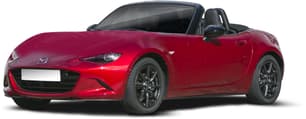
Alright, we’ve all seen ND MX-5s, you don’t need me to tell you about its proportions or explain its design elements to you in too much detail, so I’ll give you the headline changes.
At the front and rear are new pairs of LED head- and tail-lights, respectively… obviously, fitting into the spaces the old ones took up.
The DRLS and reverse lights have come off the bumpers for both, and are now part of the main lights at each end - no more DRLs in the front bumper, and the reverse lights have been replaced by reflectors.
There are new 17-inch wheel designs for the base and GT trim levels, too, and there’s a new colour - Aero Grey.
Inside, it’s a shame that the tan Nappa leather interior of the RF Black Roof can’t be had in a manual roadster, because it’s gorgeous, even though the inside still looks refined enough for a simple sports car in its base cloth trim.
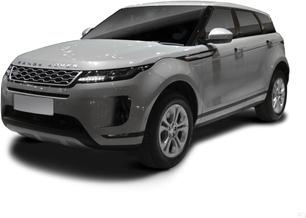
The Evoque has always been a car all about its sleek, city-slicking design, an iconic piece of modern SUV art from Jaguar Land Rover head of design, Gerry McGovern.
With its shapely proportions, clever descending roofline, and a silhouette which successfully reflects a miniaturised version of the Range Rover, the Evoque is at once classy with a faint suggestion of toughness under the skin.
The blacked-out grille, slimline headlights, and contemporary strip across the tailgate all serve to add intrigue to this SUV, and the extra detailing in the front bumper, shapeliness of the bonnet, and contrast black trims (with extra contrast panels on our test car matching the gloss black wheels) serving to add to its premium appeal.
It’s important to remember, while the Evoque slides into a busy small SUV landscape now, it was one of the first to make a premium car so successfully appealing in this small SUV space way back in 2011 with the first Evoque, following Land Rover’s historic trend of being in front of the SUV curve.
Rival small SUV designs may have caught up in the minds of many with the likes of the Audi Q3, BMW X2, and Volvo XC40 shining in recent years, but few have won as many design accolades as the Evoque.
Range Rover seems to be leaning into a more upper luxury trend, not just with the pricing, but with the vibe of the car’s interiors, too.
The new generation Evoque, for example, took a big jump in the look and feel of its interior appointments when it launched in 2019, and over time has only consolidated its market positioning.
The HSE grade which our P300e hybrid arrives in is lavish on the inside, with lovely suede-like seats, intricate contrasting grey cloth trims in the doors (do I detect an influence from Volvo here?) and a plush-looking dash, all finished in soft-to-the touch materials.
Attention to detail, like the silver bezels which adorn the centre console and media screen, add to the premium flair which lifts the Range Rover badge above the Land Rover one, and I do like the way the additional function screen seamlessly melts into the piano finish and integrated dials. While it’s always a nightmare to keep gloss piano finishes clean, it looks oh-so primo.
It’s a little odd the P300e has analogue dials, which seems to miss the premium edge which a fully digital dash might provide although the 7.0-inch centre dash screen has a great resolution and speed, as well as a mostly well laid out operating system.
I found the R-Dynamic modes, which can sharpen up the accelerator response and steering buried two menus deep, unnecessarily hard to find, as were various EV information screens and other less important functions.
One thing Mazda has significantly changed for the ND is the multimedia screen, now a larger 8.8-inch touchscreen running Mazda’s updated software.
It brings the MX-5 up to date without sacrificing simplicity and makes it a little easier to use. The physical dial and buttons for controlling the screen also remain. The USB-C ports are also new.
Oh, and the MX-5 is the first Mazda model to get Connected Services, which is coming to other Mazda models eventually.
Connected Services allows owners to find, lock, and get alerts for their cars from a phone app, even letting them set curfews to notify them if the car is started during certain hours.
Aside from that, another small tweak is the simplified instrument cluster, which aims to be easier to read even when the roof is open and the sun is bright.
The cabin isn’t built to be plush, it’s built for ‘Jinba Ittai’, Mazda’s philosophy that applies most strongly to the MX-5 which means ‘horse and rider as one’.
And trust me, you feel one with the horse- er, car, when there’s not ample room to move. It’s not restrictive, but it’s cosy.
Everything’s quite well-placed and it’s not busy with buttons or features in here though, it’s made for focusing on driving.
One downside is the lack of storage, not even a glovebox, in front of the passenger, and the central storage spot under where your elbow sits is tiny, good for keeping the key fob snug though. Also, the cupholders are able to be removed or swapped between the space behind your elbow, or above the passenger footwell.
There’s also a small storage space between the seats behind where your elbow would sit, though it’s tricky to access while you’re driving.
Then there’s the boot, which is usable for a small amount of luggage at 130 litres in the Roadster and 127L in the RF hardtop.
Finally, as a huge positive, probably the biggest advantage of the ND over any other convertible is how easy it is to open and close the roof in the Roadster. You can do it single-handed, which is great if it starts raining and you’re at a traffic light or able to quickly pull over.
The RF hard-top has a switch that automatically opens and closes the roof section.
While it still plays the role of Range Rover’s smallest SUV, the current Evoque is much bigger than the car it replaced in 2019. I would go so far as to say it’s deceptively large on the inside.
Front occupants are treated to a cabin which now feels almost as wide as an actual Range Rover, with plenty of room for elbows on either side, which are, of course, met by lovely soft-touch surfaces.
The raised console helps with the upmarket feel, as does the plush dash. The standard 14-way adjust front seats help to accommodate most passengers, with my only criticism being the large A-pillars and height of the dash can make it feel a little bit claustrophobic compared to some rival luxury SUVs.
Storage is offered through a set of large door pockets, a centre console box, dual bottle holders behind the shift lever, and a healthy nook underneath the climate controls, which also hosts a wireless charging bay.
The rear seats share the same comfortable rim as the front ones, and also have large pockets in the doors. Despite the descending roofline, I had just enough room for my head at 182cm tall although it is notable the space in the PHEV feels smaller with the raised floor needed to accommodate the batteries.
I had a little airspace for my knees behind my own driving position, too. The main drawback for rear passengers is the large transmission tunnel, making it difficult to accommodate an adult in the centre position.
There are adjustable air vents for rear passengers, but it is frustrating Land Rover has chosen to make rear USB-C charging ports an arbitrary $270 option.
The boot is also deceptively large for such a small SUV, measuring in at 472 litres (VDA), it’s above average for the small SUV class and fits the full CarsGuide luggage set, provided you remove the parcel shelf as it's just a smidge too high.
You'll also need to keep your charging cables in the boot, as there's no underfloor storage, the entire space being taken up by a space-saver spare wheel.
Getting into an MX-5 is now a little more expensive, with the base manual Roadster up by $2310 to now start from $41,520 before on-roads.
The top-spec soft-top GT RS is now $51,640, or $2800 more than before.
Pricing for the RF hard top is also similarly bumped up, a base manual costing $46,250, and the most expensive GT RS at $56,140.
There’s also a Black Roof edition which comes with tan Nappa leather inside, but that’s only available in an automatic RF, which is possibly the biggest downside to the 2024 range.
Base models get cloth seats, while GT and GT RS models get heated leather seats. The GT RS also comes with stiffer Bilstein dampers, Brembo front brakes, a bracing strut between the front suspension towers and a DSC-Track mode. The difference there is noticeable, so it's worth the extra spend for the more keen driver.
The higher overall costs bring updated tech, a new 8.8-inch touchscreen and a new limited slip-diff in manual versions, plus tweaked mechanicals like improved acceleration response and lower steering rack friction.
But they do look a tiny bit different too.
While we’re on the topic of excess, the Evoque HSE P300e certainly reflects it in the price tag. This plug-in starts from a whopping $105,060 price-wise putting it in the same league as luxury PHEV rivals a full size up.
Because there are no small luxury segment small SUVs in this league currently, we’re in fact forced to compare the Evoque to cars like the Volvo XC60 Recharge (from $100,990), BMW X3 xDrive30e ($107,000), or the particularly good-value Lexus NX 450h+ (from $88,323).
All are larger than our Evoque here, so it’s automatically at a disadvantage, and as is the usual case with Land Rover products, there’s an extensive and occasionally rude options list which can add thousands more to the price.
Our test vehicle, for example, had over $10,000 worth of options attached to it, only three of which (dual-zone climate with second row vents - $1000, and the additional Type 2 charging cable - $528) I would bother to add.
The included equipment at the HSE grade is good, with 20-inch alloy wheels, 14-way electrically adjustable front seats, Matrix LED headlights, a 10-inch tiltable ‘Pivi Pro’ touchscreen with wireless Apple CarPlay and Android Auto connectivity, as well as built-in navigation, and a second screen for the climate and car functions.
There’s also a semi-digital dash (oddly, with analogue dials for engine rpm and road speed, but a 7.0-inch digital element for everything else), the choice of either leather or suede interior trim, a leather-bound steering wheel, and keyless entry with push-start ignition.
It’s nice to see the Matrix LEDs as standard here, as well as a swish set of screens and a premium feeling interior. But it’s also frustrating things like digital radio ($520), a head-up display ($1690), data plan ($1040), and USB-C for the rear seats ($351) are optional on a car north of $100,000, especially since most of these are standard on its rivals.
One major catch is how long you might be waiting for one. Some dealer sources tell us customers will need to wait up to 12 months for delivery at the time of writing, so be prepared for this if you want one.
Up front, you get one option: a 2.0-litre naturally aspirated four-pot. It makes 135kW and 205Nm, and it’s a delightful little thing, driving the rear wheels only - as it should.
It used to be that the smaller 1.5-litre engine was the more revvy, keen option, rest its soul, but Mazda updated the 2.0-litre to be more eager (and deliver more power) at high revs and basically made the little 1.5-litre redundant.
Anyway, you can have it with a six-speed manual in any variant, or a six-speed automatic in GT guise if you find manual gearboxes difficult or a hassle.
The Evoque now sports Jaguar Land Rover’s hybridised ‘Ingenium’ engine family across the range, and the set-up which appears in the plug-in hybrid model might be the most interesting.
It consists of a 1.5-litre three-cylinder combustion engine which is said to produce 147kW/280Nm, and an electric motor powering the rear axle producing 80kW, the two of which combine for an impressive quoted total output of 227kW/540Nm, driving all four wheels.
The motor sources its power from a 15kWh lithium-ion battery pack under the floor of the car, which provides a claimed 62km of fully-electric driving range.
Land Rover also replaced the mechanical brake pedal with a drive-by-wire one to allow for improved ‘blended’ regenerative braking.
Mazda says the MX-5 uses 6.8L/100km as a manual Roadster, or 7.0L/100km with an automatic gearbox. Or, in the heavier RF 6.9L for a manual and 7.2L for auto.
Not great for a tiny car like this, but pretty good for a sports car!
It’s got a 45-litre fuel tank, takes premium 95 RON or higher, and while it should hypothetically be able to travel more than 600km with its on-paper claims, expect fuel use to sit closer to 8.0L/100km if you’re driving it anything like it deserves.
Claimed energy consumption on the combined WLTP cycle for the Range Rover Evoque P300e is 2.0L/100km. As with all plug-in hybrids though, this will heavily depend on how it is driven.
The 15kWh battery is said to provide a 62km driving range (again, on the WLTP cycle), which seems healthy for a PHEV, and I was pleased to find that my car was reporting about 56km on a full charge, not far off the claim.
Importantly, the Evoque has stellar charging specifications, which make it ideal for a city-slicker with minimal time to conveniently charge.
I was shocked to find a DC charging port when I flipped open the panel, which is capable of charging the tiny battery up in just 20 minutes (at a peak rate of 35kW), while on a slower but easier-to-find AC charger, it can extract 7kW allowing a charge time of around two hours.
This is well above par for a plug-in hybrid, and makes charging quick, painless and convenient, even for those who can’t charge at home.
As a result of this ease-of-charging and therefore minimal time spent in the hold or hybrid modes, my car reported an astounding 1.0/100km of fuel consumption during my week, covering mostly urban kilometres.
The only drawback is the need to fill this small turbo engine with mid-shelf 95RON fuel.
It feels like every motoring journo under the sun (literally if the roof is off) owns or has owned an MX-5 of some sort.
And the first time you drive one, you might understand why.
If you spend your days testing and driving a bunch of different cars that aim to be many things at once, it’s refreshing to drive something that aims to be one: fun.
That’s it, the MX-5 feels like it was built to be fun. Not for convenience, not for power, certainly not for the school run.
And fortunately its simplicity remains with this update. All Mazda has done to change the way it drives is attempt to improve the rear limited-slip differential and improve the steering a little by reducing friction in the rack, as well as improve throttle response.
Has any of that changed the way it feels to drive on-road? No, not massively, but the ND was already such a delight that Mazda could have kept this update to purely design and interior tech changes and it would have still been one of the best-value buys around in terms of fun.
The MX-5 still feels relatively softly sprung while still being a dynamic and communicative sports car that’s engaging to drive even at low speeds, and rewarding (or frustrating) to drive fast.
On tight, winding roads, the MX-5 is at home, its soft suspension keeps you humble with its shifting weight and its relatively meagre outputs keep your licence safe.
In fact, despite being slightly compromised as a daily drive, the MX-5 is still plenty of fun even in traffic, there’s something about the satisfying click as the shifter slips into gear, or the little rev matches heading back down through the cogs when approaching a red light.
The 2.0-litre four-pot is a keen unit, and the six-speed manual is light and easy to work with, plus its steering is light without sacrificing road surface feedback - that feedback can quickly turn into cabin noise on a coarse highway which could become a little irritating on a long trip.
But the MX-5 can still be plenty of fun on track, where you’re more likely to get the most out of its new limited-slip differential and Track DSC mode.
It’s equally frustrating and satisfying to hustle the MX-5 around the East Circuit at The Bend in South Australia, where the track is twisty, busy, and unforgiving. Get it wrong, and the MX-5 lurches or slides to let you know you’ve made an error.
Get it right, however, and the little roadster glides through the corners, camber changes and even over apex kerbs smoothly and carrying impressive speed.
Plus, the electronic assistance won’t usually kick-in until you really need it, a welcome change from cars that are constantly trying to keep you from having fun behind the wheel.
The second-gen Evoque is still the lovely, luxury, small SUV it was when it launched in 2019, and this plug-in hybrid version only serves to improve the formula, adding sleek electric driving characteristics to the already-smooth turbo engine and torque converter automatic.
Interestingly, and like its Volvo XC60 rival, the electric motor is located on the rear axle, giving this car the odd characteristic of being rear-wheel drive when driven electrically, or predominantly front-wheel drive when driven in combustion mode.
Speaking of modes, this car does the bulk of the management, with only three driving modes available to the pilot. These include the default ‘hybrid’ mode, which as the name suggests, blends the two power sources with more of an emphasis on electric driving when the battery is charged.
There's also an electric mode, which will only use the rear axle motor until the battery runs out, and a ‘Hold’ mode which will still blend the two sources but predominantly rely on the combustion engine to maintain the car’s state of charge.
You might want to use the last mode if you're travelling long-distance, to maintain the electric range for where it is most efficient - in low-speed stop-start driving.
The regenerative braking is not adjustable, having just a single mild level. It’s far from the single-pedal driving you can experience in a fully electric car, but Land Rover has made the brake pedal fly-by-wire so it can blend increased regen with the mechanical brakes.
It makes for a familiar experience from behind the wheel for those coming straight out of a purely combustion vehicle.
The electrified brake pedal does have the consequence of removing a bit of feel for a keen driver, and the same can be said for the rather slow steering tune in the default settings which makes the Evoque feel more luxurious and less sporty or reactive than it could be.
It’s a shame, because the two power sources combine to make for a thumping amount of power when you stick your boot in, and the all-wheel drive system and nicely balanced suspension keep this little SUV well under control in the corners.
As with my original Evoque range review in 2019, though, it is notable how heavy this SUV feels, particularly compared to some rivals like the Audi Q3.
The heftiness suits the Evoque's expanded dimensions and even more upmarket feel, but despite the power on offer it’s not an agile SUV to be carving corners in.
At least the ride quality and quietness is superb, making the Evoque an ideal SUV for driving around the centre of pothole-stricken Sydney, with a notable amount of poise. At the end of the day, isn’t that what this Range Rover was built for?
The ND MX-5 actually scored five stars with ANCAP back in 2016, even though its score has now expired. It’s not obvious how well it would fare under newer, stricter tests, given the small car’s lack of advanced driver assistance - not that that’s a bad thing in the case of a sports car.
Still, for a two-seat convertible, the MX-5 has a decent list of kit to keep you safe including front and side airbags, alerts for driver attention, blind spots, lane departure and rear-cross traffic, parking sensors and a reversing camera, belt pretensioners and side-impact door beams and even automatic Smart City Brake Support.
Despite its long options list, thankfully all key safety equipment is standard on the Evoque. Active items include auto emergency braking, lane keep assist with lane departure warning, blind spot monitoring with rear cross-traffic alert, traffic sign recognition, driver attention alert, a clear exit monitor, and adaptive cruise control.
Only two items which could be considered under the safety umbrella remain on the options list (the options list becoming a recurring theme in this review), a 360-degree parking camera ($500), and the ‘ClearSight’ rear view mirror, which is able to show a camera view out the rear if the mirror is obscured by luggage or people in the cabin ($1230).
Elsewhere, the Evoque scores two ISOFIX child seat mounting points on the outer rear seats, and three top tethers across the rear row.
There are six airbags, and despite notably missing a front centre airbag, which is often required for a maximum safety rating to today’s standard, the Evoque maintains the maximum five-star ANCAP safety rating it was awarded in 2019. For the record, it scored very highly across all categories.
Mazda’s five-year, unlimited km warranty covers the MX-5, including five years of roadside assist.
Servicing costs are pre-set, with intervals every 12 months or 15,000km up to seven years or 105,000km. They cost between $447 and $638, averaging out at about $544 each.
As of April, 2021 all Land Rover products are finally covered by an industry-standard five-year and unlimited kilometre warranty, matching its key rivals, and beating out BMW which persists with an old three-year warranty promise. Five years of roadside assist is also included for the duration.
When it comes to servicing, the P300e is available to be purchased with a five-year plan ($2650 - $530 annually) which covers 102,000km of visits.
This pack is well worthwhile as Land Rover servicing is generally quite expensive when purchased a-la-carte.