What's the difference?
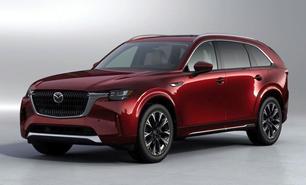
When it comes to Mazda’s luxury aspirations, the CX-90 is it. The big Kahuna. Seven seats of what should be the Japanese brand’s exceptionalism amongst its mainstream rivals.
But does this more than five-metre-long Mazda have what it takes to elevate the brand beyond the likes of Toyota, Hyundai, Nissan and Kia?
Importantly, is this base version - which is closer to Mazda’s traditional price point - a bit of a luxury seven-seat SUV bargain?
We drove a CX-90 G50e Touring (the most affordable CX-90 of the lot) for a week to find out.
Zeekr is making waves in Australia at the moment but it's not because of the car you see before you.
Nope, it’s the 7X mid-size SUV that’s captured a heap of attention and a whole lot of sales. In fact, of the 1832 sales the brand has managed over the first three months of 2026, just 54 were for the X.
But that was the old X and this is the new one. With more power, more performance, faster charging and a whole heap of pretty special equipment, especially for the small SUV segment.
So, is that enough to finally put the X on the map?
There are many reasons I quite like this CX-90. It sells the plush luxury promise when it comes to its interior and design, it feels big and purposeful, and has a refreshingly minimalist approach to its cabin tech. As a seven-seat SUV it’s particularly impressive, with plenty of amenity and a third row that can genuinely fit an adult in comfort.
However, there are areas where it could use more polish, from the drivetrain to the ride, and it ultimately strikes an odd point for price and ownership which feels lost between the premium segment and the mainstream rivals.
If you’re a long-term Mazda owner, I still think you’ll love it, and this Touring grade is definitely the best value in the range. It offers the lion’s share of equipment at a price more comparable to Mazda’s traditional mainstream rivals.
It's a good thing in a small package, this Zeekr X, and there are a lot of things I like about it. In fact, the only sticking point for me is the price. But that's all about perspective. If you see this as a newcomer Chinese brand, then yes, there are a lot of more affordable options out there. But if you see it as a premium player, it's really a more affordable version of a Volvo.
Note: The author, Andrew Chesterton, is a co-owner of Smart As Media, a content agency and media distribution service with a number of automotive brands among its clients. When producing content for CarsGuide, he does so in accordance with the CarsGuide Editorial Guidelines and Code of Ethics, and the views and opinions expressed in this article are solely those of the author.
The CX-90 is an impressive car to behold. Moving things onwards and upwards from its CX-9 predecessor, the CX-90 is bigger and even more refined in a lot of ways.
Mazda’s signature design language has evolved into something a bit beefier, trading out the delicate sharp angles and chromes of its front-wheel-drive predecessors for something a bit more upright, with a wide stance and tough proportions.
The long bonnet and expansive body panels stress the long-engined, fluid nature of this car’s design language. It certainly gives it a more premium vibe than the boxy American-influenced style of the Hyundai Palisade, and leans more European than the science-fiction styling of something like the Kia Sorento.
If anything, there’s some clear BMW influence in the shape of the tail and light fittings. Light lashings of chrome keep it in-line with Mazda’s previous design language, and on this base model at least, plastic claddings over the arches toughen it up a bit.
Inside is plush. In fact, it’s treading on Lexus territory when it comes to the design and feel of the seats, dash, doors and there are even padded leather touches down the sides of the centre console for your knees to rest against. Even the standard leather seats are nice (with softer Nappa leather available on higher grades), and I actually find the somewhat monochrome interior treatment on our test car to be the most modest option. It’s off-set by silver trims and a touch of chrome in the steering wheel and doors.
The dash is in a more traditional style (again, it feels influenced by BMW here) with a padded insert across the front, inset vents and a climate control panel leading down to a nice wide console with tasteful patterned trims, and an electronic shifter. The screen in this base car is of modest dimensions compared to most cars today, but those who aren’t sold on giant touchscreens will love it.
Even the digital dash elements are tastefully executed, although they’re not particularly customisable, which is a shame.
The visual changes aren’t massive. This AWD version welcomes a couple of new exterior colours, including the 'Matt Khaki Green' of our test car. It also gets the two-tone black roof and there are new 20-inch alloy designs.
Elsewhere, it's the futuristic-style of design we’re used to which differentiates the X from its Volvo EX30 twin under the skin.
Inside, this is a seriously well-equipped and polished-feeling small SUV, and — unlike some of the newcomer brands to Australia — it all feels very high quality and well put together. And that includes the material choices.
I don’t even hate the fact that most of the functions are controlled via this screen, thanks to the little shortcuts glued to the home screen. I do, however, hate the fact that there’s no easy way to change the wing mirrors or shortcuts for toning down some of the safety stuff.
That aside, though, it’s a nice and high-quality feeling space.
The CX-90 is enormous, but despite its long bonnet, it feels on the inside like it makes good use of its dimensions.
Up front, it’s easy to find a seating position thanks to an array of adjustability, from the seats to the telescopic adjust for the wheel, and the cabin is wide and tall enough to accommodate pretty much anyone with ease.
Unlike some Mazdas which have a strange zoom-factor on their rear vision mirrors, the CX-90 doesn't have this problem, and visibility generally out the windows is impressive. I can see the long, tall bonnet and cosy dash design creating visibility issues for shorter drivers, however.
Padded materials are everywhere they should be (and more), and when it comes to storage there’s a large bottle holder in each front door, two more cupholders in the centre console (with a flip-out cover), a split-opening centre console box (which hides USB-C connections, great for cable management) and a wireless charging bay up front below the climate unit.
It’s rare these days to see a full array of physical buttons and toggles for a dual-zone climate set-up, but the Mazda has the whole lot. It’s a breeze to adjust on the fly and integrates into the design in a subtle way.
It’s also worth calling out the multimedia screen isn’t a touch unit. Instead, you need to control it through a handful of buttons and a rotary dial on the centre console. It’s nice to have a physicality to it, and it works well for the relatively simple base operating system, but it’s a clumsy way to interact with phone mirroring.
In my experience Apple CarPlay has simply too many icons and menu features to work around with a dial-operated system, to the point where it’s distracting to use on-the-go (thus, defeating the purpose of having physical controls).
The second row is a real highlight. Set to its default position, I have leagues of legroom behind my own driving position (at 182cm tall). Again, heaps of width and headroom here, and even the huge rear doors open nice and wide, which should make loading luggage and fitting child seats easy.
The seat trim is just as good as it is in the front, with decent side bolstering, and top-notch amenities, with shades built into the windows, decent-sized bottle holders in each door, a further two in the drop-down armrest, soft pockets on the backs of each front seat, and a separate climate zone with independent temperature and fan speed controls.
There are two adjustable air vents with a lock-off, as well as two USB-C ports for power. Top marks.
The third row is usually where things get tricky for SUVs like this, but the CX-90 isn’t out of tricks yet.
Access isn’t the easiest. The second row can fold forward, but the left over aperture for clambering in, even though the doors are quite large, isn’t great, which will make it a no-go for anyone with mobility issues.
However, once you’re back there, I was surprised to find a full-sized adult like me can fit in relative comfort. With the second row set as far back as it can go, my knees are hard up against the back, but when rolled forward for more third-row space, there's still plenty of room in the middle. I was left with ample room for my knees and feet in the back seats. The seat trim also offers decent padding and comfortable trims, which is rare for most three-row SUVs, and while you wouldn’t want to be too much taller than me, the roof was just tall enough to have a little airspace above.
The armrests are hard plastic, unfortunately, but offer two large bottle holders on each side, as well as a USB-C port, and vents with decent air flow, which is again, quite rare for a three-row SUV.
I’d go so far as to say this is one of the best SUV third rows I’ve been in when it comes to space, comfort and amenity.
Now for the luggage space. I was pleased to find, even with the third row up, I could fit the largest (124 litre) CarsGuide luggage case with room to spare on either side. Officially, space here is 257L, but it’s rare to fit a case this size in a three-row SUV.
With the third row folded down, space comes in at 608 litres, which is on-par for this segment, and with the second and third row down, it tops out at 2025L.
With such space on offer it’s probably worth keeping in mind the payload, which is 580kg, and for those who want to add a trailer to the mix, the maximum towing capacity is 2500kg braked or 750kg unbraked for the 50e petrol straight-six versions like the one we’re testing here.
You know you're in a small vehicle when you can't fit two large (not those crazy American-style jumbo cups, just normal coffee-shop takeaway) coffees in the cupholders, but so it is with the Zeekr X.
The small SUV's 4432mm length, 1836mm in width and 1566mm height doesn't leave much room to spread out up front. There's ample room for driver and passenger, of course, but we are talking about a small vehicle here.
Clever storage helps to mitigate that, though, especially the super-deep storage space in the centre console and the very clever fridge that separates the driver and passenger seats.
Weirdly, though, the space doesn’t feel overly tight in the back seat. We had a massive baby seat in there, and that fit without issue. And full size humans can genuinely get pretty comfortable. I'm 175cm, and I had enough knee and headroom.
In the boot, there’s 404 litres of volume with the rear seats upright and 1247 litres with them folded flat. And it’s worth pointing out this isn’t intended to be a family car, but there’s certainly enough space for the shopping... and a pram.
We’ve reported on Mazda’s march upmarket at CarsGuide for quite some time, and while the brand has always led the charge on the pricing front, it’s sometimes surprising how quickly rivals catch up, following Mazda into pricing territory.
Remember when premium mid-size SUVs started at $74,550? It doesn’t feel that long ago, and yet here we are on the eve of 2025 with Mazda asking this price (before on-road costs) for its CX-90, and for a base model Touring G50e no less.
Honestly, this base version is the pick of the range. You still get the big powerful inline six engine, but with a more modest trim on the inside, free of luxuries you might not actually need when you think about it.
And yes, $74,550 before on-roads used to be BMW X5 territory, and it surprised us when the CX-90 launched. But now some of its key rivals are playing in the same space, although their ambition isn’t quite as stratospheric as Mazda in the seven-seat SUV space.
The new-generation Land Rover Discovery-aping Hyundai Santa Fe, for example, has crept up to this price point, although you can have the very plush top-spec Calligraphy for $75,000 and it’s a real hybrid too (as opposed to this Mazda’s sort-of hybrid drivetrain - more on this later), you can also get the Kia Sorento hybrid in top-spec AWD GT-Line form at $73,330, or even a Toyota Kluger hybrid in mid-spec GXL grade at a significantly more affordable $70,990.
Finally of course, and closer on a size and price basis, is Hyundai’s other seven-seat SUV, the more American-styled Palisade, which comes in at $75,900 in petrol six-cylinder 2WD form (also in top-spec guise). In terms of premium rivals, you could also step into a size-down seven-seater like a Mercedes-Benz GLB or a Land Rover Discovery Sport, but they’re nowhere near as big as this giant Mazda family hauler.
At this price you can also shop in the off-road 4x4 segment, which in the mid-to-late $70,000 mark offers anything from GWM’s Tank 500 to Ford’s Everest.
Even though this Touring version of the CX-90 is a base model, it’s packed with standard equipment. Key highlights include the 19-inch wheels, 10.25-inch multimedia screen with wireless Apple CarPlay and Android Auto connectivity, built-in sat-nav, a 7.0-inch info display in the dash, a wireless phone charger, tri-zone climate control, auto-dimming rear-vision mirror, leather seat trim with power adjust and heating for the front two positions and memory settings for the driver, LED headlights, front and rear parking sensors, and a power tailgate.
There’s even some rare stuff, like a 150W full-size power outlet, and if you look further up the spec tree the additional equipment you gain is mainly luxuries like larger wheels, larger screens, additional heated seats, premium audio and a sunroof.
I’d even say some things on this grade, like the smaller wheels which improve ride quality, are an improvement over the higher specs.
Is it a lot of money for a seven-seat family SUV? Still yes, but I can understand the allure of the Mazda against its rivals, especially with the way it looks and feels.
This is a small SUV with a LOT of stuff. There are two trims in the Zeekr X range – the entry-level rear-drive model is $48,900, drive-away, while the all-wheel drive version we've tested is $57,900 on the road.
The obvious comparison is to the Volvo EX30, which shares its platform with the Zeekr X through both brands' Chinese parent company Geely.
As of right now, the cheapest single-motor Volvo is $56,051, drive-away in NSW, or $49,990 plus on-roads, making the Zeekr version much, much cheaper.
Anyway, outside there are 19- or 20-inch alloys, though our test car is fitted with the optional 20-inch black alloys, paired with a black-with-red-highlights interior treatment, which adds $2000 to the price.
Ours is also fitted with the electric front doors which open or close at the push of a button, and back doors that unlatch, but don’t fully open, the same way, which adds another $2000.
Both trims also get heated and cooled front seats, and heating in the rear window seats, but this AWD version also adds a massage function for front seat riders.
There’s also wireless charging, a 13-speaker Yamaha sound system and — very cool, literally — is the little drinks fridge between the front seats in the AWD variant.
Tech is handled by a 14.6-inch touchscreen with Apple CarPlay and Android Auto and there’s a head-up display for the driver.
The CX-90 gets a bit exciting under the bonnet with its big 3.3-litre in-line six-cylinder turbocharged petrol engine. It produces a whopping 254kW/500Nm, well above par compared to its mainstream rivals.
This engine is mated to an eight-speed automatic transmission. This is no run-of-the-mill transmission though. Instead of the usual smooth hydraulic coupling this style of transmission is known for, the Mazda uses a hybridised single clutch set-up instead.
This is in the name of efficiency. A single-clutch plate has less loss, and is therefore more fuel efficient, with a small electric motor helping to push things along as part of the mix.
The catch is, like the sometimes-derided dual-clutch automatics, it’s not as smooth to operate. More on this in the driving section.
Efficiency – What is its fuel consumption? What is its driving range? 8/10
As a result of this unusual transmission set-up, fuel efficiency isn’t bad for such a big and powerful engine, and for such a large vehicle.
The official combined fuel consumption for the CX-90 G50e is 8.2L/100km, which is already impressive, and in my week with the car over a few hundred (mostly urban) kilometres it landed close, at just 8.9L/100km.
It’s seriously impressive and runs rings around the six-cylinder Hyundai Palisade (10.7L/100km combined) while producing significantly more power than the more efficient Toyota Kluger Hybrid (5.6L/100km). On the flipside, you’ll need to fill its massive 75L fuel tank with mid-shelf 95RON fuel.
The big news here is a more powerful rear motor – meaning you get more grunt whether you opt for the rear-wheel drive or this all-wheel drive.
In rear-drive form, that boosts your outputs from 200kW to 250kW, dropping the sprint to 100km/h to 5.6 seconds. In AWD guise, your new outputs are 365kW (up from 315kW) and 573Nm, and your sprint to 100km/h falls to 3.7 seconds.
For all its clever, efficient drivetrain, the CX-90 has a bit of a mixed drive experience. Initially, it comes off as impressive. It’s plush and quiet from behind the wheel, and the primarily rear-drive nature of its drivetrain gives it the big premium steering response missing from its mostly front-drive rivals.
The flaws with its tricky transmission quickly become evident, though. The clutch constantly needing to engage in stop-start scenarios makes for a slightly jerky and uneven experience, similar to the feel of a dual-clutch auto, particularly in traffic, while the at-speed gear shifts, which in a dual-clutch tend to be much smoother are telegraphed more physically by this Mazda system.
As evidenced by the actual fuel consumption, it’s clear this system does what it sets out to, and it even feels like it could be significantly better, but Mazda will need to invest some time in calibration. For what it’s worth, it feels better than its original implementation I drove at the launch of the CX-60, which was the first car to get this system.
A subsequent software update has solved some issues, but it still can’t compare to a regular auto when it comes to smoothness.
However, the engine is immensely satisfying. The big six has a low roar when pushed, and motivates the big CX-90 with ease when you step on it. It pairs nicely with the weighty steering to make for a car which feels purposeful and satisfying to steer when it gets going.
In this sense it nails the brief of elevating Mazda out of the regular crop of front-drive seven-seat SUVs, giving it a distinct and more premium edge.
As also noted with the CX-60 though, the CX-90 has the same issue with its ride quality. It’s a little too hard to give it the kind of refined response to road imperfections we’ve come to expect from brands like Lexus and BMW. The firm response to the road helps this big heavy SUV feel controlled in the corners, but it doesn’t deal with suburban bumps how it should.
Larger hits in particular are often communicated to the cabin. The CX-90 is better than its smaller CX-60 sibling, which went so far as to have its rear dampers recalled, but the brand is even considering similar updates to this large SUV, so keep an eye out.
While this version of the CX-90, the base Touring with its smaller alloys and larger tyres, is more comfortable than any other Mazda on this new platform I’ve driven, it still leaves room for improvement.
It’s a shame, because otherwise the CX-90 is a lovely and luxurious SUV to drive, with a quiet, plush interior and a satisfying engine. It’s so close to greatness that it’s frustrating.
Short answer? Pretty good, with some caveats.
I'm partial to a firmer ride. I find some Chinese car companies can feel like they get their suspension bits from Captain Snooze, such is the soft, pillowy ride served up. And to be honest, it makes me a little seasick at times.
The Zeekr is not like that. It has firmness dialled into the ride equation and can feel harsh at times, but also improves the drive experience, delivering connection and engagement at the cost of some sharpness on the wrong road.
It's also faster than the model it replaces, but it's also one of those cars in which the real-life feeling doesn't quite match the on-paper promise.
This thing serves up supercar speed, but it doesn't feel like it from behind the wheel. Instead, the acceleration - especially from a rolling start - feels potent, but not biblical.
From a standing start it pauses for a moment, almost like an internal-combustion vehicle might, before delivering a quick (but not stratospheric) flow of power. None of that is a bad thing, by the way. Who wants their small SUV to accelerate like a supercar?
It's otherwise an entirely pleasant drive. The cabin is serene and quiet and it's a small car that doesn't feel like one. There's nothing light or tinny about the drive experience, instead there's a heft and quality.
Safety equipment is mostly standard across the CX-90 range. Even this base Touring grade scores auto emergency braking with cross traffic assist, lane keep assist, blind spot monitoring, front and rear cross-traffic alert, front and rear parking sensors, driver attention alert, traffic sign recognition, and a 360-degree parking camera.
The mid-spec GT gains adaptive LED headlights, while the top-spec Azami grade scores a stop-and-go function for the cruise (dubbed cruising and traffic support), and a see-through function for the 360-degree parking cameras. Like the rest of the CX-90 range, these are purely luxury items which I don’t consider to be dealbreakers either way.
Eight airbags feature (dual front, side, and curtain, with a far side and knee airbag for the driver), with the curtain set extending the whole way to the third row.
The CX-90 is yet to be rated by ANCAP, but its smaller CX-60 relation secured a maximum five-star rating in 2022.
The Zeekr X wears a maximum five-star ANCAP safety rating, earned in 2024, which means the long list of required active safety stuff is present and accounted for, all wrapped up in what Zeekr calls its 'Intelligent Driving Assist System'.
There are five cameras, five radars and 12 sensors, which is a crazy number for a car this small.
And this is also not a car in which I was desperately trying to figure out how to deactivate any of the active safety systems – save the overzealous over-speed warning – which is a win these days, too.
There are also seven airbags, including a centre front airbag.
The Zeekr X is fitted with ISOFIX anchors on the rear outboard seats and top tether anchorages for all rear seating positions.
The usual five-year and unlimited kilometre warranty applies to the CX-90 range, with a matching five years of roadside assistance.
Servicing is required once every 12 months or 15,000km, whichever occurs first, and a schedule of costs on Mazda’s website extends to seven years. Over the first five years, prices fluctuate between $469 and $1304 annually, with an average yearly cost of $693.30. The price puts this big-engined Mazda up the premium end of mainstream automakers when it comes to service costs.
Zeekr's coverage is an underwhelming five-year, unlimited-kilometres, while the drive battery is covered for eight-years or 160,000km. There’s five years' of roadside assistance thrown in, too.
Service intervals are 20,000km or 12 months, with five years' of ownership setting you back a hefty $3072; an average of $614 per workshop visit.
There are currently 16 Zeekr dealers in Australia - two of which are 'pop-up' sites rather than full retail centres.
Multiple locations in Melbourne, Sydney and Brisbane with the ACT, Adelaide and Perth also covered. Others include Geelong and the Sunshine Coast but so far you're out of luck in Tassie or the NT.