What's the difference?
We know the story of Mazda’s sudden EV push already, but I’ll recap it quickly.
On one side, soaring fuel prices and helpful incentives combined to lure Aussie buyers into EVs in record numbers. But Mazda doesn’t really have any to sell. On the other side, tightening NVES (New Vehicle Efficiency Standard) regulations punish brands that aren’t using EVs to lower their fleet emissions. But Mazda doesn’t really have any to sell.
The answer lay not in Japan, but in China, where Mazda has been able to capitalise on its relationship with Changan to get new EVs on the road quickly. The first was the 6e sedan, and this is the second arrival, the CX-6e.
And yes, that means that under the skin of this undeniably sexy electric SUV it’s very similar to something from Deepal, but the brand insists it’s still very much a Mazda everywhere else.
And so with this, Mazda rides into the electric SUV fray. But how does it stack up?
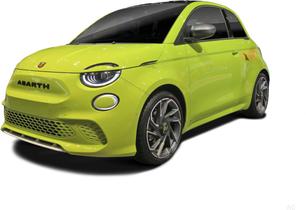
Meet the Abarth 500e, the mad-hatter sibling to the very good and all-electric Fiat 500e, and the Italian brand's first attempt at a bonafide EV hot hatch.
It's tiny, tough and – despite the lack of engine and exhaust – it burbles manically when you fire it up.
So does this mean Italy’s pint-sized, petrol-powered icon has a future in the all-electric era? Let’s go find out.
It might be the product of the brand's Chinese partnership, and in fact it might not even be a Mazda under the skin, but it definitely feels more like the Japanese brand than you might be expecting.
Does it feel quite enough like a Mazda? That's going to be up to you. But it certainly looks the part, inside and out.
Note: CarsGuide attended this event as a guest of the manufacturer with travel, accommodation and meals provided.
Note: The author, Andrew Chesterton, is a co-owner of Smart As Media, a content agency and media distribution service with a number of automotive brands among its clients. When producing content for CarsGuide, he does so in accordance with the CarsGuide Editorial Guidelines and Code of Ethics, and the views and opinions expressed in this article are solely those of the author.
It’s not perfect, but it’s everything a hot hatch should be in the electric era — engaging, exciting, and, above all, fun.
Mazda's designer is rightly proud of what he's managed to achieve here, and says every panel, and everything you touch inside, is Japanese, not Chinese.
The brand has inarguably made a very attractive SUV here. It’s sleek and modern feeling, but it has soul and character, too. Oh, and the brand insists the aerodynamic raised air curtain on the bonnet was done by Mazda first, and not the Ferrari Luce.
The black and swept-back roofline lends a sporty feel, too, while both the 19- and 21-inch alloy options suit the vibe.
But there is one view I’m not keen on, and that’s standing (or driving) directly behind it. Stay close to the car and you don’t really notice it, but take a few steps back — or follow behind one — and the rear end looks somehow blobby and out of proportion.
It's the one weak spot in an otherwise very good looking package.
The Mazda treatment has occurred in the cabin, too, and the touchpoints are suitably plush, though it is entirely lacking in tactile buttons or switches.
Pride of place instead is the massive screen, which is a whopping 26.4 inches. Honestly, though, only about half of that is of any real use. The passenger side has super limited functionality – it's limited to stuff like changing the theme of the screen or the radio station – and so it feels wasted and a bit pointless on that side of the cabin.
I’m just going to come right out and say it — I love the look of the Abarth 500e, even if the colour of our test car should be renamed Acid Trip, rather than Acid Green.
I love its perfectly proportioned, hunkered-down hot-hatch styling, the new ABARTH lettering on the body, and the new scorpion logo pasted to the side.
Basically, if you can look at the Abarth and not smile, then you need to find more fun in your life.
Inside, it’s a predictably cramped-feeling space, but it’s all nicely laid out, and the more I use them, the more I like the horizontal drive controllers that don’t eat up the little space you have with a traditional shifter. The materials are a bit hit and miss, though.
At 4850mm long and 1620mm tall, the CX-6e is longer but lower than the CX-5. But I'm 175cm, and I had no problem getting comfortable in the backseat. The leg room is huge, and I didn't find the headroom an issue at all, with clear air above me, even with the swept back roofline.
That's probably the biggest practicality perk here, with the backseat properly cavernous in that way they often are in modern EVs. There are also air vents and temperature controls for backseat riders, as well as cupholders in the middle-seat pulldown divider.
At the boot, you'll find 363 litres of storage space measured to the parcel tray (so more if you stack to the ceiling), and a total 1434 litres should you fold the second row and load all the way to the ceiling.
What you won't find, though, is a spare tyre. If you get stuck, a puncture kit is your only hope.
While I like the addition of the central screen, it’s surprisingly annoying to use — I found myself jabbing at the buttons again and again before it reacts. You need a Stephen Hawking-level intellect to figure it all out.
I was trying to turn off the Abarth Sound Generator, which I'm reliably informed is possible, but after about five minutes digging through sub-menus, I abandoned all hope.
Normally I’d spend a bit of time exploring the back seat, but frankly, once in there I didn't really feel like spending excess time back there.
The Abarth 500e is only around 3.6m long, 1.7m wide and 1.5m tall, and suffice it to say, the space is tight, and you’ll only be using the two seats in the back in an emergency, or for the smallest of kids.
The boot is pretty tiny, too, starting at 185 litres (VDA) with the rear seats up, but growing to 550L (VDA) with the split-fold rear seat lowered.
So, not much to write home about. But criticising the tiny Abarth for a lack of practicality is like criticising a horse because it can’t swim – it’s not really in its job description.
Discounting temporary drive-away offers, the Mazda CX-6e range opens at $53,990 plus on-road costs for the GT, and then climbs to $56,990 for the flagship Azami. There’s not a huge gap between those numbers, and that’s because both cars share the same battery and engine, and a lot of the same equipment.
As I write, the cheapest Tesla Model Y (the big dog in the electric SUV fight) is $58,900, so you'd have to argue Mazda has the pricing right.
The GT opens with:
Stepping up to the Azami gets you bigger 21-inch alloys and digital wing mirrors — the latter of which I don’t like.
If it was my money, you’d find me in a GT.
Ok, so bonkers thing number one: This Abarth 500e might look like it could fit in your pocket, but it is priced like a much bigger vehicle, starting at $58,900 plus on-road costs for the Turismo variant, increasing to $60,500 for the limited-edition Scorpionissima.
Outside, either trim gets 18-inch diamond-cut alloys, LED lighting all around, a fixed glass roof, the new e-latch front doors (meaning you can just push a button to open the door) from the 500e, along with some performance-focused add-ons, like a front splitter, greyed-out mirror caps, rear disc brakes and new front and rear bumper treatments.
Inside, there’s a leather-and-Alcantara steering wheel, sports seats, aluminium pedals and climate control, while on the tech front, a central 10.25-inch central screen pairs with a wireless charger and wireless phone mirroring, while a second 7.0-inch Driver Display Screen gives you all your driving data.
Oh, and there’s what the brand calls an Abarth Sound Generator, which is all kinds of crazy, but we’ll touch on that in a moment.
The difference between the Scorpionissima and the Turismo, by the way, is style led, with Abarth decals down the sides, and a certificate of authenticity confirming yours is one of 1949 vehicles sold around the world.
There’s a single front-mounted electric motor providing the go here, with a total 113.7kW and 235Nm on offer fed through the single-speed gearbox, which is enough to push the 500e from 0-100km/h in 7.0 seconds.
Happily, the way that power is delivered makes it feel faster, and that Sound Generator does a pretty good impersonation of a petrol-powered hot hatch, rising and falling with your inputs.
Delivering the range is a 78kWh LFP battery, producing a WLTP driving range of up to 484kms. The DC charge rate is capped at 194kW, which should take you from 10-80 per cent charged in 24 minutes. AC charging is up to 11kW, too.
Right, there’s one obvious downside to the Abarth experience, and that is that it is fitted with a 42kWh battery that delivers a claimed 253km of driving range.
It’s worth noting that there are three Drive Modes — Turismo, Scorpion Street and Scorpion Track — and that only the first one will deliver the maximum range, because it limits inputs to 100kW and 220Nm.
Engage the other two — I’ve had it locked in Scorpion Track, for example, which gives you all of the power and deactivates one-pedal driving — and you can expect those numbers to drop.
When it comes time to charge, the Abarth 500e is set up for 85kW DC fast charging, which should take you from flat to 80 percent charged in around 35 minutes, as well as a maximum 11kW AC charging, which takes just over four hours to get to fully charged. Or you can plug it into a regular socket, which means more like 15 hours to recharge.
One last caveat: I actually wasn't able to get it to charge, which curtailed my adventures a little bit. I tried three chargers, all of which conjured an error message on the screen, and after a quick call to the folks at Abarth it transpired that a quick software update is required.
It's not just outside and in the cabin where Mazda has worked its magic, it has done a whole bunch of stuff under the skin as well, retuning things like the steering, the suspension and the brakes, changing the tyre brand, and tweaking the damping to deliver a car that drives more like a Mazda than what you might of an electric Chinese SUV.
And it does feel more engaged from behind the wheel, but it also feels a little bit like Mazda has done the very best they can do with the package they've been given, rather than start from a clean sheet of paper.
There are some elements of the drive experience I'm not 100 per cent convinced by. One of them is a fairly busy ride, even on relatively smooth and straight roads, where it can feel a bit bouncy through the suspension. And another is the fact that it feels like it's been dialed up to 11 in places – the accelerator, for example, is super responsive, so even breathing on it can get that kind of surging feeling through the cabin, reminding you to be a little bit more gentle with your inputs.
Elsewhere, though, it is a composed and quiet package. We did a lot of driving through the city and then on flowing country roads, and it handled it all well. In fact, Melbourne is beset by potholes at the moment, and I actually targeted a few of them to see how it would handle them, and while the ride can feel busy in places, it does also soak up those really big road imperfections really well.
The two-tonne-plus kerb weight only really lets itself be known in super tight and twisty stuff. Otherwise, the CX-6e is happy just to flow along, a feeling helped by the not-stratospheric power outputs which suit the nature of this electric Mazda, too.
If you were to blindfold me, I probably wouldn't immediately guess that I was driving a Mazda, but equally, I wouldn't say I was driving some new brand of Chinese SUV either. I think it straddles those two worlds, and it does it pretty well.
Remember what I said about how just looking at the Abarth should put a smile on your face? Well, driving it paints on an even bigger grin, and it starts as soon as you fire it up.
While most EVs start silently, leaving you wondering if they're on at all, the Abarth takes a different approach, instead leaning on its sound generator, modelled on the exhaust note of the 695, to give you a throaty rumble when you fire it up. It even revs! And yes, you can turn it off (apparently), but why would you?
On the road, electric drive has actually improved the Abarth experience, I reckon, because all the harshness of the drivetrain has been ironed out, instead just leaving this smooth, potent flow of power every time you plant your right foot, with no gear changes or harsh vibrations to get in the way.
The steering is predictably direct, too, and the whole vehicle feels nimble and quick to react to your inputs.
It’s honestly the kind of car that’s fun driving anywhere, be it suburban streets or twisty backroads, and despite having a couple of options parked at my house, I found myself pulled to the Abarth for all of my trips.
Downsides? The ride is firm but comfortable on most roads, but downright uncomfortable when you clang over bumps or road imperfections. You’ll have to decide if that’s a price to high to pay, but I can live with it for the trade off. And while the cabin tech looks nice, but is fiddly and annoying to use.
Finally, the range relegates the Abarth to a second car, or for those who rarely leave the city. Which is a big ask at the price point.
There’s no ANCAP rating yet, but Mazda is hopeful of five stars. It is waiting for EuroNCAP testing, but for now the CX-6e launches as an unrated vehicle.
I do like the fact that both models share the same safety package (I don't think you should have to spend more money to be safer), which means things like:
Not all of it feels particularly Mazda, though. The driver attention monitor, for example, gets more annoying the more time you spend with it (every time you yawn it will tell you to pull over, for example), and the over-speed warning chirps you every time you stray over the limit by even a kay or two.
The Abarth 500e is fitted with six airbags, and decent suite of active safety stuff, like AEB, Lane Keep Assist, Traffic Sign Recognition, Blind Spot Warning, auto high beam and and an attention monitor. It’s all pretty subtle, though, and it didn't bing or bong at me once, which was wonderful.
It scored four stars when tested by Euro NCAP.
The CX-6e is covered by Mazda’s five-year, unlimited-kilometre warranty, which is a little underwhelming by today’s standards. The battery is covered for eight years or 160,000kms.
Service intervals are 12 months or 20,000kms, and a capped-price servicing program will see you paying a total $1860 over the first five years of ownership.
It’s an interesting ownership proposition, because the car is covered for three years or 150,000km, which is underwhelming and then some compared to the warranty offerings of its competition, but there is capped-price servicing, at $300 per visit, required every 12 months or 15,000km, which lasts 10 years.
The battery is covered for eight years or 160,000km.