What's the difference?
The Mahindra Scorpio is back – but now it has upgraded safety tech (including AEB) and it’s only available in one variant: the Z8L+.
This is a 4WD wagon with a fair bit of appeal: seven seats, a stack of standard features, a low-range transfer case, an automatic rear diff lock and its price-tag – at just under $50 grand – won’t kick you in the space near the pocket where you keep your wallet.
It hasn’t undergone any mechanical changes so is the Scorpio any good off-road?
Read on.
Zeekr is making waves in Australia at the moment but it's not because of the car you see before you.
Nope, it’s the 7X mid-size SUV that’s captured a heap of attention and a whole lot of sales. In fact, of the 1832 sales the brand has managed over the first three months of 2026, just 54 were for the X.
But that was the old X and this is the new one. With more power, more performance, faster charging and a whole heap of pretty special equipment, especially for the small SUV segment.
So, is that enough to finally put the X on the map?
It may seem like I've been harsh on this Mahindra but I reckon the Scorpio Z8L+ is a positive product for the company.
It’s nice enough to drive on-road – reasonably refined and comfortable – and it’s also a capable 4WD, with some trade-offs.
But this seven-seat wagon remains a good value-for-money prospect with the addition of more driver-assist tech onboard boosting its safety and adding to its overall appeal.
It's a good thing in a small package, this Zeekr X, and there are a lot of things I like about it. In fact, the only sticking point for me is the price. But that's all about perspective. If you see this as a newcomer Chinese brand, then yes, there are a lot of more affordable options out there. But if you see it as a premium player, it's really a more affordable version of a Volvo.
Note: The author, Andrew Chesterton, is a co-owner of Smart As Media, a content agency and media distribution service with a number of automotive brands among its clients. When producing content for CarsGuide, he does so in accordance with the CarsGuide Editorial Guidelines and Code of Ethics, and the views and opinions expressed in this article are solely those of the author.
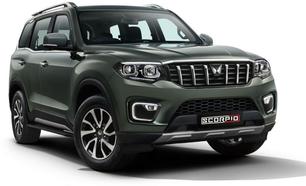
Nothing has changed on the Scorpio’s exterior. It still reminds me of the early-generation Hyundai Terracan – long bonnet, generic cabin (i.e. inoffensive, soft lines, nothing to set it apart from most other mid-sized SUVs) and, though its off-road angles check out (more about those later) it looks quite low to the ground.
So it’s all standard for a 4WD wagon.
The Scorpio also has 18-inch alloy wheels, side steps, roof rails and a sunroof.
Potential main rival GWM Tank 300 holds sway in the looks department.
The visual changes aren’t massive. This AWD version welcomes a couple of new exterior colours, including the 'Matt Khaki Green' of our test car. It also gets the two-tone black roof and there are new 20-inch alloy designs.
Elsewhere, it's the futuristic-style of design we’re used to which differentiates the X from its Volvo EX30 twin under the skin.
Inside, this is a seriously well-equipped and polished-feeling small SUV, and — unlike some of the newcomer brands to Australia — it all feels very high quality and well put together. And that includes the material choices.
I don’t even hate the fact that most of the functions are controlled via this screen, thanks to the little shortcuts glued to the home screen. I do, however, hate the fact that there’s no easy way to change the wing mirrors or shortcuts for toning down some of the safety stuff.
That aside, though, it’s a nice and high-quality feeling space.
Nothing much has changed inside the Scorpio, either, except for the addition of an electronic park brake.
The cabin has a neat layout with a 8.0-inch touchscreen multimedia system that is easy to operate but it needs to be bigger.
The synthetic leather trim looks and feels only adequately premium and if you more closely scrutinise the Scorpio’s interior it lacks the build quality, storage spaces and USB charge points of rival wagons.
Driver and front passenger get adequate room, while the second row is actually satisfactorily spacious without being capacious; behind my driving position I had more than enough leg, head and shoulder room – but, take note, I'm the size of a garden gnome. The third row is the stuff of nightmares – only joking, but it should quite rightly be limited to use by small children or your mate the jockey.
There’s one cupholder (between the driver and front passenger), door pockets are narrow and there are few other storage spaces. In this respect, the Scorpio cabin lacks general functionality.
The Scorpio also cops a mark down because of its third row. With the third-row seats in use, there’s a small rear cargo area, and those seats don’t fold flat so when they’re not in use they occupy a lot of what could be useable storage space.
As a result, the Scorpio is one of the few modern 4WDs I’d consider removing the third row every time long-distance loaded-up travel was on the cards – just so it’s a more practical touring vehicle.
Some features, such as the directional air vents, feel flimsy. Otherwise, the Scorpio’s cabin is adequately practical, rather than overly impressive.
Suffice to say, in terms of practicality, the Scorpio’s rivals have it beaten.
You know you're in a small vehicle when you can't fit two large (not those crazy American-style jumbo cups, just normal coffee-shop takeaway) coffees in the cupholders, but so it is with the Zeekr X.
The small SUV's 4432mm length, 1836mm in width and 1566mm height doesn't leave much room to spread out up front. There's ample room for driver and passenger, of course, but we are talking about a small vehicle here.
Clever storage helps to mitigate that, though, especially the super-deep storage space in the centre console and the very clever fridge that separates the driver and passenger seats.
Weirdly, though, the space doesn’t feel overly tight in the back seat. We had a massive baby seat in there, and that fit without issue. And full size humans can genuinely get pretty comfortable. I'm 175cm, and I had enough knee and headroom.
In the boot, there’s 404 litres of volume with the rear seats upright and 1247 litres with them folded flat. And it’s worth pointing out this isn’t intended to be a family car, but there’s certainly enough space for the shopping... and a pram.
As mentioned, there is only one Mahindra Scorpio now available, the Z8L+. And its price-tag is listed as from $48,990, drive-away. That’s $2000 more than its previous incarnation, the Z8L.
Standard features in the Z8L+ include a 8.0-inch touchscreen multimedia system (with wired Apple CarPlay and Android Auto), a 12-speaker Sony stereo, dual-zone climate control, front and rear parking sensors and a six-way power-adjustable driver’s seat.
New features include ventilated front seats, an electronic park brake, an auto-dimming rear view mirror and, more importantly, the Scorpio now has Level 2 Advanced Driver Assistance Systems (ADAS) detailed in the Safety section.
It also has 18-inch alloys, a full-sized steel spare, power sunroof and synthetic leather trim.
Exterior paint choices include 'Deep Forest', 'Everest White', and 'Stealth Black'. Metallic paint costs $495 and floor mats cost $125. Price as tested for this vehicle is $49,610.
Rivals such as the GWM Tank 300 and KGM Rexton offer more in this category.
This is a small SUV with a LOT of stuff. There are two trims in the Zeekr X range – the entry-level rear-drive model is $48,900, drive-away, while the all-wheel drive version we've tested is $57,900 on the road.
The obvious comparison is to the Volvo EX30, which shares its platform with the Zeekr X through both brands' Chinese parent company Geely.
As of right now, the cheapest single-motor Volvo is $56,051, drive-away in NSW, or $49,990 plus on-roads, making the Zeekr version much, much cheaper.
Anyway, outside there are 19- or 20-inch alloys, though our test car is fitted with the optional 20-inch black alloys, paired with a black-with-red-highlights interior treatment, which adds $2000 to the price.
Ours is also fitted with the electric front doors which open or close at the push of a button, and back doors that unlatch, but don’t fully open, the same way, which adds another $2000.
Both trims also get heated and cooled front seats, and heating in the rear window seats, but this AWD version also adds a massage function for front seat riders.
There’s also wireless charging, a 13-speaker Yamaha sound system and — very cool, literally — is the little drinks fridge between the front seats in the AWD variant.
Tech is handled by a 14.6-inch touchscreen with Apple CarPlay and Android Auto and there’s a head-up display for the driver.
The Mahindra Scorpio Z8L+ has a 2.2-litre four-cylinder turbo-diesel engine, producing 129kW and 400Nm and it’s matched to a six-speed automatic transmission.
This engine-and-auto combination is sluggish at times but it’s generally okay.
The Scorpio has a part-time 4WD system (with high- and low-range) and an automatic rear diff lock.
Worth noting the Scorpio must be in neutral and stationary for the driver to shift into '4WD low-range', but the driver is able to shift between '2WD' and '4WD High' on the move, up to 80km/h.
This 4WD wagon’s '4Explor' system’s drive modes include 'Normal' (2WD for sealed surfaces), 'Grass/Snow' (4WD), 'Mud & Ruts' (4WD) and 'Sand' (4WD).
The Scorpio lags behind its rivals here.
The big news here is a more powerful rear motor – meaning you get more grunt whether you opt for the rear-wheel drive or this all-wheel drive.
In rear-drive form, that boosts your outputs from 200kW to 250kW, dropping the sprint to 100km/h to 5.6 seconds. In AWD guise, your new outputs are 365kW (up from 315kW) and 573Nm, and your sprint to 100km/h falls to 3.7 seconds.
Official fuel consumption is 7.2L/100km on a combined (urban/extra-urban) cycle on regular unleaded fuel.
Actual fuel consumption on this test was 9.0L/100km, which is better than the 9.6L/100km I recorded on my last Scorpio review a couple of years ago.
The Mahindra Scorpio Z8L+ has a 57-litre fuel tank so, going by those fuel figures, you could reasonably expect a driving range of about 633km from a full tank. It also has a 16-litre Adblue tank, so keep that mind.
Remember, that 633km is a best-case scenario figure and has not had a 30-50km safe-distance buffer subtracted from it. And it doesn't take into account the fact that, when being used for touring, the Scorpio may be loaded with people, pets, camping gear and more.
Rivals such as the GWM Tank 300 easily outclass the Scorpio when it comes to off-roading and all-round touring suitability.
This is where it starts to get weird. The rear-drive Zeekr X is fitted with a 61kWh LFP battery, which can accept up to 230kW DC fast charging, taking you from 10 to 80 per cent charged in just 18 minutes. Total claimed range is 405km.
The flagship AWD, though, charges at a slower rate. It gets a 66kWh NMN battery and can only be charged at 150kW, meaning the same charge takes 30 minutes. Zeekr is promising a 415km driving range between charges.
On road the Scorpio is reasonable. It’s comfortable and refined but can be a bit firm on the suspension it has – double wishbone and coil springs at the front, live axle with multi links, Watts link and coil springs at the rear. But for a four-wheel drive wagon it's quite nice on sealed surfaces.
The powertrain is generally a reasonable set-up, although there is lag between foot-down and acceleration and it holds onto gears for too long before upshifting.
There have been no mechanical changes to this Scorpio over the previous generation and that's fine because this Mahindra’s tractable engine offers reasonable power and torque across enough of a rev range to make it an effective 4WD.
The Scorpio feels comfortable and reasonable off road. And when it’s time to tackle ‘4WD-only’ territory, it is generally capable. High- and low-range gearing is decent, and as mentioned earlier, its off-road drive modes adjust traction control, among other aspects, to best suit the terrain you’re tackling.
Its no rock-crawling beast but as a result of these mechanical and technical elements this 4WD wagon is able to drive the kind of terrain you’d reasonably expect to be able to cover in a standard off-roader that's been engineered for 4WDing across light to moderately difficult terrain.
The Scorpio’s off-road angles and ground clearance are on par with mid-size SUV rivals. Ground clearance is a listed 227mm. It feels quite low, but if you drive it with care and consideration, you should be fine.
The rear diff lock doesn't feel as clunky in its application as it has in the past. Maybe I'm more forgiving in my old age because, as I mentioned earlier, there haven't been any upgrades mechanically or in terms of off-road-specific driver-assist tech or in diff lock operation.
Hill descent control works reasonably well, although it's not the greatest, allowing for some free-wheeling before it bites.
The Scorpio’s road-oriented Bridgestone Ecopia (255/60 R18) tyres are fine on formed dirt tracks but are found wanting on anything rougher than that.
In terms of towing capacity, the Scorpio is able to tow 750kg unbraked and 2500kg braked. So if you're looking to haul anything larger than a small box trailer, camper trailer or tinny, you'll have to look elsewhere.
GVM and GCM are 2610kg and 5155kg, respectively.
Main potential rival GWM Tank 300 has it over the Scorpio in terms of off-roading prowess and, even though it’s not a towing beast, the GWM wagon is better suited to life as a touring platform than the Mahindra.
Short answer? Pretty good, with some caveats.
I'm partial to a firmer ride. I find some Chinese car companies can feel like they get their suspension bits from Captain Snooze, such is the soft, pillowy ride served up. And to be honest, it makes me a little seasick at times.
The Zeekr is not like that. It has firmness dialled into the ride equation and can feel harsh at times, but also improves the drive experience, delivering connection and engagement at the cost of some sharpness on the wrong road.
It's also faster than the model it replaces, but it's also one of those cars in which the real-life feeling doesn't quite match the on-paper promise.
This thing serves up supercar speed, but it doesn't feel like it from behind the wheel. Instead, the acceleration - especially from a rolling start - feels potent, but not biblical.
From a standing start it pauses for a moment, almost like an internal-combustion vehicle might, before delivering a quick (but not stratospheric) flow of power. None of that is a bad thing, by the way. Who wants their small SUV to accelerate like a supercar?
It's otherwise an entirely pleasant drive. The cabin is serene and quiet and it's a small car that doesn't feel like one. There's nothing light or tinny about the drive experience, instead there's a heft and quality.
The Mahindra Scorpio Z8L+ hasn't been tested by ANCAP, but as standard it has six airbags (front, side and curtain) and a 'Level 2 Advanced Driver Assistance System' which includes AEB, 'Forward Collision Warning', 'Front Vehicle Start Alert', adaptive cruise control, high-beam assist, lane departure warning, 'Smart Pilot Assist', 'Speed Limit Assist', lane keep assist and more.
It also has electronic stability control, front and rear parking sensors and a tyre pressure monitoring system.
Rivals such as the GWM Tank 300, with a full suite of driver-driver-assist tech and the maximum five-star ANCAP safety rating, have it all over this Mahindra in this category.
The Zeekr X wears a maximum five-star ANCAP safety rating, earned in 2024, which means the long list of required active safety stuff is present and accounted for, all wrapped up in what Zeekr calls its 'Intelligent Driving Assist System'.
There are five cameras, five radars and 12 sensors, which is a crazy number for a car this small.
And this is also not a car in which I was desperately trying to figure out how to deactivate any of the active safety systems – save the overzealous over-speed warning – which is a win these days, too.
There are also seven airbags, including a centre front airbag.
The Zeekr X is fitted with ISOFIX anchors on the rear outboard seats and top tether anchorages for all rear seating positions.
The Mahindra Scorpio Z8L+ has a seven-year/150,000km warranty and comes with seven years' of roadside assistance if your Scorpio is serviced by Mahindra.
The first service is scheduled at the 1500km mark, then every 12 months or 10,000km. Pricing details were not available at the time of writing.
Five years of capped price servicing is available at an average cost per visit of $471.
For reference, the GWM Tank 300 offers a seven year/unlimited km warranty, five years' of roadside assistance, and five years of capped price servicing (starting at $360 for the first service and topping out at $1035 for the sixth). Service intervals are scheduled for every 12 months or 15,000km.
At time of writing there were reportedly about 80 Mahindra dealerships spread across Australia. According to the company, "the dealer network spans all states and territories, including locations in major cities like Melbourne, Brisbane, Adelaide, and Perth". Your Scorpio can be serviced at any authorised Mahindra dealership.
Zeekr's coverage is an underwhelming five-year, unlimited-kilometres, while the drive battery is covered for eight-years or 160,000km. There’s five years' of roadside assistance thrown in, too.
Service intervals are 20,000km or 12 months, with five years' of ownership setting you back a hefty $3072; an average of $614 per workshop visit.
There are currently 16 Zeekr dealers in Australia - two of which are 'pop-up' sites rather than full retail centres.
Multiple locations in Melbourne, Sydney and Brisbane with the ACT, Adelaide and Perth also covered. Others include Geelong and the Sunshine Coast but so far you're out of luck in Tassie or the NT.