What's the difference?
Lotus - it’s one of the most iconic names in the history of automobiles and was once Great Britain’s answer to Ferrari - on the road and the Formula One circuit.
But that was a long time ago, in the 1960s and ‘70s. Since then Lotus has been on a rollercoaster ride through various owners who put in various levels of investment, resulting in various degrees of success.
But through it all, Lotus has stayed true to the ethos of company founder, Colin Chapman - ‘simplify, then add lightness.’ It’s obviously a playful saying, but it spoke to the core elements of Lotus cars, agility and driving purity.
Lotus rarely worried about big, powerful engines and instead focused on creating the best-handling cars.
That was the past, though, because Lotus Cars is now owned by Geely, the Chinese automotive giant that also counts Volvo, Polestar, Zeekr and more under its control.
Geely’s vision for Lotus is very different to what has come before, with a future focused on building electric SUVs and sedans; such as the already released Eletre and Emeya.
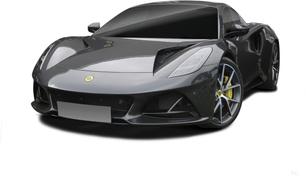
All of which is a very long way to get us to the car we’re actually testing - the MY24 Lotus Emira.
This is the last petrol-powered sports car from Lotus, and while it has been available already with a V6 engine, it has recently arrived with a Mercedes-AMG four-cylinder turbo.
Given its place in the grand scheme of things, the Emira not only needs to live up to the legacy of the iconic models that came before it, but also needs to lay the foundations for the brand’s electric future. Which is a lot of pressure for one car to carry…
Audi's A5 Coupe and Sportback have always been good looking cars. Yes, yes, beauty is in the eye of the beholder and all that, but seriously, just look at one and tell me it's not handsome.
Happily, the just-updated RS5 doesn't just build on the looks of its more sedate sibling, but on the performance, too, adding near-supercar speed to those supermodel looks.
Sounds like a pretty good match, right? Let's find out, shall we?
If this really is the final petrol-powered Lotus sports car then it’s a sad day for fans of the brand and its history. But it’s also worthy of celebration because they have made a car that is genuinely impressive.
It may not be perfect, and it will have to fight hard to lure buyers away from Porsche, BMW and co. but for anyone who enjoys a dynamic, engaging and incredibly fun sports car the Emira should be on your short-list.
Alternatively, if you’ve always dreamed of buying a traditional Lotus sports car and haven’t got around to it until now, this is your last chance so don’t wait too long.
Good looking, good to drive, and good to simply sit in, the Audi RS5 range ticks plenty of premium boxes. Whether you can live with the practicality pitfalls of the Coupe is up to you, but if you can't, might I suggest taking a wander over to our RS4 Avant review?
As mentioned earlier, the Emira is meant to be a bridge between Lotus’ past and its future - combining elements of its previous sports cars while also laying the visual tone for future models.
The design does a good job of that, because there’s clearly a link to the Exige and Evora of the recent past, but it also takes heavy influence from the limited-run Evija hypercar.
In turn, this new design language will spread out across the all-new electric models, including the Eletre SUV and Emeya sports sedan.
The styling does a good job of making the Emira look and feel like a premium sports car, without the need for any flashy wings or similar. It’s a simple, compact but stylish sports car.
This trend carries over to the cabin, with the more premium finish with the carpets, leather and good quality switchgear, as well as the digital instrument display and 10.2-inch multimedia touchscreen. Gone are the days of a Lotus having a minimalist, exposed aluminium interior with only the bare necessities. This is a proper premium sports car.
I defy anyone to describe the RS5, and especially the Coupe, as anything but stunning. Seriously, the near perfect proportions and swept-back styling make it look fast even when it's parked.
Up front, there's a new-look black-mesh grille that's been given a 3D effect, like it juts out over the road in front it, while the thing headlights have been carved back into the body work like they're been windswept under hard acceleration.
The 20-inch darkened alloys fill the arches, too, with a sharp body crease that runs from the front headlight all the way back to the bulging shoulder lines above the rear tyres accentuating the curves.
Inside, the RS5 is a sea of black Nappa leather and sporty touches, and we particularly like the chunky, flat-bottomed steering wheel, which both looks - and feels - great.
While it’s a more luxurious Lotus, it remains a compact and impractical sports car - and that’s very much on brand. In terms of storage inside the cabin, there are two cupholders and a small lidded console box, but the size of the cabin means everything is quite narrow and feels a little tight for space.
There is a decent sized, although not very deep, shelf behind the seats, so you can put smaller, softer items there and hope they don’t slide around too much.
In terms of actual luggage space, there isn’t much. There’s a small boot behind the engine, and while deep, it’s pretty narrow so you’ll only get soft bags in there if you plan on taking your Emira on a road trip.
We only tested the Coupe, and I can tell you that the practicality perks on offer largely depend on where you're sitting.
Up front, you're spoiled for room in the two-door Coupe, with the two spacious seats separated by a sizeable centre console that's also home to two cupholders and a variety of cubbies, with extra bottle storage in each of the front doors.
The back seat, though, is a little, or a lot, tighter, with come acrobatics required to even climb into it, given the Coupe only has two doors. The Sportback offers two more doors, which will surely make the process a little easier.
The Coupe measures 4723mm in length, 1866mm in width and 1372mm in height, and will deliver a decent 410 litres in luggage space in the boot. The Sportback measures in at 4783mm, 1866mm and 1399mm, and boosts your luggage space to 465 litres.
Either vehicle has your tech needs sorted, with an abundance of USB and power outlets serving both front and backseat riders.
In terms of size and price, the Emira lines up almost directly against the Porsche 718 Cayman, which is a formidable adversary, but also the likes of the BMW M4. Notably, it’s significantly cheaper than anything offered by the likes of Ferrari, Maserati and McLaren.
The MY24 Emira range begins at $155,900, before on-road costs, for the entry-level model but stretches up to just over $206,000 for the i4 First Edition we’re driving here.
The Emira has been designed as a more premium and luxurious sports car compared to the stripped down and basic models of the recent past, such as the Elise and Exige, so it gets a range of items not previously seen on many Lotus models - such as carpeted floors and the choice of either Nappa leather or Alcantara trim.
Also included are LED headlights, climate control, keyless ignition, cruise control, rear parking sensors, a premium sound system and a 12.3-inch digital dashboard.
It's worth noting the MY25 Emira line-up was detailed earlier this month. You can read all about it, including pricing and specification, here.
It's available as a Coupe or a Sportback, but either way, the RS5 commands a $150,900 asking price. And that's not chump change, but Audi's performance model does come with a lot of bang for those bucks.
We'll get to the engine and safety stuff in a moment, but in terms of fruit, you'll find 20-inch alloys outside, as well sportier RS body styling, sport brakes, Matrix LED headlights, keyless entry and push-button start and heated mirrors, a sunroof and privacy glass. Inside, there's Nappa leather seats (heated in the front), illuminated door sills, stainless steel pedals and ambient interior lighting.
The tech stuff is handled by a new 10.1-inch central touchscreen that gets both Apple CarPlay and Android Auto, as well as Audi's Virtual Cockpit, which replaces the dials in the driver's binnacle with a digital screen. There's also wireless phone charging, and a killer 19-speaker Bang and Olufsen sound system.
The MY24 Emria first arrived in Australia with the same Toyota-built 3.5-litre V6 engine Lotus had used in recent years in the likes of the Exige and Evora. However, this new AMG-built four-cylinder provides a fresh choice.
Importantly, while built by Mercedes-AMG, the tuning and calibration is unique to Lotus (but we’ll discuss that in detail later).
That means the 2.0-litre unit is tuned to make 268kW/430Nm, which is less potent than AMG offers in its 310kW/500Nm A45 hot hatch, although a more potent version of the four-pot Emira has been confirmed for MY25.
The engine is paired with an eight-speed dual-clutch auto transmission, which you can either leave in automatic mode or change gear manually using the F1-style paddles on the steering wheel.
Its a terrific engine, this - a twin-turbo 2.9-litre six-cylinder TFSI that will deliver 331kW at 5700rpm and 600Nm at 1900rpm, sending it thundering to all four wheels (because quattro) via an eight-speed tiptronic automatic.
That's enough, says Audi, to deliver a 0-100km/h sprint time of 3.9 seconds in the Coupe and the Sportback. Which is very, very quick.
Given the Emira is a sports car, the four-cylinder turbo is tuned for performance over economy and that’s reflected in an 10.1L/100km return on the combined (urban/extra-urban) cycle. That’s not too bad for a sports car, but is relatively thirsty given the engine capacity and the overall size of the car.
The Emira is equipped with a 60-litre fuel tank, so it has a driving range of approximately 594km.
The RS5 Coupe will sip a claimed 9.4L/100km on the combined cycle, and emit a claimed 208g/km of Co2. It's fitted with a 58-litre fuel tank.
The RS5 Coupe will the same 9.4L/100km, but emit 209g/km of Co2.
Just to be clear right up front, the score for this section is heavily biased towards the car's dynamic attributes, because frankly the Emira can be hard to live with at times.
At urban speeds the powertrain feels like a dog straining at its leash, which can result in some awkward moments.
For example, there were multiple instances where the gearbox refused to change out of second gear when exiting a roundabout, letting the engine rev quite hard and likely annoying my neighbours.
Some of the gear changes can be clunky too, not slotting as sweetly as they should on a sports car costing in excess of $200K.
However, you forget all that when you get the Emira onto a stretch of twisty, winding open road (preferably smooth tarmac) and move it from the 'Tour' to 'Sports' mode. The car comes alive, revving hard, shifting with precision and feeling like a puppy running through a field in pure ecstasy.
Like the great cars to come before it from Lotus, the Emira is in its element carving through corners. The steering is incredibly accurate, direct and responsive - as good as any sports car I’ve driven in recent memory. The chassis responds to those inputs with immediacy, too, feeling nimble, agile and engaging.
This is Lotus at its best.
With our time behind the wheel limited to the RS5 Coupe, we can only really report on how the two-door feels on the road, but given the prodigious power on offer, it's unlikely the addition of two doors is going to make the Sportback any slower.
In short, the RS5 is thunderously fast, collecting speed with utter nonchalance thanks to this thick and endless-feeling supply of power unleashed whenever you plant your right foot.
It makes even the most ham-fisted attempts at cornering feel fast as lightning, with the power flow able to make up for every slow entry and exit by simply piling on pace between bends.
But that's what you expect from an RS model, right? So perhaps more impressive is the RS5's ability to transform back into a relatively sedate urban cruiser when the red mist subsides. The suspension is firm, especially over rough road surfaces, and you do need to be a little careful with the accelerator to avoid that lurching feeling at every green light, but driven calmly, it doubles as a everyday car quite nicely.
Like in the RS4, we did find the gearbox felt a little quick to change at pace, shifting up or down at strange moments on the way into or out of corners, but you can reclaim control via the paddle shifters.
Sports cars are not typically beacons of safety, not that they’re dangerous but the priority is speed, not complex and often weighty safety technology. It’s part of the reason these types of cars are rarely crash tested by the authorities, as is the case of the Emira.
But this more modern and luxury focused Lotus comes with a raft of safety items including adaptive cruise control, an anti-collision system (Lotus-speak for AEB), fatigue alert, road sign information, a vehicle speed limiter, lane departure warning, rear cross-traffic alert and lane change assist.
The safety story begins with six (Coupe) or eight (Sportback), and the usual suite of braking and traction aids, but then climbs into the tech-savvy stuff from there.
You get a 360-degree camera, adaptive cruise with stop and go, active lane assist, front and rear parking sensors, AEB with pedestrian detection, rear cross-traffic alert, an exit warning system, blind-spot monitoring and turn assist, which monitors oncoming traffic when making a turn.
It's a lot of gear, and it all contributes to Audi's five-star ANCAP safety rating, awarded in 2017 to the A5 range.
Lotus Australia offers a three year warranty, which is in line with Porsche's cover, so that’s competitive in the sports car market.
However, the brand does not offer capped price servicing, so you’ll need to discuss with your local dealer how much regular maintenance will cost you. The service intervals are every 12 months/15,000km.
Audi vehicles are covered by a three-year, unlimited-kilometre warranty, which is feeling more than a little underdone when compared to some competitors.
Services are due every 12 months or 15,000kms, and Audi allows you to pre-pay your service costs for the first five years, at a cost of $3,050.