What's the difference?
Far from just another mid-size SUV offering, the Lexus RZ bares the burden of much of the Japanese premium brand’s future.
While Lexus has been a trailblazer in the past, offering a wide range of hybrid luxury vehicles before every other brand, it’s a little late to the party with this car; it’s first ground-up electric vehicle.
The question is, has all this extra time given Lexus the luxury of perspective, or is it too little too late for the RZ to make a meaningful impact on the mid-size luxury SUV space? Stick with us as we find out.
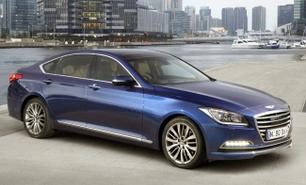
Anybody who doubts that Hyundai is gunning for the number one in the world has rocks in their head. Big heavy ones. Korean companies do not settle for anything less than number one. The second-generation Genesis (our first taste here in the Antipodes as the gen-one had its steering wheel on the wrong side) is proof.
What's different about Hyundai's unstoppable rise is the way they're going about it. They've always done their own thing in Korea, reinventing themselves time and again when they strayed off the beaten path.
The Genesis is a gamble for a Korean company in foreign markets whose default setting for luxury is marked, Britain or Germany. If Hyundai gets the Genesis wrong there will be howls of derision, or at best patronising pats on the back - "Nice try, you'll get there one day". But if they get it right...
There are sportier EVs out there, there are more tech-savvy EVs out there, but few adhere to the luxury promise quite like the Lexus RZ, particularly at its price point.
It’s this primary characteristic which sets the RZ apart from the pack for me, and while it might not be for every first-time EV adopter, it nails the brief for the existing Lexus buyer while providing a ‘luxurious’ alternative to many of its firmer, sportier and less approachable rivals.
The Genesis is not quite a match for cars twice its price but it makes you think what's possible. It doesn't have the dynamic brilliance of a BMW or the self-assured faultless execution of a Mercedes. Lexus ought to be worried, though - why would you have an LS when you could have this? The only answer is 'badge'.
The Genesis is an epoch-making car for the Korean manufacturer. As the company has got better, there are fewer excuses for overlooking it. While the Genesis is pitched into a shrinking market, it's not really meant for the average i30 buyer to buy, but to see.
It's bristling with tech and is not only a halo car but a shot across the bows of both Lexus and the Germans. Attached to that shot is a note: "We're coming for you." In other words, Hyundai got it right.
I don’t think the RZ will be for everyone, but it has some very cool details and interesting angles, regardless.
It maintains the signature Lexus face, but this time has sunk the ‘spindle’ pattern deep into its plastic grille, making for a clean nose, but perhaps one which is a little too blank for some. No doubt it needs this smooth look to maintain as low a drag coefficient as possible.
Closer inspection reveals clever detailing, like the way the spindle pattern fades into the corners, and the whole look is lifted by how wide the car is.
Sports Luxury versions are lifted further with contrast panels accentuating the width and shape.
My favourite angle of the RZ is the rear three-quarter. The coupe window line, split spoiler design, and cool strip tail-light, complete with three-dimensional Lexus branding, looks as contemporary as it gets, not to mention sportier and more intriguing than even some of its rivals.
Savvy EV buyers might know the RZ shares its platform and overall shape with the upcoming Toyota bZ4X and its Subaru Solterra spin-off, and while those two cars look near-identical from the outside, Lexus has clearly had a lot more creative licence with the design of its take on the formula.
Inside is perhaps where this car feels the most Lexus, however. The interior design is almost entirely unrecognisable when compared to the bZ4X, with Lexus going to town with its curvy, intricate design language, and plush detailing throughout.
Padded synthetic leather trims, which match the seats, adorn the doors, which are swapped out for ultrasuede in the case of the higher-grade Sports Luxury.
And Lexus has opted for a deep-set digital dash and massive touchscreen in place of the small column-mounted screen and tablet multimedia of its Toyota and Subaru relations.
Everywhere you look, though, there’s attention to detail, with interesting material choices from the wacky carpet to the detailing on the centre console and in the door cards. It’s unmistakably Lexus, and feels premium.
The Genesis is like no other Hyundai. For a start, it's gigantic - it looks easily as big as a BMW 7 Series (it isn't) with the road presence to match. There's a lot of BMW from most directions, but with a sharper approach to the creasing and character of the sheet metal.
Towards the rear it's more BMW 6 Series Gran Coupe and is all the better for it. The style is understated and technocratic.
Inside is also very Germanic, but with a bit more of a Lexus feel
The big wheels from the Ultimate pack help make it look lower and sleeker, too.
Inside is also very Germanic, but with a bit more of a Lexus feel. Our car had the lighter leather which meant that the wood and the metal materials didn't necessarily work well together.
The interior is expertly put together and feels like it will last forever.
The only jarring moment is the gear selector is shared with our long-term Hyundai i30 - it looked a bit cheap in what is otherwise a beautifully executed cabin - it needs more heft.
On Australian-delivered cars there is just one Hyundai badge, sitting proudly on the boot - you get the feeling this was debated long and hard and when the decision was made to go for it, a big one was chosen.
However, the winged Genesis branding takes pride of place everywhere else. When you approach the car at night and the puddle lamps come on, the Genesis logo is projected on to the ground, crisp and clear.
The RZ arrives in Australia in just one 450e all-wheel drive variant, with two trim levels to pick from. Either the entry-point Luxury grade ($123,000, before on-road costs), or the top-spec Sports Luxury ($135,000, before on-roads).
It’s entering a hot market, which every luxury brand wants a slice of. Rivals include the outgoing Audi e-tron, ($138,323) which is set to be replaced by the presumably more expensive Q8 e-tron imminently, base BMW iX ($135,900), Genesis GV70 Electrified ($127,800) or the smaller GV60 ($107,700).
Soon it will also have to duke it out with the Polestar 3 which is higher performance, starting from $132,900, and there’s always the spectre of the Tesla Model Y, which is a comparative bargain at $98,415 for the go-fast Performance version.
In terms of premium-badged rivals, though, it’s at the lower end of the price-scale, following the Lexus model of providing relative value in its space.
The entry-level Luxury grade comes standard with 18-inch alloy wheels, LED headlights and tail-lights, a massive 14.0-inch multimedia touchscreen with Apple CarPlay and Android Auto connectivity, built-in sat-nav, connected services, wireless charging, a digital instrument cluster, synthetic leather interior trim, dual-zone climate control, push-start ignition with keyless entry, a 360-degree parking camera, a 10-speaker premium audio system, and the full safety suite. More on that later.
For the extra spend to get into the Sports Luxury grade, the wheels are upgraded to massive 20-inch units, then you can count on adaptive headlights, acoustic glass, contrast styling panels on the exterior (with a two-tone paint option), ‘ultrasuede’ interior trim with ‘Tsuyasumi’ ornamentation, interior LED ambient lighting, an electrochromatic sunroof, ventilated and heated front seats with infra-red ambient heating for front passengers, rear outboard heated seats, memory driver’s seat, a head-up display, touch-sensitive wheel controls, and a 13-speaker Mark Levinson audio system.
Some of these features are very cool. The sunroof and ultrasuede interior trim options with the detailed ornamentation, and even wacky carpet trim in the Sports Luxury grade, are enough to take you aback, helping this Lexus make its mark on the luxury mid-size EV market.
Will it be enough to offset some notable omissions like the lack of vehicle-to-load systems or household power outlets on the interior?
This will depend on the buyer, but I think objectively this Lexus is playing into its existing loyal customer base more than it is the new-age tech savvy buyer.
The only way to describe the Genesis' pricing is aggressive - kicking off at $60,000, it's the most expensive Hyundai money can buy, but with a spec list like this, you won't feel at all short-changed.
Your sixty large buys you a huge cabin with a seventeen speaker stereo, auto headlights and wipers, LED ambient lighting inside and out, dual-zone climate control, keyless entry and start, powered front seats which are heated and cooled, satnav, front and rear parking sensors, and plenty of other bits and pieces.
Our car had the $22,000 Ultimate package, adding 19-inch alloys, blind spot sensor, front and side cameras, around-view display, real leather, more adjustments for the driver's seat, ventilated seats in the front, heated rear seats, panoramic glass sunroof, acoustic glass, heads-up display, powered bootlid and LED foglamps.
The Genesis is like no other Hyundai
You can have a lot of the more useful features in the $11,000 Sensory Pack. It's a good middle ground that, for example, features the excellent heads-up display.
The 9.2-inch screen splits the asymmetric air-conditioning vents. The software is unique to the Genesis and a huge leap forward over the rest of the Hyundai range - classy, smooth graphics, a good responsive screen.
You control the seventeen speaker stereo from here, which kicks out a rich sound and an impressive Bluetooth performance - rear seat passengers can also run the stereo from their armrest. The satnav is detailed and chatty, while the excellent heads-up display shows a configurable information set in strong, clear graphics.
The RZ is only available with one powertrain choice, a dual-motor all-wheel drive set-up dubbed the 450e.
Unlike some systems, this dual-motor arrangement is far from symmetrical, with by far the majority of power sent to the front wheels.
Total system output is rated at 230kW/435Nm, consisting of 150kW/266Nm from the front, and just 80kW/169Nm from the rear.
Interestingly, this is significantly more punch than the Toyota bZ4X, further setting this Lexus apart.
The RZ uses a clever torque-vectoring system to make the most of this set-up when cornering, and debuts some interesting new tech like computer-balanced brakes to keep the car level under heavy deceleration as well as new adaptive pistons in the suspension to help the car adjust to different surfaces.
The Genesis is powered by Hyundai's own 3.8-litre V6 developing 232kW and 397Nm, mated to Hyundai's eight-speed automatic transmission.
Despite weighing just under two tonnes, the Genesis completes the dash to 100km/h in 6.5 seconds.
It has a claimed 11.2L/100km on the combined cycle. In what must be a first, we got below that, averaging 10.8L/100km over two weeks. And that's without stop-start fuel-saving to blunt the effect of lot of city driving.
The Genesis is not going to tempt you into a track day, even with rear wheel drive
We'd still like to try the V8 - only available in left-hand drive markets - though.
Usually EVs, even premium ones, have a particular formula to the way they drive.
Hefty, firm, and usually break-neck fast is the default position, with seemingly every manufacturer trying to remind buyers they too can be as fast as a Tesla.
However, the RZ breaks with the premium pack, offering a car which leans more into the luxury promise than maybe any other right now.
It’s a relatively serene space in the cabin, with notably limited wind or tyre noise, and a gentle steering tune which makes the car effortless to pivot into corners.
This combines with the clever torque vectoring system, and lenient suspension to have the RZ simply wafting through corners.
The ride is interesting in that it is so far from the norm for the EV space. It is the opposite of firm and aggressive, with the car gently leaning into bends and barely feeling the texture of the road.
Small, rough bumps and high-frequency corrugations are dispatched with ease, the car simply floating over them, even when loaded up in corners, although, on the flip-side, longer undulations have it bouncing up and down a bit after-the-fact, perhaps a consequence of the doughy ride having to deal with the well-hidden weight of its batteries.
Despite efforts to deal with body-roll, there’s a notable amount, a consequence of the forgiving ride.
While these characteristics make the RZ a far more luxurious proposition on the road than many of its rivals, it is notable in how much it lacks a feel for the road.
The steering is so electrically augmented it feels almost simulated, no matter which drive mode you select, and little of the road surface is communicated well to the driver.
Even the brake pedal feels lifeless and distant, as it combines regenerative braking with the actual discs in a purely digitised progression.
The steering, acceleration and regenerative braking are all heavily altered by drive mode, with the car lacking a single-pedal drive setting, instead being fairly hands-off with the system.
Some, looking for a particular EV drive experience, may be happy with this, others will appreciate how ‘normal’ the RZ feels in this department.
While the car feels disconnected in a sense, there’s no doubt the brakes work, the steering is effective, and it is deceptively quick.
Its soft character might have you assuming it's slow, but a hot-hatch baiting 5.3 second 0-100km/h sprint time seems alarmingly achievable in the Sport mode.
One thing is for sure - everything described here is deliberate. Lexus has made a choice to go against the grain and do something different when it comes to the way this mid-size EV feels.
To many existing Lexus loyalists, there will be a lot which is familiar, while providing a slice of the future, yet it might be far from the most engaging EV to drive. It certainly provides a gentler and more luxurious - if a little lifeless - alternative to the sporty status quo.
At five metres long, with a ride firmly pitched in the luxury camp, the Genesis is not going to tempt you into a track day, even with rear wheel drive.
Blindfold your passengers and swap them between a Lexus, a BMW and a Genesis and the overwhelming impression they'll get is one of incredible smoothness.
If you're wanting sudden movements, this isn't the car for you
Sitting in the back of the Genesis, it's easily as good as the German and luxury Japanese competition. The seats are hugely comfortable, there's ample head, leg and shoulder room and it feels lot nicer than anything within a bull's roar of its price.
No matter where you sit, it's an incredibly quiet car. The engine is a distant whoosh, the tyre noise muted and there's almost no wind or ambient noise. It's supremely comfortable and the excellent stereo will wash away what little noise does invade.
It certainly feels its weight from the driver's seat, with a competent, soft turn-in, but if you're wanting sudden movements, this isn't the car for you.
The Genesis is an epoch-making car for the Korean manufacturer
On fast flowing roads you can have some fun, but things will get floaty and that will quickly kill that fun. The ride and isolation from the rest of the world is completely worth it.
Safety comes standard on the Lexus RZ, with even the base Luxury trim-level scoring high-speed radar-based auto emergency braking (which detects vulnerable road users at night), lane keep assist (with lane departure warning), blind-spot monitoring (with rear cross-traffic alert), as well as driver attention alert, adaptive cruise control, and a tyre-pressure monitoring system as standard.
The only item reserved for the higher-grade Sports Luxury is the advanced adaptive high-beam suite.
The RZ also scores an impressive complement of 10 airbags, as well as the most recent crash structures in its fresh e-TNGA frame, however the EV mid-sizer is yet to be rated by either ANCAP or Euro NCAP.
Nine airbags, traction and stability control, lane departure warning, forward collision control, ABS, brake force assist and distribution and traction and stability control bring the ANCAP count to five stars.
The Sensory and Ultimate packs add blind spot sensors and around view cameras.