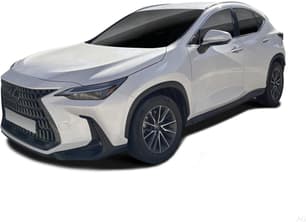
What's the difference?
As far as clichés go, attempting to make “a silk purse from a sow’s ear” couldn’t be more apt than when contemplating the original NX of 2014.
What was essentially the Lexus-fication of the vocal, fidgety and thirsty old Toyota RAV4 may have worked a treat sales-wise, but proved trickier when assessed against the lens of a BMW X3, Audi Q5 and Volvo XC60 rival.
The earliest NX just wasn’t refined enough.
This was especially true following the reborn RAV4 arrival in 2019, proving to be embarrassingly more competent – even compared to most luxury midsized SUV alternatives.
Now, finally, the NX redesign has followed suit, moving on to a variation of the Toyota’s stronger, quieter and more advanced TNGA architecture (dubbed GA-K) as a starting base.
Speaking of which, let’s dive straight into the least-expensive version, the NX 250 Luxury 2WD auto, to find out if the most popular Lexus model in Australia has finally found its mojo.
The Subaru Outback holds a special place in the hearts of adventurers everywhere. It’s long been regarded by its fans as a genuine mix of decent on-road manners, family-friendly practicality and sound off-road capability. Just right for light-duty off-roading.
Now, Subaru claims, it has made the Outback even better and a new off-road-focussed variant called the all-wheel-drive Wilderness now sits near the top of the line-up.
The Wilderness is equipped with a 2.4-litre turbo-petrol, four-cylinder, horizontally-opposed 'boxer' engine, 240mm of ground clearance, improved approach/departure angles and electronically controlled dampers.
But is this new Outback all it’s cracked up to be? Read on.
So, is the cheapest Lexus NX the grade you’d skip? Depends on where you live and drive.
If you’re urban based and bound, save up a bit more and go the petrol-electric hybrid; otherwise, out on country roads especially, the spirited and sporty NX 250 is more than up to the task.
Either way, though, the latest NX is finally fit to fight the other premium brands’ medium SUV efforts, head on and held up high. Welcome to big mid league, Lexus.
Ignore or underestimate at your own peril, everybody else.
If you’re a Subaru fan chances are the Wilderness will float your boat. It’s an appealing mix of on-road refinement and more than satisfactory capability on bush tracks.
The Wilderness engine-and-CVT combination helps to make this Subaru well refined and highly responsive on-road and it benefits from punchier low-rev output in off-road scenarios.
Subaru has made a habit of producing practical vehicles and this new addition to the upgraded Outback line-up doesn’t disappoint.
Does anyone need a Wilderness version of the Outback? Probably not. Will anyone want a Wilderness edition Outback? I reckon a lot of Outback fans would fall over themselves to get their hands on one of these.
Lexus says that nearly one million of the original-shape NX versions were produced, so there’s no way that the brand was going to mess with the styling of the latest version. Which explains why picking new from old is a serious case of trainspotting.
But that migration to the TNGA GA-K platform has brought some benefits from a design point of view. The styling now breathes more, especially when viewed rear-on, thanks to a body that’s 20mm longer and wider, as well as a handy 30mm wheelbase stretch.
Drilling into the details, the headlights have an LED ‘tick’ motif, the corporate ‘spindle’ grille isn’t as in your face and the rear gains ‘LEXUS’ lettering spelled out, probably to accentuate stance.
Crisp and elegant, the design works well. This is a handsome machine. Looks expensive too.
The most obvious design tweaks include a glare-reducing bonnet decal, the new grille and bumper, substantial durable plastic cladding on each side, and some tailgate trim and lighting variations away from standard Outbacks.
There’s gold edging here and there around the Wilderness exterior (fog lights etc) and it’s eye-catching, but this vehicle attracts some bemused looks.
While it’s based on the mid-spec Outback AWD Premium, the Wilderness stands apart because of its taller stance (with an extra 20mm ground clearance over standard Outbacks) and chunkier overall look.
For numbers nerds, the Wilderness is 4880mm long (with a 2745mm wheelbase), 1880mm wide, 1735mm high and has a listed kerb weight of 1781kg.
Its wheel tracks (1575mm front / 1600mm rear) are 10mm narrower in both cases than those of standard Outbacks.
Inside, the Wilderness has water-repellent upholstery with embossed Wilderness logos on the headrests, Wilderness tags on the seats, orange stitching throughout and all-weather floor mats.
All in all, it looks stylish, inside and out, but it’s also ready to play in the dirt.
Though distinctively attractive and obviously well built, the previous NX was quite small for a medium-sized SUV inside, with tight rear legroom.
It also had a nonsense mouse-operated multimedia controller that was fiddly, annoying and counter-intuitive to use.
Thankfully, the new-from-the-ground-up design has rectified both these issues in the latest version.
Now the NX is properly medium-sized, and so easier to get in and out of, as well as palpably roomier front and rear. Employing the RAV4’s TNGA architecture results in a lower and roomier cabin, that benefits all in terms of packaging.
Being the entry-level 250, you might not expect much in terms of interior presentation or style, but Lexus Australia’s product planners have been deft in specifying this grade to make it look luxurious and on-brand.
Body-hugging bolstered perforated leather front bucket seats, in our example finished in a black/cream hue with orange stitching, belie the base-grade reality of the 250. This scheme is also found on the centre console, armrest and door cards, lifting the ambience no end. It looks, feels and smells expensive in here.
The only thing that seems to be missing is a smartphone charger. That's part of a $3K option pack that also throws in a sunroof and foot-operated actuation for the electric tailgate. Not bad.
Then there’s the driving position, with an electrically-operated reach/height adjustable steering column and a multi-configurable seat to help find the right spot. All-round vision is also better than you might expect, no doubt helped out by huge exterior mirrors and a large reversing camera screen.
Typical Lexus-style classy digital instrumentation, directly ahead, are positioned in such a way that you’re not really aware of/missing the available head-up display in higher grades. Though it takes a quick amount of familiarisation, all the info there is ultimately clear and easy to take in.
The same applies to the now touch-only centre screen, which has a slick rich finish and tactility, and also encompasses the climate-control display.
Along with banishing the dreaded mouse pad, kudos to Lexus for also installing physical switches or buttons for the most-used items – audio volume, temperature setting, and front and rear window demisting.
These and the simplified sub-screen menus for navigation, wireless telephony/audio streaming, vehicle diagnoses and vehicle settings amongst other features, is quickly second-nature in their accessibility and operation. And the sound system quality is great too.
One of our very few complaints concerns the Apple CarPlay experience, which seems needlessly complicated to return to if you temporarily switch away from it to the NX’s native multimedia system. Confusing and distracting.
Never mind. There are minivan levels of practicality at work here, from the superb and easily manipulated ventilation system to the seemingly endless storage options, that include bottle holder capability in the doors, a clever lid operation for the huge centre console and properly engineered cupholders.
Lovely lush materials of satisfying quality are further plus points.
We’re also fans of the NX’s electric door opening system with a failsafe handle, meaning you can grasp the door handle inside or out and a solenoid activated by a press in of a thumb releases the door quickly and naturally in a single action; it feels… upmarket and ergonomic once accustomed to.
Accessing the back seat is easy due to the latest model’s larger proportions. Much of the same applies out back as the front seat area in terms of quality of finish and attention to detail. Sculptured and enveloping backrests (adjustable for two reclining positions), a well-padded cushion and more-than-sufficient space for two burly adults or three smaller people means this NX is more family friendly than the swoopy exterior styling suggests.
We’re also happy to find large people-facing air vents, two USB and a 12V outlets, one-touch electric windows with that premium-car soft close mechanism, overhead LED lights, grab handles, centre armrest with cupholders, map storage behind both front seats, coat hooks and good lines of vision further enhance the appealing and comfortable back seat environment. It feels like a Lexus should.
Further back than that, after releasing the electric tailgate via either an interior button or exterior switch, you’ll find that the boot has a fairly high loading lip, but then offsets this with a long, flat floor with matching levels of appropriate-quality finishes. Another 12V plug and two bag hooks are included, along with ample lighting and tie-down hooks. There’s also a hidden deep storage compartment underneath the floor, due to the discontinuation of a spare wheel (due to runflat tyres, remember).
Capacity is rated at a fairly ordinary 520 litres, extending to 1411L with the split/fold backrests folded. You’d expect a remote actuation for the latter like Mazda wagons have had for decades, but none is found at this price point.
Note there is no solid cargo cover either, just a flexible/flimsy fabric item that’s foldable and easily stored.
Overall, though, despite of its base positioning within the NX hierarchy, the 250's interior experience is in keeping with the brand's image.
In terms of practicality the Wilderness doesn’t disappoint. The cabin has a neat and familiar layout with enough soft-touch surfaces, storage space, cupholders and charge points to satisfy most drivers and passengers.
The 12.1-inch horizontal multi-media touchscreen is easy enough to operate, with many cabin functions able to be controlled via on-screen buttons, but some functions (including air-conditioning and auto vehicle hold) can also be adjusted via physical off-screen controls, which is handy.
The seats offer improved lumbar and pelvic support relative to previous Outbacks, there’s more headroom for the driver and passengers and Subaru reckons the rear cargo area opening is more than 50mm higher than standard for easier loading and unloading of gear into the rear.
According to Subaru the Wilderness upholstery is “hydrophobic synthetic leather with an anti-slip embossed finish” which looks good and seems durable enough for a lifetime of weekend road trips with some dirt inadvertently tracked inside for good measure.
Cargo volume is a listed 530 litres (with the rear seat up and in use), and that expands to 1211 litres when the 60/40 split-folding rear seat is down.
You can conceal whatever is in the rear cargo area with the new foldable fabric cargo cover which can be used as a tonneau-style cover, cargo partition, or even to protect the rear load lip. Its rear-most fixing points attach to the inner walls with magnets.
The cargo area has a 12-volt outlet, two shopping bag hooks on each wall, four tie-down points on the floor and a full-size spare wheel stored under that floor.
The Wilderness has new high-strength roof rails which are claimed to offer a static load capacity of 363kg (increased from 318kg).
Subaru has made a habit of producing practical vehicles and this new Outback doesn’t disappoint.
Priced from $60,800 (all prices are before on-road costs), NX 250 Luxury equipment levels are – in a word – generous for an entry-level proposition. In fact, we thought our test vehicle arrived jam-packed with options, but what’s in the photos is standard fare.
There’s no scrimping on safety, for example, with eight airbags, autonomous emergency braking (AEB), front and rear cross-traffic alert, blind-spot monitor, lane-keep and steering assist, adaptive cruise control, LED lights with auto high beams and Safe Exit Assist – which won’t allow doors to open if vehicles or cyclists are whizzing by and in danger of being struck. Clever.
The NX 250 also scores keyless entry/start, a 9.8-inch touchscreen featuring ‘Hey, Lexus’ voice control, sat-nav, Apple CarPlay/Android Auto, digital radio, powered steering column adjustability, electric front seats with heating, dual-zone climate control, a powered tailgate and 18-inch alloys running on 235/50 runflat tyres (so no spare wheels whatsoever).
About the only thing we’d like is a smartphone charger, though that’s available as part of a $3000 Enhancement Pack 1, which also throws in a sunroof and kick-sensor activation for that powered tailgate. All for under $64K. Job done.
This is provocative pricing. A base Genesis GV70 RWD starts at $68,500, a Q5 35 TDI diesel FWD costs from $68,350 or nearly $73,000 for the quattro petrol AWD – as does XC60 Plus B5 AWD, an X3 sDrive20i RWD is $76,600 and a GLC 200 RWD is now from $77,305.
Even with the Lexus’ EP1 box ticked, they make the NX 250 seem like conspicuously good value for money.
You’ll find luxuries like leather, adaptive headlights, instrumentation head-up display, a larger touchscreen, vented seats, surround-view camera, premium audio and 235/50 R20-sheathed 20-inch alloys in the bestselling 350h hybrid grade, in either swishier Sports Luxury or racier F Sport grades; both begin at $73,100, AWD adds $4800 and another (rear-sited) electric motor, while that price also covers the rapid and non-hybrid 350 Turbo AWD F Sport.
The flagship NX is the 450h+ F Sport AWD plug-in hybrid electric vehicle (PHEV) from $89,900. The company’s (and Toyota’s) first such tech for Australia.
All NXs include Lexus’ ‘Encore’ aftersales subscription program offering myriad offers and services including “free” car rental.
The 2026 Subaru Outback Wilderness has a manufacturer list price of $59,690, before on-road costs.
It’s based on the mid-range Outback AWD Premium but offers a lot on more onboard than that variant including an upgraded turbo engine, 240mm ground clearance (20mm more than the standard Outback), electronic dampers and extra 'X-Mode' off-road functionality.
As well it gets a new bumper and front grille (with SUBARU emblazoned across the front), substantial cladding on each side, water-repellent upholstery with embossed Wilderness logos, all-weather floor mats and some Wilderness-specific trim and lighting on the tailgate.
The Wilderness also gets a 12.1-inch horizontal multi-media touchscreen with wireless Apple CarPlay and Android Auto (and wireless charger), a 12.3-inch digital instrument cluster, heated/powered front seats, heated outboard rear seats, a hands-free powered tailgate, X-Mode off-road mode, roof rails, 18-inch black-finish alloy wheels (with full-sized spare).
Annoyingly, the Wilderness misses out on some features included in its cheaper stablemate, the Outback AWD Touring ($56,990, before on-road costs) – namely active lane-change assist, a 360-degree camera system, 12-speaker Harman Kardon sound, Nappa leather, ventilated seats and a sunroof.
Spend another $3000 over the Wilderness price-tag and that $62,690 (before on-road costs) will put you in the top-spec Wilderness Apex. Its extras (over the Wilderness grade) include sat-nav, and the aforementioned 360-degree view monitor and Harman Kardon audio system.
In terms of value for money, you get a lot a of bang for your buck in this Outback and it more than holds its own against rivals, such as the Ford Everest, Isuzu MU-X and Toyota RAV4.
There are two ways of looking at this.
Yes, the NX 250 is powered by a variation of the same engine found in the humble base Camry Ascent in Australia at almost half the price. On the other hand, it’s a Toyota powertrain and everything that’s good and reliable and dependable about that. Which is not always the case with premium SUVs.
Dubbed Dynamic Force, which may imply forced-induction like a turbo or supercharger but there isn’t any, the 2487cc 2.5-litre naturally aspirated direct-injection D-4S twin-cam four-cylinder engine delivers 152kW of power at 6600rpm and 243Nm of torque at between 4000rpm to 5000rpm.
Drive is sent to the front wheels only, via an eight-speed torque-converter automatic. Tipping the scales at a pretty hefty 1705kg, it’s nonetheless the lightest NX, and manages a power-to-weight ratio of 89.1kW per tonne. That’s about the same as a GLC 200, which uses a 2.0-litre turbo petrol engine.
There are two direct-injection Boxer engines on offer in the Outback line-up: standard Outbacks get a 2.5-litre naturally-aspirated engine (137kW at 5800rpm and 254Nm at 3700rpm), while the Wilderness and Wilderness Apex get a 2.4-litre turbo-petrol boxer engine, producing 194kW at 5600rpm and 382Nm at 2000-3600rpm.
Both engines are matched to a continuously variable auto transmission (CVT) with eight-speed 'manual' mode. No Outback in the new line-up has a manual gearbox.
The Wilderness’s engine-and-CVT combination helps to make this Subaru well refined and highly responsive on-road and it benefits from punchier low-rev output in off-road scenarios.
Rated Euro6b, the NX 250 demands 95 RON premium unleaded petrol. Same as Camry, actually,
We recorded a decent 9.7 litres per 100km during our time using the NX 250 in city, urban and rural conditions, against the trip computer’s 9.5L/100km and the official combined average of just 6.9L/100km.
Note this may be so because there was a lot of fast back-road driving, as the engine loves a rev and there’s a palpable wave of power that comes on strongly between 5000rpm and 6500rpm. A bit like Mazda’s naturally-aspirated units, but just not as sonorous.
At 55 litres, the fuel tank will allow for up to 797km based on the combined average cycle between refills.
Official fuel consumption for the combined (urban/extra-urban) cycle is 9.7L/100km.
Fuel consumption on test was 10.8L/100km (combined) and while a lot of this test was spent on sealed surfaces, we did do unsealed road and rough-track driving.
The Outback has a 63-litre fuel tank so going by our on-test fuel consumption figure, you could reasonably expect a driving range of about 583km from a full tank of premium unleaded petrol.
The NX 250 truly is a tale of two cars.
Around town, it is utterly capable and benign. The 2.5-litre atmo four-pot petrol unit is a revvy, raucous sort of engine, pulling away strongly off the line, responding quickly to pressing down on the throttle, shuffling up through seven of the lower gears smoothly (top is a highway overdrive), and generally being an easy vehicle to drive.
About the only concern is how noisy the engine can become if you’re needing to accelerate hard, with a definite mechanical zing that gives the Lexus a bit of a hoon attitude. We’re also a little hesitant about using the Sport mode in built-up areas, as ratios are held on to whether up or down shifting, amplifying the loud nature of this powertrain.
Other aspects of the NX 250’s driveability around town rate highly: light yet linear steering, with a tight turning circle providing easy manoeuvrability and parking; firm yet still absorbent suspension, offering an appropriately isolating ride over most bad road surfaces; and an overall sense of sound engineering. It seems quieter than an equivalent RAV4, more importantly.
Which led us to initially conclude that, in an urban environment, you’d naturally pay the extra $3K for the NX 250 Hybrid, to eliminate that noisy engine when pushing down hard on the throttle. Easy.
However, then we ventured out on a long rural drive, a few couple of hundred kilometres from the big city. On country roads, the NX 250 really sparks up in a most compelling way.
Yes, the engine is still a bit rowdy, but as the revs rise and the needle edges near the 6800rpm red line, the Lexus just keeps on building up speed rapidly, providing an unexpectedly sporty edge. Above 5000rpm this thing still has plenty of oomph, relying on a deep well of power to really extend its legs.
It also makes sense to slot the auto lever into manual, and use the finely positioned paddle shifters. That’s when you’re most aware of the gearbox being a torque-converter auto, with defined and assertive selections. It’s a good way to feel involved in the experience too.
Actually, as a mechanical ensemble, it all comes together at speed; that light and easy steering remains relaxed yet reactive, weighing up nicely if you choose Sport. The handling maintains a fluid, connected feel, with ample levels of grip from the Bridgestone tyres.
It occurred to us that driving the NX 250 Hybrid out on rural backroads would deny the enthusiast of the base model’s lightness and agility, since the latter weighs hundreds of kilos less; the brakes are perfectly modulated instead of feeling vaguely mushy and/or trigger happy as with many electrified SUVs; and – even with the road noise being well-supressed – you’re far less aware that the atmo petrol engine is singing loudly at speed.
Plus, the ride out in the sticks, even on our craggy old test strip that would jar the bones of some other midsized SUVs, remains calm and comfortably firm. That’s real progress for the NX.
We’d appreciate a bit more nuance in the way the stability control kicks in (quite late) to catch the tail; while the driver-assist tech like the adaptive cruise control and lane-keep assist do their jobs admirably, the latter’s constant chiming can be annoying; and there's a fair amount of road-noise intrusion over coarse bitumen. Like most midsized luxury SUVs, actually. Still quieter than a RAV4, though.
No jarring faults then. Lexus has done its homework and fixed most of the things that annoyed or infuriated us about the previous generation version. Good work.
From the start, this is an enjoyable car to drive. The driver’s seat is eight-way power-adjustable so it’s easy to dial-in your preferred driving position. There’s ample visibility for a vehicle that feels so snug around you and this is a nimble mid-sized SUV with a 11.0m turning circle.
On-road, it is quiet and smooth, and its ride and handling are well controlled, with new dual-pinion electric power steering adding more precision.
The tweaked Wilderness suspension set-up – MacPherson struts at the front and double wishbones at the rear (both with newly tuned electronically-controlled dampers) – yields a comfortable driving experience.
As mentioned, the engine/CVT combination is generally impressive, but if driving based on the CVT’s behaviour is not entirely your cup of tea, you can always use the paddle shifters on the back of the steering wheel to have your fun.
The Outback has always been a solid all-rounder and well suited to light- to medium-duty off-roading and over the years its driver-assist systems have been tweaked and finessed to improve those attributes.
Worth noting, we define light- to medium-duty off-roading as driving on well-maintained gravel tracks or dirt roads in dry weather, or coping with minor corrugations, or muddy potholes on dirt or gravel tracks in wet weather.
This SUV's AWD system is intended to keep you safe on less-than-ideal terrain, such as rain-splattered wet blacktop, loosely gravelled bush tracks or slightly muddy dirt roads, rather than transform the Outback into a rock-crawling beast.
Afterall, this is not a 4WD with low-range gearing, ample ground clearance and aggressive all-terrain tyres.
However, with a skilled, experienced driver at the helm, the Outback is even able to tackle off-roading so difficult it would otherwise seem out of an all-wheel drive’s realm of capability.
The Wilderness edition simply builds on that reputation.
For starters, it has greater ground clearance (240mm) than other Outbacks and so its off-road angles are an improvement, with its 20-degree approach, 21.2-degree ramp-over angle and 23.6-degree departure angle besting its lower-spec stablemates.
Subaru’s X Mode system, with snow/dirt and deep snow/mud modes, adds another level to the Outback’s capability. These modes tweak acceleration, off-road traction-control activity and front and rear axle limited-slip function, among other things, to suit the terrain. Working in conjunction with driver-assist tech such as Hill Descent Control, the Outback handles light- to medium-duty off-roading with no strife whatsoever.
Ride and handling remain fine on unsealed country roads, and the suspension mostly soaks up the more dramatic bush track lumps and bumps.
If you’re looking for a vehicle to tow a 2500kg-plus caravan, boat or horse float then look elsewhere because the Wilderness has 750kg (unbraked trailer) and 2100kg (braked) towing capacities.
In terms of all-around driveability, this Outback has a lot going for it and can stand its ground against the likes of the Toyota RAV4, and even the Ford Everest and Isuzu MU-X.
Tested in July, 2022, the latest NX range delivers a five-star ANCAP crash-test rating. It managed high scores in all four categories: Adult, Child and Vulnerable Road User protections, and Safety Assist technologies.
You’ll find eight airbags (providing coverage to all outboard occupants, also taking in dual-front occupant knees and centre item to stop lateral head strikes).
The AEB system with intersection assist works between 5-80km/h for pedestrian and cyclist detection and works day and night, while the car-to-car protection works between 5-180km/h.
Then there’s lane-tracing, lane-keep and steering assist, that works between 50-200km/h, as well as blind-spot monitoring, adaptive cruise control with stop/go functionality, auto high beams, road sign recognition, front as well as rear cross-traffic alert, reverse parking cameras, all-round parking sensors, tyre pressure monitors and Safe Exit Assist – which won’t allow doors to open if passing cyclists or pedestrians are in danger of being struck.
There’s also Intersection Turn Assist, providing early brake activation if required, Emergency Steering Assist (extra steering assistance to help keep the vehicle in its lane) and Emergency Driving Stop System.
As with most new vehicles nowadays, anti-lock brakes with brake-assist and electronic brake-force distribution is also standard, along with stability and traction control systems. Lexus provides three rear-seat child-seat tether anchorages and two ISOFIX latches, fitted to the outboard positions of the back bench.
The Wilderness has not been tested ANCAP, but it has an extensive suite of safety gear and driver-assist tech.
Standard safety features include nine airbags, AEB (Auto Emergency Braking), driver monitoring (annoying), active lane-change assist, front and side alert assist, emergency lane keep assist, rear cross-traffic alert, lane-departure warning, blind-spot monitor, traffic-sign recognition, adaptive cruise control and more.
For child seats there are top tether points for all three rear seat positions with ISOFIX anchors on the outer two.
Since the beginning of 2021, Lexus offers a five-year, unlimited kilometre warranty with roadside assistance. It used to be four years.
Service intervals are at 12 months or 15,000km, whichever comes first.
The NX also includes three years and 45,000km of capped-price servicing, with each one costing $495 – and as we’ve noticed in the recent past, that is very highly competitive pricing for a luxury brand.
Plus, there’s also Lexus’ ‘Encore’ aftersales subscription program offering myriad offers and services.
The Wilderness is covered by a five-year/unlimited km warranty, five-year/75,000km capped price servicing, and comes with 12 months of roadside assistance.
Servicing is recommended at 12 month/15,000km intervals.
The upfront prepaid service plans are a three-year service plan ($1275.37) and a five-year service plan ($2347.31).
For comparison, the first five years' service for a comparable Toyota RAV4 will set you back $1625.
At time of writing, Subaru Australia has more than 114 authorised dealerships and more than 120 service centres around the country.