What's the difference?
Being a true Jack of all trades in the car world is rare.
Generally speaking, a vehicle is either capable or comfortable. Attractive or aerodynamic. Practical or performance orientated. And problems arise when cars try to do all those things well, all at the same time.
Which make the Lexus LC 500 Convertible such an interesting proposition. Because it is, without doubt, stylish, and lavishly equipped. It’s also rather large and rather heavy. All of which is perfect for cruising the Bondi foreshore.
But it’s also equipped with a thumping V8 engine and a throaty exhaust that sounds like bricks in a blender on the overrun. It’s stiffer than the LFA supercar, and plenty powerful, which should deliver one of Lexus’ sportiest-ever drives.
So can the LC 500 really do it all? Let’s find out.
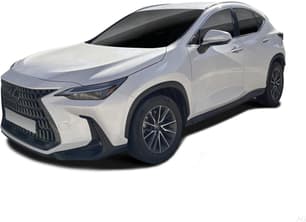
One of the great, unsung success stories over the last few years has been the Lexus NX.
Out since 2014, it turned Toyota's ailing luxury brand around, connecting with buyers gravitating towards luxury midsized SUVs like the BMW X3, Audi Q5, Mercedes GLC and Volvo XC60. Today, no school run is complete without them!
Now there's an all-new one. And, as Lexus' bestseller by far, any new NX is a big deal. The recipe is much the same – including petrol, turbo and hybrid versions – but with fresher and better ingredients. Plus, there's also a new plug-in hybrid flagship to really shake things up.
Is it time to cancel your order for that German, British or Swedish luxury midsized SUV? Keep reading to find out...
Stunning to behold, and even more so to listen to, the LC 500 Convertible with no doubt turn as many heads as its owners surely want it to. It's not the final word in performance, but it's a lavishly equipped transporter none the less.
The all-new NX is a massive step forward over its popular predecessor.
In every way, it is an improvement, with better refinement, comfort, performance, efficiency, safety and choice.
Indeed, look out, Audi, BMW, Mercedes and Volvo: the NX has finally come of age. If we were in the market for a luxury medium-sized SUV, we'd definitely have the Lexus on our shortlist, especially the incredibly efficient hybrids.
Europe, you've been warned.
It’s eye-catching, the LC 500, if big, bolshy convertibles are your thing, and especially viewed front-on, where the aggressive nose design ends in a sharp crease in the mesh grille. I love the headlight design, too, which bleeds back into the body work, but also merges with the vertical light cluster that bookends the grille.
The side view is all shining alloys and sharp body creases, too, leading to an oversized boot that stores the fabric, aluminium and magnesium roof structure, which drops or raises in 15 seconds at speeds of up to 50km/h. The design fits into what Lexus calls an “impossibly small space behind the seats”.
Inside, it’s a snug but luxurious space, wrapped largely in leather and equipped with a wealth of technology. It’s a point we’ve made before, but why Lexus perseveres with its trackpad infotainment control technology is beyond us, but there’s no denying the cabin of the LC 500 is a wondrous place to spend time.
We particularly like the integration of the centre screen, which is recessed beneath the leather-wrapped edge of the dash. While some look like an afterthought, this appears to have been included in the broader design philosophy.
UX, NX, RX, LX, RZ... Lexus' nonsensical naming strategy can be quite flummoxing.
Just remember that the NX sits above the smaller UX but below the larger RX in the brand's burgeoning SUV stable. It's also closely related to the wildly-popular Toyota RAV4 – though you'd never know by looking at them side-by-side.
At first it may look much like the old model, but the new NX has switched to the latest RAV4's advanced Toyota New Global Architecture, known as GA-K in Lexus' lexicon.
Basically, it allows for a vehicle that's between 20 and 30 mm larger than before, to help improve overall proportions. And with this considerably bigger canvas to work on, it also means that Lexus's stylists have had more freedom to evolve the brand's design language. Albeit at a glacial pace from an exterior point of view.
Starting from the front, the controversial 'spindle' grille has been toned down a bit and the headlights have a neat Lexus 'lightning rod' tick motif, while – looking at the side profile – a startlingly cab-backward shape gives it a surprisingly sleek silhouette.
The extra length and stretched wheelbase let the design to breathe more than before, bringing with it a more graceful and elegant aesthetic.
Finally – and this is a brand first – the new NX's rather nondescript rear has 'LEXUS' spelled out in letters, with no sign of the company logo.
It’s not, really. But then, what were you expecting?
As mentioned above, the interior feels snug for upfront riders, but not in a bad way. More that elements of the interior feel like they’re reaching out to greet you, leaving you with the impression of being tucked into the cabin.
Backseat riders are out of luck, though, with the seats really only reserved for emergencies. Legroom is tight, and while Lexus promises the roofline is about on-par with the Coupe, it’s not going to be a comfortable journey.
The LC 500 Convertible stretches 4770mm in length, 1920mm in width and 1350mm in height, and it rides on a 2870mm wheelbase. It will sit four at a pinch, and provide 149 litres of luggage space.
There are two ISOFIX attachment points in each of the rear seats, as well as top-tether points.
For the really big design step-change, you'll need to step inside...
Hallelujah! Lexus has finally forsaken its weird, futuristic dash design elements for a simpler and far-more intuitive look that finally banishes unnecessary complication while still appearing progressive.
Somehow, there are now 33 fewer switches than before, aided by permanent virtual short-cut buttons on both of the touchscreens on offer.
Lexus has clearly been listening!
So, now, what we have here is an attractive, functional and superbly built interior (save for a couple of very-atypical Lexus rattles in these early production cars we drove), boasting quality materials that rate highly on all the important sensory metrics: lush to the touch, easy on the eyes and lovely to breathe in... and breathe out again!
Other plus points include a gorgeous steering wheel, attractive instrument dials, endless storage and climate control that's so effective it pretty much creates a microclimate within your personal space.
Brilliant seats, with ample adjustability, provide comfort and support even after hours ensconced within them, while the driving position is enhanced by thoughtful placement of most major controls - including the natty little gear lever and big old paddle shifters.
It's also worth pointing out a couple of surprise-and-delight features – starting with the 'e-latch' electric door handles, with sensors that delay opening if there are cyclists or pedestrians on approach to prevent striking them, as well as a manual override should the battery go flat.
There's more, like the wireless phone charger tray that also slides to reveal a hidden cubby area; centre-console lid that opens sideways FROM BOTH DIRECTIONS – what sort of sorcery is this?? – and optional digital rear-view mirror that works like X-ray vision in seeing through obstructions... handy for when back-seat passengers' beehives block the back view out.
However, after lavishing such intricate attention to detail, why does the instrument cluster's digital trip computer use the same cheap style and font as found in a lowly Yaris? It takes you completely out of the Lexus state-of-mind.
And, like me, you might lose your mind with the infuriatingly fiddly capacitive touch controls on models with the HUD. While it does provide a broad range of functionality that's displayed on the windscreen view, it's difficult to modulate accurately, and doesn't operate intuitively. Remnants of the fiddly old touchpad from the previous NX. Why can't Lexus just abandon such needless complexity? After a while I worked it out – but it's deeply distracting to use.
Oh well. At least the rear seat area is an improvement over the old NX, with more space, comfort and convenience features. Entry/egress is easy, with wide apertures that ought to make fitting in child seats less of a chore than before.
Most adults should find sufficient leg, knee, shoulder and head room back there, though a trio of adults might result in a very tight fit.
Rear facing air vents (with climate control functionality on higher grades), 12V power outlets, twin USB ports and a wide centre armrest with cupholders are included.
Further back, there's a handy (though not class-leading) 520 litres of luggage space regardless of powertrain, expanding to 1411L when the rear backrests are folded. Access is easy thanks to the wide door and flat floor, where a bit of extra storage and even space for the cargo blind are provided. Thanks, Lexus.
Note, though, that runflat tyres take the place of any spare wheel – a bummer if you're out on deserted country road late at night with no help in sight.
It costs $214,000 - and that’s rather a lot of money - but unlike some premium and luxury cars, with Lexus, once you’ve handed over the cash, that’s it. There’s no tempting option list to lure you into parting with even more of your hard earned.
And I mean that literally - Lexus proudly proclaims that “there is no option list” for the LC 500 Convertible, so suffice it to say it arrives with plenty of gear.
Take a deep breath…
You get 21-inch two tone alloys, triple-stack LED headlights, keyless entry, retractable door handles and rain-sensing wipers outside, while inside, you’ll find dual-zone climate, leather-accented seats which are heated and ventilated, neck-level heating for when the roof is down, a heated steering wheel and sports pedals.
The tech stuff is handled by a 10.3-inch centre screen with Apple CarPlay, Android Auto and on-board navigation, both of which are controlled via Lexus’ impossible-to-kill touchpad. There’s a second, 8.0-inch screen for the driver, and the lot pairs with an impressive 13-speaker Mark Levinson stereo.
There’s also a heap of safety stuff, but we’ll come back to that in a moment.
If that’s not enough for you, you can spring for the Limited Edition, which is $234,000 for each of its 10 available examples. It arrives in a unique Structural Blue hue, with a white leather interior with blue highlights. It is designed to be the most blue of blues, too, with Lexus saying the paint colour was the result of a 15-year research project. Which sounds like a thrilling way to spend a decade and a half.
Like most Lexuses, this second-generation NX is spoiling us for choice, with four quite different models to choose from, ranging from just over $60,000 for the base four-cylinder NX 250 2WD (which means front-wheel drive in this instance), to $90,000 for the debuting NX 450h+ plug-in hybrid all-wheel drive (AWD)... and all before on-road costs, of course.
Within these are three grades: Luxury, Sports Luxury and F Sport, as well as a pair of equipment bundles. And, as always, the price you pay depends on how high-tech you want your NX to be.
Keep in mind that all feature a lofty level of standard safety equipment, including eight airbags (with a front centre item fitted as well), autonomous emergency braking (AEB) with intersection assist and pedestrian and daytime cyclist detection, lane-keep and steering assist, blind-spot monitoring, adaptive cruise control, road sign recognition, front/rear cross-traffic alert and Safe Exit Assist – which won't allow doors to open if passing cyclists or pedestrians are in danger of being struck.
Kicking things off is the Luxury grade in the entry-level NX 250 from $60,800 and NX 350h from $65,600.
It includes LED lights with auto high beams, keyless entry and start, a 9.8-inch touchscreen, 'Hey, Lexus!' always-on voice command, satellite navigation, Apple CarPlay/Android Auto support, digital radio, a power-adjustable steering column, electrically-actuated front seats with heating, dual-zone climate control, a powered tailgate and 18-inch alloy wheels running on runflat tyres.
Given that key competitors like the base BMW X3 sDrive2.0i and GLC 200 cost nearly $15,000 and $20,000 more respectively, you can see how serious Lexus is about dominating this segment.
Stepping up to the NX 350h Sports Luxury grade from $73,100 brings tri-beam LED adaptive headlights, leather upholstery, ritzier cabin materials, a 14.0-inch touchscreen, 20-inch alloys, head-up display, wireless smartphone charging, ventilated front seats, ambient lighting, surround-view cameras and a 17-speaker audio system upgrade.
For a racier look and feel, there's the F Sport grade, which scores most of the Sport Luxury fittings (minus the audio/speakers upgrade and digital rear-view mirror) and then adds adaptive dampers, sports suspension, extra configurable driving modes, a unique body kit and alloy wheel design, sports seats and blacked-out cabin trim.
The F Sport, too, begins from $73,100 in the NX 350h, and this also happens to be the price of the non-hybrid, performance-focused NX 350 F Sport with a turbo and AWD.
Speaking of which, the NX 350h hybrid is available with AWD as well, adding $4800 on all grades, brandishing two electric motors (one per axle) rather than having a mechanical drive shaft, as per the NX 350 F Sport turbo AWD. With this level of choice, little wonder, then, that Lexus expects around half of all buyers to go hybrid.
Finally, there's the NX 450h+ F Sport AWD plug-in hybrid electric vehicle (PHEV – the first Lexus or Toyota with this tech in Australia), starting from $89,900. This undercuts all of its European rivals, including the $95,700 Mercedes-Benz GLC 300e, $102,001 Range Rover Evoque R-Dynamic HSE PHEV and $104,900 BMW X3 30e PHEV.
Buyers seeking popular goodies like a panoramic sunroof, kick-motion powered tailgate, power-folding rear seats, heated rear seats, heated steering wheel, 17-speaker audio upgrade, digital rear-view mirror and parking assist can find some or all of these bundled up into varying 'Enhancement Packs' according to grade, offered across the range from between $3000 and $6000.
Since early 2021, Lexus has also matched Mercedes-Benz in lifting its warranty to five years/unlimited kilometres, and also offers capped-price servicing at $495. There's also the brand's 'Encore' aftersales subscription program offering myriad offers and services.
No NX is lacking in equipment or features compared to its direct, corresponding luxury medium SUV rival, and matches most for technology.
It’s a lusty power plant, this one, and not something you immediately expect to find in a luxurious Lexus convertible.
The 5.0-litre V8 produces 351kW and 540Nm - 260kW of which arrives from 2000rpm - and it sounds like a God of Thunder as it’s doing it.
It pairs with a 10-speed automatic and sends all that grunt to the rear tyres, with Lexus’ Active Cornering Assist and a mechanical limited-slip differential helping you to not make a mess of things when tackling corners.
Here is where the NX shines, with clear options that provide very obvious benefits according to wants, needs and budgets. And there are even fundamental differences compared to the RAV4 powertrain, further justifying that premium 'L' badge experience.
Let's divide these into petrol and petrol-electric hybrid models, with petrols first.
The NX 250 is powered by a 2487cc 2.5-litre naturally aspirated direct-injection twin-cam four-cylinder engine, producing a healthy 152kW of power at a heady 6600rpm, and 243Nm of torque from 4000rpm to 5000rpm.
Drive is sent to the front wheels only, via an eight-speed torque-converter automatic. Tipping the scales at 1705kg, it's the lightest NX on offer, and thus delivers 89.1kW per tonne.
The NX 350 turbo version, meanwhile, uses a somewhat different four-cylinder engine as well as a variation of the eight-speed auto. A 2393cc 2.4-litre turbo unit, it pumps out 205kW at 6000rpm and 430Nm from a low 1700-3600rpm. It's also AWD only, which adds kilos. That said, coming in at 1860kg, its power-to-weight ratio is a stirring 110.2kW/tonne.
Moving to the series/parallel hybrids, both the expected-bestselling NX 350h and the intriguing new NX 450h+ PHEV are based on that 2487cc 2.5-litre four-cylinder atmo unit, tuned this time to offer 140kW and 136kW (at 6000rpm) and 239Nm/227Nm (from 4300-4500rpm and 3200-3700rpm) in the NX 350h and NX 450h+ respectively.
The NX 350h uses either a single synchronous permanent magnet 134kW/270Nm electric motor in the front-drive version, or two electric motors (adding a 40kW/121Nm generator on the rear, double wishbone axle) to create the AWD alternative. Their combined total power rating is 179kW. The NX 450h+ ups that to 227kW.
None are light, however. While the NX 350h 2WD weighs a reasonable 1810kg, the twin-motor AWD system bumps that up to 1870kg, while the NX 450h+ is a portly 2050kg. Result? The power-to-weight ratio for all three are 98.9kW/tonne, 95.7kW/tonne and 110.7kW/tonne – almost identical to that of the NX 350 turbo.
The hybrids' gearbox in question is an 'e-CVT' electronic continuously variable transmission, working with a lithium-ion high-voltage battery, while the NX 450h+'s EV drive's battery is an 18.1kWh unit.
So, no prizes for guessing which one is the most frugal...
Remember when I said it was lusty V8? When has that ever been good news for fuel use?
Lexus reckons you’ll get 12.7L/100km on the combined cycle, but the temptation of all that grunt will pretty much ensure that never happens. Emissions are pegged at 290g/km of C02.
The LC 500 Convertible’s 82-litre fuel tank only accepts 98RON fuel.
All NXs require 95 RON premium unleaded petrol, and are emissions rated at Euro6b.
Not surprisingly, on the official combined run, thirstiest of the lot is the NX 350 turbo at 8.1L/100km (for a carbon dioxide emissions rating of 185 grams per kilometre), followed by the NX 250 at 6.9L/100km (158g/km).
The NX 350h cut that down to 5.0L/100km (113g/km for the FWD and 114g/km for AWD), while the NX 450h+, naturally, is the most economical by far, slashing that down to just 1.3L/100km, or 29g/km.
While we can't tell you what the NX 450h+ managed on test, the others didn't quite match their official numbers. Over several hundred kilometres, the NX 350 ranged from 9.3-11.3L/100km, the NX 250 7.5-9.3L/100km and the NX 350h from 5.7-6.8L/100km.
Note that the NX 450h+'s 18.1kW battery can only be charged using an AC outlet, meaning it'll need about 2.5hr to get the job done. Its EV-only range is about 70km on the WLTP score, or 87km using the less-realistic NEDC method.
At 55 litres, the fuel tank will allow the following combined average range between refills: 679km (NX 350 turbo), 797km (NX 250), 1100km (NX 350h) and a barely believable 4231km (NX 450h+, naturally).
It’s a tough nut to immediately crack, the LC 500 Convertible.
It feels like it really wants to be a super-accomplished performance car, and on longer, more sweeping bends it is, with that thick flow of power ensuring you simply surf through corners before rocketing out the other side, the air filled with that growling exhaust note as your right foot finds its way to the carpet.
But on the tighter stuff, there are some factors that play against it. The suspension feels sorted and that engine is always willing to deliver, but for mine, the steering and brakes felt a little disconnected from the experience, not inspiring much in the way of late-braking confidence. And then there’s the sheer two-tonne-plus weight of the thing, which can’t be totally hidden, even by Lexus’ best wizardry.
Don’t get me wrong, it’s very capable, even on surprisingly tight stuff. It’s just that there’s something of a disconnect between car and driver.
That’s not a bad thing, really. Are you really buying a premium convertible to attack a mountain pass? Probably not. And keep it flowing through corners and the LC 500 Convertible will keep a smile painted on your face, owing mostly to wave of torque you can ride to your destination.
Hovering your foot over the accelerator must surely be what the President feels like whenever he stands near the nuclear football, with that big V8 always ready to turn on the fireworks.
Away from the red mist, you’ll find the LC 500 Convertible positively flows from destination to destination, the 10-speed gearbox - which can feel flustered at pace - seamlessly flicking through its options, and the ride in its most comfortable settings disposing of most road imperfections before they enter the cabin.
The cabin is also very cleverly insulated, not just when the four-part roof is up, but also when it’s down, with the climate and ambience of the interior largely unaffected by what’s going on in the outside world.
The previous NX looked better than it drove.
Based on the previous-gen RAV4, it failed to rise above such humble underpinnings, despite all the extra design, comfort and equipment features Lexus created to help it do just that.
Sure, there were some very appealing things going on, including attractive styling, an intriguing interior, sumptuous seats and lots of kit to play with, but the Toyota's noisy, fidgety and tiring DNA soon became apparent, especially compared to rival luxury midsizers. And some of the dashboard multimedia controls were just down-right madness.
Building on the latest RAV4's set of modern, competent components, however, has fundamentally changed the NX.
For starters, it's much quieter inside. Whether at idle, travelling at speed, or traversing some pretty rough patches of road, the NX at last rides like something you'd expect a Lexus should. And given how noisy and droney most of its European rivals also are on Aussie bitumen, it gives the Japanese contender a handy head-start.
The same applies to how enveloping the soft yet supportive seats are, how settled the suspension feels and how calm the experience is. No previous Lexus SUV has seemed so... refined. Even the really big, expensive ones.
From the driver's point of view, the steering is beautifully balanced, for precise yet reassuring control at speed. This varies according to which grade you're driving, but as a whole, while not sporty like a BMW's nor as fluid as, say, a Mazda CX-5's helm, the Lexus walks that line between easy and involving quite well.
Ditto the handling and roadholding. The lightest of the bunch – the petrol-powered NX 250 and NX 350 turbo – feel ripe and ready for a hustle along a curvy ribbon of road, coming across as taut enough for tight turns yet supple enough to soak up the many bumps and thumps thrown up at them.
Switching to the NX 350h hybrid, there's a greater sense of mass, whether driving the front-drive 2WD or even heavier AWD version. As such, it's still quite dynamic, but not as athletic as the petrol-only models.
In terms of performance, there are no duds – and that's no surprise, as the previous NX's powertrains were pretty sound as well.
Though simply a front-drive version of the RAV4 Edge's 2.5-litre unit, the NX 250 seems more muted than the Toyota's application, and yet is willing to rev hard to hit the power band necessary for it to feel alive. At higher speeds, sometimes the raspy engine can sound a tad noisy when extended, but it's never harsh or rough.
Moving on to the NX 350h, it feels like, well, a heavier and quieter RAV4, not unexpectedly. Silent at take-off speeds, the engine chimes in fairly unobtrusively, providing plenty of oomph along the way, while the CVT seamlessly slices through each (artificial) ratios. After the petrol versions, the steering does seem a little more remote, and you can feel the extra heft through turns, but – again – the basics underneath seem right.
Accelerating hard on the open road does reveal that typical Toyota hybrid engine roar and CVT flair, but only when the throttle is prodded hard. Driven normally, the NX 350h is as smooth, swift and sweet as you'd expect. And definitely in keeping with brand performance expectations.
Finally, there's the NX 450h+ F Sport. At over two tonnes, Toyota and Lexus' plug-in hybrid debutante is not a flyweight by any means, yet having all that extra low-down mass does result in a slightly different driving experience.
Take acceleration: having access to 227kW of power and torque together at very low revs equals lots of thrust right from the get-go. And while it's not sports-SUV rapid, there's certainly enough punch to justify the F Sport badge. Similarly, the low centre of gravity that the 18.1kWh battery pack provides seems to promote hunkered-down road-holding attitude through tight turns, with minimal body roll.
Regardless of which NX you're looking at, quibbles are few. Occasional road and tyre roar are still a little evident over some surfaces; the adaptive cruise control and lane-keep technologies could benefit from some local fine-tuning so they behave a little more nuanced in Australian conditions (and that applies to most luxury SUVs nowadays); and the optional head-up display's capacitive controls located on the steering wheel spokes are distracting, difficult to modulate and needlessly complicated. They're so annoying we'd even untick the Sport Luxury option box to avoid it.
If we had to choose a favourite among the new NXs, it would probably be the NX 350h F Sport, since its adaptive sports chassis provides the best compromise between agility and suppleness; the NX 350 turbo is probably the most fun to drive hard and fast, while the base NX 250 is thoroughly competent and sufficiently luxurious to scare most rivals.
Could this really be a medium-sized Lexus SUV we're talking about?
We're not saying that the latest NX is perfect, but it now provides a very compelling argument not to buy European.
The Lexus LC 500 Convertible arrives with six airbags, a reversing camera with guide lines, parking sensors, and the usual suite of traction and braking aids, but there’s much more to the safety story, too.
The more high-tech stuff includes parking sensors, pre-collision assist with AEB, lane keep assist, blind-spot monitoring, rear cross-traffic alert and active cruise, as well as bespoke convertible safety gear, like active roll bars that deploy when the car is in danger of rolling over, protecting the occupants beneath that soft roof.
Being so new, there's no ANCAP rating for the latest NX range right now, but it is expected to score a five-star result just like its predecessor.
This is because there is plenty of safety for Lexus to crow about, including eight airbags (providing coverage to all outboard occupants, also taking in dual-front occupant knees and centre item to stop lateral head strikes), autonomous emergency braking (AEB) with intersection assist and pedestrian and daytime cyclist detection, lane-keep and steering assist, blind-spot monitoring, adaptive cruise control with stop/go functionality, auto high beams, road sign recognition, front/rear cross-traffic alert, reverse parking cameras, all-round parking sensors, tyre pressure monitors and Safe Exit Assist – which won't allow doors to open if passing cyclists or pedestrians are in danger of being struck.
There's also Intersection Turn Assist (ITA – providing early brake activation if required), Emergency Steering Assist (ESA – extra steering assistance to help keep the vehicle in its lane) and Emergency Driving Stop System as standard across the range – along with a digital rear-view mirror on some grades.
Anti-lock brakes with brake-assist and electronic brake-force distribution is also standard, along with stability and traction control systems. Lexus provides three rear-seat child-seat tether anchorages and two ISOFIX latches.
At the time of publication, there is no data on the NX's AEB operating range.
Lexus vehicles are covered by a four-year, 100,000 kilometre warranty, and the LC 500 Convertible requires servicing every 15,000kms.
Lexus's Encore ownership program includes pick-up and drop-off servicing, but the new Encore Platinum level for owners of its more exclusive models unlocks even more stuff.
One is a new On Demand service, which allows owners to book a different style of car when heading off on a holiday or business trip. The loans are available in your state or somewhere else in Australia if you're travelling, with your car waiting for you at Qantas Valet for you when you arrive.
The On Demand service is available on four occasions over your first three years of ownership (which is also the length of the Encore Platinum membership).
Lexus now offers a five-year, unlimited kilometre warranty with roadside assistance.
Furthermore, NX 350h hybrid and NX 450h+ plug-in hybrid models also feature a 10-year, unlimited kilometre battery warranty.
Service intervals are at 12 months or 15,000km, whichever comes first.
The NX also includes three years and 45,000km of capped-price servicing, with each one costing owners just $495 – and that's highly competitive pricing for a luxury brand.
Plus, there's also Lexus' 'Encore' aftersales subscription program offering myriad offers and services.