What's the difference?
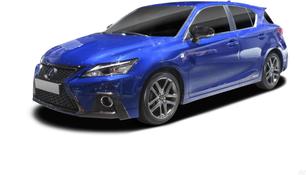
There are two ways to look at the Lexus CT200h; as either the cheapest model in the Japanese company’s range, or as a planet-saving hybrid.
Either way, the four-door, five-seat CT200h hatch – which has been updated for 2018 – differs from the rest of the Japanese luxury brand’s lineup for a number of different reasons.
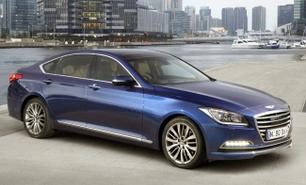
Anybody who doubts that Hyundai is gunning for the number one in the world has rocks in their head. Big heavy ones. Korean companies do not settle for anything less than number one. The second-generation Genesis (our first taste here in the Antipodes as the gen-one had its steering wheel on the wrong side) is proof.
What's different about Hyundai's unstoppable rise is the way they're going about it. They've always done their own thing in Korea, reinventing themselves time and again when they strayed off the beaten path.
The Genesis is a gamble for a Korean company in foreign markets whose default setting for luxury is marked, Britain or Germany. If Hyundai gets the Genesis wrong there will be howls of derision, or at best patronising pats on the back - "Nice try, you'll get there one day". But if they get it right...
The cheapest Lexus of them all isn’t chasing badge snobs with the CT200h as blatantly as Mercedes-Benz, BMW and Audi do with their entry level cars… but it’s perhaps not quite the Lexus you’d expect it to be.
It has a lovely front-of-cabin, for example, but there’s a lot of last-gen Prius in plain sight in the rear of the cabin.
The hybrid powertrain, too, is noble in concept, but the day-to-day reality is that it’s not as nice to drive, especially town to town, as a regular petrol-powered car of similar size.
The foot brake, silly multimedia joystick and odd gearshifter also spoilt the party a bit.
Empty nesters who are looking for a nice city runaround with a tinge of greenwash about it will love it… and if the current Prius is anything to go by, the next CT will be a very good thing indeed.
The Genesis is not quite a match for cars twice its price but it makes you think what's possible. It doesn't have the dynamic brilliance of a BMW or the self-assured faultless execution of a Mercedes. Lexus ought to be worried, though - why would you have an LS when you could have this? The only answer is 'badge'.
The Genesis is an epoch-making car for the Korean manufacturer. As the company has got better, there are fewer excuses for overlooking it. While the Genesis is pitched into a shrinking market, it's not really meant for the average i30 buyer to buy, but to see.
It's bristling with tech and is not only a halo car but a shot across the bows of both Lexus and the Germans. Attached to that shot is a note: "We're coming for you." In other words, Hyundai got it right.
There are some light external revisions for the latest update of the compact Lexus CT200h. New grey 17-inch alloys are unique to the Sport Luxury, along with a black roof treatment, new L-shaped LED driving lamps that match new-design LED tail-lamps, while Lexus designers have also added its new spindle grille to the brand’s smallest model.
It manages to be inoffensive, but it doesn't really reflect the brand's latest design language of 'real world concept cars' like the NX and the LC ranges.
Inside, a couple of new leather colour options are available for the CT200h, while the addition of the wide-format 10.3-inch screen to the top of the centre console is the single largest change. Interestingly, the steering wheel controls appear to have regressed a little from the previous model, no doubt brought about by the addition of the new driver aids.
The Genesis is like no other Hyundai. For a start, it's gigantic - it looks easily as big as a BMW 7 Series (it isn't) with the road presence to match. There's a lot of BMW from most directions, but with a sharper approach to the creasing and character of the sheet metal.
Towards the rear it's more BMW 6 Series Gran Coupe and is all the better for it. The style is understated and technocratic.
Inside is also very Germanic, but with a bit more of a Lexus feel
The big wheels from the Ultimate pack help make it look lower and sleeker, too.
Inside is also very Germanic, but with a bit more of a Lexus feel. Our car had the lighter leather which meant that the wood and the metal materials didn't necessarily work well together.
The interior is expertly put together and feels like it will last forever.
The only jarring moment is the gear selector is shared with our long-term Hyundai i30 - it looked a bit cheap in what is otherwise a beautifully executed cabin - it needs more heft.
On Australian-delivered cars there is just one Hyundai badge, sitting proudly on the boot - you get the feeling this was debated long and hard and when the decision was made to go for it, a big one was chosen.
However, the winged Genesis branding takes pride of place everywhere else. When you approach the car at night and the puddle lamps come on, the Genesis logo is projected on to the ground, crisp and clear.
The 1.8-litre petrol-electric CT200h comes in three different flavours – the Luxury, the F-Sport as tested here, and the Sport Luxury. The range now kicks off at $40,900 (up $2150) and peaks at $56,900 with the Sport Luxury (up $810).
The F-Sport may be a little lacking in the actual ‘sport’ department, but it’s is pretty flush with flash kit, including not one but three motors (one petrol and two electric), auto lights and wipers, a wide 10.3-inch multimedia system, leather seats, dual-zone climate control and new 17-inch alloys.
At $50,400 plus on-roads, the F-Sport has jumped in price by $1960, but it’s gained a host of new gear, including a new driver aid system that adds auto emergency braking (AEB), pedestrian-detecting pre-collision warning system, lane departure warning with steering assistance and adaptive cruise control.
There are also LED headlights and taillights, as well as revised styling for the front and rear bumpers.
The CT will be cross-shopped against other premium tiddlers like the Mercedes-Benz A-Class, Audi’s A3 and the BMW 1 series. Comparing it like-for-like in the hybrid category, there’s the top spec Toyota Prius i-Tech, while Nissan’s Leaf could theoretically be lumped in both on price and on environmental grounds.
The only way to describe the Genesis' pricing is aggressive - kicking off at $60,000, it's the most expensive Hyundai money can buy, but with a spec list like this, you won't feel at all short-changed.
Your sixty large buys you a huge cabin with a seventeen speaker stereo, auto headlights and wipers, LED ambient lighting inside and out, dual-zone climate control, keyless entry and start, powered front seats which are heated and cooled, satnav, front and rear parking sensors, and plenty of other bits and pieces.
Our car had the $22,000 Ultimate package, adding 19-inch alloys, blind spot sensor, front and side cameras, around-view display, real leather, more adjustments for the driver's seat, ventilated seats in the front, heated rear seats, panoramic glass sunroof, acoustic glass, heads-up display, powered bootlid and LED foglamps.
The Genesis is like no other Hyundai
You can have a lot of the more useful features in the $11,000 Sensory Pack. It's a good middle ground that, for example, features the excellent heads-up display.
The 9.2-inch screen splits the asymmetric air-conditioning vents. The software is unique to the Genesis and a huge leap forward over the rest of the Hyundai range - classy, smooth graphics, a good responsive screen.
You control the seventeen speaker stereo from here, which kicks out a rich sound and an impressive Bluetooth performance - rear seat passengers can also run the stereo from their armrest. The satnav is detailed and chatty, while the excellent heads-up display shows a configurable information set in strong, clear graphics.
The 1.8-litre twin-cam petrol engine makes a relatively low 73kW and 142Nm, while a 60kW, 207Nm electric motor that’s also connected to the front wheels chips in its share.
Combined, the system produces 100kW, while the torque figure translates to around the 150Nm mark. That juicy 207Nm doesn’t come into play, sadly, given that the petrol engine – which is built to run cooler than a traditional Otto cycle engine, and therefore more efficiently – does most of the work.
Throw in a transaxle for the electric motor and a power inverter, and things are getting complex. However, if the Prius is any indication, the CT200h’s drivetrain is durable and relatively serviceable, with batteries estimated to last ten years or longer.
The Genesis is powered by Hyundai's own 3.8-litre V6 developing 232kW and 397Nm, mated to Hyundai's eight-speed automatic transmission.
Despite weighing just under two tonnes, the Genesis completes the dash to 100km/h in 6.5 seconds.
It has a claimed 11.2L/100km on the combined cycle. In what must be a first, we got below that, averaging 10.8L/100km over two weeks. And that's without stop-start fuel-saving to blunt the effect of lot of city driving.
The Genesis is not going to tempt you into a track day, even with rear wheel drive
We'd still like to try the V8 - only available in left-hand drive markets - though.
If you've ever driven a Prius, then you'll be very familiar with the way that the CT drives. Based around a 73kW Atkinson cycle petrol engine which focuses on fuel efficiency rather than outright power, a 60kW electric motor (the pair combine to produce 100kW in total), a nickel-metal hydride battery array and a CVT gearbox, the CT200h – like the Prius – is a bit different to a regular hatch.
Under light throttle, the CT is quiet and moves along quite well, and you can even use full Electric Vehicle mode at speeds under 45km/h for a brief amount of time, (slightly less than two kilometres), and with a very gentle right foot.
The battery array is recharged via the petrol motor as well as regenerative braking (where heat energy is captured and directed back to the electric system) – but unlike a petrol-electric plug-in hybrid, there’s no way to stick a 240v cable into the CT to top up the battery.
It has the unusual whines and odd noises that you would associate with a partly electric car, but the petrol motor sounds just like a regular old four-pot petrol unit, and it’s running most of the time.
One issue with the drive of a hybrid is its ability, or the lack thereof, to get off the line in any sort of hurry. You really have to mash the throttle to get going, which takes some getting used to. There’s also some hesitation and un-Lexus like thumps from the drivetrain if you confuse it by almost stopping then taking off again.
The CT200h’s biggest bugbear is that the fourth generation Prius exists. Built on a more sophisticated newer-generation platform and with a more refined drivetrain, the new Prius is a great insight into how good the next CT will be – and what the shortcomings of the current one currently are.
The CT works well in high-traffic city environs, where a light throttle foot helps get the best out of the unusual drivetrain. Lots of lag from rest is an annoyance, as is an excess of CVT whine under hard efforts, but the CT200h pootles around town very well.
Its small size does play against it when it comes to keeping out road noise at freeway speeds, though the CT is superior to most other similarly sized cars in this regard. As an aside, its build quality is nothing short of amazing, with minimalist panel gaps, a tight interior and lashings of paint on every surface.
At five metres long, with a ride firmly pitched in the luxury camp, the Genesis is not going to tempt you into a track day, even with rear wheel drive.
Blindfold your passengers and swap them between a Lexus, a BMW and a Genesis and the overwhelming impression they'll get is one of incredible smoothness.
If you're wanting sudden movements, this isn't the car for you
Sitting in the back of the Genesis, it's easily as good as the German and luxury Japanese competition. The seats are hugely comfortable, there's ample head, leg and shoulder room and it feels lot nicer than anything within a bull's roar of its price.
No matter where you sit, it's an incredibly quiet car. The engine is a distant whoosh, the tyre noise muted and there's almost no wind or ambient noise. It's supremely comfortable and the excellent stereo will wash away what little noise does invade.
It certainly feels its weight from the driver's seat, with a competent, soft turn-in, but if you're wanting sudden movements, this isn't the car for you.
The Genesis is an epoch-making car for the Korean manufacturer
On fast flowing roads you can have some fun, but things will get floaty and that will quickly kill that fun. The ride and isolation from the rest of the world is completely worth it.
Part of the update for 2018 is the addition of several driver aid systems, including AEB across the range, lane departure control with steering and adaptive cruise control.
The F-Sport also has reversing camera and eight airbags as standard, ensuring the maximum five-star ANCAP safety score it managed in 2017.
Nine airbags, traction and stability control, lane departure warning, forward collision control, ABS, brake force assist and distribution and traction and stability control bring the ANCAP count to five stars.
The Sensory and Ultimate packs add blind spot sensors and around view cameras.