What's the difference?
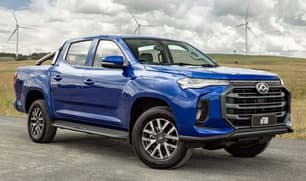
This is it: Australia’s first fully electric ute.
It is telling of the times that the eT60, a dual-cab, no less, doesn’t come from a traditional titan of Australia’s car market like Ford, Nissan or Toyota.
Instead, it comes from Chinese upstart, LDV. The brand has already made a name for itself importing affordable alternatives to these mainstream rivals.
The combustion version of the T60 is chipping away at the market share of established names, commanding nearly six per cent of the light commercial market, placed fifth behind Mitsubishi.
Can the brand be more than a cut-price option, though? Does it have what it takes to be a first-mover with its all-electric dual-cab? We drove a pre-production example at its Australian launch to find out.
Kia’s newest addition is either an overpriced mistake or the logical next step for a brand looking to move up in the world.
It’s called the EV9 GT, and much like the many ‘GT’ variants that have gone before it, this one is packing plenty of performance. It’s also loaded with creature comforts, enough to push it into the same league as the luxury car establishment.
But it also takes Kia to new heights in terms of price, which were already pushing boundaries. And it comes at a time when electric vehicles are in hot demand, but at the other end of the price spectrum.
So is this the case of the right car at the wrong time, or simply the next step in Kia’s evolution?
The eT60 presents as an electric vehicle clearly converted from a combustion vehicle to take advantage of being first in our market.
It comes with some significant downsides, from the lack of key specifications and safety equipment to the downright average drive experience, but in other areas it’s specified right, with decent charging specs, and surprisingly good software on that centre multimedia screen.
In some ways, these impressions are a reflection of how far the ute market has come in Australia in the last few years, with many commercial offerings now feeling just as complete as passenger cars in terms of specification and driving prowess.
LDV has left open the door for future tweaks and improvements to the eT60’s spec, ride, and features, and we’re keen to get it in for a longer test in the near future. Either way, though, the brand says it has no shortage of buyers lining up to be a part of the zero emissions future of commercial vehicles.
Whether you think the EV9 GT is an over-priced mistake or the logical next step for a brand looking to move up in the world will depend on your point-of-view.
Kia has certainly extended the appeal of the EV9 range, but possibly in the wrong direction. Certainly the wrong direction if the goal is to add significantly more sales.
A cheaper alternative to the $97,000 EV9 Air would likely be a more popular choice from the point-of-view of Australian families considering replacing their diesel-powered SUVs with something that doesn’t rely on the chaotic fuel market.
But that’s not really who the EV9 GT will appeal to. Instead, from the point-of-view of someone looking at a more expensive European option, whether it be an Audi Q8 e-tron, BMW iX or something else, the EV9 GT may be appealing in a very different way - assuming that they aren't driven by what badge is on the front.
Kia has certainly evolved beyond its ‘cheap and cheerful’ image or buying primarily for its long warranty. These days Kia is a mainstream brand, but whether it has enhanced its reputation enough to attract buyers willing to spend more than $130,000 will be decided in the showroom.