What's the difference?
There are currently 14 rivals competing for customers in the Light Duty or LD (3501-8000kg GVM) segment of Australia’s heavy commercial vehicle market. Business buyers and fleet operators are thick on the ground here and competition for their business is fierce.
Chinese brand LDV, a division of the huge SAIC Motor conglomerate which is now the seventh largest automotive company in the world, recently joined this battle with its new Deliver 9 van range that’s priced to entice. We spent a week aboard one to see how LDV’s claim of superior value stacks up when there’s work to be done.
Feels like lately all the Mercedes-AMG buzz has been at the smaller end of the scale.
Most recently, the screaming GLA 45 S has arrived in Australia, pumping out more kilowatts and newton-metres than any compact SUV has a right to.
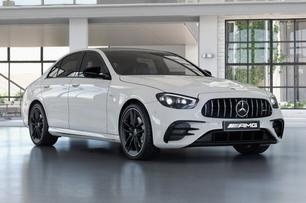
But here, we're doubling the cylinder count to eight, arranging them in a vee, and lighting the wick on AMG's powerhouse mid-size sedan, the recently upgraded E 63 S.
While the ferocious twin-turbo V8 and the rest of this beast's powertrain are unchanged, the car has been brought up to speed with some aero-focused styling tweaks, Merc's latest 'Widescreen' digital cockpit, as well as the MBUX multimedia system, and a tricky new multi-function sports steering wheel.
It has its flaws, like any vehicle, but it’s not as far away from segment leaders in terms of refinement and performance that its bargain-basement pricing might suggest. Whichever way you look at it, this is a lot of van for not a lot of money.
The E 63 S fills its niche in AMG's Australian line-up perfectly. More mature than the brand's four-cylinder hatches and SUVs, but not as overbearing as some of its bigger sedan, GT and SUV stablemates. And its ability to seamlessly switch between serene comfort and dynamic performance has nailed the objective for this 2021 update.
If imitation is the greatest form of flattery then Ford should be blushing, because the Deliver 9 appears to draw a lot of exterior design inspiration from the Transit van. It’s a substantial vehicle, as they tend to be in this weight division, with a 3750mm wheelbase and 14.2 metre turning circle, length of almost 6.0 metres (5940mm) and width of 2466mm. Its 2535mm height excludes it from underground and shopping centre carparks with typical height limits of 2.2 metres.
The rear-wheel drive chassis construction is simple and robust, with MacPherson strut front suspension, multi-leaf live axle rear suspension with supplementary rubber cones to boost support of heavy loads, rack and pinion steering and four-wheel disc brakes. There’s also ample use of hard-wearing black plastic on lower body sections where most scrapes and dents appear.
The cargo bay is accessed by one kerbside sliding door and dual rear-barn doors with 180-degree opening. The walls are lined to mid-height and there’s no roof lining. Bright LEDs provide ample lighting and even though our test vehicle was not the high-roof model, there was enough headroom for tall adults to stand without stooping.
The cabin has a spacious and airy feel, even with a crew of three aboard, thanks largely to a banana-shaped dashboard with ends that curve towards the windscreen providing wide entry access and passenger legroom which is unusually generous for a commercial van.
The cabin has higher-grade look than you would expect at this price, with a tasteful two-tone blend of light/dark grey plastics and faux carbon fibre inserts on the dash along with comfortable, supportive seats with quality-feel fabrics.
However, there is room for improvement, as there’s no cargo protection for driver and passengers, no driver’s left footrest, crackly AM radio reception (too bad if you like talkback) and a poor-quality image projected by the reversing camera.
The E 63 S has been massaged for 2021 starting with flatter headlights, AMG's now signature 'Panamericana' grille, and a high gloss black flap across the top of the curved 'Jet Wing' section defining the lower part of the nose.
At the same time, the vents on either end of it are larger and feature twin transverse louvers to guide cooling air to wherever it's needed.
It's all about what AMG calls 'optimised aerobalance' but the form is just as appealing as the function. The characteristic 'Power Domes' in the bonnet dial up the muscle, as do the fat wheel arches (+27mm each side), and 20-inch rims with distinctive aero inserts.
This car's optional exterior carbon package consists of a front splitter, side sills, a flash near the fender badges, the exterior mirror covers, the boot lid lip spoiler, as well as the lower apron around the redesigned diffuser and quad tailpipes.
New, intricately styled LED tail-lights are also flatter, but there's even more going on inside.
A new AMG sports steering wheel features three rounded twin-spokes with new switches on the bottom to control the car's dynamic set-up.
It also picks up a new take on the small touch-sensitive controllers used to adjust the instrumentation and manage other functions like phone calls, audio and the cruise control.
Not sure I'm in love with them at this stage. In fact, the words fiddly, imprecise, and frustrating come to mind.
Nappa leather covering the superb AMG sports seats, upper dash, and door beltlines remains standard, but the show-stopper is the 'Widescreen Cockpit' - twin 12.25-inch digital screens for the MBUX multimedia interface on the left and instruments on the right.
The instrument cluster can be set to 'Modern Classic', 'Sport' and 'Supersport' displays, with specific AMG read-outs such as engine data, gear speed indicator, warm-up status, car set-up, as well as a G-meter and 'RaceTimer.'
To borrow an official automotive design term, it looks schmick. Overall, with touches like open-pore black ash wood trim, and brushed metal highlights, the interior looks efficient but classy, with an obvious attention to detail in the layout and its execution.
Its 2358kg kerb weight and 4000kg GVM leaves a competitive maximum payload of 1642kg. It’s also rated to tow up to 2800kg of braked trailer but given the GCM figure (or how much you can legally carry and tow at the same time) is not published, we can’t tell you how much payload it can legally carry while towing that weight.
We struck a similar problem testing a G10 LDV van as far back as 2017, when LDV could not provide the GCM despite a direct approach to the factory in China. Why such a fundamental figure must remain secret is a mystery to us and could be a deal-breaker if you need to tow and carry.
The cargo bay offers a competitive 10.97 cubic metres of load volume. Its load floor’s 3413mm length, 1800mm width and 1366mm between wheel housings means it can easily carry two 1165mm-square Aussie pallets or up to four 1200 x 800mm Euro pallets, held in place by a choice of eight sturdy load anchorage points. There’s also a small cave above the cabin which is ideal for carrying straps, ropes, load padding, tarps etc.
There’s more than ample cabin storage too, with large-bottle holders and two levels of storage in each front door, numerous nooks of different shapes and sizes across the dashboard including a driver’s cup holder, plus a single glove-box and large overhead storage shelf with central sunglasses holder.
Pivoting the two passenger seat base cushions forward reveals another big storage area beneath them. The centre seat backrest also folds down to reveal a handy work desk on the back if it, which includes two cup holders. Overall, there’s smart use of space here.
At just under 5.0m end-to-end the E-Class sits in the upper range of the mid-size luxury spectrum. And almost 3.0m of that is accounted for by the distance between the axles, so there's plenty of space inside.
The driver and front passenger are provided with heaps of room to breathe, and there's a surprising amount of space for those in the back as well.
Sitting behind the driver's seat set for my 183cm (6'0”) position I had more than adequate head and legroom. But access to and from the back is a struggle for full-size adults.
The rear doors open out a long way, but the limiting factor is the size of the aperture, necessitating excessive contortion of the head and limbs to fold in and out of the car.
Connectivity runs to two (power-only) USB-C sockets in the front centre storage bin, as well as another USB-C (for power and multimedia) and 12-volt power outlet in the centre console.
Speaking of the front centre storage bin, it's a decent size and has a padded split lid so it can double as an armrest. There are two cupholders in the front console, a generous glove box, as well as long door compartments with recesses for large bottles provided.
There's a pair of USB-Cs along with another 12-volt socket in the back, sitting under the climate control panel with adjustable vents in the rear of the front centre console. Nice.
The fold down centre armrest incorporates a lidded (and lined) storage box as well as two pop-out cupholders. Again, there are bins in the doors with room for smaller bottles.
The boot offers 540 litres (VDA) of volume, and is able to swallow our three-piece hard suitcase set (124L, 95L, 36L) with room to spare, or the substantial CarsGuide pram, or the largest suitcase and pram combined! There are tie-down hooks to help secure loads, too.
Don't bother looking for a spare of any description, a repair/inflator kit is your only option. And the E 63 S is a no-tow zone.
Our test vehicle is the long wheelbase mid-roof, which is part of a three-model Deliver 9 range offering mixed wheelbase and roof height combinations. According to local distributor Ateco, the van’s unusual name has no real significance beyond the fact that in China it’s sold as the V90, so given Volvo’s existing V90 nomenclature, LDV changed the name to Deliver 9 in export markets.
Available only with a 2.0 litre turbo-diesel engine, the standard transmission is a six-speed manual or there’s the optional six-speed automatic like our test vehicle, which has an RRP of $44,726. Needless to say, that’s a massive saving compared to top-selling van rivals like the Ford Transit 350L LWB RWD auto at $54,090 and Mercedes-Benz Sprinter 314 CDI LWB RWD auto at $66,240.
Colour choice is limited to Blanc White or Pacific Blue. It comes equipped with 16-inch steel wheels and 235/65R16C tyres with a full-size spare, plus checker-plate-pattern rubber flooring throughout, LED cargo bay lighting, big truck-style power adjustable and heated side mirrors with indicators, seating for three including an eight-way adjustable driver’s seat with fold-down inboard armrest and an multimedia system with big 10.1-inch touchscreen, two USB ports and Apple CarPlay (but no Android Auto) to name a few. There’s even a rare and endangered cigarette lighter and ashtray.
LDV also offers a $1500 options pack which adds 236-degree rear door opening (except mid-wheelbase model), blind-spot monitoring, lane-change assist and remote keyless entry with push button start.
So, first of all, let's get the price out of the way. At $253,900, before on-road costs, this car's competitive set is a bruising, all-German trio comprising the Audi RS 7 Sportback ($224,000), BMW M5 Competition ($244,900), and Porsche Panamera GTS ($309,500).
And no surprise, it's loaded with all the luxury features you'd expect in this part of the market. Here are the highlights.
On top of the standard performance tech and safety equipment fitted to the E 63 S (covered later in this review), you'll also find: Nappa leather trim (seats, upper dash, upper door cards, and steering wheel), MBUX multimedia (with touchscreen, touchpad, and 'Hey Mercedes' voice control), 20-inch alloys, three-zone climate-control, interior ambient lighting, auto LED headlights (with 'Active High Beam Assist Plus'), eight “energising comfort programs” (with 'Energising Coach'), an 'Active Multicontour' front seat package, the 'Air Balance' package (including ionisation), and keyless entry and start.
Also included are the the 'Widescreen' digital cockpit (twin 12.25-inch digital screens), 13-speaker Burmester audio with digital radio, Apple CarPlay and Android Auto, a panoramic sunroof, adaptive cruise control, a head-up display, augmented reality satellite navigation, 'Parktronic' self-parking, electric front seats, seat cooling and heating front (heated rear), heated front centre armrest, a power-adjustable steering column, auto rain-sensing wipers, a wireless device charger, illuminated door sills, as well Amazon Alexa, etc, etc, etc.
And our test car also featured a couple of tasty options. An exterior carbon package ($7500), and AMG's professional grade ceramic composite brakes ($15,900), for an as-tested price of $277,300.
LDV’s Euro 5-compliant 2.0-litre four-cylinder turbo-diesel produces 110kW at 3500rpm and 375Nm between 1500-2400rpm, which is adequate but not class-leading. It also offers a choice of Eco and Power driving modes and auto stop/start.
The six-speed torque converter automatic is smooth-shifting and easy to use. It also has the option of sequential manual-shifting which can be handy at times when hauling heavy loads, particularly in hilly terrain to save the transmission from continually hunting for gears.
The E 63 S is powered by the M178 version of the all-alloy 4.0-litre twin-turbo V8 engine used across numerous AMG models from the C-Class up.
Thanks in no small part to direct injection and a pair of twin-scroll turbos (located in the engine's 'hot vee' to optimise throttle response), this all-alloy unit produces 450kW (that's 612hp) from 5750-6500rpm, and 850Nm from 2500-4500rpm.
And as per standard AMG practice for its Vee engines, this car's powerplant was built from scratch by a single engineer in Affalterbach. Thank you Robin Jäger.
AMG calls the nine-speed transmission used in the E 63 S an MCT, which stands for Multi-Clutch Technology. But it's not a dual-clutch, rather a normal auto transmission using a wet clutch as opposed to a conventional torque converter, to connect it to the engine on take-off.
Drive goes to all four wheels via Merc's '4Matic+' AWD system, built around an electromechanically controlled clutch connecting the permanently driven rear axle (with locking diff) variably to the front axle.
The dash display was showing an average combined figure of 11.0L/100km at the end of our 290km test, with the auto start/stop function disabled and about a third of that distance hauling maximum payload. Our figure crunched from fuel bowser and tripmeter came in at 12L/100km, so you could expect a real-world driving range of around 660km from its 80-litre tank.
Claimed fuel economy for the combined (ADR 81/02 - urban, extra-urban) cycle is 12.3L/100km, the E 63 S emitting 280g/km of CO2 in the process.
That's a pretty hefty number, but in line with this car's proportions and performance potential.
And Merc-AMG has gone to great lengths to minimise fuel use. As well as the standard 'Eco' stop-start function, in the 'Comfort' drive program cylinder deactivation becomes active, the system able to drop four cylinders anywhere between 1000 to 3250rpm.
There's no physical hint of half the cylinders leaving the party. The only clue is a blue icon on the dash indicating a temporary shift to V4 operation.
Despite all that effort, however, we saw a dash-indicated 17.9L/100km over a mix of urban trundling, highway cruising, and some spirited dynamic assessment.
Recommended fuel is 98 RON premium unleaded (although it'll run on 95 at a pinch), and you'll need 80 litres of it to fill the tank. That capacity translates to a range of 650km according to the factory claim, and 447km using our real world result.
It’s pleasantly civilised to drive unladen, even on bumpy roads. With rock-hard tyre pressures (front 51psi, rear 71psi) recommended for load-carrying, the unladen ride remained disciplined and relatively smooth, so LDV has done a good job with the suspension tuning.
We were also pleasantly surprised by the low internal noise levels, not only in city and suburban driving but also at highway speeds. We can only assume that the load floor’s thick rubber flooring, which also covers the rear wheel housings, is effective in reducing the higher noise levels typically experienced in vans without cabin bulkheads like this one.
There are clear eye-lines to the door mirrors and the view through the rear doors using the central mirror is also uncluttered. There’s evenly-balanced elbow support for the driver between the fold-down inboard armrest and door moulding. However, we did miss having a left footrest.
With maximum torque available across a broad band between 1600-2400rpm, the engine displays good flexibility in city and suburban driving, even though it lacks the instant punch of rivals like the Transit’s stellar 2.0 litre EcoBoost engine when operating in its peak torque zone. The engine only needs 2000rpm at 100km/h and 2250rpm at 110km/h, but the degree of push required on the accelerator pedal to maintain it feels like it’s punching above its weight a little in either drive mode.
Our only major gripe is the adaptive cruise control. Usually these systems will automatically resume their pre-set speed, after being given clear road ahead following a lane change from behind a slower vehicle. However, our test vehicle required tapping the accelerator each time a lane change was made to resume the set speed. It also required this reset technique after downhill braking, so some refinement here would be welcome.
AMG's major goal with this upgrade of the E 63 S was to maintain its dynamic response and ferocious performance, but dial in the extra comfort customers had said they wanted.
So, the 4Matic+ AWD system has been fine-tuned for more smoothness as has the Comfort option in the dynamic set-up. But we'll investigate that shortly.
First, that 4.0-litre turbo V8 in the nose is claimed to slingshot this roughly 2.0-tonne sedan from 0-100km/h in just 3.4 seconds, and it feels every bit that fast.
With 850Nm available from 2500-4500rpm and nine gear ratios to help keep you operating in that Goldilocks band, mid-range thrust is monumental. And thanks to the bi-modal sports exhaust it sounds beautifully brutal.
The nine-speed auto's wet clutch, as opposed to a conventional torque converter, is designed to save weight and optimise response. And while some will tell you an auto with one input shaft is never going to be as fast as a dual-clutch with two, shifts are rapid and direct. The wheel-mounted shift paddles are larger and set lower, as well.
The AMG 'Ride Control+' suspension with multi-chamber air suspension and adaptive damping is amazingly good. The underlying set-up is by multi-links front and rear, and despite riding on big 20-inch rims wrapped with low-profile, high-performance Pirelli P Zero rubber (265/35 fr - 295/30 rr) the Comfort setting is incredibly... comfortable.
Slip into 'Sport' or 'Sport+' and the car immediately feels tauter but far less compliant and forgiving. An impression reinforced by the engine, transmission, and steering shifting to a more buttoned-down mode at the same time.
The standard dynamic engine mounts play a big part here. Able to make a soft connection for maximum comfort, but switch to a rigid link when required.
But no matter which mode you're in, the car is well damped and feels beautifully balanced in quick cornering. And the E 63 S's electro-mechanically-assisted variable-rate steering is progressive, feelsome, and accurate.
The 4Matic+ AWD system is built around an electromechanically controlled clutch connecting the permanently driven rear axle (with locking diff) variably to the front axle.
Torque distribution happens imperceptibly, the big V8 putting its power down emphatically, with various electronic systems tieing up the loose ends as you aim up for the next corner.
There's even a 100 per cent RWD Drift mode available in the Race setting, but without a race circuit at our disposal this time around that'll have to wait for another time.
The optional ceramic brakes feature huge rotors and six-piston front calipers, and stopping power is immense. And the good news is they operate quickly but progressively at normal pottering around town speeds. No warming up required to get them in an optimal temperature zone (as can be the case with other ceramic set-ups).
There’s no ANCAP required in the 3501-800kg GVM class but it comes well equipped for the money with AEB, lane-departure warning, reverse parking sensors and wide-view reversing camera, hill-hold assist, adaptive cruise control and stability control. There’s also driver and passenger front, side and curtain airbags. No cross-traffic alert but blind-spot monitoring and lane-change assist are available as part of the previously mentioned options pack.
The three-pointed star's white-coated boffins have gone to town on the E 63 S, and the car is as good as it currently gets in terms of active and passive safety technology.
You could argue this car's dynamic ability is its strongest contributor to crash-avoidance. But a broad suite of features, specifically designed to keep you out of trouble includes, forward and reverse AEB (with pedestrian, cyclist, and cross-traffic detection), traffic sign recognition, 'Attention Assist', 'Active Blind Spot Assist', 'Active Distance Assist', 'Active High Beam Assist Plus', 'Active Lane Change Assist', 'Active Lane Keeping Assist', and 'Evasive Steering Assist.' That's a lot of assists.
There's also a tyre pressure monitoring and pressure loss warning system, as well as a brake priming function (monitors release speed on the accelerator pedal, moving pads factionally closer to the discs when required), and brake drying (when the windscreen wipers are active the system periodically applies just enough brake pressure to wipe water off the brake rotors to optimise wet weather efficiency).
But if an impact is unavoidable the 'Pre-Safe Plus' system is able to recognise an imminent rear-end collision and fire up the rear hazard lights (at high frequency) to warn following traffic. It will also firmly apply the brakes once the vehicle is stationary to minimise the risk of whiplash injuries if the car's then hit from behind.
If the potential crash is coming from the side, 'Pre-Safe Impulse' inflates air chambers in the side bolsters of the front seat backrest (within a fraction of a second) moving the occupant to the side towards the centre of the car, away from the impact area. Amazing.
As well as that, there's an active bonnet to minimise pedestrian injuries, an auto emergency call function, 'Crash Response Emergency Lighting', even a first aid kit and hi-vis vests for all occupants.
For the record, the current E-Class received a maximum five-star ANCAP assessment in 2016.
LDV’s national network of 82 dealers inspires more confidence than the three years/160,000km warranty, which is less than the major players – but then its purchase price is much lower too. Scheduled servicing is six months/5000km then 12 months/35,000km whichever occurs first and 12 months/30,000km after that. Capped-price servicing program of $1895 covers the first three years or 95,000km whichever occurs first.
All AMG models sold in Australia are covered by Mercedes-Benz's five year/unlimited km warranty, with 24-hour roadside and accident assistance included for the duration.
Recommended service interval is 12 months or 20,000km, with pricing for a three-year (pre-paid) plan set at $4300, a $950 saving overall relative to its three year, pay-as-you-go 'Service Solutions' capped price program.
And if you're happy to fork over a little more up-front, there's a four-year service deal at $6300, and five years coming in at $7050.