What's the difference?
Breadth of capability. That’s the key phrase the engineers, public relations managers and even the support crew keep using when discussing the all-new Range Rover Sport SV. And with good reason.
There aren’t too many SUVs on the market that can match it for its bandwidth. Within the space of a few hours at the recent launch in Portugal, we hit 233km/h down the front straight at the Portimao race track, carved through country back roads and then drove down a muddy track, across a small creek and then conquered an off-road obstacle course.
Most of its rivals can do some of those things, but none can do all of them.
Range Rovers have always had a Swiss Army knife element to their appeal, but the Sport SV adds a new dimension with its sheer dynamic ability.
The company confidently calls it its most dynamic model yet, which isn’t saying much for a brand that’s history is focused on off-road performance rather than worrying too much about paved roads.
But not only is it clearly the most dynamic Range Rover ever, it’s also now a clear front-runner in the highly-competitive performance SUV market, capable of holding its own against the likes of the Porsche Cayenne Turbo GT, Lamborghini Urus and Aston Martin DBX.
Five-cylinder fury is still kicking!
Audi has just launched the mid-life updated version of its RS3 hatch and sedan in Australia.
With new looks inside and out, the German carmaker has also made a number of subtle tweaks under the skin via software updates. Thankfully, however, the five-cylinder beast lurking under the bonnet remains untouched.
As the viability of pure internal combustion engines in the hot hatch segment dwindles in the age of ever-tightening emissions regulations, will this be the last hurrah for the five-banger RS3?
Read along to see how this latest version stacks up.
Range Rover proudly calls it its “most dynamic” model ever, and based on our first experience that’s most definitely true. Its ability to be genuinely exciting to drive on a race track is nothing short of remarkable for a brand whose history is all about off-road prowess.
On the road it shines just as brightly, with its potent engine and state-of-the-art suspension system working in unison to make for a stunningly dynamic large and luxurious SUV. And then, if you need to cut across a field or scramble up a slippery hill, it will do that too.
Range Rover’s claims of ‘breadth of capability’ is apt but arguably an understatement. I’d stop short of calling the Sport SV the obvious class-leader in the high-end, high-performance SUV market because it’s up against some seriously impressive rivals, but the Range Rover offers a broader range of ability than any of its competitors.
Note: CarsGuide attended this event as a guest of the manufacturer, with travel, accommodation and meals provided.
The Audi RS3 is a special hot hatch and sedan I’m so glad I experienced before its five-cylinder engine is inevitably retired due to emissions regulations. Full of character and charisma, this car is far from a rational purchase, pitched at boy racers who don’t want to grow up just yet.
From a value perspective, too, while the asking price has crossed the six-figure threshold and the option prices add thousands, it’s still much cheaper than the Mercedes-AMG A45 S. Make of that what you will.
Note: CarsGuide attended this event as a guest of the manufacturer, with meals provided.
Range Rover is a brand synonymous with big, imposing and off-road capable SUVs, not dynamic and sporty vehicles. But in recent years the Evoque and Velar have added a new layer of style and a sleekness to the brand’s reputation.
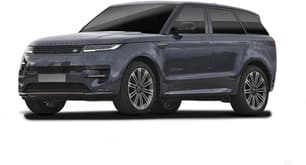
The latest generation Sport is still a big and imposing two-tonne SUV, but it’s also definitely sportier to look at and the SV changes only add to that.
It only takes a moment looking at it and it’s clear this is an SUV that means business. The 23-inch wheels fill out the guards, the air-suspension can lower the body to the ground and the aerodynamic package, including the front splitter, make for a purposeful look.
The carbon-fibre bonnet can be finished with the centre section exposed, showing off the weave of the fibres, which is a nice touch, although fake vents on the bonnet and front fenders are a bit disappointing.
Audi has made some subtle tweaks to the RS3 that has somehow made this snarling hot hatch look even angrier.
Up front there’s a new fascia featuring more open sections, which in turn improves air flow. A black styling package is now standard so it almost looks like the entire front is open and ready to eat you alive.
The matrix LED headlights now have a darkened finish which adds to the menacing look. There are new signatures, including a special chequered flag one for the RS3 which looks top notch.
Around the side it surprises me just how much wider the front is compared to the rear. Both have big, muscular haunches, but it shows this hot hatch is a bit of a bulldog. I’m a big fan.
These haunches stand out even more when you opt for the new Daytona Grey Matte exterior paint. While the extra $11,400 for the privilege makes me wince, it looks sexy on this car.
The standard 19-inch ‘Y-spoke’ alloy wheel design remains unchanged from the pre-update car, though there’s a new, optional ‘cross-spoke’ design that looks delicious (and tricky to clean).
At the back there’s still the classic RS dual exhaust tip motif which looks mean and it’s surrounded by a new black rear diffuser with a motorsport-inspired vertical red reflector in the centre.
The new LED tail-light signature with the vertical slats is so clean and neat. It looks particularly great in low-light situations or at night.
Inside, the biggest change is the new RS steering wheel with the flat top and bottom. As standard it’s wrapped in perforated leather, but with the optional RS Design package it’s wrapped in 'Dinamica' synthetic suede. I much prefer the standard leather-wrapped unit as the Dinamica likely won’t last in the long run, especially if you’ve got clammy hands.
Other changes include more interior ambient lighting on the door cards through small slits, as well as a new shift-by-wire gear selector. The digital instrument cluster and touchscreen multimedia system set-up remains unchanged which is no bad thing because they look fantastic.
It’s disappointing Audi has stuck with an extensive use of piano black on the centre console because this gets dusty and grimy very quickly, and then can get scratched easily when wiped clean. It now also features on the steering wheel buttons, which are frequent touchpoints.
There are two stand-out features in the cabin, beyond the standard high-level of luxury you expect from a Range Rover Sport.
The first is the SV-specific steering wheel with illuminated paddles, which feels solid in your hands. But the second is by far the most interesting, the so-called Body and Soul Seats (BASS), which Range Rover has developed in conjunction with Coventry University.
Available with either genuine leather or ‘ultra fabric’ and a 3D-print knit trim, the seats look great on the outside but it’s what’s inside them that’s special.
There are four audio transducers integrated into the seat back which can vibrate to the beat of whatever audio track you’re listening to. The system uses AI to detect the lower frequencies and then work out which beats to transmit.
This is technology used by musicians, Coldplay’s Chris Martin reportedly wears transducers integrated into a vest when he performs, but Range Rover is confident it will add to the ownership experience.
It’s certainly an interesting technology and a demonstration across different music genres highlights the way the system adapts to individual songs, but it’s hard not to feel like this is more of a gimmick than something an owner will use every day.
If you don’t like listening to music with it, the Body and Soul Seats also work with a ‘Wellness’ setting that features six audio pieces (designed by Coventry University musicians) - calm, soothe, serene, cool, tonic and invigorate.
It’s probably what you need to help settle your heart rate after you unleash the full performance potential of the Sport SV.
In the back seat there’s none of this technology but they do feature heating and ventilation as well as power recline functions. There’s also four-zone climate control, so every occupant can be comfortable.
The RS3’s standard sport front seats are deliciously comfortable and offer plenty of electric adjustment. This means people of any size and stature should be able to find their desired seating position.
Thanks to the electric lumbar there’s also a massage function for the front seats. This is pretty cool to flick on and relax into, but I wish the massage was a little stronger.
While the new steering wheel looks cool interacting with the buttons on it can be a bit of a hassle. They’re touch-sensitive but do have a satisfying click if pressed harder.
There were moments where I accidentally clicked on the buttons during intensive track driving as my hands were at the nine and three o’clock positions. Not the best thing when you’re meant to be focussing.
The digital instrument cluster offers so much configuration you won’t know what to do with yourself. There’s even a new rev counter design especially for the RS3 which looks very cool.
Moving across, the touchscreen multimedia system is classic Audi. It’s easy to navigate around and hard to get lost in the sub-menus. There’s also wireless Apple CarPlay and Android Auto connectivity which is virtually a given now.
While you need to use the touchscreen for a number of features, I appreciate how Audi has retained so much physical switchgear up front. It’s particularly handy to have physical toggle switches and a small digital display that’s separate from the touchscreen for the climate control.
Another piece of physical switchgear I like up front is the rotary dial for the media controls on centre console. It’s much like an iPod, allowing you to change the volume if you rotate your finger on it like a click-wheel. Major throwback vibes.
In terms of storage up front, it’s decent but not outstanding. There are two cupholders, a wireless phone charger, a centre console box as well as a lockable glove box.
Moving to the second row, it’s clear it’s more for the sake of it, rather than having a space you’d want to use all the time. At a leggy 182cm tall, I have minimal legroom behind my own driving position.
With headroom, it’s adequate in the hatchback and not great in the lower-slung sedan. I need to kink my neck in the latter to fit, which isn’t comfortable.
The second-row bench seat is comfortable, offering enough support for short-to-medium trips. I wouldn’t want to get stuck back there for too long, however.
In terms of amenities, there are air vents mounted on the back of the centre console with a dedicated third zone of climate control, two USB-C ports, nets on the seat backs as well as a fold-down centre armrest with cupholders.
At the back there’s a power tailgate for the hatchback, however the sedan only has a power-opening boot lid. This means you need to manually shut it, which isn’t uncommon for sedans.
Boot space in the RS3 is a weak spot due to all the componentry for the all-wheel drive system and the tricky rear clutch set-up. There’s only 282L for the hatch and 321L for the sedan, which isn’t much.
In reality, however, the boot space is still usable. It’s fairly square and there’s barely any boot lip, meaning you can slide things in and out with ease.
Boot-related amenities include a netting system to keep things from sliding around, a light, some hooks and a 12V socket. There’s also a parcel cover for the hatchback.
Unfortunately there’s no spare wheel of any kind under the boot floor in the RS3 as this is where the 12V battery lives. Instead there’s a tyre repair kit. This isn’t uncommon in performance cars, though it’s disappointing if you frequently travel in the country, away from tyre repair shops.
To be blunt, the Range Rover Sport SV is one of those vehicles that if you have to ask, you can’t afford. Particularly in this case, as the model has launched in a single specification level, the Sport SV Edition One, which is priced from $360,800, plus on-road costs.
That puts it into the same financial category as the likes of the Aston Martin DBX ($356,512), Porsche Cayenne Turbo GT Coupe ($364,700) and Lamborghini Urus ($409,744) - especially when we discuss some of the pricier options.
For that price the Sport SV Edition One comes with exclusive branding on the front splitter, centre console, treadplates and puddle lamps as well as a raft of standard features likely to carry-over to the 2025 model year version.
These include carbon-fibre badges, forged 23-inch alloy wheels, digital LED headlights, a carbon-fibre bonnet, 16-way electronically adjustable front seats, Meridian 'Signature' sound system, 13.1-inch multimedia touchscreen, Apple CarPlay and Android Auto and newly developed ‘Body and Soul Seats’ (more on those later).
But if you’re feeling really sporty, you can upgrade your Sport SV with lightweight carbon fibre wheels and carbon ceramic brakes.
These will cost you a staggering $16,130 and $13,500, respectively, but the wheels measure 23-inches and are the largest fitted to a production car (and are also Australian-made by Carbon Revolution in Geelong).
Unfortunately, for now at least, this is all a moot point because Range Rover Australia has already invited and sold all examples of the Sport SV Edition One, so you'll need to be patient and wait until at least 2025 to have the option to buy one.
This facelift for the Audi RS3 has seen the price tag rise beyond six figures for the first time.
It’s now priced from $104,800, before on-road costs for the hatchback or $107,800, before on-road costs for the sedan. This is between $9000 and $9500 more expensive than the pre-update version, depending on body style.
While this may seem like a considerable amount of money for a hot hatch it’s worth noting the Mercedes-AMG A45 S is well over $120,000, before on-roads.
As standard there are 19-inch alloy wheels, darkened matrix LED headlights, a black exterior styling package, 12.3-inch digital instrument cluster, 10.1-inch touchscreen multimedia system with wireless Apple CarPlay and Android Auto, 15-speaker Sonos audio and RS sport seats with Nappa leather upholstery.
There’s a new RS steering wheel with a flat top and bottom, as well as touch-sensitive and shortcut buttons for the 'RS Performance' drive modes. There’s also more interior ambient lighting and a panoramic glass sunroof as standard.
Optional extras include a 'Carbon Package' ($7400 hatch, $6300 sedan), 'RS Design Package Plus' ($2150) in either red or green, ceramic front brakes ($10,800) and a new 'Daytona Grey Matte' exterior paint colour ($11,400). The latter is the first time matt paint has been offered on an RS3 locally.
While there’s a considerable amount of standard kit in the RS3, it’s easy to add tens of thousands to the asking price with the options list, but as a result you can personalise the car exactly how you’d like.
Sadly the wonderfully evocative supercharged V8 engine from the previous generation Range Rover Sport SVR is gone.
But, thankfully, in its place is a more powerful engine that’s exclusive to the Sport SV in the Jaguar Land Rover family.
It’s a 4.4-litre twin-turbo V8 petrol engine with mild-hybrid assistance, which is actually built by BMW and based on the same powertrain as you’ll find in the M5, albeit with some specific Range Rover elements for more off-road capability.
It’s also more powerful than the old supercharged V8, making an impressive 467kW of power and 750Nm of torque, which is a 44kW and 50Nm improvement over the old engine.
It’s paired to an eight-speed automatic transmission, again with a specific SV calibration for improved performance.
And, of course, being a Land Rover, it’s also got a four-wheel drive system with full off-road systems as well as an active locking differential.
The Audi RS3 is still powered by a 2.5-litre turbocharged five-cylinder petrol engine which produces an unchanged 294kW of power and 500Nm of torque.
This is mated to a seven-speed dual-clutch automatic transmission with drive sent through an all-wheel drive system.
Audi claims both versions of the RS3 can do the 0-100km/h sprint in just 3.8 seconds, which is technically 0.1 seconds faster than a Mercedes-AMG A45 S. Top speed is electronically limited to 250km/h.
Despite all the extra power, thanks to the mild-hybrid system it’s more fuel efficient and produces less emissions than the old 5.0-litre V8.
Still, it’s all relative, and as you’d expect from a twin-turbo V8 SUV it’s still thirsty and uses 11.7-12.5-litres per 100km, based on European specifications.
The mild hybrid system uses a crank-integrated starter generator instead of a conventional alternator, providing a boost of up to 20kW and 175Nm of electrical power when needed, with the energy captured during braking and stored in a 48-volt lithium-ion battery.
The Audi RS3 sedan is claimed to consume 8.2L/100km, whereas the RS3 hatch is claimed to consume 8.3L/100km, both on the combined (urban/extra-urban) cycle (ADR 81/02).
Both body types come with a 55L fuel tank and require a minimum of 98 RON premium unleaded petrol.
During my testing I saw an average of 9.6L/100km according to the trip computer. We did around 200km of higher speed driving heading east out of Melbourne, including some spirited sections.
Our on-test figure translates to a range of 570km on a full tank of petrol.
Before driving the Sport SV you need to understand its highly complex suspension system that allows it to be so dynamically capable. Range Rover calls it a '6D Dynamic' system, because it can control the car left and right, up and down and corner to corner.
To achieve this the system uses a combination of hydraulic interlinked dampers, height-adjustable air springs and pitch control, which makes it a semi-active suspension set-up similar to the set-up Formula 1 race cars used to boast.
This allows the Sport SV to sit between 10-25mm lower than the other Sport models and with its clever suspension can actually sit flatter in the corner with less pitch and roll - which is the traditional enemy of high-riding SUVs when it comes to handling.
But the suspension is only part of the story, with the intelligent all-wheel drive, rear-wheel steering, torque vectoring and the active locking rear diff all combining to produce an SUV with incredibly impressive dynamic capability.
Put simply, there’s never been a Range Rover that deserved to be driven on a racetrack. The Sport SV changes that, and thankfully the company let us loose on the challenging Portimao circuit in Portugal to put the SV through its paces.
Range Rover management was quick to stress it doesn’t expect the Sport SV to be a race track regular for its owners, but driving it on track did highlight the extreme potential it offers.
With such a powerful engine it should come as no surprise that the Sport SV hauled down the straight, hitting 233km/h at the end of the long front straight, but with speed still rising which suggests its 290km/h claimed top speed is accurate.
Even from those speeds and with 2560kg of SUV to slow down, with the carbon ceramic brakes it was no trouble whatsoever. Instead the braking was strong and consistent across multiple laps.
The steering is the particular highlight, with the rear-wheel steering helping to turn the Sport SV sharper and more quickly than a big SUV like this should.
But while it impressed on the circuit, we also experienced it on some great winding rural roads across Portugal and this is where it shone even more brightly.
This is an SUV that you’ll genuinely enjoy driving with its ability to carve through corners and blast down anything resembling straight road.
But to ensure it lives up to the Land Rover badge on the front, we also drove it off-road. Nothing too serious at first, just muddy ruts, across some water and over some rocks.
But then we were guided through a course that showed off its articulation potential, which is far greater than the average owner will ever need.
However, to achieve this Range Rover removed the carbon-fibre front splitter, so it’s not the most off-road friendly model the brand offers.
Spoiler alert, it’s a cracker.
Starting up the RS3, you’re instantly aware you’re behind the wheel of something special. Audi has made the start-up more “emotional” with this update and also “optimised” the exhaust flap control for more five-cylinder growl across a wider rev range.
When you’re on the boil, this five-cylinder sounds so fantastic. It’s the clear centrepiece of this car and I’m so happy Audi has continued to offer it.
However, thanks to the addition of a petrol particulate filter (PPF) with this latest-generation model it sounds a little muted in everyday driving. Call me a boy racer, but I want more noise.
Staying on the engine, it’s full of character and gets this small hatch and sedan moving along with ease. Even though the outputs are unchanged with this update, it’s still more than enough; 0-100km/h in 3.8 seconds shows it's more than enough.
The seven-speed dual-clutch automatic transmission in this car keeps the acceleration feeling relentless with snappy gear changes at a moment’s notice. It’s particularly fun taking control of moving between the ratios with the paddle shifters.
In slow-moving traffic, however, the dual-clutch can get a little lost and stuttery, which is a classic characteristic of this kind of transmission.
As standard the all-wheel drive system remains neutral, keeping the front and rear balanced and in check. However, if you flick to the ‘Dynamic’ drive mode you get more rear-biased action which is fun when you exit a corner with some extra heat.
There’s also still a ‘RS torque rear’ drive mode which is essentially a drift mode. Unfortunately we didn’t get to sample this during the launch program.
Additionally, there’s an ‘Individual’ mode that allows you to choose your own destiny. You could spend hours here fine-tuning your desired drive mode which is both great to see but complete nerd-core.
Like the pre-update car, there’s an electronically controlled multi-disc clutch on the rear axle which actively splits the torque between the rear wheels. However, it’s been "optimised" to allow for quicker cornering.
While this is hard to gauge without testing the pre-update and current car back-to-back, the RS3 is so dynamic it feels like you only scratch the surface on public roads. Thankfully we got to see how far we could push it on Haunted Hills, which is a fantastically complicated hill climb circuit in eastern Victoria.
In terms of the steering, there’s a progressive rack as standard which ramps up the steering intensity the more you turn the wheel. In practice, this means the lock-to-lock ratio is very short, making it easy to link up tight corners.
It also makes it easy to navigate tighter driving scenarios, like parking, though it disguises how wide the turning circle is. Expect to do three-point turns fairly often.
For the suspension, the RS3 has adaptive dampers set-up that generally errs on the sportier and firm side. There is a ‘Comfort’ mode which irons out some bumps, but larger road imperfections still transmit harshly into the cabin.
It’s also worth noting at higher speeds there’s a considerable amount of road and tyre noise that comes into the cabin. Thankfully the Sonos sound system does a great job at drowning this out.
Lastly, the safety systems in this car are generally user-friendly, though the lane-keep assist can be a little too hands-on, especially on narrow roads with poor lane markings. Thankfully you can switch this off by pressing and holding a button on the end of the indicator stalk.
The Sport SV comes generously equipped with safety gear, as you’d expect at this price point. There’s all the usual passive safety, including airbag coverage for all occupants, and plenty of active safety including adaptive cruise control with steering assist, remote park assist and 3D surround cameras - which are used for off-roading as well as parking.
As with the rest of the Range Rover Sport range, it has been awarded a maximum five-star rating from safety agency, ANCAP.
The regular Audi A3 received a maximum five-star ANCAP safety rating back in 2020, though this only covers front-wheel drive versions and doesn’t extend to the high-performance RS3.
Standard safety equipment includes seven airbags, autonomous emergency braking (AEB), blind-spot monitoring with exit warning, rear cross-traffic alert, adaptive cruise control, lane-keep assist, driver attention monitor, front and rear parking sensors, a surround-view camera as well as a semi-autonomous parking assistant.
AEB is active from 5.0km/h and lane-keep assist activates from 60km/h.
There’s also Audi’s 'Pre-Safe' system as standard which automatically closes the windows and sunroof, as well as pre-tensions the seatbelts if the car senses it’s going to be involved in a crash.
Additionally, all owners get three years of complimentary access to 'Audi Connected Services', including online roadside assistance and remote functions through a smartphone app. There’s also 10 years' emergency SOS call support and automatic service reminders.
If you’re worrying about servicing costs, you’re probably shopping at the wrong end of the market, but as with the range-topping Range Rover model the price of the car is expected to include servicing for the first five years and roadside assistance for the same period.
It’s also covered by a five-year, unlimited kilometre warranty.
As with all Range Rovers the car will tell you when it needs a service depending on driving conditions. For example, if you hit the track or go off-roading it will likely need a visit quicker than if you're just commuting to and from work.
Like all Audis, the RS3 is covered by a five-year, unlimited-kilometre warranty. There’s also five years of roadside assistance.
Logbook servicing is required every 12 months or 15,000km, whichever comes first.
You’re able to purchase a five-year pre-paid service package for $4010. That averages out to $802 per service, which seems like a lot until you see how much Mercedes-AMG charges to service an A45 S.
RS3 owners can also purchase two-year packages to extend the warranty, roadside assistance and servicing coverage. This allows new RS3 owners to have warranty coverage for up to nine years and it’s transferable to future owners.