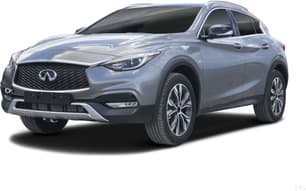
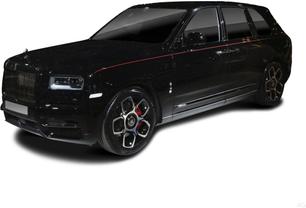
What's the difference?
Tim Robson road tests and reviews the 2016 Infiniti QX30 at its Australian launch with specs, fuel consumption and verdict.
There’s no doubt that the compact crossover segment is a vitally important place for any carmaker to be. Nissan’s luxury arm, Infiniti, is no different, and thanks to a decision from its Japanese masters, the diminutive premium brand will go from having no players on the field to having two marquee players in a matter of just a few months.
The architecturally identical front-wheel-drive Q30 launched only a month ago in three variants, and now it’s the turn of the all-wheel-drive QX30 to take to the pitch.
But is there enough of a difference between the two to actually consider them different cars? Is it adding a layer of complexity for the prospective Infiniti customer? As it turns out, the differences run more than skin deep.
The truly great thing about great wealth - I mean like, drop $1 million on a new Rolls-Royce with a casual yawn and a mouse click wealth - would be how great it is not having to do anything for yourself.
Personally, I would hire a chef, so I’d never have to cook again, and a pilot to fly my private jet, so I’d never have to catch pneumonia while flying 34 hours to Ibiza with strangers to do my weird job (oh, and if I was rich I wouldn’t have to work anyway), and in theory I might even hire a chauffeur for those odd times when I didn’t want to drive myself in one of my fleet of beautiful cars.
All right, so I can’t even imagine that last one, but the most interesting fact I gleaned while in Spain, tirelessly testing the new Rolls-Royce Cullinan Series II, is that even the ridiculously rich are falling out of love with not driving these days.
Perhaps, being tech-savvy types, they can see the end of driving and the rise of autonomy coming and they want to make the most of it while they still can. But according to Rolls, the percentage of its buyers who sit in the back rather than in the driver’s seat has flipped entirely over the past 15 years.
Back in the day, 80 per cent of Rolls owners were back-seat passengers, blowing cigar smoke at the back of a chauffeur’s head, while 20 per cent actually drove their expensive motors.
Today, the number who drive themselves has soared to 80 per cent, and apparently that’s not just because it would feel weird being chauffeured around in what is now the most popular Rolls-Royce by far - the Cullinan SUV.
The other big change, apparently, is that the average age of a Rolls-Royce buyer has also dropped, from 56 to the low 40s. And that means more buyers with kids, and gold-plated prams and other associated dross, which means they need bigger Rolls-Royces, family-sized SUV ones, which again helps to explain why the Cullinan now makes up as much as half of all the brand’s sales in some markets.
And why the arrival of this, the facelifted, tweaked and twirled Series II version of a car that was greeted cynically by many in the media when it arrived (“one group was not sceptical, and that was our clients,” as a Rolls spokeswoman delightedly pointed out) is such a big deal.
Even though it’s almost identical to the Q30, the QX30 manages to feel sufficiently different in suspension tune and cabin ambiance to be considered different.
It’s a disappointing oversight, though, by Infiniti to deny the base GT such basic safety fundamentals as a rear view camera (which Infiniti assures us is being worked on).
The Cullinan might not be the most beautiful or traditional Rolls-Royce, and it’s a shame modern success means providing an SUV option to everyone, but it’s still a remarkable machine, either to drive or just to sit in. It remains not just a marvel of engineering, but a marvellous of engineering. Hats doffed, old bean.
Note: CarsGuide attended this event as a guest of the manufacturer, with travel, accommodation and meals provided.
The QX30 is one of the first projects to result from a technology partnership formed between the parent company of Mercedes-Benz and the Nissan-Renault Alliance.
In a sign of how worldly the car industry is becoming, the QX30 is built in Nissan’s Sunderland plant in the UK, using the German Mercedes-Benz A-Class platform and powertrains, all under Sino-French ownership via the Nissan-Renault Alliance.
On the outside, the design that first aired on the Q30 is pretty unique. It’s not a subtle car, with deep crease lines along its sides that, according to Infiniti, is an industry first in terms of manufacturing complexity.
When it comes to differences between the two vehicles, it’s minimal at best. There is a 35mm increase in height (30mm from taller springs and 5mm from roof rails), an extra 10mm in width, and extra trims affixed to the front and rear bumpers. Aside from the all-wheel-drive underpinnings, that is pretty much it for the exterior.
The same black plastic overfenders that are fitted to the Q30 are present on the QX30, with 18-inch rims on both the base model GT and the other variant, the Premium.
The dimensions of the QX30 are also an exact match for those on the Mercedes-Benz GLA, with the long front overhang acting as the main visual connection between the two cars.
It is something of an achievement when a team of designers manage to make a facelifted version of a vehicle less ugly, daunting and disappointing than the original.
I thought the first Cullinan, launched five years ago, looked like a London black cab that had been mounted and inseminated by a double-decker bus. Big? Sure? Impressive? Yes. Beautiful? Only if you think Boris Johnson is sexy.
There was a lot of chat at the launch about the changes made for Series II, but in summary they tried to make it look more… like a boat, according to Exterior Design Lead Henry Clarke.
“We don’t look for speedy, overcomplicated lines, we take our inspiration from the luxury world, and it’s often from yachts, it’s that same sense of scale and grandeur, that’s the key to the timelessness of a Rolls-Royce,” he explained.
“We’re not focused on the world of automotive design, and if you look at the Cullinan it has that ethos you think of with a yacht, that strong, vital bow and then everything rearwards, the back of a yacht, has an elegance and grace to it.”
Fair enough, but what I appreciated was that they’ve squared the front end off a bit more, by outlining the grille, adding some gills beneath it and putting in some natty DRLs, and then rounded off the rear a little as well, so that it looks less… awful.
Indeed, after a couple of days of staring at it (and particularly admiring how good it looks in your rear-view mirror when behind you), I did come around to its looks. Certainly a lot more than last time.
And strangers driving past seemed to really like it, because they keep smiling and clapping at me.
The QX30 is obviously very similar to the Q30 in many respects, but the interior is slightly different, with larger, less cosseting seats up front and slightly higher seats in the rear.
The cabin is also lighter in overall appearance, thanks to a paler colour palette.
There are plenty of neat inclusions, including a pair of USB ports, plenty of door storage, a space for six bottles and a sizable glove box.
A pair of cupholders resides up front, along with a pair in the fold-down armrest in the rear.
There is no particularly logical location for the storage of smartphones, though, and the lack of Apple CarPlay or Android Auto is down to Infiniti opting for its own phone connectivity suite.
A decent 430 litres of luggage space behind the rear seats is contrasted by a cramped rear area for all but the smallest of passengers, while sharply shaped rear door apertures making getting in and out a bit of an ask.
There are two ISOFIX baby seat points and a 12-volt socket in the rear, as well.
In terms of being a vehicle you might actually use - and keeping in mind that if you can afford one of these you’ve also got at least a half dozen other choices - every day, the Cullinan is the pick of the Rolls-Royce enclosure.
From the big boot space - 600 litres with the seats up, 1930 litres with them down - and its lovely little Viewing Suite, through the spacious rear relaxing zone to the absurdly comfortable and plush front seats, there’s a sense of grandeur about the whole Cullinan experience.
You can opt for a champagne fridge between those rear seats, if you like, or you can just lie back and stare at the blinking pins of light in your 'Starlight Headliner' and imagine that each one of them represents one of your millions, smiling down at you.
It’s a lovely place to be, in short, and with its super-thick double glazed glass, coated with an acoustic layer on top of that, and carpets thick enough to keep out road noise on their own, it’s also a very pleasantly quiet one.
The QX30 will be offered in two variants; the base model GT at $48,900 plus on-road costs, while the Premium will cost $56,900.
Both come equipped with the same engine; a 2.0-litre four-cylinder turbocharged petrol engine that’s sourced from Mercedes-Benz and also used on the Q30 and Merc GLA.
Eighteen-inch rims are standard on both cars, while an electronic handbrake, 10-speaker Bose audio, 7.0-inch multimedia screen and a full set of LED lamps all round are fitted across both variants as well.
Unfortunately, the QX30 GT misses out on a reversing camera all together, a fate it shares with the Q30 GT.
Infiniti Cars Australia told us that this was an oversight at the time the cars were being specced for Australia, particularly in light of the other technologies that the car would receive, like automatic emergency braking.
The company says it’s working hard to bring a reversing camera to the GT.
The top-spec Premium gets leather trim, a powered driver’s seat, and additional safety equipment like a 360-degree camera and radar cruise with brake assist.
The only optional extra on each car is metallic paint.
Value? Price? What are these things you speak of, little plebeian person? Such is the disdain for such things at Rolls-Royce that they wouldn’t even tell us what the Series II is going to cost when it lands in Australia later this year.
The people who can afford one don’t much care, of course, but for the rest of us, who like to shake our heads and make low, whistling noises, you can bet the price will rise just a little from where it was with the original Cullinan - and that was $705,000 for the basic car, or closer to $795,000 for the sportier, and blacker, Black Badge variant.
In terms of value, it’s hard to grasp that any car could cost that much, but for a Rolls buyer the equation is very different. They don’t need a Rolls, no-one does, but it makes a nice change from buying art works, gold or small countries.
In terms of features, it has almost too many to mention, but let’s pause on the marvellous massage seats, the bespoke sound system, entirely unique to this case and built by Rolls itself, with incredible levels of detail, the Rolls umbrellas tucked into each door and the very lovely 'Viewing Suite'.
This consists of two pop-up seats in the rear, with a little champagne and canapés table in between, where “you can watch your children play football”.
Try that in Australia, at the rugby league, and you’ll be covered in half-time oranges and abuse spittle in no time. Stick to the polo, perhaps.
Just the one engine is used across both cars; the 155kW/350Nm single-turbo 2.0-litre four-cylinder petrol engine from the Q30 and A-Class.
It’s backed by a seven-speed transmission and wired into an all-wheel-drive system that is biased towards a front-drive configuration.
Sourced from Mercedes-Benz, up to 50 per cent of drive can be sent to the rear wheels, according to Infiniti.
Rolls-Royce has committed to being a fully EV brand by 2030, so it’s a safe bet this Series II Cullinan will be the last one offered with its storming, staunch V12 engine.
Indeed, Rolls hinted the only reason it hung around in this version is that this is only a mid-life face-lift for the Cullinan, and the car that replaces it will arrive on an entirely new, all-electric platform.
As good as the EV Roller, the Spectre undeniably is, driving this old-school Cullinan with its 6.75-litre twin-turbocharged V12 making the kind of thumping, torque-thick, nothing-is-too-much-trouble acceleration is a hoot.
It’s not loud, but it’s just loud enough that you can enjoy its deep, brassy tones, and it’s got plenty of power in reserve to hurl even this 2.75-tonne machine past lesser vehicles with ease.
There are two Cullinans to choose from, of course, with the base model providing a very pleasant 420kW and 850Nm or the sportier Black Badge version (Rolls calls it the brand’s “alter ego”) with 441kW and 900Nm.
Infiniti claims a combined fuel economy figure of 8.9L/100km for the 1576kg QX30 across both the variants; this is 0.5L thirstier than the Q30 version.
Our brief test yielded a dash figure of 11.2L/100km over 150km.
Rolls-Royce claims the Cullinan will provide you with between 16 litres per 100km and 16.8L/100km, but I believe you’d have to drive it quite steadily to achieve even that quite appalling figure.
Twelve cylinders, 2.75 tonnes, you do the math, but it's interesting to note that with a nearly full tank - and we’re talking 100 litres of fuel - my distance to empty was looking like barely more than 500km - that’s an EV-like number.
Again, it would be easy to think that the QX30 would feel almost identical to its lower-riding sibling – but that would be incorrect. We criticised the Q30 for being a bit too buttoned down and unresponsive, but the QX30 feels more lively and involving, thanks to its unique spring and damper set-up.
Even though it’s 30mm higher than the Q, the QX doesn’t feel it at all, with a benign, pleasant ride with good body roll control and competent steering.
Our front-seat passenger complained of feeling a little ‘hemmed in’, which is a valid point. The sides of the car are very high, and the roofline is quite low, exacerbated by the steeply raked windscreen.
The 2.0-litre four-potter is smooth and punchy, and the gearbox well suited to it, but it’s lacking in aural character. Luckily the QX30 does a terrific job of suppressing noise before it gets into the cabin, then…
The first word that comes to mind when describing the experience of driving a Rolls-Royce the size of a small housing estate is 'intimidating', because it's one of those cars where you take a few deep breaths before setting off (while muttering “please don’t crash it”) and then some sharp intakes of breath the first few times you find cars coming towards you on a narrow road, of which there are many on Ibiza where we were summoned to drive it.
I followed a panicked young man from India who had never driven a Rolls, nor a left-hand-drive car before, and boy, he sure looked intimidated, even if he didn’t ever get above 30km/h.
The incredible thing about the Cullinan, however, is how quickly it relaxes you and how astonishingly light and easy it is to drive. The steering feels almost absurdly light at first, you really can drive it with just one finger, two if you’re feeling cautious, but once you get used to it it just feels very Rolls-Royce.
The whole brand lives on the idea of effortlessness, wafting over the world, and the much-touted 'Magic Carpet Ride', and it really does deliver that sense of ease. You’re almost as relaxed at the wheel as you are in the rear seat (and the massage functions only make you feel more so).
Speed humps do upset the Cullinan, but only a very little, and you’re aware when the car finds broken surfaces, but only distantly so. It feels like someone is dealing with bumps and imperfections in a far-off-place, perhaps the car’s basement, and it shouldn’t worry you too much.
When traffic annoys you, you can just make it disappear by engaging your whumping V12 engine and making the world go briefly blurry.
Attempt to throw the Cullinan through sharp bends at speed, however, and it reacts in much the same way you’d expect the cruise ship it somewhat resembles to.
There’s a bit of body roll, but it’s all quite polite and a sense that if you need to drive like that, perhaps you should go and get one of your other cars.
The Black Badge version does feel just a trifle sportier than the base Cullinan but we’re splitting very grey and expensively coiffed hairs here.
The overall experience is one of grand relaxation, imperiousness and a certain touch of superior glee.
The QX30 gets seven airbags, auto emergency braking, forward collision warning and a pop-up bonnet as standard across the line.
The base GT does, however, miss out on a reversing camera.
The Premium model also offers a 360-degree camera, blind spot warning, radar cruise control and brake assist, traffic sign detection, reverse motion detection and lane departure warning.
The Rolls-Royce Cullinan SUV has not been ANCAP tested, but it feels safe because it’s bigger than a tank. It has eight airbags - driver, front passenger, two curtains, driver side, front passenger side, two rear passenger side), and a full-suite of active-safety tech including Forward Collision Warning and Automatic Emergency Braking.
The Q30 is offered with a four-year, 100,000km warranty, and servicing is suggested every 12 months or 25,000km.
Infiniti offers a fixed three-year service schedule, with the GT and the Premium both costing an average of $541 over the three services provided.
Questions about service intervals and warranties seem to confuse the people at Rolls, as if none of their customers have ever bothered to ask.
Yes, you would think servicing would be free when you’re pushing a $1 million price tag, and that the warranty would be for life, particularly considering the low mileage on these things, but it is, in fact, just a four-year servicing and warranty offer for Australian customers of this vehicle. So that means an unlimited-mileage warranty, including all services, for the first four years (at which point you obviously buy a new one). "Rolls-Royce Motor Cars will offer a service inclusive package but no pricing available yet and this will not be required until the fifth year of ownership."