What's the difference?
For the first time in Australia, the mid-sized Hyundai Tucson is being offered with a hybrid powertrain – which combines its spritely turbo-powered engine with a fuel efficiency-improving electric motor. And it might be enough to swing you to becoming a hybrid fan.
The new powertrain makes the Tucson a proper competitor against Australia’s darling, the Toyota RAV4 but the Nissan X-Trail e-Power and Kia Sportage remain strong rivals.
This week I’m family-testing the mid-spec Elite Hybrid with the N Line option pack to see how the newly updated Tucson handles family life.
In the realm of family friendly mid-size SUVs, few names have the same reputation as Mitsubishi’s Outlander.
While this new one looks almost identical to the previous version, it’s hiding some serious, Australian-flavoured changes under the skin.
But in a segment now full of not only upgraded mainstream rivals, but also new cut-price alternatives from China, does such a modest upgrade to the Outlander do enough to deserve your consideration in such a crowded market?
We went to its Australian launch to find out.
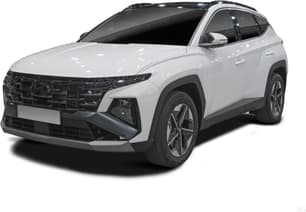
The updated Hyundai Tucson Elite Hybrid N Line offers families space, features and easy-enough handling for everyday stuff and the occasional weekend adventure pursuits.
The price point is higher than the previous non-hybrid model but you get a lot of bang for your buck and my family was comfortable this week.
Mitsubishi has leaned into its strengths with this Outlander update, spending its money in subtle areas to upgrade what was already a widely appealing mid-size SUV.
The local tuning has made a notable difference to the refinement and comfort of this version, while subtle updates to the software and interior trim help to refine things even further.
If you’ve had an Outlander before, you’ll love this one, although it doesn’t help the brand to challenge new players on the value front. This leaves you with the decision of whether to pick a brand with the reputation and network of Mitsubishi, or roll the dice on a far more affordable new player.
For what it’s worth, it’s genuinely tough to pick a sweet spot here. I think the best picks are at either end of the spectrum, with the ES being outstanding value, and the Exceed being particularly plush.
Note: CarsGuide attended this event as a guest of the manufacturer, with travel, accommodation and meals provided.
The Hyundai Tucson has seen a minor facelift on the exterior but most of the changes are in the cabin.
The N Line pack means that you get 19-inch alloy wheels over the standard 18-inch version as well as extended body panelling instead of black plastic trims. There is N Line badging across the car too, but N Line option pack does limit you to just four exterior colour choices.
The front features new stacked LED DRLs which tie in with the fang-like design of the rear LEDs. The origami-styled panelling looks more severe than the previous model which helps it stand out in a class that’s heavy on rivals.
The cabin features a completely reconfigured dashboard and now sports a large curved display panel that houses those upgraded tech screens and a new 6.6-inch climate control panel.
The centre console has been redesigned to look like it’s floating and now adds an extra-large storage cubby underneath it.
The upgraded interior makes the Tucson a leader for the mid-sized SUV segment and is very pleasant to spend time in.
Blink and you’ll miss the changes. Actually, squint and you still might miss them. Aside from the eye-catching new 20-inch wheels on the Exceed and Exceed tourer grades and the new ‘Moonstone Grey’ paint colour, it’s hard to tell the new Outlander apart from its predecessor.
Look closer and there’s new lower garnish designs front and rear, a tweaked grille and a smoked appearance for the rear tail-light clusters.
It’s very subtle stuff, but Mitsubishi has chosen to spend its time and money on upgrades on unseen areas.
For example, the bonnet is now steel rather than aluminium, which helps with noise insulation (and also has the side-effect of removing the high-speed ‘fluttering’ effect the aluminium bonnet had on the previous version), there’s additional sound insulation throughout the car, and cladding in the transmission tunnel to make the cabin a quieter place.
Back on the topic of appearance, though, the dash and console has also been tweaked a little. For example, the new screen looks a bit more contemporary, with a much smaller bezel and more attractive software. The console has been rearranged to move the bottle holders to one side of the electronic gear shifter, which makes for a larger centre console.
High-grade leather seat trims also now have alternate patterns, but the range follows the same trims, from cloth on the ES and LS, while the Aspire gets a microsuede and synthetic leather blend, while the Exceed and Exceed Tourer get the ‘high-grade semi-aniline’ leather trim.
The cabin up front is spacious with plenty of head- and legroom on offer. You also won’t jostle for elbow room either when you have a passenger.
The seats are comfortable with their heat function but you might still get fatigue on longer trips as you only get adjustable lumbar on the drivers side and it's simple at best.
The back seat has really good space for the class and no matter the passenger, they were comfortable back there. The seats in the rear are well-padded and access to this row is good for sliding in a child seat as the door aperture is wide.
Other amenities are average with directional air-vents, a single reading light, and a fold-down armrest. My seven-year-old son found the window sills to be quite high, so he didn’t get the view he wanted.
The individual storage is excellent for the class with the redesign as you get a dedicated storage shelf in front of the front passenger and a massive cubby that easily fits a handbag underneath the mid-sized centre console.
There are two cupholders and two drink bottle holders per row but the rear storage bins are skinny. The rear row also gets map pockets but again, these are shallow.
The upgraded technology is a must have and the new multimedia system is easy to use once you spend time with it and looks great with its graphics. The system has built-in satellite navigation, over-the-air updates and wireless connectivity for Apple CarPlay and Android Auto.
Connecting the CarPlay is simple and maintains a strong connection.
Charging options are great with two USB-C ports per row and the front also gets a wireless charging pad and a 12-volt socket to choose from. The centrally located position of the charging pad is handy and the liner grippy - so no phone movement.
Rounding out the practicality is the boot, which has a wide aperture and a loading space level with 582L of capacity available with all seats in use, which is good for the class.
The back row has a 60/40 split but don’t fold flat – they sort of spring up a bit, which might annoy when you do a big Bunnings run.
There is a 12-volt socket, a space-saver spare tyre underneath the floor and you get a powered tailgate in this model – which I always like.
The previous Outlander was already known for having a spacious and versatile cabin, and this continues for the new car with a few small tweaks.
The width and satisfying seat positioning continue, and seats in all grades are generous and comfortable, but particularly the leather seats on the Exceed and Exceed Tourer grade we tested.
Adjustability is good in all positions, and the digital instrument cluster has an attractive dual-dial layout and functional display options. While not the best in class, it’s far better than many rivals.
The touchscreen’s new software is meant to be faster, but I found it a bit laggy still, although the integration of Google’s API into the navigation suite is an excellent tweak, making it relevant and useful for much longer.
The tweaks to the centre console make the area more space efficient and useful, but the new cupholders seem strangely shallow, potentially causing large bottles to tip. The tweaked centre console box is nice and large, and the wireless charger is nice and accessible, although its surface is not quite rubbery enough to stop your phone from leaving the charging area in the corners.
The back seat is noticeably stadium – you sit a fair bit higher than in the first row, which eats into headroom in cars equipped with a sunroof for adults. However, width is good, as is the seat comfort.
The rear doors open nice and wide, which should make fitting a child seat easy enough, and the floor is surprisingly flat, too, which makes the middle position more useful.
The third row, which I sampled in an Aspire grade, is both hard to get into and tight once you’re in there. The second row can slide forward on a rail, offering just enough room for me, at 182cm tall, to fit back there, with my knees hard up against the seat in front, and my head nearly touching the roof.
It is for this reason Mitsubishi calls seven-seat versions ‘5+2’. Good for kids, maybe, but not adults for any extended period of time.
The boot is enormous with two rows in use (485 litres in five-seat versions, or 478 litres in seven-seaters), and for this update, the space now has a wider aperture that should make loading objects easier. Space with seven seats up is 163L. Five-seaters get a full-size spare under the floor, while seven-seaters get a space saver.
Braked towing capacity is a middling 1600kg for petrol-powered variants. The brand says not many Outlander buyers are focused on towing as a key capability for the mid-sizer.
There are now six variants for the Hyundai Tucson with the release of the hybrid powertrain and all six have the choice of being either a front-wheel-drive or all-wheel drive with either the petrol engine or hybrid powertrain. And every grade gets the option of adding the N Line style pack. So, there is no excuse for not getting the combo you actually want now.
The model on test is the mid-spec Elite Hybrid with the N Line option pack and its priced from $55,100 before on-road costs. That positions it towards the top end of the market but you get an SUV that's more feature-heavy than most of its rivals.
The standard equipment for the upgraded Elite Hybrid N Line now includes dual 12.3-inch technology screens, wireless Apple CarPlay and Android Auto, as well as a 6.6-inch climate control touchpad.
Other equipment includes a powered driver’s seat, heated front seats, suede/leather upholstery, dual-zone climate control, wireless charging pad, digital radio, four USB-C ports, keyless entry, push-button start, space-saver spare wheel and a powered tailgate.
The Kia Sportage SX hybrid is more affordable at $45,950 MSRP but unlike the Elite Hybrid it misses out on wireless connectivity for phone charging and phone integration apps.
The Toyota RAV4 XSE AWD is priced from $52,585 MSRP but misses out on the newer and bigger technology screens that the upgraded Elite Hybrid has.
The Nissan X-Trail Ti 4WD e-Power is the closest rival in terms of price ($55,090 MSRP) and available features.
Let’s get the bad news out of the way first: prices are up across the whole Outlander range.
The increases are modest, contained to between two to three thousand dollars across this mid-size SUV’s sprawling eight-variant range.
It sounds like an overwhelming number of versions but the Outlander is split across five grades in front- or all-wheel drive, with either five or seven seats.
Check out our pricing table below for the detailed prices before on-road costs:
Traditional rivals in the 5+2 mid-size SUV category include this model's platform-mate Nissan X-Trail (from $38,025 - $59,265) and the Honda CR-V ($41,900 - $59,900), with the Hyundai Santa Fe ($53,000 - $72,500) and Kia Sorento ($50,880 - $84,660) being a price-bracket above.
The biggest issue is the Outlander is facing increased competition from models like Chery’s Tiggo 7 (as a five-seater), which can be had for as low as $29,990 drive-away! Even the most expensive version of the Tiggo 8 (seven-seater) in plug-in hybrid form costs the same as a mid-grade Outlander, at $49,990 (d/a).
Options like this put the choice back in your hands. You can choose a brand with the heritage and support network of Mitsubishi, or you can go with the value of a new player yet to put those runs on the board.
Although it has an almost identical visage to the previous car, there are some major upgrades hidden below the metal. Sure, there’s a tweaked equipment list, but importantly, there’s a completely revised ride and handling tune, which was developed by Mitsubishi right here in Australia using local expertise.
It’s a similar program to the successful ones undertaken by Kia and Hyundai in recent years to improve the handling of their cars, and Mitsubishi in Japan was impressed enough with the depth of the changes that most of them have been adopted to the global tune for the car.
On the topic of standard equipment, LED interior lights and the 12.3-inch digital dash have been made standard across the range, there is now seat ventilation to join the seat heating for the front two positions in the top Exceed and Exceed Tourer grades, while the upper mid-spec Aspire grade scores front seat heating and a heated steering wheel.
The 12.3-inch multimedia screen has also been upgraded, featuring a smaller bezel and more processing power for a faster response rate, as well as a tweaked software suite with a new layout. This screen also hosts wireless Apple CarPlay and Android Auto across the range.
In addition, there’s also the introduction of the Mitsubishi Connect phone app, which features a range of safety and security features, as well as the ability to remotely control things like the ignition, climate system, navigation and locking system.
Across the range the audio system has also been upgraded to an eight-speaker Yamaha-developed system, with the top-spec Exceed Tourer grade scoring a 12-speaker Yamaha system with up to 1650W of power.
The interior now uses higher-quality materials, according to the brand, with extended upholstery across the range. The top-spec Exceed Tourer also scores a new brown interior colour.
A 360-degree parking camera is now standard across the range, and the safety suite also includes the driver monitoring system and traffic sign recognition system as also used in the Triton.
The plug-in hybrid version, which is what the Outlander is arguably most famous for, is not yet available, but Mitsubishi tells us it will arrive in a few months time, at very least before the end of 2025, and it, too, will carry an Australian-developed ride and handling tune.
The Elite Hybrid N Line model features a hybrid powertrain that combines an electric motor with a 1.6-litre four-cylinder turbo-petrol engine. They combine to produce 172kW of power and 367Nm of torque. Which is more than enough to make the mid-sized Tucson feel spirited.
This particular variant is AWD and uses a six-speed automatic transmission, which can over rev at times but is mostly smooth with its gear changes.
The petrol-powered Outlander soldiers on with a drab non-turbo, non-hybrid 2.5-litre four-cylinder engine, mated to a continuously variable automatic transmission.
The brand calls this combination “proven” and it’s hard to argue given it hasn’t cropped up with any major reliability issues in the pre-facelift car.
Still, it produces a middling 135kW/244Nm, not as punchy as many turbo options, and nowhere near as efficient as hybrid alternatives.
Those seeking a more powerful fuel-sipping option may want to wait for the PHEV version arriving later this year.
The official combined cycle fuel consumption figure is a low 5.3L/100km, and my real-world usage came out at 6.0L after doing a lot of open-road driving where hybrids tend to be at their least efficient, so that is an excellent result.
The Tucson hybrid is the second best for fuel usage after the Toyota RAV4 hybrid, which sits at 4.8L/100km for combined usage. Overall, the new hybrid powertrain has proven itself to be pretty frugal.
Based on the official combined fuel cycle and 53L fuel tank, expect a theoretical driving range of up to 981km, which is great for a family road tripper.
As a result of its relatively old-school sounding powertrain, fuel consumption isn’t at the forefront of the petrol-powered Outlander, with official consumption ranging between 7.5L/100km for the lightest five-seat ES 2WD version, to 8.1L/100km in the heaviest, top-spec Exceed Tourer AWD.
C02 emissions are also on the high side, which the brand will no doubt be off-setting with the new PHEV version which will offer even more emissions-free driving range than before.
One benefit of this long-serving engine, though, is it can be fed entry-level 91RON unleaded, better for the back pocket. The petrol-powered Outlander has a 55-litre fuel tank.
The new hybrid powertrain offers respectable power delivery that makes the Tucson feel zippy in the city and a relaxed cruiser on the open road.
There can be some over-revving when you’re trying to get up to speed and the accelerator and brake feel touchy at first until you get used to them.
On the hybrid side of things the Elite Hybrid has regenerative braking and there are moments of pure EV mode but it kicks in seemingly when it feels like it. When it is on, there’s practically no engine noise but when it's off, the cabin still remains fairly quiet.
My family went off the paved stuff this week and hit muddy and gravel roads on our quest to find a cool picnic spot, and the Elite Hybrid impressed with how it handled the different terrains. It’s not an off-roader but you can still do mini adventures.
The Tucson is mid-sized and has a very clear reversing camera with front and rear parking sensors, so it’s not too hard to manoeuvre or park.
The real negative feedback is that on three separate occasions, our test car randomly shifted into neutral while driving and to clarify, this did not occur while trying to shift into or out of 'drive' but while on the road, already in drive.
The first time it happened, I thought I had somehow bumped the column shifter but on the other two occasions, I happened to be watching my husband drive and he didn’t touch the shifter.
This is probably just a fault on out test car and not indicative of the model in general but it wasn't fun.
The Australian team had a significant amount of input on the driving dynamics of this new Outlander, but does it make a big difference behind the wheel?
We were granted the chance to drive the old one alongside the new version to find out, and the changes are significant.
Overall, the character of the car hasn’t been fundamentally altered. This is still a somewhat plush and soft-around-the-edges family SUV, but redeveloped new suspension parts and even very minor, nerdy modifications like the thickness of sway bars have added up to a much more pleasant vehicle to spend an extended amount of time in.
The first thing you’ll notice is the retuned steering. Mitsubishi’s engineers tell us the tweaked feedback was all down to the software in the rack, and it’s a big difference, upping the firmness of the steering at low speeds, keeping the vehicle on track with more confidence while heading straight, and also removing a slight twitchiness with sudden adjustments.
Next is the cabin ambiance. The new Outlander is a relatively quiet place to be thanks to the extra insulation throughout. It combines with the new steering to give the car much more of a sense of heft than before. The engine is reduced to a distant thrum, and the road is damped away for the most part. Mitsubishi says the 20-inch wheels are a particular hit with buyers, which to me is a shame because I’m willing to bet it’s particularly comfy on the lower-grade tyres.
Elsewhere, the Outlander has a softer initial response to bumps thanks to retuned shocks, and the reduced width of the front sway bar makes for less ‘head toss’ for front seat occupants.
Does it make a significant difference? Yes. The new Outlander is all-round better balanced and better suited to our road conditions. It might not have the sophistication of more expensive options, and it still might be a tad off what the also balanced-and-comfortable RAV4 offers, although it will be interesting to get one back to see how it compares to rivals in a like-for-like test.
Just expect a much more comfort-oriented option than some rivals. These changes don’t make the Outlander as fun to drive as a Mazda CX-5 or a Skoda Kodiaq. For example, while the 2.5-litre engine and CVT combo provides a surprisingly urgent initial response, it's a dull, rubbery power application from there on.
FINALLY! Hyundai has listened to the people.
They have found a workaround for the annoyingly intrusive beeping alerts associated with the traffic sign recognition and speed alert tech. Yes, they still alert unless you turn them off and yes, you still have to turn the damn thing off every time you get in the car, but you not longer have to access five to six menu pages to do so. Hurrah.
The Hyundai Tucson Elite Hybrid N Line has a robust safety features list and includes equipment like blind spot monitoring, driver attention monitoring, safe exit warning, rear occupant alert, forward collision warning, LED daytime running lights, rear cross-traffic alert, lane keeping aid, traffic sign recognition, intelligent seatbelt warning, adaptive cruise control, a reversing camera, and front/rear parking sensors.
Our test model misses out on lane departure alert and the lane keeping aid is too intrusive for every day driving. It gets to the point where you wonder who is driving, you or the car.
The Hyundai Tucson has a maximum five-star ANCAP safety rating from testing done in 2021 and the hybrid variants are covered by this as well. It has seven airbags, including, the newer front centre airbag.
The Tucson has two ISOFIX child seat mounts and three top-tethers.
Auto emergency braking (AEB) is standard and features car, pedestrian, cyclist and junction assist detection which is operational from 5.0 – 80km/h (85km/h for car) but it's usual to see a higher top speed for the car detection (usually 180km/h).
The Outlander has a robust array of active safety kit, with all the key gear like autonomous emergency braking, lane support, blind-spot monitoring and rear cross-traffic alert available across the range. Traffic sign recognition and driver attention monitoring is now available from the new Triton, however it is also worth noting some relatively minor items are only available on higher grades.
The ES and LS grades miss out on adaptive high beams, traffic jam assist and steering assist (although they maintain lane departure warning and lane-keep assist).
Mitsubishi is hoping the updated Outlander will qualify for a continued five-star ANCAP safety rating held by the pre-facelift model.
During our drive we also found the lane-keep and driver attention software (which was much-derided at the launch of the Triton) was reasonably well behaved, with the brand saying it had had significant software tweaks over time to make it less invasive. We’ll need to save our final verdict on this system for when we spend an extended time behind the wheel.
Hyundai offers the Tucson with a five-year/unlimited km warranty and the battery is covered by an eight-year/160,000km warranty which is pretty standard for the class now.
You can pre-purchase servicing for up to five years and the breakdowns are as follows.
Three years or up to 30,000km for $1240 (average $413 per service).
Four years or up to 40,000km for $1700 (average $425 per service).
Five years or up to 50,000km for $2040 (average $408 per service).
The five-year pricing is comparable to its rivals and not outrageous for the class.
Servicing intervals could get annoying if you put a lot of kilometres on your car as they sit at every 12 months or 10,000km, whichever occurs first.
Mitsubishi continues to offer its near-industry-leading 10-year/200,000km warranty, conditional on the car being serviced at a Mitsubishi dealer. Otherwise, it reverts to a five-year/100,000km promise.
The 10 years of warranty is joined by 10 years of capped-price servicing required at 12 month or 15,000km intervals.
Prices are tame, varying between $320 and $680 per visit, for a total yearly average of $434. It’s not the cheapest yearly average out there, but most brands also don’t have capped price servicing extended this far, so it seems like a good deal regardless.