What's the difference?
The Hyundai Sonata N Line is a sedan. Not a hatchback, not a fastback, nor a coupe and definitely not an SUV.
And even though only a handful of people in Australia buy the Sonata N Line each year it’s been updated with a completely different look and new technology, making it an outstanding car in many ways.
The thing is, because we’re obsessed with SUVs in Australia most people will never know how good this sedan is - unlike you.
So, let me congratulate you for making it this far. There’s probably so few of you I could possibly congratulate all of you in person. In an afternoon.
The big question is, though, is the Sonata N Line fit for Aussie families? Well, it scores well, but maybe not where it counts…
Let’s see what’s new and what the Sonata N Line can do.
Do you like swimming against the tide? Do you like to zig when everyone else is zagging? Are you unafraid of making the unpopular choice?
Well, if you align with the above, I have just the car for you.
The Volvo ES90 pushes against most current trends. The luxury sedan used to be the measure of a brand, but not anymore. These days the luxury market is defined by SUVs and sedans have been reduced to an afterthought for many.
But if you’re willing to think outside the SUV-shaped box, there is a lot to like about Volvo’s new luxury offering. Whether it’s a true sedan or not is open to debate, but what it isn’t is an SUV and for those willing to live that counter-culture lifestyle this may be right for you.
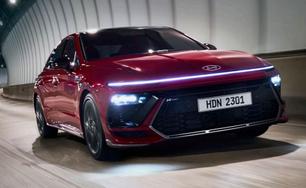
The updated Sonata N Line looks beautifully modern from its new face to the refreshed cockpit, while remaining a ‘driver’s car’ with good dynamics, and a sporty engine.
The Sonata isn’t an ideal family car, however. This is down to a lack of practicality. Although the cabin is fairly roomy, if that roofline wasn’t so coupe-like and cabin storage was better, and the boot had a large hatch opening, and the ride height was more elevated then it would be a great family car. Oh, I’ve just described an SUV.
Note: CarsGuide attended this event as a guest of the manufacturer, with meals provided.
More stylish than ever before, as quiet and refined as you'd expect from a luxury car and yet the stand out feature might once again be safety. Despite seemingly every new car being loaded to the gills with safety features, Volvo has managed to demonstrate industry best-practice and leads the way again.
I would encourage engineers from every other car brand to drive the ES90 to learn how to better integrate the modern suite of active safety features like forward collision warning and lane departure warning.
But beyond that, is the ES90 a car worthy of consideration? Well, pretty much everything it does the EX90 does too, so if you prefer an SUV that’s definitely worth consideration. But if you don’t want an SUV, if you prefer a sedan or just love to be different, the ES90 is a very attractive proposition in more ways than one.
So, we’ve established that the Sonata N Line is a sedan and that means if you’re still reading this you are, a) A Sonata owner looking to trade the old one in for this new one, b) Driving another type of sedan such as a Toyota Camry or Volkswagen Passat and looking to update your trusty steed with one from Hyundai or c) Not in the market for an SUV.
Whatever the reason, sedans lend themselves to being sleek and sophisticated in their styling just by being lower to the ground than SUVs and generally longer than sports cars.
The Sonata N Line is long at 4.91m end-to-end. That’s only 8.0cm shorter than the gigantic Hyundai Palisade which has eight seats. I know… it bends the mind.
This new Sonata N Line looks even wider than the previous version, too, with that broad flat bonnet meeting the Seamless Horizon LED strip.
Fact is the Sonata N Line is 1.86m across - exactly the same as the previous version. Remind me never to wear a 'seamless horizon' T-shirt on days I’m feeling rotund.
If you look closely at the photos you can see the hidden LED headlights flanking the large, dark and low-set grille.
The rear of the new Sonata looks so different from the previous version, too, with its boot lid spoiler and LED tail-lights.
The menacing body kit comes with the N Line grade and accentuates the sporty nature of this car. It’s a good thing it has an engine to back up the looks, but more on that later.
Inside, the Sonata has been given the new 12.3-inch curved screens and a digital climate control display, while the steering wheel is new and adorned with the Hyundai 'Morse Code' badge (the letter H is four dots in Morse Code). It’s a premium and modern looking cockpit topped off with suede and leather leather N Line sports seats.
Discussing Volvo design will draw different opinions depending on your age. As a millennial, I grew up at a time when Volvos were, to quote a famous movie line from the 1990s, ‘boxy, but good’.
But over the past two decades Volvo has smoothed off those boxy edges and become one of the most style-conscious car companies in the world. It has embraced its now-unique place as a Scandinavian carmaker and uses softer edges and more Nordic design themes (such as light coloured interior woods) to ensure the ES90 is simply a good-looking car.
What it isn’t, at least not technically-speaking, is a sedan. That’s because it has a liftback rear-end design, rather than a traditional ‘three-box’ sedan with a conventional boot. That shouldn’t be a deal-breaker for anyone and it means it’s a far more practical design.
It also sits taller than a conventional ‘sedan’, which is an increasingly common trait for modern European sedans as they try to woo would-be SUV buyers. It’s not a lot, you certainly wouldn’t call it a tall or high-riding car, but it is noticeable.
Ends up as an ‘in-between’ design, neither one thing or the other. The closest thing it reminds me of is the short-lived BMW 5-Series GT, which is damning with faint praise, but it speaks to the challenge of making something that simply isn’t an SUV appealing to the modern SUV-obsessed market.
The very stylish cabin features that previously mentioned light coloured wood (at least in our test car) and that unique Scandinavian look. It’s the closest you’ll get to sitting in a Swedish lounge room on wheels.
Sedans might be sleek and sophisticated but practicality is not typically their strength because their low height means passenger access isn’t as easy as it is with an SUV, but mainly because the cargo carrying ability is limited by the relatively small boot opening.
Still, the Sonata N Line does have a big 480-litre boot and cabin storage has been improved thanks to the gear shifter being relocated to the steering column and freeing up space in the centre console for stowing items and a wireless phone charger.
Rear legroom is also good. I’m 189cm tall and I can sit behind my driving position with space to spare. Headroom back there is also good thanks to contoured heading which has a ‘carved out’ section for extra space.
Along with the wireless phone charger there are two Type-C USB ports up front and another two for the second row.
There are four cupholders (two up front and two in the second row) and decent sized bottle holders in the doors.
This lack of practicality compared to an SUV or even a station wagon means the Sonata N Line really isn’t the perfect family car.
In terms of space the ES90 is very generous, which it should be given it's a five-metre long car. There’s loads of room front and the back so you’ll seat four adults in absolute comfort, and can squeeze in a fifth if needed. Thanks to the relatively flat floor, as well as the panoramic roof that can either be opaque or clear, the cabin feels spacious and bright even in the rear.
As for luggage space, the boot measures 424 litres, and obviously it’s very easy to access via the power liftgate. But it’s still not as big as an SUV. The EX90 offers up 655 litres of space in its five-seat configuration. Which is at least a small part of the explanation why SUVs have become the more popular choice.
But what really stands out in the cabin isn’t the space, it’s the technology. The ES90 Ultra’s multimedia system is centred around a 14.5-inch touchscreen that runs all the car’s key functions; you also get a 9.0-inch driver’s display.
Notably, Volvo has opted to offer Google’s operating systems built-in, which means while you can still run Apple CarPlay or Android Auto, if you have a Google account you can sign-in and have your contacts, address book and other details integrated into the car.
It’s a really fast system, too, supported by the most powerful software Volvo has ever put inside one of its cars. Having a big tablet-style screen is great and feels very modern, but if it runs slowly, with lag between commands, it’s not as useful. This Volvo system, particularly the transitions between menus and even the voice assistant, reacts with lightning-fast speed.
Then there’s the sound system we mentioned earlier. It’s a 25-speaker Bowers & Wilkins set-up with 'Dolby Atmos' and an app called Abbey Road Studios. This app has been produced in conjunction with the iconic recording studio made famous by The Beatles. The speakers and the app were all developed together to provide a superior audio experience.
The speakers themselves are incredibly powerful while staying crystal clear, with the Abbey Road app providing the ability to change the sound between 'Modern' and 'Vintage' settings that make you feel like you’re inside a recording studio.
Put simply, it is as impressive a sound system as I’ve ever experienced in a car.
Hyundai offers one type of Sonata in Australia, so there’s not a lot of choice. Actually there’s no choice: it’s the petrol version of the Sonata in the sporty N Line grade or nothing.
But if I were to choose one Sonata this would be the one, even if at a list price of $55,500 it’s quite expensive and about $3500 more than the previous Sonata N Line.
In return for the almost $56K price you’re getting a lot of standard features, including a mountain of new equipment for this updated model.
So, new for this 2024 Sonata are dual 12.3-inch curved screens for media and driving instruments, the digital climate control display, there’s a column-mounted gear shifter, LED ambient lighting and a hands-free boot lid. That’s in addition to proximity unlocking, sat nav, Apple CarPlay and Android Auto and a 12-speaker Bose sound system.
There’s also suede and Nappa leather seats, a leather steering wheel, sunroof, dual-zone climate control, heated and ventilated front seats, a heated steering wheel, LED headlights and the LED strip which wraps around the front of the Sonata.
Hyundai calls it the 'Seamless Horizon', which sounds beautifully poetic and leads us nicely into the Design section of this review.
The ES90 range consists of two models at the time of publication both powered by a single, rear-mounted electric motor, with the twin-motor option available on the EX90 SUV currently not offered in Australia (emphasis on the word ‘currently’).
The range begins with the Pure from $88,880, before on-road costs, and is completed by the current range-topping Ultra variant, which we're testing, priced from $107,990, plus on-roads.
That means it’s cheaper than its direct rivals in the luxury electric sedan market. Audi’s e-tron GT starts at more than $200,000, the BMW i5 line-up is priced from $155,900 and the Mercedes-Benz EQE range begins at $134,900. So, even with this more expensive Ultra variant, Volvo has a clear head-start on the competition.
And Volvo hasn't managed that by skimping on standard equipment. The ES90 comes loaded with adaptive air suspension, 22-inch alloy wheels, a comprehensive safety package (as you’d expect from Volvo) as well as an electrochromic panoramic roof, a smart key you can add to your phone and 'Nordico' upholstery - Volvo’s sustainable synthetic leather.
There’s also a 25-speaker Bowers & Wilkins sound system, but more on that later…
The Sonata N Line comes with a 2.5-litre turbo-petrol four-cylinder engine making 213kW and 422Nm, which is plenty of oomph, and it all goes to the front wheels through an eight-speed dual-clutch automatic transmission.
So no, there’s not a diesel version nor an all-wheel drive version, but this sporty engine suits the Sonata N Line perfectly.
That said a hybrid variant would be good seeing it’s 2023.
As the name suggests, the ES90 Single Motor is powered by a single, rear-mounted electric motor that drives the rear wheels via a single-speed transmission. The motor makes a healthy 245kW and 480Nm, so the 0-100km/h sprint time is 6.6 seconds - sprightly for such a big car.
As alluded to earlier, there is a Twin Motor, all-wheel drive ES90 variant available in overseas markets, with 500kW, but Volvo Australia is yet to confirm when, or even if that will arrive here.
As we were saying above there’s no hybrid variant of the Sonata N Line and there should be. Actually there is, but Hyundai says it isn't available for the Australian market.
So, this turbo-petrol four-cylinder is all we have and according to Hyundai it uses 8.1L/100km on the combined cycle.
When we tested it at the launch our trip computer was reporting exactly 8.1L/100km, but the roads were clear, the traffic was nowhere to be seen, so you can expect that consumption to climb higher if you’re commuting around the city.
Built on Volvo’s 800-volt electrical architecture, the first Volvo to feature the technology, the ES90 is powered by a 92kWh battery that provides up to 554km of driving range on a single charge.
Volvo quotes an NEDC energy consumption of 18.5kWh/100km, with 300kW DC charging able to take the battery from 10 to 80 per cent in 22 minutes. A full, empty to 100 per cent charge using a 16A outlet will take 10 hours.
It should be noted that the EX90 SUV will be upgraded to the 800V architecture with the 2026 model year introduction.
The Sonata N Line’s performance matches its sporty looks. That turbo-petrol engine is responsive and provides great acceleration, the transmission shifts fast and the steering is nicely weighted and accurate.
Add to this better rigidity in the car’s structure in this updated model and a feeling of stability thanks to this being a sedan with a low centre of mass and you have a dynamic and enjoyable vehicle in your hands.
Sure it doesn't have the sky-high visibility that comes from the pilot’s seat of an SUV, but the Sonata N Line is for those who like to drive but still want the practicality of four doors, back seats and a boot.
As you’d expect from a luxury, electric car the ES90 is a quiet and refined vehicle to drive. Being a Volvo, the company has used its experience where it matters, and there is excellent insulation from the outside world. Unlike some EVs that lose the engine and hope that just makes things quieter, the ES90 gives you a genuine feeling of insulation from the exterior hustle and bustle.
Performance is adequate from the single motor but it’s by no means a sports sedan with only 250kW/480Nm and such a big vehicle. But it has the instant response that is an EV trademark so it has all the performance this type of car and the drivers it will attract would likely need. If buyers start banging on the door for more power, Volvo can oblige, but for now it does the job you expect of a luxury four-door.
While it has the sedan silhouette, the taller body and raised ride height on the air suspension are noticeable. You will find yourself looking up at SUV drivers, but not all of them. It’s roughly the same seat height as you’ll find in a modern small SUV, so a slight elevation rather than a big boost.
The ride is what you expect from this type of car. You can adjust the suspension and steering between ‘soft’ and ‘firm’ settings, but even with the latter selected there is a lot of compliance and the ride remains comfortable.
The steering is fine most of the time, but when you have to do parking maneuvers you certainly notice the ES90's steer-by-wire technology. The steering literally feels like an old computer game steering wheel set-up, with very little resistance as the wheel lightly spins from lock-to-lock. It’s not a bad feeling, but it is a bit odd and takes some getting used to.
The ultimate take-away from the driving experience is just how relaxed it is - quiet and effortless are the two words that probably best sum it up.
The Sonata N Line hasn’t been tested by ANCAP, but it does have an extensive armoury of safety tech including AEB (which also works at intersections) able to detect pedestrians, cyclists, other cars and now motorbikes.
There’s blind spot warning which pulls you back into your lane and lane keeping assistance, plus rear cross-traffic alert with braking, as well.
A rear occupant alert will remind the driver there are passengers in the back seat and 'Safe Exit Assist' will protect children from opening the door into moving traffic.
Along with all this, which Hyundai bundles together in its 'Safety Sense' package as standard on the Sonata N Line, there are also side airbags protecting the rear passengers and plenty of airbags in the front for the driver and passenger.
This is obviously the area that Volvo is famous for, but with seemingly every other brand forced to raise their own safety features over the years, does the Swedish brand still do anything special on this front?
Absolutely.
Put simply the Volvo suite of active safety systems is better developed and better integrated. Every rival car to the ES90 will have a similar list of features, including adaptive cruise control, forward collision warning, lane departure assist, road sign information and more. But Volvo has made it work so well that unlike rival models, you never even think of turning them off, they don’t beep and bong ad nauseum, they only work if you need them in an emergency - which should be the standard.
One thing to note is the ‘bump’ on the roof (you may see in the images) to house a Lidar system. However, Volvo split with its supplier and has decided to abandon this technology for the ES90. That means the 2026 model year examples will not have the roof bump, but still come loaded with five radars, seven cameras and 12 ultrasonic sensors for the excellent coverage of the surrounding environment.
The only thing that stops the ES90 being worthy of a 10/10 safety score is the lane keeping assist could do with some fine-tuning, as it has a tendency to move in the lane slightly too much.
There is no current ANCAP score for the ES90, but the EX90 SUV does, and given the organisation's previous sharing of scores between different models based on the same core underpinnings, there is no reason to believe the ‘sedan’ wouldn’t be just as safe.
The Sonata N Line is covered by Hyundai’s five-year, unlimited-kilometre warranty.
Servicing is recommended annually or every 10,000km. There’s no capped price serving but you can buy a 'Lifetime' or a five-year plan that work out to be between $350-$400 on average a year.
The ES90 is covered by Volvo’s five-year, unlimited kilometre warranty, which is competitive for the luxury market even if it’s shorter than the cover some mainstream brands offer.
Servicing costs are currently unclear, at the time of publication. Volvo Australia typically offers five-year servicing plans for its models but is yet to finalise the cost for its electric vehicles.
Despite its long history in Australia, Volvo still has a relatively small footprint in this country with only 28 dealers/service centres spread across the country. However, more are planned to expand that coverage in the coming years.