What's the difference?
The Hyundai Sonata N Line is a sedan. Not a hatchback, not a fastback, nor a coupe and definitely not an SUV.
And even though only a handful of people in Australia buy the Sonata N Line each year it’s been updated with a completely different look and new technology, making it an outstanding car in many ways.
The thing is, because we’re obsessed with SUVs in Australia most people will never know how good this sedan is - unlike you.
So, let me congratulate you for making it this far. There’s probably so few of you I could possibly congratulate all of you in person. In an afternoon.
The big question is, though, is the Sonata N Line fit for Aussie families? Well, it scores well, but maybe not where it counts…
Let’s see what’s new and what the Sonata N Line can do.
China has made a substantial impact on the Australian ute market by single-handedly creating a new category of utes, which are larger than traditional Ranger/HiLux size but smaller than full-size US pick-ups.
Chinese brands competing exclusively in this segment include the BYD Shark 6, GWM Cannon Alpha and platform-sharing LDV Terron 9/MG U9, but they’ve recently had to make room for another competitor with the return of Foton and its all-new Tunland model.
Having withdrawn from the Australian market in 2019, the brand has regrouped under long-established local distributor Inchcape with a new four-model Tunland range offering 4x2 and 4x4 drivetrains, a generous warranty and expanding national dealer network.
Established in 1996 and headquartered in Beijing, Foton claims to be China’s largest commercial vehicle manufacturer and sales leader for the past two decades. So, there’s plenty of truck building experience here, enhanced by technology partnerships with blue-chip global automotive brands including Cummins, Daimler, ZF, Bosch and Borg Warner.
We were recently handed the keys to the entry-level model grade to see if it has the performance, practicality and price to be a significant competitor in the work-focused ute market.
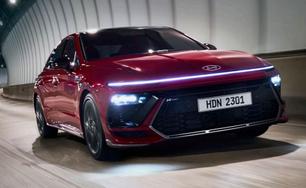
The updated Sonata N Line looks beautifully modern from its new face to the refreshed cockpit, while remaining a ‘driver’s car’ with good dynamics, and a sporty engine.
The Sonata isn’t an ideal family car, however. This is down to a lack of practicality. Although the cabin is fairly roomy, if that roofline wasn’t so coupe-like and cabin storage was better, and the boot had a large hatch opening, and the ride height was more elevated then it would be a great family car. Oh, I’ve just described an SUV.
Note: CarsGuide attended this event as a guest of the manufacturer, with meals provided.
In pure workhorse terms the V7-C 4x2 is the most impressive Chinese ute we’ve tested, with its ability to legally haul more than one tonne of payload while towing up to 3.5 tonnes of braked trailer unmatched by Chinese rivals (and most others). When you add purposeful styling, ample cabin space, generous appointments and a long warranty, all for less than $40K, the new Tunland model represents compelling value for money.
So, we’ve established that the Sonata N Line is a sedan and that means if you’re still reading this you are, a) A Sonata owner looking to trade the old one in for this new one, b) Driving another type of sedan such as a Toyota Camry or Volkswagen Passat and looking to update your trusty steed with one from Hyundai or c) Not in the market for an SUV.
Whatever the reason, sedans lend themselves to being sleek and sophisticated in their styling just by being lower to the ground than SUVs and generally longer than sports cars.
The Sonata N Line is long at 4.91m end-to-end. That’s only 8.0cm shorter than the gigantic Hyundai Palisade which has eight seats. I know… it bends the mind.
This new Sonata N Line looks even wider than the previous version, too, with that broad flat bonnet meeting the Seamless Horizon LED strip.
Fact is the Sonata N Line is 1.86m across - exactly the same as the previous version. Remind me never to wear a 'seamless horizon' T-shirt on days I’m feeling rotund.
If you look closely at the photos you can see the hidden LED headlights flanking the large, dark and low-set grille.
The rear of the new Sonata looks so different from the previous version, too, with its boot lid spoiler and LED tail-lights.
The menacing body kit comes with the N Line grade and accentuates the sporty nature of this car. It’s a good thing it has an engine to back up the looks, but more on that later.
Inside, the Sonata has been given the new 12.3-inch curved screens and a digital climate control display, while the steering wheel is new and adorned with the Hyundai 'Morse Code' badge (the letter H is four dots in Morse Code). It’s a premium and modern looking cockpit topped off with suede and leather leather N Line sports seats.
If Oscar Wilde was correct in claiming that imitation is the sincerest form of flattery then Ford and Ram should be blushing, judging by some of the Tunland’s styling cues which appear to draw strong design inspiration from Ford’s F-150 (V7) and Ram’s 1500 (V9).
Even so, our base model V7-C 4x2 does not look or feel like the afterthought that workhorse models can represent in commercial fleets. Its alloy wheels and splashes of bright body chrome combined with body-coloured doorhandles/mirror shells and a decorative tailgate looks more upmarket than you’d expect, particularly at this low price.
Riding on a long 3355mm wheelbase with external dimensions of 5617mm length, 2000mm width and 1910 height, its traditional body-on-frame design features twin wishbone front suspension, a leaf-spring live rear axle, electric power-assisted steering and four-wheel disc brakes.
And although it’s a 4x2 it shares many of its 4x4 siblings’ off-road credentials including a useful 240mm of ground clearance, 28 degrees approach/21 degrees ramp break-over/26 degrees departure angles, 700mm wading depth and 13.5-metre turning circle.
Its external dimensions create a spacious interior that nudges the benchmark for workhorse luxury. With Daimler truck DNA evident in its digital screen displays, the plush synthetic leather trim features a combination of quilted white stitching and contrasting red stitching, plus splashes of satin chrome and dark woodgrain highlights on the dash, centre console and door trims.
Sedans might be sleek and sophisticated but practicality is not typically their strength because their low height means passenger access isn’t as easy as it is with an SUV, but mainly because the cargo carrying ability is limited by the relatively small boot opening.
Still, the Sonata N Line does have a big 480-litre boot and cabin storage has been improved thanks to the gear shifter being relocated to the steering column and freeing up space in the centre console for stowing items and a wireless phone charger.
Rear legroom is also good. I’m 189cm tall and I can sit behind my driving position with space to spare. Headroom back there is also good thanks to contoured heading which has a ‘carved out’ section for extra space.
Along with the wireless phone charger there are two Type-C USB ports up front and another two for the second row.
There are four cupholders (two up front and two in the second row) and decent sized bottle holders in the doors.
This lack of practicality compared to an SUV or even a station wagon means the Sonata N Line really isn’t the perfect family car.
With its 2190kg kerb weight and 3305kg GVM, the V7-C 4x2 has a sizeable 1115kg payload rating which is the largest of the Tunland fleet.
It’s also rated to tow up to 3500kg of braked trailer and with its big 6805kg GCM (or how much it can legally carry and tow at the same time) it can tow its maximum trailer weight when carrying its maximum one-tonne-plus of payload. Those are impressive numbers unmatched by its Chinese rivals.
The load tub is protected by a spray-in liner and measures 1577mm long, 1650mm wide and 530mm deep, with 1240mm between the wheel housings ample for carrying Aussie or Euro pallets.
There’s also tailgate assist and load-anchorage points front and rear, but the front ones are mounted near the tops of the sidewalls which is not ideal for securing low loads. Anchorage points near floor level (like those at the rear) are best for securing loads of all heights.
There’s ample room in all key dimensions for the driver and front passenger, where storage includes a bottle-holder and bin in each door plus an overhead glasses holder and large glovebox.
A cleverly designed centre console offers two levels of storage, with dual USB-A ports and a 12v socket in the lower level. There’s also two bottle-holders in the centre and a large box at the back, with an internal A/C vent to keep contents cool and a padded lid that doubles as an elbow rest.
The rear doors open wide to allow easy access to a spacious rear bench seat, given I’m 186cm and have ample knee clearance and headroom when sitting behind the driver’s seat set in my position. There’s also a flat floor that saves central passengers from having to straddle a transmission hump but shoulder room for three big Aussies can be squeezy, which is okay for short trips but a limit of two would be ideal for longer journeys.
Rear passengers have access to adjustable air vents on the rear of the centre console, along with storage that includes a bottle-holder and bin in each door plus pockets on each front seat backrest. The centre seat’s backrest also folds forward to provide an armrest containing two cup-holders.
The 60/40-split base cushions can swing up and be stored vertically if more internal carrying space is required. And although there’s no dedicated under-seat storage compartments, there’s generous space for stowing soft items like sports bags, jackets etc.
Hyundai offers one type of Sonata in Australia, so there’s not a lot of choice. Actually there’s no choice: it’s the petrol version of the Sonata in the sporty N Line grade or nothing.
But if I were to choose one Sonata this would be the one, even if at a list price of $55,500 it’s quite expensive and about $3500 more than the previous Sonata N Line.
In return for the almost $56K price you’re getting a lot of standard features, including a mountain of new equipment for this updated model.
So, new for this 2024 Sonata are dual 12.3-inch curved screens for media and driving instruments, the digital climate control display, there’s a column-mounted gear shifter, LED ambient lighting and a hands-free boot lid. That’s in addition to proximity unlocking, sat nav, Apple CarPlay and Android Auto and a 12-speaker Bose sound system.
There’s also suede and Nappa leather seats, a leather steering wheel, sunroof, dual-zone climate control, heated and ventilated front seats, a heated steering wheel, LED headlights and the LED strip which wraps around the front of the Sonata.
Hyundai calls it the 'Seamless Horizon', which sounds beautifully poetic and leads us nicely into the Design section of this review.
The Tunland range includes the V7-C 4x2 and V7-C 4x4 workhorses aimed primarily at fleet and trade buyers plus two 4x4s variants with a more upmarket/lifestyle focus comprising the V9-L and premium V9-S.
Our V7-C 4x2 test vehicle is the tradie’s entrance to Tunland ownership, which comes standard with the same 2.0-litre four-cylinder turbo-diesel with 48-volt hybrid assist and eight-speed automatic shared by all models, for a tempting list price of only $39,990 before on-road costs. Our example is finished in gleaming Galaxy Silver which is a premium paint option that adds $690.
The V7-C comes well equipped for a workhorse with standard equipment that includes chunky 18-inch gloss black alloy wheels with 265/70R18 tyres and a full-size steel spare.
There’s also LED headlights, tail-lights and daytime running lights, side-steps, spray-in tub-liner, electronic parking brake, front/rear parking sensors, panoramic 360-degree camera with integrated dash-cam, smart key entry/start, USB ports and 12v socket, 12.3-inch driver’s digital instrument cluster, 14.6-inch infotainment screen with Apple Car Play and Android Auto connectivity, four-speaker sound system, ‘Hi Foton’ voice recognition and more.
The Sonata N Line comes with a 2.5-litre turbo-petrol four-cylinder engine making 213kW and 422Nm, which is plenty of oomph, and it all goes to the front wheels through an eight-speed dual-clutch automatic transmission.
So no, there’s not a diesel version nor an all-wheel drive version, but this sporty engine suits the Sonata N Line perfectly.
That said a hybrid variant would be good seeing it’s 2023.
Foton’s Aucan 2.0-litre four-cylinder turbo-diesel meets Euro 6 emission standards using AdBlue and produces 120kW of power at 3600rpm and a meaty 450Nm of torque between 1500-2400rpm.
Its hybrid assistance follows convention with the turbo-diesel engine equipped with a belt-driven starter-generator paired with a compact 48-volt lithium-ion battery nestled behind the rear seat.
This combination provides not only smooth engine stop-start technology but also modest boosts in power and torque (in addition to the diesel’s 120kW/450Nm) to enhance engine response and load-hauling ability.
The ZF-designed eight-speed torque converter automatic offers the choice of manual sequential shifting using the steering wheel-mounted paddles, along with several drive modes. The V7-C is estimated to accelerate from 0-100km/h in less than 11 seconds with a top speed of around 160km/h.
Only thing missing is a locking differential, which for a 4x2 can be handy when accessing rugged worksites or pulling a boat trailer up a slimy boat-ramp.
As we were saying above there’s no hybrid variant of the Sonata N Line and there should be. Actually there is, but Hyundai says it isn't available for the Australian market.
So, this turbo-petrol four-cylinder is all we have and according to Hyundai it uses 8.1L/100km on the combined cycle.
When we tested it at the launch our trip computer was reporting exactly 8.1L/100km, but the roads were clear, the traffic was nowhere to be seen, so you can expect that consumption to climb higher if you’re commuting around the city.
Foton claims official combined consumption of 8.0L/100km and the Tunland’s trip computer was showing 9.5 at the completion of our 294km test, which comprised our usual mix of suburban, city and highway driving of which about one third was hauling more than one tonne of payload.
Our own figure, calculated from fuel bowser and tripmeter readings, was even better at 9.2L/100km. That’s excellent sub-10L/100km economy for a vehicle weighing more than two tonnes being driven mostly on metro roads and consumption that's well within the usual 2-3L/100km discrepancy between manufacturer and real-world figures.
So, based on our test figure, you could expect a realistic driving range of more than 800km from its 76-litre diesel tank.
The Sonata N Line’s performance matches its sporty looks. That turbo-petrol engine is responsive and provides great acceleration, the transmission shifts fast and the steering is nicely weighted and accurate.
Add to this better rigidity in the car’s structure in this updated model and a feeling of stability thanks to this being a sedan with a low centre of mass and you have a dynamic and enjoyable vehicle in your hands.
Sure it doesn't have the sky-high visibility that comes from the pilot’s seat of an SUV, but the Sonata N Line is for those who like to drive but still want the practicality of four doors, back seats and a boot.
There’s big assist handles on the A and B-pillars which combined with the side-steps makes for easy boarding into a spacious and comfortable driving position. However, some adjustments for base cushion rake and lumbar support would be welcome.
With selectable steering feel and drivetrain settings, it’s an enjoyable vehicle to drive. The turbo diesel has excellent all-round response, with the seamless interaction of its 48V mild-hybrid assist providing extra urge from standing starts.
Although you can manually shift, the eight-speed auto gets the best out of this engine in urban use, keeping it mostly within the 1500-2400rpm band where torque is at its strongest. We also sampled the Sport and Eco drive modes but found the default Standard setting was an ideal compromise. It’s also a relaxed highway cruiser requiring only 1800rpm to maintain 110km/h.
To test its GVM rating we forklifted 830kg into the load tub, which combined with our crew of two equalled a total payload exceeding one tonne (1010kg). The rear leaf springs compressed 75mm under this weight, leaving about 40mm of static bump-stop clearance which did not display any harsh bottoming-out on our test route.
It hauled this payload with commendable ease, particularly on our 13 per cent gradient, 2.0km-long set climb at 60km/h where it quickly downshifted to fourth gear and 2400rpm (the upper end of its peak torque band) to haul this load to the summit.
Engine-braking on the way down, in a manually selected second gear, was also robust for a relatively small engine displacement restraining more than three tonnes of combined vehicle and payload on overrun. It proved to be a competent heavy load-hauler.
Our only criticisms are that the eight-speed automatic tends to hold sixth gear for too long at times, with the engine sounding and feeling like it’s really labouring before downshifting to fifth.
There were also a few settings in the touchscreen’s ‘Rear Cross Traffic Assist’ menu that could not be selected and the ‘Traffic Sign Recognition’ symbol was not displayed in the driver’s instrument display. Inchcape could not confirm if these findings were unique to our test vehicle or a broader product issue.
The Sonata N Line hasn’t been tested by ANCAP, but it does have an extensive armoury of safety tech including AEB (which also works at intersections) able to detect pedestrians, cyclists, other cars and now motorbikes.
There’s blind spot warning which pulls you back into your lane and lane keeping assistance, plus rear cross-traffic alert with braking, as well.
A rear occupant alert will remind the driver there are passengers in the back seat and 'Safe Exit Assist' will protect children from opening the door into moving traffic.
Along with all this, which Hyundai bundles together in its 'Safety Sense' package as standard on the Sonata N Line, there are also side airbags protecting the rear passengers and plenty of airbags in the front for the driver and passenger.
The latest Tunland is yet to receive an ANCAP star rating which may hinder sales, particularly to fleets.
Even so, it comes loaded with safety features like eight airbags including full-length side-curtain, driver’s knee and front-centre deployment, plus auto emergency braking (AEB) with pedestrian and cyclist detection, adaptive cruise control, lane keeping, speed sign recognition, blind spot monitoring, rear cross-traffic alert, trailer stability assist, tyre pressure monitoring, front/rear parking sensors, 360-degree camera with integrated dash-cam and more.
For junior tradies the rear bench seat has three top-tethers plus ISOFIX anchorages on the two outer seating positions.
The Sonata N Line is covered by Hyundai’s five-year, unlimited-kilometre warranty.
Servicing is recommended annually or every 10,000km. There’s no capped price serving but you can buy a 'Lifetime' or a five-year plan that work out to be between $350-$400 on average a year.
It's confidently backed by a seven-years/unlimited kilometre warranty and seven years of roadside assistance.
Scheduled servicing is every 15,000km/12 months whichever occurs first.
There’s capped pricing for the first seven scheduled services up to seven years/110,000km totalling $4492, or an average of around $640 per service.
Foton Australia currently has a national network of around 20 dealers (with plans to expand) represented in most states and territories. All can provide scheduled vehicle servicing.