What's the difference?
Hyundai is leading the charge. And not just in electric vehicles.
Not yet known in Australia for utes, the brand’s Santa Cruz is part of a new wave of car-based dual-cab “pick-ups” that is sweeping North America.
We’re talking monocoque-bodied utes here, not body-on-frame light trucks like a Toyota HiLux.
Recently, we learned that Hyundai is planning to release the Santa Cruz in Australia in the not-too-distant future, giving us the excuse to get behind the wheel of one right now.
What’s it like? How’s the driving experience? Is the tray 'ute' enough? And would it work in Australia?
Let’s find out!
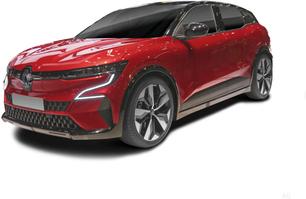
The hotly anticipated Renault Megane E-Tech has arrived on our shores but we're only getting the mid-spec variant for now.
Renault's newest EV is related to the well-known Megane in name only because it has been built from the ground up as an EV. It’s not a hatchback, like its namesake, either, rather a crossover, which means it’s a bit lower than some of its small SUV rivals.
It faces firm competition in the likes of the Hyundai Kona Electric, Volvo C40 and newcomer bZ4X from Toyota. In this review we'll see how Renault's cutest EV handles life with my family of three.
We need the Santa Cruz and its ilk in Australia. It’s great to be in a dual-cab ute that is compact enough to fit in a regular car-parking space and light enough to be efficient.
In ways, the Hyundai is reminiscent of the better Ford Falcon and Holden Commodore utes of yore, especially in its performance, dynamics and civility. And why wouldn’t it be a good fit here? Back in 1932, Australia invented the coupe utility, after all.
Bring it on, Hyundai.
The design for the Renault Megane E-Tech is top-notch and the eco-conscious footprint is even better. It’s an easy and comfortable car to be in but the price is a smidge too high in my opinion when you consider there’s currently only one choice for us Aussies and it’s a mid-spec variant at that. It also misses out on some items its rivals have but is a solid EV to consider for urban dwellers.
Nose-on, the Tucson SUV’s futuristic nose treatment looks a little out of place on the Santa Cruz. It needs to be blunter and more aggressive.
Hyundai knows this and has attempted to square-off the lights, grille and bumpers as part of the MY25 facelift, but it still seems too sophisticated against more truck-like utes. No doubt the next-gen redesign will be bolder.
Profile and rear appearances, on the other hand, are pitch-perfect, imbuing the Santa Cruz with confidence and class. No other dual-cab can boast such a sleek, coupe-utility-esque silhouette. A drag coefficient figure of 0.37 is notable for this shape of vehicle.
Deftly executed, the Hyundai’s design is both contemporary yet reminiscent of ‘70s and ‘80s two-door utes, from Japan’s Subaru Brumby and Ford’s XA-XC Falcon, to America’s iconic Chevrolet El Camino and Ford Ranchero.
With all that in mind, it’s no surprise to learn that the Santa Cruz was designed in California, with the brief stating it combine car, SUV and ute, for urbanites seeking a workhorse that can also be a family-friendly weekend getaway machine.
While it is obviously smaller than a typical body-on-frame ute, in the flesh, the Hyundai seems almost as large. Some might even say right-sized for lighter-duty requirements, which seem to be the majority of urban-based vehicles in this segment.
Length, width, height, wheelbase and ground clearance measurements are 4970mm, 1905mm, 1695mm, 3005mm and 218mm respectively. Putting these figures in perspective, a Ranger’s corresponding dimensions are 5370mm, 1918mm, 1886mm, 3270mm and 234mm.
Not too big, then, and not too small. And much, much easier to manoeuvre and park in a big city like Toronto. It’s a bit of a Goldilocks zone inside the Santa Cruz as well.
The E-Tech’s plump body panelling gives me some cute marshmallow vibes from certain angles but there are enough features to keep it looking slick, like the fun LED headlights, massive 20-inch alloys and optional two-tone paintwork.
I’m also a fan of the door handles on the E-Tech as they add some nice focal points, because the front has auto-flush handles that pop out on approach and the back door handles are positioned on the C-pillar.
If you're eco-conscious the E-Tech ticks the box because Renault has designed it to be 90 per cent recyclable.
The body is made of aluminium and can be reformed and shaped into new products at the end of its life. The interior materials are made from recycled fabrics and trims; even the lithium-ion battery is free from any rare earth minerals.
Head inside the cabin and the grey knit trims and upholstery on the seats, doors and dashboard creates a cabin space that feels warm and inviting. It's a similar feel to the Polestar 2 - simple but refined.
Although, with my kid around I have higher anxiety about dirtying them!
A comfy and inviting five-seater, the Santa Cruz only really feels like a ute rather than a mid-size SUV if you look behind the (fixed) rear backrest or underneath the back cushion (where the jack and additional storage lay).
Spacious and quite airy up front, this one’s based on the pre-2024 Tucson facelift, so it’s completely car-like in its design and execution. The update also adopts the SUV’s vast touchscreen layout. Typical Hyundai features include digitalised instrumentation, pleasingly simple displays and thoughtful placement of all controls. There’s nothing even remotely alien about this ute’s presentation.
Quite bracing bucket seats up front offer decent support, while SUV standards of practical storage, ventilation and – surprise – noise suppression further impress, especially considering that our ute rides on 20-inch wheels and all-weather tyres. Maybe Canadian bitumen is just quieter.
If you’re used to smaller body-on-frame utes like the HiLux or previous Mitsubishi Triton, you might also be pleasantly surprised by how accommodating the Santa Cruz’s rear bench is.
The typical ute foibles of a too-upright backrest and flat, unsupportive seats do not apply here, revealing how spacious that shapely silhouette allows the cabin to be. Instead, you can enjoy SUV-levels of cushy comfort, as well as associated amenities like rear air vents, USB outlets and cupholders, though you’ll need to stick larger water bottles beneath the rear-hinged cushion, where extra storage is provided.
Better still, if you want some additional ventilation, just slide back the rear-window partition. This might mess with your mind, as the Santa Cruz then really begins to muddy the waters between SUV and ute.
Which leads us to the elephant in, or rather on, the Hyundai: the open bed.
Among other items, you’ll find side as well as rear steps for easier load bed access and a simple yet effective sliding tonneau operation, revealing a ridged floor and sizeable compartment storage compartment underneath. It comes with drainage holes for ice. Bed lighting, tie down hooks, and sliding cleats further boost useability and versatility. Just like in utes you’re probably used to.
Note that in this 20-inch wheel grade, there’s a space-saver spare underneath.
Bed length is 1323mm, width 1368/1085mm between the arches and height 488mm. For perspective, Ranger’s equivalents are 1464mm, 1520/1217mm and 525mm respectively. Bed volume is 764 litres, versus 1232L in the Ford.
Finally, towing capacity in the AWD version is 2260kg (Ranger: 3500kg) and payload is 730kg (Ranger Wildtrak: 901kg).
In summary then, compared to utes like the Ford above, the Hyundai’s OB is clearly shorter, narrower and shallower, yet is still usefully large for getting many jobs done.
Again, this is a new, more compact ute experiment, with no direct rivals, designed to be lighter, more efficient and fun to drive.
The E-Tech’s cabin is fairly roomy up front with plenty of head- and legroom. The front seats are super comfortable with powered lumbar support and I wouldn’t mind them not being powered if the price point was a bit lower.
The rear seat is comfortable enough once you get seated but the top of the door apertures are low, and I have to duck my head to get in and out.
Your head also brushes against the roof lining in the back which isn't terribly comfortable, especially considering there is no fold-down armrest to lean on.
The front row benefits the most with individual storage and you get a lot of options to choose from but the centre console is one of the most practical I’ve seen for the class. Lots of pockets and nooks that feature adjustable 'walls'.
You get a single permanent cupholder but with the removable walls, accommodation for a second cup or bottle, can be catered for.
Underneath the multimedia screen you get a dedicated phone shelf, which I love using.
In the rear, you get two map pockets and shallow bin storage in each door.
The charging options are good with two USB-C ports in each row as well as a 12-volt outlet and a wireless charging pad up front but you miss out on V2L (Vehicle to Load) functionality in this model.
The 9.0-inch touchscreen multimedia system looks great headlining the dash and is easy to access and use. The system rebooted once on me while driving but other than that everything is responsive.
You get wireless Apple CarPlay and Android Auto and the CarPlay is easy to get started.
The steering wheel has numerous stalks, controls, regen paddle shifters and even the gearshifter on the column, too. It takes a beat to get used to it but I like how driver orientated it is.
The boot offers great storage at 440L but it’s a deep well, which might be annoying if you’re unloading heavier gear. There is underfloor storage for the cables, too, and like I said, you miss out on a powered tailgate.
Built solely for now in Alabama, the Santa Cruz is a four-door dual-cab mid-size ute, with five seats and a traditional open bed (OB) load area. Think of it as a Toyota RAV4 ute, if such a thing existed. The Hyundai is actually part of the current, Tucson SUV range.
We understand that the coming redesign is set for Australia from around 2026. Dealers were notified back in May this year, so this isn’t a question of if, but when.
We’re in Canada, driving this year’s model, though a facelift is imminent for 2025, in line with this year’s Tucson refresh and dashboard revamp.
Our test vehicle, kindly loaned to us by Hyundai Canada, is a 2024 Ultimate AWD, powered by a 2.5-litre four-cylinder turbo-petrol engine driving all four wheels via an eight-speed transmission. More on that later.
Costing from around A$55,000 in Canada, this is akin to our top-line Tucson Premium, meaning a sunroof, keyless entry/start, surround-view monitor, leather, heated/vented/powered front seats, dual-zone climate, Bose audio, adaptive cruise control, 20-inch alloys and all the advanced driver-assist safety tech expected in high-grade SUVs nowadays.
Lots of glossy exterior trim also tells the world this is the most salubrious Santa Cruz, along with a sliding rear window, retractable solid tonneau cover, composite bedliner, lockable under-bed storage, side-wall compartments, adjustable track rail and cleat system, a power outlet, multi-functional tailgate and integrated OB side steps.
Alternatives? None currently in Australia. And its SUV DNA gives the Hyundai a handy price advantage over Ford Ranger and Toyota HiLux models, which would cost tens of thousands of dollars more in Ultimate-grade matching spec. A Ranger Platinum nudges $100K.
In North America, the Santa Cruz tackles the segment sales-slaying Ford Maverick (an Escape SUV-based ute available in hybrid) and Honda Ridgeline that shares its underpinnings with the Pilot large SUV. The former’s unexpected success, combined with increasingly punitive emissions standards, suggest more are coming.
Plus, we’re hearing whispers that the Maverick redesign will go global sometime in the second half of this decade.
For the moment, the Megane E-Tech is being offered in only one grade for the Australian market and that’s the Techno EV60, which is the mid-level version of Renault’s brand new EV.
The EV60 is priced from $64,990, before on-road costs, and that positions it right in the middle of its rivals. The nearest competitor is the Hyundai Kona Extended Range at $60,500 MSRP, newcomer Toyota bZ4X 2WD slides in at $66,000 MSRP and the Volvo C40 Plus sits at $78,990 MSRP.
The E-Tech comes with a decent array of features for a mid-spec variant and premium items include heated front seats, a heated steering wheel, a digital rear view mirror and wireless functionality for Apple CarPlay and Android Auto but you do miss out on items like a powered tailgate and electric front seats which most of its rivals sport.
Technology looks good with a 9.0-inch touchscreen multimedia system, 12.3-inch digital instrument cluster, dual-zone climate control, faster USB-C ports (four total) and a wireless charging pad.
Sound is covered by the Arkamys Auditorium sound system with six speakers and the mood can be set with the 48-way configurable ambient lighting system.
Despite missing out on a powered tailgate, the EV60 has some features that still offer convenience like keyless entry, heated and auto-folding side mirrors and auto-folding flush door handles that pop out on approach (front only).
The Santa Cruz is fitted with Hyundai’s 2.5-litre four-cylinder direct-injection turbo-petrol engine not offered in any Australian models at this time.
In North American-spec, it delivers about 210kW of power at 5800rpm and 422Nm of torque from 1700-4000rpm, to the front or all four wheels automatically via an eight-speed wet-type dual-clutch transmission, with a manual mode.
Acceleration time from 0-100km/h is about 6.5 seconds. Impressive for an 1860kg ute, aided no doubt by a healthy 113kW/tonne power-to-weight ratio.
Like the Tucson, the Santa Cruz is fitted with MacPherson-style struts up front and a multi-link independent rear suspension set-up, though they are tuned differently given the varying nature of the duo.
The Techno EV60 has a single electric motor. It produces a power output of 160kW and 300Nm of torque, and Renault says it will sprint from 0-100km/h in 7.4-seconds.
That's perfectly adequate for keeping up with traffic or getting around town. You only notice a sluggishness with power when you have a full load of gear. Flipping it to 'Sport' mode make it feel peppier, if you ever need it.
Hyundai says the Santa Cruz is tuned to run on American 87 RON unleaded petrol.
It returns a combined average of 10.6L/100km, for a carbon dioxide emissions rating of 250 grams per kilometre. Other official figures are 12.1L in the city and 8.7L on the highway.
That should mean the 67L fuel tank should give a range of about 632km.
Running on 90+ Octane unleaded petrol, our Santa Cruz averaged 10.5L, against a trip computer figure of 10.8L. Our best cycle, on mainly rural roads, was 9.1L. Again, this is SUV efficiency. The long-mooted hybrid version will smash all these figures out of the park.
The official energy consumption figure is 15.6kWh/100km and I averaged 13.9kWh after a fair mix between urban and open-road driving.
That’s outstanding consumption but the official driving range for this E-Tech’s 60kWh lithium-ion battery is up to 454km, which is similar to the Hyundai Kona Electric but I still had an eye on the range during longer trips.
The E-Tech has a Type 2 CCS charging port which means you can benefit from faster DC charging speeds, however, it can only accept a top speed of 7.4kW on AC power.
On a 7.4kW AC charger, you can go from 0-100 per cent in a little over nine hours but on a standard 2.3kW house plug, that jumps up to over 30-hours.
On a 130kW DC charger expect to go from 15-80 per cent in as little as 30 minutes, which is pretty convenient if you have access to one.
Sadly, the E-Tech doesn’t have vehicle-to-load capability, so you can’t power or charge bigger items.
The most remarkable thing about the Santa Cruz is how multi-faceted the driving experience is.
On one hand, compared to body-on-frame utes, it feels just like a medium-sized SUV, with none of their lumbering heaviness. That should come as no shock seeing this is an extension of the Tucson (and related Kia Sportage).
Yet if you approach the Santa Cruz from an SUV perspective, there are palpable driving and behavioural differences, setting the ute apart. Especially considering Australians are unfamiliar with this particular powertrain.
Let’s start with that.
After years of the sweet if at-times somewhat stretched 1.6-litre turbo found in most upper-spec Hyundai and Kia models, the Santa Cruz’s big 2.5L turbo is a revelation, with little to no lag moving off the line and a steady and growing tide of torque as speed builds.
Quiet, smooth and refined, it is a terrifically muscular engine application, aided by an equally smooth and responsive dual-clutch transmission. That there’s real-world economy benefits as well – we averaged just 9.1L/100km during one tankful – is icing on the cake.
You know what they used to say… there’s no substitute for cubic inches. Why can’t other Hyundais have this powertrain in Australia?
Likewise, there’s little to criticise regarding the Santa Cruz’s steering, being as light yet direct as its SUV cousin’s. The upshot is exact and controlled handling that would put even the most nervous driver at ease. With that in mind, one particular heavy late-summer storm only served to highlight the Hyundai’s AWD-enhanced stability and traction.
And a word of praise for the driver-assist tech too, with the adaptive cruise control, lane-assist and blind-spot systems providing nuanced operation and gentle intervention. Bounding along in highway traffic moving at the legal speed limit, all remained calm.
Speaking of which, the Santa Cruz’s ride quality is shockingly cushy for something on 20-inch rubber. This never ceased to impress us.
So far, so very good.
Tighter corners and speedy off-ramp turns did reveal a couple of unexpected traits, though. That soft suspension tune and 218mm ground clearance can make the Hyundai feel roly poly, with pronounced body lean that can lead to understeer, meaning the ute can run wide mid-turn unless the driver piles in more steering angle.
In contrast, an Aussie-spec Tucson is far more composed and agile in such situations.
Still, we mentally readjusted to this, applying similar degrees of caution that drivers of even the best body-on-frame utes, dynamically speaking, should exercise (hello, Ranger). Yet even in such scenarios, the Santa Cruz is still far more SUV-like in its suspension discipline and roadholding.
Our two other beefs are a big turning circle and poor side/rear vision. Otherwise, a big thumb’s up here.
Obviously, as with all vehicles tested abroad, we need to experience the Hyundai on local roads for a more definitive assessment.
But, as our very enjoyable time behind the wheel of the 2024 Santa Cruz AWD revealed, it seems especially well-suited to Australian tastes.
As a spiritual successor to the Brumby and Falcon/Holden utes, this dual-cab seems beyond the sum of its parts.
I have mostly loved driving the E-Tech. It's easy to cruise around in and the power is adequate for open-road driving but it prefers an urban environment.
The power can feel a bit lacklustre when you are carrying lots of people or gear but you mostly feel that when you're on a steep incline and trying to keep up your speed.
The steering is crisp and that makes the E-Tech very responsive to drive. The power is delivered smoothly and it feels well-balanced when you put your foot down.
There is more roll in corners than I was expecting but the car still feels firmly planted.
The ride comfort is great. The suspension is more firm than soft which means you feel the road but it's not a major bother. There is a bit of wind noise at higher speeds, as if the door isn’t properly sealed by a millimetre but it doesn't annoy me.
The regenerative braking is controlled by paddles on the steering wheel and you have three levels plus a one-pedal function to choose from.
The single pedal set-up is pretty smooth, even in stop/start traffic, but it’s great to be able to quickly change modes on the go.
The smaller size of the E-Tech makes it an easy car to manoeuvre in a small car park. You get front, rear and side parking sensors which is great because the reversing camera isn’t as clear as it should be for this price level.
There is no EuroNCAP/ANCAP rating for the Santa Cruz, due to its North American market focus.
But it does score a 'Top Safety Pick' by the Insurance Institute of Highway Safety (IIHS) for whatever that’s worth.
Safety tech includes 'Forward Collision Avoidance Assist', consisting of autonomous emergency braking with cyclist, pedestrian and night-time capability, as well as blind-spot monitoring, safe-exit warning, rear cross-traffic alert, a driver-attention warning and adaptive cruise control with full stop/go.
Electronic stability control, anti-lock brakes with brake assist and electronic brake-force distribution, tyre pressure monitors, surround-view cameras, auto on/off LEDs with auto high beams, rain-sensing wipers, front/rear parking sensors, six airbags and child-seat lower anchors and upper-tether anchors are also fitted.
Note that the AEB operation data is not available at this time.
The E-Tech has a maximum five-star ANCAP safety rating from testing in 2022 and has seven airbags, including a front centre airbag.
The EV60 comes with lots of passive safety features including dusk sensing auto LED headlights, LED DRLs, a rear fog light, child safety locks, tyre pressure monitoring, traffic sign recognition tech, an intelligent seatbelt warning, a reversing camera plus front, rear and side parking sensors.
Active safety equipment includes items like blind-spot monitoring, driver attention alert, rear collision warning, forward collision warning, rear cross-traffic alert, lane departure alert, lane keeping aid, and adaptive cruise control (with stop and go).
You also get a digital rear view mirror which is essential as the back window is narrow and the camera feed provides a clearer view than you’d have without it.
The rear row also features ISOFIX child seat mounts on the outboard seats and three top tethers but two seats will fit best. The front passenger seat also has ISOFIX child seat mounts and a top tether.
AEB with car, pedestrian, cyclist and junction turning assist function is operational from 8.0-80km/h (160km/h for cars) but it is common to see that starting figure sit closer to 5.0km/h.
The Santa Cruz is not available in Australia at this time.
Hyundai’s current Australian warranty period is five years/unlimited kilometres with roadside assistance and available capped-price servicing options.
Most models also offer scheduled servicing between 10,000km and 15,000km.
The E-Tech comes with a five-year/100,000km warranty, but it’s usual to see an unlimited km term for the class. The battery is covered by an eight-year or up to 160,000km warranty term.
Service intervals are reasonable at every 12 months or 30,000km and you also get five-years roadside assistance included.
Pricing over the first five years ranges from a low of $230.04 to a high of $519.62, averaging out at pretty competitive $317.72 per service. No capped-price deal is available.