What's the difference?
The line between mainstream and luxury is getting blurier by the day. As cost-of-living pressures bite Australian families, anyone looking for a new car is looking to extract maximum value without sacrificing too much luxury.
Enter the new 2026 Hyundai Palisade Calligraphy. Sporting a bold and premium new look, loaded with more luxuries than ever before and powered by a new hybrid powertrain, the second-generation Palisade is a clear step forward from its predecessor.
As it should be, because it’s also significantly more than the previous Palisade Calligraphy. That puts it in the same ballpark as the Mazda CX-80 and range-topping Toyota Kluger, but it also means the Palisade is now no longer enormously cheaper than premium SUV options, such as the Land Rover Defender, Lexus RX and Volvo XC90.
So, is the new Palisade a luxury mainstream family transporter or a premium-priced SUV without the premium badge? We drove it to find out…
If you’re someone still convinced the newcomer Chinese brands don't have what it takes to shake up the Australian new car market, this might just prove you wrong.
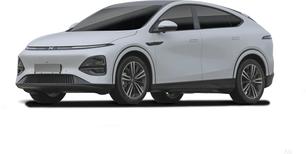
It’s the 2025 XPeng G6 Long Range, and it’s a lot like the Tesla Model Y, only cheaper – and, in some ways, much better.
Don't believe me? Read on and I'll prove it.
So, is the new Palisade a luxury mainstream family transporter or a premium-priced SUV without the premium badge?
The reality is, it’s somewhere in the middle. The $14,000 price rise is a huge step up for family buyers, likely an insurmountable sum for many, which leaves them looking at the more affordable (but smaller) Santa Fe, waiting for a cheaper Palisade variant or going somewhere else entirely.
Having said all that, there’s no question, for those who can afford it, the new Palisade is a clear upgrade over the old model in every way. Especially the premium look and feel, which is a leap up, but also the driving experience, with its combination of potent but efficient powertrain and locally-tuned suspension.
So, for those who can afford it, the Palisade Calligraphy will provide a luxury experience at a lower price - which means it does offer good value, just at a higher price.
Note: CarsGuide attended this event as a guest of the manufacturer, with accommodation and meals provided.
You never know quite what to expect when you jump into the first model from a brand-new brand, but the XPeng G6 was a pleasant surprise. And at this price, with these features, it should really give Tesla Model Y shoppers something to think about.
Unlike many of its rivals that adopt a common design theme, Hyundai has made sure each of its models is dramatically different visually.
While there are some common elements that tie them together, comparing the new Palisade to the rest of Hyundai’s SUV range it’s clearly very different.
For the Palisade that means a deliberately big and bold exterior, with the vertically stacked headlights and large grille to create a unique look compared to either the Santa Fe or Ioniq 9. It’s the same at the rear, with more vertically stacked tail-lights.
That bold, premium design theme carries over to the interior, where there are some unmistakable Hyundai elements - like the steering wheel - but the soft, curved lines of the dashboard give it a distinct look compared to anything else the brand is offering at the moment.
Hyundai says the interior is inspired by premium furniture design and that rings true, but it’s also a noticeably tall dashboard, which gives a lot of visual depth to the interior.
To emphasise the premium furniture design and the flagship-nature of the Calligraphy, there are four different colour options for the Nappa leather interior - black, brown, dark charcoal (with brown stitching) and light grey/dark navy.
There’s more than a little Tesla Model Y in the XPeng’s exterior design, with the two sharing the same kind of soft-edged, swept-back SUV styling.
It helps make the XPeng look familiar and inoffensive, and while I wouldn’t go so far as to call it ground-breaking, I think it has enough exterior flourishes to break up the body work, and I don’t mind the way it looks, and the way it sits on those big alloys.
Inside, it’s a spacious and pretty stylish space. This giant screen is super responsive, and is easy enough to navigate, with the key functions (like climate) glued to the bottom of the screen so you don't have to paw through menus to access them. The idea begins to fail when you have Apple CarPlay or Android Auto active, though, as you have to revert back to the car's home screen to access anything.
The XPeng uses its steering wheel controls to access air-con fan and temp controls as a kind of shortcut, but confusingly they change to distance adjustment when you’ve got the cruise control on. An easier, and much better solution would be to bring back buttons.
I also don't love the stalk-style gear selector, which doubles as a cruise control activator, and, with a double pull, as your autonomous helper. It just feels super old-school in a vehicle this modern.
What is a massive win though is the driver screen. Tesla fans can scream minimalist aesthetics all they want, but the drive experience is simply better when you can see your speed and other key info right in front of you.
The new Palisade is bigger in every dimension compared to the old model, and that helps translate into a roomy cabin, which in turn does help make it feel more premium.
As mentioned earlier, the Palisade comes with Hyundai’s Digital Key 2.0, which allows you to have a virtual key on your compatible smartphone, so you can lock/unlock and start the car without a physical key. The new fingerprint scanner, which is a small circular scanner in the centre console, allows you to program your Palisade to start by pressing your finger on the scanner.
While the Digital Key is a great concept and has obvious practical benefits, the fingerprint scanner doesn’t make much sense when you can also start the car by pressing the ‘start’ button.
Anyway, once you’re inside, the driver is treated to Hyundai’s ‘Ergo-motion’ seat, which can provide on-the-go massage. Both front seats are the brand’s relaxation seats, which can recline into a more comfortable position if you need to take a nap (obviously not when you’re driving).
In the second row the Palisade comes standard with a three-person bench, but for $1000 you can swap that out for a pair of captain’s chairs. Hyundai expects the split between these to be an even 50-50.
The third row is also a three-person bench, which means the Palisade can accommodate up to eight occupants, if needed. The third row would only accommodate three adults at a squeeze, but would be fine for younger children.
The second row seats can tilt out of the way at the press of a button, to make getting into the third row easier.
What’s really impressive about the Palisade Calligraphy cabin is the level of detail paid to making sure each seat is well looked after. Naturally there are cup/bottle holders and other small item storage spaces, but both the second and third rows get air-conditioning controls as well as heated seats (for the outboard positions), plus there are six 100W USB-C ports spread around the cabin. The front seats are heated and ventilated, and there’s also a UV sterilisation compartment in the front as well as a wireless charging pad.
Out the back the boot is a respectable 300 litres with the third row in use, but it expands to a roomy 712 litres with the third row stowed.
If you do need to fold down either the second or third row seats, you can do it at the press of a button in the boot. There’s also a 240-volt household outlet in the boot which allows you to run small electric devices.
At 4753mm in length, 1920mm in width and 1650mm in height, the XPeng fits into the fast-growing mid-size electric SUV space.
And it ticks a lot of practicality boxes, like with its 571-litre boot, swelling to 1374 litres with the seats folded. But its real party trick is in the back seat, where the space is properly massive.
I have another mid-size SUV, powered by a petrol engine, at the moment and our baby seat presses against the back of the passenger seat. In this it feels like I could fly a kite in the space between them.
It’s the same for passengers, too. Honestly, the real estate on offer is massive, and that includes for the middle-seat rear passenger, where the lack of a bulky tunnel eating into legroom means adults can sit there comfortably.
There's a pull-down divider separating the back seat that's also home to two cupholders, and there are twin USB connections, as well as air vents (though no temp controls).
There's no spare tyre, though, which means fiddling with the repair kit should you get puncture, or waiting for roadside assist.
Hyundai has opted to launch with only the Calligraphy grade for now, but that won’t be the end of the Palisade range. The more rugged XRT Pro variant will be coming in 2026, but no details are locked in just yet in terms of timing or pricing.
So, for now there is just one Palisade to pick, the Calligraphy priced from $89,900 (plus on-road costs). That’s a whopping $14,000 more expensive than the model it replaces, which is a huge jump regardless of the many changes Hyundai has made.
To be fair to Hyundai, the range-topping Kluger Hybrid Grande will set you back $85,135 (plus on-roads), so they’re in the same ballpark. But both are quite pricey for mainstream, family SUVs, especially in the current economic times.
Fortunately, Hyundai has been very generous with standard equipment, befitting the Calligraphy badge. This includes 21-inch alloy wheels, LED headlights and tail-lights, sunroof, a 14-speaker Bose sound system, leather-appointed upholstery, inbuilt navigation as well as Apple CarPlay and Android Auto. There’s also Hyundai’s 'Digital Key 2.0', which launched on the recent Ioniq 9 and an all-new fingerprint scanner - more on those below.
Okay, first things first – what the hell is XPeng? It's been around for about 10 years in China, but only made its way to Australia last year. It was founded by some former car company execs and tech tycoons — one of whom is telecommunications billionaire He Xiaopeng, which is where that name comes from.
Anyway, this one is the XPeng G6, which launched in Australia with two trims – the Standard Range, which is $54,800, before on-road costs, and the one we’ve tested, the Long Range, which is $59,800. The difference is in the battery size, of course, but we’ll get to that in a minute.
As of now, the new Model Y can be ordered for $63,400 for the Standard Range or $73,400 for the Long Range, which makes the XPeng a whole heap cheaper.
Outside, you get LED lighting all around (including the DRLs), a massive glass roof, auto door handles, an auto-opening boot, a V2L connection, which allows you to use your XPeng’s battery to power whatever you plug in and big 20-inch wheels wrapped in Michelin rubber.
You also get some cool high-tech features, accessed through the XPeng app, like the ability to drive your car out of tight parking spots remotely.
Inside, there are synthetic-leather seats that are heated, a heated steering wheel, dual-zone climate, a massive 18-speaker sound system (with speakers in the headrest), wireless charging and two very handy screens — a responsive 15-inch central screen with Android Auto and Apple CarPlay, and a 10.2-inch digital dashboard.
There’s also more safety stuff than you can shake a crash test at, but we’ll come back to that in a second.
Hyundai has replaced both the old 2.2-litre turbo-diesel and the 3.8-litre V6 petrol with an all-new hybrid powertrain.
Officially known as the 'TMED-II' hybrid system, the set-up combines a new 2.5-litre turbocharged petrol engine with a freshly developed hybrid system that integrates two electric motors, instead of just one.
It’s a very complex set-up that Hyundai spent many spreadsheet graphics explaining, but in simple terms, the two motors are mounted between the engine and the transmission and one motor is dedicated to creating power and the second one to drive the wheels.
The end result is the new Palisade makes a healthy 245kW of power and 460Nm of torque, whilst also being quite fuel efficient.
This G6 is a rear-wheel drive affair, with a single electric motor housed at the rear axle. It produces 190kW and 440Nm in Standard Range form or 210kW/440Nm in Long Range guise, which don’t sound like massive numbers — especially given the 2.0-tonne-plus weight of this XPeng – but it gets up and moving just fine.
The 100km/h sprint is a claimed 6.2 seconds, while the top speed is 200km/h.
Hyundai claims this new hybrid set-up allows for a short amount of all-electric driving range, although it doesn’t reveal how far, but its main priority is to improve fuel economy while creating a viable alternative to the increasingly unpopular turbo-diesel engines.
Which it arguably manages to do quite well. Despite being a full-size SUV capable of accommodating up to eight occupants, the Palisade has a claimed fuel economy rating of just 6.8L/100km, which is an impressively small number for such a sizable vehicle.
While we couldn’t achieve that number on our predominantly open-road test drive, we still returned a solid 8.6L/100km, which is good given the conditions.
The Palisade is fitted with a relatively large 72-litre fuel tank, which means if you can hit the official claim, there is a theoretical driving range of more than 1000km.
The Long Range version of the G6 nabs a 87.5kWh battery (compared to 66kWh in the Standard Range), unlocking a claimed driving range of 570km.
The official power use figure is 17.5kWh/100km, but I did a fair bit of driving on all sorts of roads and my number was more like 14kWh.
When it does come time to charge, the G6 is set up for 280kW DC fast charging which means, should you find the right fast charger, a 10-80 per cent charge should arrive in just 20 minutes. Home charging will take a lot longer, of course – we’re talking overnight plugged into a regular wallbox.
While it may look like a small engine of paper, the hybrid system provides good performance. It offers plenty of punch when you need it, not labouring up hills or when overtaking. But it’s also very quiet and smooth at lower speeds and when cruising, so the powertrain gets good marks.
The Palisade is also pleasant to drive thanks to its locally-tuned suspension and steering. Hyundai has returned to a local ride and handling program, after wavering in the aftermath of the pandemic. Engineers from Hyundai’s Korean headquarters came out to assist and ensure it was as well suited to our unique road conditions.
The result is a large SUV with good body control but also good compliance, which means it feels responsive to driver inputs but the suspension is still able to soak up bumps with relative ease. At no point does it feel crashy or harsh, instead it has a very relaxed driving character.
How much you love your time behind the wheel of the XPeng G6 comes down to what you're looking for from your mid-size electric SUV.
Speed and sportiness? There's not much of either. But it does serve up tons of space and technology, surprising refinement and a calm and cosseting ride.
And I think you can mount a pretty solid argument that all of that is pretty important in a mid-size SUV, more so than the ability to carve corners.
I did some solid driving in the G6, including a round trip from Sydney to the start of the NSW South Coast, taking in every road type and surface imaginable, and XPeng proved super comfy, pretty quiet and very, very easy the entire time.
Sure, it's not one of those EVs that makes the scenery blur when you put your foot down. Its outputs and acceleration are a bit more user-friendly than that. But it also doesn't ever feel underpowered, with the plenty of poke away from the lights and even some in reserve for freeway overtakes at 110km/h.
The steering, even in its 'Dynamic' mode, is fairly soft, and you can never magic away the weight of the XPeng in corners, where that compliant suspension does allow for some roll, but it also doesn't feel entirely disconnected from the road below in that disconcerting way some vehicles can.
So, if comfort is mission critical in your SUV space, the XPeng delivers.
Oh, and I know that big screens aren't that uncommon these days, but the multimedia unit in the XPeng is a treat. It's super fast, even when scrolling across maps, and it's relatively user friendly, too.
Safety was a controversial topic with the first-generation Palisade, with some minor safety systems missed during the rush to get it secured in right-hand drive production, ANCAP decided to test it and publicly slam Hyundai for offering a four-star model. Only to quickly upgrade it to five-stars when Hyundai added the missing safety tech, as planned, when it did the mid-life refresh.
So, after ANCAP’s questionable approach last time, Hyundai took no chances this time around and is confident it will score a maximum five stars when it is tested. No stone was left unturned with the addition of all the required active safety systems and even deleted the central lamp that runs across the grille in other market models.
It has all the usual suspects, including autonomous emergency braking, lane change assist and rear cross-traffic alert, but also gets the more advanced systems like forward junction assist. There are plenty of passive systems, including airbag coverage for all three rows.
Unfortunately, Hyundai still has some work to do on implementing these systems in a seamless manner. The brand has made some improvements, but there are still a lot of ‘bings’ and ‘bongs’ when you change speed limits, veer too close to a lane marking or similar.
It’s great to have these safety systems, but only if they work well enough so you leave them on and pay attention to them.
The XPeng G6 wears a maximum five-star ANCAP safety rating from assessment in 2024, owing mostly to a flood of active safety features that arrive as standard, including AEB (with pedestrian, backover, cyclist, motorcycle and crossing detection), lane departure warning, lane keep assist, speed sign recognition, driver monitoring and more.
But it could also lay claim to a unique record – the first Chinese EV in which the safety systems don't make you want to make you pull your hair out with their incessant chiming and bonging.
Only on the freeway, where an intermittent chiming incorrectly warned me I was leaving my lane, were the safety systems at all overzealous. Otherwise, they were entirely liveable.
If a crash is unavoidable, the airbag count runs to seven (dual front, front side, side curtain and front centre) and multi-collision brake is standard, to minimise the chances of a secondary crash following an initial impact.
Hyundai has recently introduced a seven-year, unlimited kilometre warranty, which covers the new Palisade.
Of course, Hyundai is one of the best established car brands in the Australian market, and has a nationwide dealership network so factory servicing should be easy for most owners. This is a major advantage in these changing times with some many new brands looking to make a mark in Australia with modest foundations.
Service intervals are every 12 months or 10,000km, the latter is a bit shorter than average. And the capped price servicing plan only runs for five years. Costs vary from $397 for a minor check-up to $674 for your fourth visit, but over the course of the five years you’ll pay out $2600.
I'm scoring the regular warranty offering here, which is five years or 120,000km, with the battery covered for eight years or 160,000km. Keep an eye out for deals, though. At the time of writing XPeng was offering a 10-year warranty on both, for example.
Service intervals are 12 months or 20,000km. The cheapest individual service is $238, but over five years the total cost is $2064, averaging out to more like $410 per year.