What's the difference?
The line between mainstream and luxury is getting blurier by the day. As cost-of-living pressures bite Australian families, anyone looking for a new car is looking to extract maximum value without sacrificing too much luxury.
Enter the new 2026 Hyundai Palisade Calligraphy. Sporting a bold and premium new look, loaded with more luxuries than ever before and powered by a new hybrid powertrain, the second-generation Palisade is a clear step forward from its predecessor.
As it should be, because it’s also significantly more than the previous Palisade Calligraphy. That puts it in the same ballpark as the Mazda CX-80 and range-topping Toyota Kluger, but it also means the Palisade is now no longer enormously cheaper than premium SUV options, such as the Land Rover Defender, Lexus RX and Volvo XC90.
So, is the new Palisade a luxury mainstream family transporter or a premium-priced SUV without the premium badge? We drove it to find out…
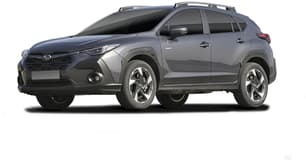
Among the many strange new car brands and names we're increasingly confronted with Subaru is an established and trusted beacon along with Honda, Hyundai, Mazda and Toyota. And Subaru’s Crosstrek SUV competes against rivals such as the Honda HR-V, Hyundai Kona, Mazda CX-30 and Toyota Corolla Cross.
So, what does the Crosstrek give you for your money and what’s different or better about the Crosstrek compared to those rivals?
We tested the mid-grade Crosstrek 2.0S and rediscovered what this small SUV does so well and what could probably be improved.
So, is the new Palisade a luxury mainstream family transporter or a premium-priced SUV without the premium badge?
The reality is, it’s somewhere in the middle. The $14,000 price rise is a huge step up for family buyers, likely an insurmountable sum for many, which leaves them looking at the more affordable (but smaller) Santa Fe, waiting for a cheaper Palisade variant or going somewhere else entirely.
Having said all that, there’s no question, for those who can afford it, the new Palisade is a clear upgrade over the old model in every way. Especially the premium look and feel, which is a leap up, but also the driving experience, with its combination of potent but efficient powertrain and locally-tuned suspension.
So, for those who can afford it, the Palisade Calligraphy will provide a luxury experience at a lower price - which means it does offer good value, just at a higher price.
Note: CarsGuide attended this event as a guest of the manufacturer, with accommodation and meals provided.
The Crosstrek is good to drive with great ground clearance and an excellent all-wheel drive system for light off-road adventures. I’m also a fan of the styling and features for the money. But The letdowns comes in the form of limited boot space and cabin storage, a short warranty and pricey servicing. Still, it’s great to see Subaru has updated the car's safety systems, the most important part of any car.
Unlike many of its rivals that adopt a common design theme, Hyundai has made sure each of its models is dramatically different visually.
While there are some common elements that tie them together, comparing the new Palisade to the rest of Hyundai’s SUV range it’s clearly very different.
For the Palisade that means a deliberately big and bold exterior, with the vertically stacked headlights and large grille to create a unique look compared to either the Santa Fe or Ioniq 9. It’s the same at the rear, with more vertically stacked tail-lights.
That bold, premium design theme carries over to the interior, where there are some unmistakable Hyundai elements - like the steering wheel - but the soft, curved lines of the dashboard give it a distinct look compared to anything else the brand is offering at the moment.
Hyundai says the interior is inspired by premium furniture design and that rings true, but it’s also a noticeably tall dashboard, which gives a lot of visual depth to the interior.
To emphasise the premium furniture design and the flagship-nature of the Calligraphy, there are four different colour options for the Nappa leather interior - black, brown, dark charcoal (with brown stitching) and light grey/dark navy.
While SUVs tend to come in either a tall and boxy or coupe-like shape, the Crosstrek has a uniquely sleek and sporty wagon look that has stayed much the same over three generations.
Also while the Crosstrek competes with the Honda HR-V, Hyundai Kona, Mazda CX-30 and Toyota Corolla Cross the Subaru is the most off-road suitable thanks in part to its high 220mm ground clearance
As if to signal those adventurous aspirations the Crosstrek has a more rugged appearance with robust-looking plastic guards and chunky roof rails.
Inside the Crosstrek looks so much the same as most other new Subarus it's hard to work out which one you’re in. The materials are dark and soft, there is not much in the way of glitzy trimmings but there’s a high quality feeling throughout.
The new Palisade is bigger in every dimension compared to the old model, and that helps translate into a roomy cabin, which in turn does help make it feel more premium.
As mentioned earlier, the Palisade comes with Hyundai’s Digital Key 2.0, which allows you to have a virtual key on your compatible smartphone, so you can lock/unlock and start the car without a physical key. The new fingerprint scanner, which is a small circular scanner in the centre console, allows you to program your Palisade to start by pressing your finger on the scanner.
While the Digital Key is a great concept and has obvious practical benefits, the fingerprint scanner doesn’t make much sense when you can also start the car by pressing the ‘start’ button.
Anyway, once you’re inside, the driver is treated to Hyundai’s ‘Ergo-motion’ seat, which can provide on-the-go massage. Both front seats are the brand’s relaxation seats, which can recline into a more comfortable position if you need to take a nap (obviously not when you’re driving).
In the second row the Palisade comes standard with a three-person bench, but for $1000 you can swap that out for a pair of captain’s chairs. Hyundai expects the split between these to be an even 50-50.
The third row is also a three-person bench, which means the Palisade can accommodate up to eight occupants, if needed. The third row would only accommodate three adults at a squeeze, but would be fine for younger children.
The second row seats can tilt out of the way at the press of a button, to make getting into the third row easier.
What’s really impressive about the Palisade Calligraphy cabin is the level of detail paid to making sure each seat is well looked after. Naturally there are cup/bottle holders and other small item storage spaces, but both the second and third rows get air-conditioning controls as well as heated seats (for the outboard positions), plus there are six 100W USB-C ports spread around the cabin. The front seats are heated and ventilated, and there’s also a UV sterilisation compartment in the front as well as a wireless charging pad.
Out the back the boot is a respectable 300 litres with the third row in use, but it expands to a roomy 712 litres with the third row stowed.
If you do need to fold down either the second or third row seats, you can do it at the press of a button in the boot. There’s also a 240-volt household outlet in the boot which allows you to run small electric devices.
The Crosstrek is a small SUV but its low and sleek shape doesn’t do it any practicality favours in terms of exiting and entering or storage in the boot.
Boot capacity is 291 litres which is very small compared to its rivals which have capacities closer to 350 or 400 litres.
People space inside, however, is good, and even for a tall (189cm) person like me there’s plenty of space up front and behind my driving position.
Storage space is passable with three cupholders and thin door pockets and a decent-size console bin.
Given the Crosstrek’s adventurous intent, the cabin should be more reflective of that rugged aspiration.
Hyundai has opted to launch with only the Calligraphy grade for now, but that won’t be the end of the Palisade range. The more rugged XRT Pro variant will be coming in 2026, but no details are locked in just yet in terms of timing or pricing.
So, for now there is just one Palisade to pick, the Calligraphy priced from $89,900 (plus on-road costs). That’s a whopping $14,000 more expensive than the model it replaces, which is a huge jump regardless of the many changes Hyundai has made.
To be fair to Hyundai, the range-topping Kluger Hybrid Grande will set you back $85,135 (plus on-roads), so they’re in the same ballpark. But both are quite pricey for mainstream, family SUVs, especially in the current economic times.
Fortunately, Hyundai has been very generous with standard equipment, befitting the Calligraphy badge. This includes 21-inch alloy wheels, LED headlights and tail-lights, sunroof, a 14-speaker Bose sound system, leather-appointed upholstery, inbuilt navigation as well as Apple CarPlay and Android Auto. There’s also Hyundai’s 'Digital Key 2.0', which launched on the recent Ioniq 9 and an all-new fingerprint scanner - more on those below.
The Crosstrek range is divided into three petrol variants and two hybrids. With a list price of $43,990, our test Crosstrek 2.0S sits at the top of the petrols and second from the top of the line-up under the Crosstrek AWD Hybrid S flagship.
Standard features on our 2.0S include 18-in alloy wheels, roof rails, LED headlights and tail-lights, dual-zone climate control, push-button start, proximity unlocking , 10-speaker audio, wireless phone charging, Apple CarPlay and Android Auto, an 11.6-inch media touchscreen and leather-trimmed seats.
If you’re looking to save a few thousand dollars the 2.0R is almost as well equipped.
Is it worth stepping up to the hybrid? Not in my opinion. The hybrid is the 'mild' kind and doesn't offer a great deal in terms of real-world fuel savings. You can read more on fuel efficiency below.
Hyundai has replaced both the old 2.2-litre turbo-diesel and the 3.8-litre V6 petrol with an all-new hybrid powertrain.
Officially known as the 'TMED-II' hybrid system, the set-up combines a new 2.5-litre turbocharged petrol engine with a freshly developed hybrid system that integrates two electric motors, instead of just one.
It’s a very complex set-up that Hyundai spent many spreadsheet graphics explaining, but in simple terms, the two motors are mounted between the engine and the transmission and one motor is dedicated to creating power and the second one to drive the wheels.
The end result is the new Palisade makes a healthy 245kW of power and 460Nm of torque, whilst also being quite fuel efficient.
The Crosstrek 2.0S uses a 2.0-litre, four-cylinder, horizontally-opposed 'boxer' petrol engine which makes 115kW and 196Nm. A continuously variable transmission (CVT) with eight 'speeds’ isn’t the most exhilarating automatic but all Subaru now use CVTs.
The boxer engine has advantageous in terms of a lower centre of mass and helps deliver better driving feel thanks to more adept handling. Boxer engines also sound better to my ears with their throaty burble.
Hyundai claims this new hybrid set-up allows for a short amount of all-electric driving range, although it doesn’t reveal how far, but its main priority is to improve fuel economy while creating a viable alternative to the increasingly unpopular turbo-diesel engines.
Which it arguably manages to do quite well. Despite being a full-size SUV capable of accommodating up to eight occupants, the Palisade has a claimed fuel economy rating of just 6.8L/100km, which is an impressively small number for such a sizable vehicle.
While we couldn’t achieve that number on our predominantly open-road test drive, we still returned a solid 8.6L/100km, which is good given the conditions.
The Palisade is fitted with a relatively large 72-litre fuel tank, which means if you can hit the official claim, there is a theoretical driving range of more than 1000km.
The Crosstrek 2.0S's combined cycle (urban/extra-urban) fuel consumption is 7.2L/100km which aligns closely with our real-world test average of 8.7L/100km returned over mainly urban and city driving. That’s not bad, but given the price of fuel as well as the availability of EVs and excellent hybrids from other brands the Crosstrek is seriously behind the times.
Yes, yes, there is a hybrid Crosstrek, but it’s a mild-hybrid and the electric motor doesn't drive the wheels and doesn’t save much fuel. The hybrid Crosstrek has a claimed combined cycle consumption figure of 6.5L/100km, so there’s not much difference between the efficiency of the two. When you consider the price premium you need to pay it’s not worth stepping up into the hybrid.
While it may look like a small engine of paper, the hybrid system provides good performance. It offers plenty of punch when you need it, not labouring up hills or when overtaking. But it’s also very quiet and smooth at lower speeds and when cruising, so the powertrain gets good marks.
The Palisade is also pleasant to drive thanks to its locally-tuned suspension and steering. Hyundai has returned to a local ride and handling program, after wavering in the aftermath of the pandemic. Engineers from Hyundai’s Korean headquarters came out to assist and ensure it was as well suited to our unique road conditions.
The result is a large SUV with good body control but also good compliance, which means it feels responsive to driver inputs but the suspension is still able to soak up bumps with relative ease. At no point does it feel crashy or harsh, instead it has a very relaxed driving character.
I’ve never met a new Subaru that wasn’t good to drive, apart from that time a friend sent me his 30-year old Brumby minus brakes. But even that was fun, until it was time to stop… Anyway, in my view the Crosstrek is better than its rivals in multiple areas except one, which I’ll get to in a moment.
The Crosstrek 2.0S is comfortable to sit in and its ride and handling balance is exceptional for a vehicle in this class. Honestly, the ride quality, body control and steering outshines the HR-V, Kona, CX-30 and Corolla Cross in my view.
A big call out has to go to the Crosstrek's all-wheel drive system, which is exceptional. I have tested this vehicle in some pretty adventurous settings and the kind of terrain it can devour would frighten its rivals.
But the one area that lets the experience down is the CVT auto. I feel this way about this type of transmission in any car and I’m not alone. CVTs provide smooth acceleration and deceleration but if you’re hoping for an engaging, sporty experience you’ll be left wanting.
That said, my wife also drove the car and thought it was perfect for city traffic. And I agree, it’s just on the motorway where you might notice the lack of oomph when overtaking.
Visibility is good and you sit quite high for a little SUV. That small size makes it easy to park and manage in the city’s tighter spaces.
Safety was a controversial topic with the first-generation Palisade, with some minor safety systems missed during the rush to get it secured in right-hand drive production, ANCAP decided to test it and publicly slam Hyundai for offering a four-star model. Only to quickly upgrade it to five-stars when Hyundai added the missing safety tech, as planned, when it did the mid-life refresh.
So, after ANCAP’s questionable approach last time, Hyundai took no chances this time around and is confident it will score a maximum five stars when it is tested. No stone was left unturned with the addition of all the required active safety systems and even deleted the central lamp that runs across the grille in other market models.
It has all the usual suspects, including autonomous emergency braking, lane change assist and rear cross-traffic alert, but also gets the more advanced systems like forward junction assist. There are plenty of passive systems, including airbag coverage for all three rows.
Unfortunately, Hyundai still has some work to do on implementing these systems in a seamless manner. The brand has made some improvements, but there are still a lot of ‘bings’ and ‘bongs’ when you change speed limits, veer too close to a lane marking or similar.
It’s great to have these safety systems, but only if they work well enough so you leave them on and pay attention to them.
Part of the reason we're testing the Crosstrek is because it was updated with more safety tech and equipment towards the end of last year. This safety boost means the Crosstrek continues to boast a maximum five-star ANCAP rating.
The big change was to the 'Eyesight' sensor system with better traffic sign recognition and enhanced AEB systems. An emergency vehicle stop system has also been added to bring the car to a halt if the driver becomes unresponsive.
The rest of the Crosstrek’s features carry over including AEB, lane-keeping assistance, front and rear cross-traffic alert (with braking) and blind-spot warning.
For child seats there are two ISOFIX points and three top tether anchor mounts across the second row.
There is a spare where but it's a temporary type which will get you to a repair place.
Hyundai has recently introduced a seven-year, unlimited kilometre warranty, which covers the new Palisade.
Of course, Hyundai is one of the best established car brands in the Australian market, and has a nationwide dealership network so factory servicing should be easy for most owners. This is a major advantage in these changing times with some many new brands looking to make a mark in Australia with modest foundations.
Service intervals are every 12 months or 10,000km, the latter is a bit shorter than average. And the capped price servicing plan only runs for five years. Costs vary from $397 for a minor check-up to $674 for your fourth visit, but over the course of the five years you’ll pay out $2600.
Subaru’s five year united kilometre warranty is becoming less appealing as other brands offer seven or even 10 years of coverage.
Servicing is recommended every 12 months/15,000km and a capped schedule is pricey relative to its competitors at more than $2400 over five years or about $400 on average per service.
The brand is represented by a long-established and stable network of close to 130 dealers covering metro, rural and regional locations across every state and territory.