What's the difference?
The current generation iLoad was launched in 2008. With only minor upgrades during its first decade on sale, it was recently given its first facelift with a new grille design plus new comfort and convenience features.
These updates don't change the fact that the iLoad is now stretching beyond the usual 10-year generational lifespan for LCV models, yet it continues to generate strong sales in a softening market.
It currently commands more than 23 per cent of the mid-size (2.5 to 3.5 tonne) commercial van segment, topped only by Toyota's dominant HiAce with a 33 per cent market share. The closest competitor behind the iLoad is Ford's Transit Custom with only 11 per cent.
We recently spent a week with the iLoad, to find out why this venerable Korean workhorse maintains its popularity in a mid-size van market packed with hungry competitors.
The small van segment (Under 2.5-tonne GVM) is one of the smallest in Australia’s light commercial vehicle market, as it currently caters for only three contenders, the Volkswagen Caddy Cargo, Peugeot Partner and Renault Kangoo.
Although total sales in this category are a fraction of those achieved in the mid-size (2.5-3.5-tonne GVM) van division, these compact commercials are ideal for buyers not requiring the big one-tonne payload ratings and cavernous load volumes of their larger siblings.
Petrol and diesel-powered models are typically equipped with small displacement engines offering excellent fuel efficiency, combined with cabin ergonomics and driving dynamics which are the most car-like of any LCV offering.
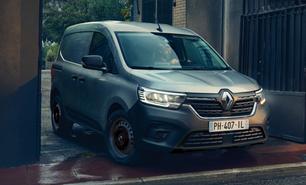
French manufacturer Renault released its third generation Kangoo range in Australia in 2024, comprising a mix of petrol and full-electric variants. We were recently handed the keys to one of the petrol models to see if it has what it takes to win costumers in this three-way fight.
The iLoad remains one of the most competent all-rounders in the business. This highlights the excellence of its original design, as it hasn't changed much since it launched here more than a decade ago.
However, it's starting to show its age a bit, particularly in terms of safety compared to HiAce and Transit Custom rivals which have aggressively raised the mid-size van benchmark to a five-star standard that rivals most sedans and SUVs.
We hope Hyundai will soon do the same with the iLoad, because apart from increasingly outdated safety it's pretty hard to fault. We're sure its army of loyal customers would agree.
The latest petrol-powered Kangoo has the pricing, practicality and performance to win friends in Australia’s small commercial van class. If you can afford an option pack or two, like those fitted to our test vehicle, it's even better.
The iLoad is 5150mm long, 1920mm wide and 1935mm high with a 3200mm wheelbase. That height means it can access underground and multi-storey carparks, in which it's also easy to manoeuvre with a relatively compact 11.22-metre turning circle.
No doubt a big factor in the rear-wheel drive iLoad's enduring appeal is its simplicity and ruggedness, combining MacPherson strut front suspension with rack and pinion steering, leaf-spring live rear axle and four-wheel disc brakes. A sliding door on each side of the cargo hold come standard. The large tailgate window, equipped with a wiper/washer and demister, provides the rear-view mirror with a relatively clear picture of what's behind even with the cargo barrier and clear plastic covering on it.
The cabin environment is bright and airy with a tasteful mix of light and dark grey surfaces. The light grey cloth seats with their colourful striped inserts look sharp but we reckon they would also show some grime pretty quickly in a working role.
Our only criticisms are that, like the new HiAce, there's no fold-down inboard armrest for the driver. We don't know why Australia's top two mid-size vans do not have this simple feature, because it's standard issue in numerous rivals and creates a more relaxed driving position.
Our other gripe is the centre passenger seat, which shares the outer passenger's base cushion but has a separate backrest which can be rotated forward through 90 degrees to reveal a handy storage tray and dual drink holder on the back of it.
However, passenger comfort and safety are compromised as the seat is too narrow for an adult, the backrest has no head restraint, there's very limited leg room and only a lap seat-belt. And to make matters worse, the belt's buckle digs firmly into your right butt cheek when it's clicked in. This ‘seat' should be for emergency use only and, if you must, only for short distances.
Our test vehicle is less than 4.5 metres long (4488mm) and well under 2.0 metres in width (1859mm) and height (1830mm), making it ideal for those with either limited parking space and/or needing to access space-restricted areas in their working roles.
Its compact 2716 wheelbase results in an 11.3-metre turning circle. This is larger than you might expect, given it’s no tighter than Toyota’s shortest HiAce mid-sized van.
However, it’s also line-ball with its small van rivals, which highlights the restrictions in steering lock shared by front-wheel drive vehicles compared to rear-wheel drivers like the HiAce.
The Kangoo features MacPherson strut front suspension and its rear suspension uses torsion bar primary springing supplemented by a pair of secondary coil springs for carrying heavy loads. There’s also rack and pinion steering and a quartet of disc brakes.
Bodywork and wheels confirm its no-frills work focus, with unpainted dark grey plastic prominent on the hubcaps, front/rear bumpers and along the sides where bumps and scrapes usually occur.
It has tidy styling for a commercial van, including the sharp cabin design that combines a tasteful blend of grey and satin chrome hard surfaces with the practicality of wipe-clean fabric upholstery and vinyl floors.
The iLoad's 2062kg kerb weight and 3160kg GVM results in a genuine one tonne-plus payload rating of 1098kg and up to 125kg of that can be carried on roof racks. It's also rated to tow up to 1500kg of braked trailer and with a GCM rating of 4660kg (or how much you can legally carry and tow at the same time), that means you can do it at maximum GVM.
In other words, it can legally carry more than a tonne while towing 1.5 tonnes. Those numbers make the iLoad a very practical and versatile workhorse, well suited to a variety of trades and other working roles beyond the usual delivery chores.
The cargo hold, with its 2375mm length, 1620mm width and 1340mm height, offers a total load volume exceeding 4.4 cubic metres and is accessed through sliding doors on each side or via the single-lift tailgate. The load floor with its protective vinyl mat has a total of 10 load anchorage points.
There's no full-length roof lining like the new HiAce but the cargo hold walls and doors are lined to hip height and there's one internal light at the rear. The load floor length and 1272mm between the rear wheel housings means the iLoad can theoretically take two 1165mm-square Aussie pallets (without the cargo barrier installed).
However, loading these could be an issue if fitted with the single-lift tailgate, as it blocks forklift access when opened. And the 870mm side door opening (even less with the cargo barrier fitted) is not wide enough to allow a pallet to pass through it, so do your homework on the iLoad's suitability for your loading requirements.
The cabin has storage bins and bottle holders in each door, plus a shallow tray in the centre dash-pad, two different-sized gloveboxes, a cubby near the gearshift for small items like chewy etc and a pop-out dual cup/bottle holder in the centre console. The centre seat backrest also folds forward to reveal a large open storage tray and two small bottle/cup holders.
Our test vehicle’s 1447kg kerb weight and 2010kg GVM results in a useful 563kg payload rating.
It’s also rated to tow up to 1500kg of braked trailer and with its 3510kg GCM (or how much it can legally carry and tow at the same time) it can carry its maximum payload while towing its maximum trailer weight for optimum versatility.
Cargo bay access is through asymmetric rear barn-doors which can be opened to 180 degrees for forklift and loading dock access, or sliding doors on each side with (according to our tape measure) 625mm openings. The walls and doors are lined to mid-height and there’s internal lighting.
The cargo bay’s load volume is a competitive 3.3 cubic metres and with more than 1.8 metres in length, almost 1.6 metres in width and more than 1.2 metres between the rear-wheel housings, it can easily swallow one standard Aussie pallet or two Euro pallets.
The load floor, which does not include a protective liner as standard equipment, offers a choice of six load-anchorage points.
The solid bulkhead doubles as a sturdy cargo barrier and insulates the cabin from cargo bay noise, most of which comes from the tyres emanating through the rear-wheel housings.
Given its compact dimensions, the cabin is surprisingly spacious and accommodating even for someone my height (186cm), thanks to front doors that open to a full 90 degrees, generous leg and elbow room plus a high roof relative to the seating position that adds to the airy feel.
Storage includes a large-bottle holder and bin in the base of each door, single glove box, full-width overhead shelf, large open tray in the centre of the dash-pad and (in standard form at least) a centre console with two cupholders and trays for small items.
However, given our test vehicle is equipped with the optional Business Pack, the standard console is replaced with a more elaborate version, which in addition to a pair of cupholders has a wireless phone-charging dock up front and a box with hinged lid at the back.
There’s also a sizeable clamshell-lid compartment set into the dash-pad ahead of the driver, which includes a smartphone holder on a stalk that can be easily moved to either side of the compartment depending on driver preference.
Our only criticism is the lid on the optional console box. Although it’s been thoughtfully angled downwards at the front to provide the driver with comfortable elbow support, there’s no mechanism on the hinge to hold it in the open position.
This makes it awkward to access the box, as the angled lid naturally wants to keep closing on your hand, so a detent in the hinge would be useful.
And, in a similar context, we’d also like to see hinge detents (or struts) to firmly hold the rear barn-doors open in their 180-degree positions, given their propensity to slam shut if hit by wind gusts during loading/unloading.
This can potentially injure the operator, so these devices should be standard issue, not only for Kangoos but all barn-door vans.
Our iLoad test vehicle, with single-lift tailgate, 2.5 litre turbo-diesel engine and optional five-speed automatic transmission has a list price of $41,790, which compares favourably with Toyota HiAce ($44,140) and Ford Transit Custom ($43,790) equivalents.
The recent upgrades brought not only the new grille design but also automatic dusk-sensing headlights, tilt-and-reach adjustable steering wheel and a new design instrument cluster with trip computer. There's also an updated infotainment system (first featured in Kona) featuring a 7.0-inch touchscreen and multiple connectivity including Bluetooth, Apple CarPlay and Android Auto.
Other useful features are a rear-view camera (tailgate models only), power windows with one-touch auto down, height adjustable driver's seat and cruise control (auto variants only). The iLoad rolls on 16-inch steel wheels with 215/70R16C tyres and a full-size spare.
It's also available with a six-speed manual transmission, plus there's a choice of three-seat single cab or six-seat crew cab. Both cabin variants offer a choice of single-lift tailgate or forklift-friendly twin barn-doors with 180-degree opening, plus there's numerous genuine accessories available including the steel-mesh cargo barrier fitted to our test vehicle.
The Kangoo petrol range is available in SWB (short wheelbase) with a choice of six-speed manual or seven-speed dual-clutch automatic, plus a LWB (long wheelbase) model available only with the auto.
Our test vehicle is the SWB auto, powered by the same 1.3-litre four-cylinder turbocharged engine shared by all petrol models, for a list price of $41,990.
That figure sits comfortably between petrol rivals in the small van class, including the Peugeot Partner Pro Short ($39,990) and Volkswagen Caddy Cargo TSI220 ($43,990).
Our example has been enhanced with genuine accessory carpet mats ($167) plus some desirable options including 'Highland Grey' metallic paint ($800) and the ‘Peace of Mind Pack’ ($1500) comprising blind-spot monitoring, front/rear/side parking sensors, driver attention alert, high-beam assist, navigation, overspeed prevention and traffic sign recognition.
It’s also equipped with the ‘Business Pack’ ($3000) which adds tyre pressure monitoring, hands-free key card, body-coloured external door handles, climate control, adaptive cruise control, centre console with armrest and storage, wireless smartphone charger, extra tinted rear barn-door glass, front fog lights, LED headlights and a leather-wrapped steering wheel.
This is in addition to its work-focused standard equipment list which includes 16-inch steel wheels and 205/65 R16 tyres with a full-size spare, plus auto-door lock when driving, rain-sensing wipers, a reversing camera and more.
The two-seater cabin, which is separated from the cargo bay by a solid bulkhead, is equipped with an electronic parking brake, two USB ports, two 12-volt sockets, a colour 4.2-inch driver’s info display and a multimedia system controlled by an 8.0-inch central touchscreen with wireless Apple CarPlay/Android Auto connectivity and smartphone dock.
In addition to its option packs, Renault also offers numerous single options including a 200kg GCM upgrade, different cargo bay sliding-door configurations, a smart digital rear view mirror and more.
The iLoad's 2.5 litre four-cylinder DOHC 16-valve turbo-diesel is a refined and proven performer with Euro 5-emissions compliance (so no AdBlue needed), common rail direct injection (CRDi) and variable vane turbocharging with impressive flexibility. It produces a class competitive 125kW at 3600rpm and peak torque of 441Nm between 2000-2250rpm, but there's ample throttle response and pulling power on tap either side of those figures.
The five-speed torque converter automatic is an equally robust and proven transmission, although most rivals have updated to closer ratio six-speed units. Even so, the iLoad delivers crisp and smooth shifts in auto mode, with the option of sequential manual shifting if required. The transmission's gearing and 2.92:1 final drive ratio provide a good compromise between stop-start city delivery work and economical highway driving.
The Euro 6 emissions-compliant 1.3-litre turbocharged four-cylinder engine produces 96kW at 5000rpm and 240Nm at 1600rpm.
Its seven-speed dual-clutch automatic provides the option of sequential manual-shifting plus three drive modes comprising 'Normal', 'Eco' and 'Performance', which alter the shift calibrations to optimise engine efficiency in each setting. They are selected using a button on the dash.
Hyundai's official combined figure of 8.8L/100km seemed realistic at the beginning of our road test which included a variety of roads and payloads, from near empty to three-quarters of a tonne. So we were impressed to see near-identical numbers after crunching trip meter and fuel bowser readings. Needless to say, that's great economy for a one-tonne van and no doubt another reason for its enduring popularity. Based on our figures, you could expect a realistic driving range of around 870km from its 75-litre tank.
Renault claims average combined consumption of 6.4L/100km and the dash display was showing 7.8 when we stopped to refuel at the completion of our 254km test, of which about one third of that distance was hauling more than half a tonne of payload. We also had the annoying engine auto stop/start function switched off for the duration.
Our own figure, calculated from fuel bowser and tripmeter readings, was higher again at 8.6 which was still within the usual 2.0-3.0L/100km discrepancy between official and ‘real world’ figures.
So, based on our consumption number, you could expect a ‘real world’ driving range of around 630km from its 54-litre tank which should only be filled with premium petrol (min 95 RON).
The iLoad has big grab handles on the windscreen pillars to assist entry and once aboard it's not hard for drivers of most shapes and sizes to find a comfortable position, thanks to the height-adjustable seat, height-and-reach adjustable steering wheel and decent-sized left footrest.
The instrumentation is easy to read and dashboard controls are clearly marked and intuitive to use. There's a clear eye-line to the left door mirror but given that there's no blind-spot monitoring, this mirror would benefit from the addition of at least a dedicated wide-angle lens.
In city and suburban driving the iLoad is surprisingly quiet for a van without a sealed bulkhead between cabin and cargo hold. However, tyre roar emanating from the rear wheel housings does become quite intrusive at highway speeds, particularly on coarse bitumen surfaces.
The over-driven fifth gear ensures the engine isn't working hard though, with only 1800rpm at 100km/h and 2200rpm at 110km/h, which contributes to good fuel economy on long hauls. The cruise control also works well and is a big improvement on the last iLoad we tested in 2017.
The 2.5 litre turbo-diesel and five-speed auto are well-honed for this working role. They provide ample performance in city and suburban driving, even though the gaps between five gears are more noticeable now given the increasing use of six gears in rival automatic vans.
Apart from the huge and unavoidable solid-walled blind-spot over the driver’s left shoulder, the Kangoo feels more like a nippy small car than a commercial van.
The driver’s seat has no adjustments for lumbar support or base-cushion rake and the backrest angle is restricted by the bulkhead close behind it, but there’s still enough room even for tall people to find a comfortable driving position.
Its leather-rimmed wheel feels nice in your hands and the unladen ride quality is excellent, with nicely weighted and responsive steering feel, reassuringly strong braking and suspension settings that combine good handling response with supple bump absorption.
The turbocharged 1.3-litre four is a refined and willing performer, albeit with softer response below its peak torque band which is tapped at 1600rpm.
From there it happily spins its way to maximum power at 5000rpm, with the dual-clutch auto getting the best out of this engine in all drive modes, when either unladen or hauling a heavy load.
Its diminutive size and agility are well suited to zipping through heavy city traffic, squeezing into tight loading zones or negotiating narrow and crowded city lanes for delivery work.
Manual sequential-shifting allows more direct control if preferred when hauling heavy loads, or for those simply wanting a more engaging drive experience (particularly in Performance mode).
It's impressively quiet up to 80km/h in city and suburban use, but at highway speeds tyre noise becomes more intrusive (particularly on coarse bitumen surfaces) and some wind noise is evident.
The engine requires only 2000rpm to maintain 110km/h cruising speeds and the (optional) adaptive cruise control is resolute in maintaining its speed settings, even on long and steep descents.
To test its GVM rating, we forklifted 415kg into the cargo bay which with driver equalled a payload of just over half a tonne, or about 50kg under its legal limit.
The rear suspension compressed 55mm, which engaged the long cone-shaped jounce rubbers positioned inside the rear coil springs to provide a second stage of load support.
The Kangoo coped commendably with this payload, floating smoothly over bumps and with minimal effect on handling, braking and engine performance.
It also made light work of our 13 per cent gradient, 2.0km-long set climb at 60km/h, quickly self-shifting down to fourth gear to easily reach the summit.
Engine-braking on the way down was not as robust, as you’d expect from such a small engine with more than half a tonne on its back, but still within expectations for small vans.
Our only gripes are the absence of a full-width driver’s left footrest and that the thick panel separating the bulkhead windows almost completely blocks the central mirror’s view through the LHS barn-door. You can option a smart digital mirror with rear-facing camera to resolve this issue, but that’s another $800.
Five years/160,000km warranty. Scheduled servicing every 12 months/15,000km whichever occurs first. Lifetime Service Plan includes capped-price servicing for first five scheduled services ranging from $356 to $506.
The Kangoo petrol is backed by a five year/200,000km warranty, whichever occurs first. There's also complimentary roadside assist for up to four years/120,000km, with annual renewals available after that.
Scheduled servicing is every 12 months/30,000km with capped-pricing for the first five scheduled services totalling $2385, or an average of $477 per year.