What's the difference?
Anybody who doubts that Hyundai is gunning for the number one in the world has rocks in their head. Big heavy ones. Korean companies do not settle for anything less than number one. The second-generation Genesis (our first taste here in the Antipodes as the gen-one had its steering wheel on the wrong side) is proof.
What's different about Hyundai's unstoppable rise is the way they're going about it. They've always done their own thing in Korea, reinventing themselves time and again when they strayed off the beaten path.
The Genesis is a gamble for a Korean company in foreign markets whose default setting for luxury is marked, Britain or Germany. If Hyundai gets the Genesis wrong there will be howls of derision, or at best patronising pats on the back - "Nice try, you'll get there one day". But if they get it right...
Throughout its history Volvo has been known for a lot of things. Being a safety leader, dorky but endearing station wagons, ‘bloody Volvo drivers’, and more recently, a trailblazer in minimalist premium design.
The C40 is the first step in a next chapter for Volvo, with the brand wanting to be known next for its leadership in the electric space. For the first time for Volvo, it’s a fully electric offering
But in a world of Teslas, Polestars, and Mercedes Benz EQs, where does the C40 sit, and is it worth considering in an increasingly congested premium small SUV space?
We went to its Australian launch to find out.
The Genesis is not quite a match for cars twice its price but it makes you think what's possible. It doesn't have the dynamic brilliance of a BMW or the self-assured faultless execution of a Mercedes. Lexus ought to be worried, though - why would you have an LS when you could have this? The only answer is 'badge'.
The Genesis is an epoch-making car for the Korean manufacturer. As the company has got better, there are fewer excuses for overlooking it. While the Genesis is pitched into a shrinking market, it's not really meant for the average i30 buyer to buy, but to see.
It's bristling with tech and is not only a halo car but a shot across the bows of both Lexus and the Germans. Attached to that shot is a note: "We're coming for you." In other words, Hyundai got it right.
The C40 becomes a compelling option in the electrified small SUV space, offering a premium look and feel, great range and tech inclusions at the price, as well as awesome on-road dynamics.
Its main downsides are the rear seat, which is compromised by its platform and design-led roofline, and the overwhelming power and added traction of the dual-motor makes the single motor less attractive on the value front.
Still, regardless of variant chosen, the C40 looks to offer a stand-out balance of price, range, and performance, against its traditional rivals and newcomers alike.
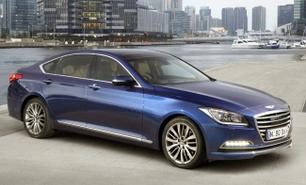
The Genesis is like no other Hyundai. For a start, it's gigantic - it looks easily as big as a BMW 7 Series (it isn't) with the road presence to match. There's a lot of BMW from most directions, but with a sharper approach to the creasing and character of the sheet metal.
Towards the rear it's more BMW 6 Series Gran Coupe and is all the better for it. The style is understated and technocratic.
Inside is also very Germanic, but with a bit more of a Lexus feel
The big wheels from the Ultimate pack help make it look lower and sleeker, too.
Inside is also very Germanic, but with a bit more of a Lexus feel. Our car had the lighter leather which meant that the wood and the metal materials didn't necessarily work well together.
The interior is expertly put together and feels like it will last forever.
The only jarring moment is the gear selector is shared with our long-term Hyundai i30 - it looked a bit cheap in what is otherwise a beautifully executed cabin - it needs more heft.
On Australian-delivered cars there is just one Hyundai badge, sitting proudly on the boot - you get the feeling this was debated long and hard and when the decision was made to go for it, a big one was chosen.
However, the winged Genesis branding takes pride of place everywhere else. When you approach the car at night and the puddle lamps come on, the Genesis logo is projected on to the ground, crisp and clear.
Volvo has become a brand with a distinctive and consistent design language which embodies the kind of beautiful minimalism normally associated with Scandinavian brands.
I have always liked how Volvo says more with less design elements, with only gentle touches of chrome or gloss black, and a lack of over-the-top sporty pieces avoiding the temptation to over-sell the sporty potential of the brand’s range.
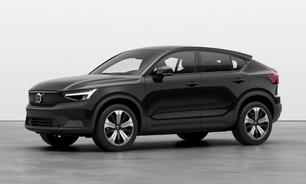
The C40 takes the small SUV formula, well established by its XC40 relation, and gets a bit weird and experimental. It’s slightly lower and has a more coupe-styled rear, with a strongly raked rear window giving it a sportier and more aggressive look than the rest of Volvo’s SUV range.
The styling is sold by an angular spoiler piece running atop the boot, and the rear light clusters have gone all minimalist, constructed of individual pieces rather than a single transparent housing, and they give a nod to the C30 hatchback which this car is the spiritual successor to, by name and nature.
The interior offers up no surprises, sticking to the formula Volvo has established across all of its current models. An effortlessly premium space with, again, a minimalistic dash dominated by the portrait touchscreen, the C40’s premium nature is confirmed by its finely patterned inlays, simple chrome pieces, and abundance of soft-touch surfaces.
The big upright vent fittings with clever rhomboid patterns on their adjustment dials are always a highlight piece of modern Volvos, and the pattern work is continued on the central volume adjust dial and even on the little rotating pieces of the light and wiper stalks. Clever.
Even the software is paired back on the multimedia suite and digital dashboard, with easy to use shortcuts and simple menus which suit the car.
Volvo might turn off some buyers with the more unconventional shape of the C40. But for those looking for a more traditional SUV it also offers the XC40 in the same two variants, and the Polestar 2 caters to those not looking for an SUV at all.
The only way to describe the Genesis' pricing is aggressive - kicking off at $60,000, it's the most expensive Hyundai money can buy, but with a spec list like this, you won't feel at all short-changed.
Your sixty large buys you a huge cabin with a seventeen speaker stereo, auto headlights and wipers, LED ambient lighting inside and out, dual-zone climate control, keyless entry and start, powered front seats which are heated and cooled, satnav, front and rear parking sensors, and plenty of other bits and pieces.
Our car had the $22,000 Ultimate package, adding 19-inch alloys, blind spot sensor, front and side cameras, around-view display, real leather, more adjustments for the driver's seat, ventilated seats in the front, heated rear seats, panoramic glass sunroof, acoustic glass, heads-up display, powered bootlid and LED foglamps.
The Genesis is like no other Hyundai
You can have a lot of the more useful features in the $11,000 Sensory Pack. It's a good middle ground that, for example, features the excellent heads-up display.
The 9.2-inch screen splits the asymmetric air-conditioning vents. The software is unique to the Genesis and a huge leap forward over the rest of the Hyundai range - classy, smooth graphics, a good responsive screen.
You control the seventeen speaker stereo from here, which kicks out a rich sound and an impressive Bluetooth performance - rear seat passengers can also run the stereo from their armrest. The satnav is detailed and chatty, while the excellent heads-up display shows a configurable information set in strong, clear graphics.
When it comes to electric vehicles, it’s impossible to consider price alone, as you also have to consider driving range, and the C40 manages to impress on both fronts.
Its refreshingly simplified range consists of just two highly-specified variants, a single motor which starts from $74,990, offering a 434km driving range, or a dual motor starting from $82,490 which offers a 420km driving range.
There’s much more devil in the detail, but to set the scene there are now quite a few direct rivals in this price-bracket, including everything from the Tesla Model Y (from $72,300), Mercedes-Benz EQA (from $78,513), Polestar 2 (from $63,900) and even the Kia Niro which is similarly sized and specified (from $65,300).
Interestingly, the C40 is closely related to the Polestar 2, but has a much higher base starting price. Volvo says this is because it carries a higher standard specification, and offers the C40 without option packs.
Standard gear on the base single motor C40 includes 19-inch alloy wheels, a 9.0-inch portrait multimedia touchscreen (running a Google-based always-online software suite), LED headlights, dual-zone climate control, a fixed panoramic sunroof, electrically adjustable front seats, heated seats for the front two and outboard rear seats, a powered tailgate, as well as keyless entry with touch-free ignition.
Interestingly, Volvo also told us some 90 per cent of customer interest so far has been for the more expensive dual-motor variant, which is particularly impressive for doubling the power output while adding 20-inch alloy wheels, a 360-degree parking suite, premium Harmon Kardon audio, and an alternate interior trim.
Both variants score safety equipment and items which are otherwise part of expensive option packs in the Polestar 2 range. We’ll take a look at the full safety gear later in this review.
Overall, the C40 impresses on the premium car value front compared to rivals, bolstered by solid range and impressive performance.
The Genesis is powered by Hyundai's own 3.8-litre V6 developing 232kW and 397Nm, mated to Hyundai's eight-speed automatic transmission.
Despite weighing just under two tonnes, the Genesis completes the dash to 100km/h in 6.5 seconds.
It has a claimed 11.2L/100km on the combined cycle. In what must be a first, we got below that, averaging 10.8L/100km over two weeks. And that's without stop-start fuel-saving to blunt the effect of lot of city driving.
The Genesis is not going to tempt you into a track day, even with rear wheel drive
We'd still like to try the V8 - only available in left-hand drive markets - though.
Great news here, the C40 can be chosen with two powerful layouts, either a front-wheel drive 170kW/330Nm set-up, or a dual-motor all-wheel drive arrangement, able to make use of nearly double the power at 300kW/660Nm. The dual-motor is capable of sprinting from 0-100km/h in just 4.7 seconds.
The front-drive is backed by a 69kWh battery allowing it a 434km range, while the dual motor ups the battery size to 78kWh to allow a 420km driving range.
At five metres long, with a ride firmly pitched in the luxury camp, the Genesis is not going to tempt you into a track day, even with rear wheel drive.
Blindfold your passengers and swap them between a Lexus, a BMW and a Genesis and the overwhelming impression they'll get is one of incredible smoothness.
If you're wanting sudden movements, this isn't the car for you
Sitting in the back of the Genesis, it's easily as good as the German and luxury Japanese competition. The seats are hugely comfortable, there's ample head, leg and shoulder room and it feels lot nicer than anything within a bull's roar of its price.
No matter where you sit, it's an incredibly quiet car. The engine is a distant whoosh, the tyre noise muted and there's almost no wind or ambient noise. It's supremely comfortable and the excellent stereo will wash away what little noise does invade.
It certainly feels its weight from the driver's seat, with a competent, soft turn-in, but if you're wanting sudden movements, this isn't the car for you.
The Genesis is an epoch-making car for the Korean manufacturer
On fast flowing roads you can have some fun, but things will get floaty and that will quickly kill that fun. The ride and isolation from the rest of the world is completely worth it.
If you’ve driven any kind of XC40 or even a Polestar 2 before, the C40 will offer no surprises. It’s pretty much exactly the same from behind the wheel with a few subtle tweaks.
This is a very good thing. The C40 is quiet, easy to drive, and its electric motor and regen system offer a smooth single-pedal experience.
It is also alarmingly, overwhelmingly, rapid. While its massive set of batteries under the floor make it feel heavy off the line in stop-start traffic, sticking your boot into the accelerator will remove any doubt, particularly in the dual-motor variant, that this Volvo means business.
The dual-motor also has an incredible torque-vectoring system, making it extremely difficult to elicit so much as a squeak from its tyres. It also feels as though torque is distributed quite evenly between its two driven axles, making it feel neither prone to over- or understeer.
This has the effect of making the C40 feel somewhat indestructible in the corners, with absurd levels of grip.
The same feeling is present in top-spec versions of the Polestar 2, only the feeling of ever-present weight is more noticeable in the higher-riding C40, which can make it unsettling to take corners at the kinds of speeds it is capable of.
The steering tune is interesting. Volvo offers two software-controlled modes, either heavy or standard, and the standard mode is heavy enough.
Despite its electrical assistance, the wheel does continue to offer some organic feedback, making the C40 a pleasure to steer on countryside roads.
The ride is also surprisingly good, despite massive wheel options. I was impressed how easily the C40 handled most bumps and undulations, communicating little to the cabin.
The ride can approach its limits with such big wheels and the weight of its batteries, generally these are communicated via unsettling thuds from underneath the car. Regular undulations at higher speeds also had the C40 bouncing around a little.
On the whole, though, the cabin is kept relatively insulated and serene, adding an element of total confidence, similar to that offered by Teslas, whilst offering better ride quality with a softer edge. At higher speed, at least on the 20-inch wheels, road noise does pick up, however.
In terms of electric driving, there is a single adjustable setting for regen. The car either offers a full single pedal mode with maximum regenerative braking to bring the car to a halt with the motor alone, or a ‘standard’ mode which tones the regen down and offers it blended in via the brake pedal.
Single pedal mode is more efficient. I suggest you stick to it if you want to make the most of this car’s efficiency.
I was surprised to have so few complaints about the C40’s drive experience. This is a balanced and capable EV which is yet another example of how even vehicles which use combustion platforms are improved out of sight by full electrification.
Nine airbags, traction and stability control, lane departure warning, forward collision control, ABS, brake force assist and distribution and traction and stability control bring the ANCAP count to five stars.
The Sensory and Ultimate packs add blind spot sensors and around view cameras.
Sticking to its brand promise, Volvo offers the full range of active safety equipment on the C40 regardless of variant.
This includes freeway-speed auto emergency braking, rear auto braking, lane keep assist with lane departure warning, blind spot monitoring with rear cross-traffic alert, and one of the best adaptive cruise control systems on the market.
The only item the single motor misses out on is a 360-degree parking camera, which is exclusive to the dual motor variant.
It is notable how the adaptive cruise control, blind spot monitoring rear cross-traffic alert, and rear auto braking are on the options list for the Polestar 2.
These active systems combined with eight airbags (the standard dual front, side, and curtain, as well as a driver’s knee and centre airbag) make for a five-star ANCAP safety rating to the latest 2022 standards.