What's the difference?
Honda used to be a big deal in Australia back in the 1990s and early 2000s but I wouldn’t be surprised if it’s moved off your radar in recent years.
The Japanese carmaker has seemingly fallen out of favour in the last few years following its move to an agency retail model which negates haggling on price with dealers.
However, Honda is making a resurgence and it’s putting a heavier focus on hybrid power.
The ZR-V small-to-medium SUV has been updated for 2026 and picks up new, more affordable hybrid trims, among other minor tweaks. Read on to see if this car should be on your shortlist.
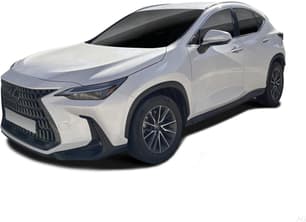
One of the great, unsung success stories over the last few years has been the Lexus NX.
Out since 2014, it turned Toyota's ailing luxury brand around, connecting with buyers gravitating towards luxury midsized SUVs like the BMW X3, Audi Q5, Mercedes GLC and Volvo XC60. Today, no school run is complete without them!
Now there's an all-new one. And, as Lexus' bestseller by far, any new NX is a big deal. The recipe is much the same – including petrol, turbo and hybrid versions – but with fresher and better ingredients. Plus, there's also a new plug-in hybrid flagship to really shake things up.
Is it time to cancel your order for that German, British or Swedish luxury midsized SUV? Keep reading to find out...
The Honda ZR-V has always been an engaging and fun car that’s the right size for many people. The frugal hybrid powertrain has always been the pick too.
It’s great that Honda has finally introduced more affordable hybrid trims with this update which addresses one of my biggest criticisms of this car previously.
If you’re willing to forgo some luxury features, this entry-level hybrid trim is a fantastic car that still offers enough creature comforts to be driven daily.
Hopefully Honda has some renewed sales success with this car as I believe it’s a clear benchmark for the segment.
The all-new NX is a massive step forward over its popular predecessor.
In every way, it is an improvement, with better refinement, comfort, performance, efficiency, safety and choice.
Indeed, look out, Audi, BMW, Mercedes and Volvo: the NX has finally come of age. If we were in the market for a luxury medium-sized SUV, we'd definitely have the Lexus on our shortlist, especially the incredibly efficient hybrids.
Europe, you've been warned.
The exterior of the ZR-V has always left me feeling quite… meh. It’s a mundane and generic look that doesn’t stand out from the crowd, but that's no bad thing because not everyone wants a flashy car.
That said, I’m still not a fan of the front grille, which makes it look like this car has a moustache.
The dark red paint looks nice, though when it’s paired with these generic-looking grey alloy wheels and black wheel arch cladding, it cheapens the look. The top-spec e:HEV LX looks more attractive.
Inside, it’s similarly standard and doesn’t break the mould. Everything is where you’d expect it to be, which is great for functionality.
The wildest part of the interior is the centre tunnel which features a push-button gear selector and a split console section including a small storage area underneath that’s big enough for a phone.
Looking around, it’s a sea of black finishes, which is a bit boring. However, I do like the mesh panel that spans the dashboard and houses the air vents. It’s a premium touch.
UX, NX, RX, LX, RZ... Lexus' nonsensical naming strategy can be quite flummoxing.
Just remember that the NX sits above the smaller UX but below the larger RX in the brand's burgeoning SUV stable. It's also closely related to the wildly-popular Toyota RAV4 – though you'd never know by looking at them side-by-side.
At first it may look much like the old model, but the new NX has switched to the latest RAV4's advanced Toyota New Global Architecture, known as GA-K in Lexus' lexicon.
Basically, it allows for a vehicle that's between 20 and 30 mm larger than before, to help improve overall proportions. And with this considerably bigger canvas to work on, it also means that Lexus's stylists have had more freedom to evolve the brand's design language. Albeit at a glacial pace from an exterior point of view.
Starting from the front, the controversial 'spindle' grille has been toned down a bit and the headlights have a neat Lexus 'lightning rod' tick motif, while – looking at the side profile – a startlingly cab-backward shape gives it a surprisingly sleek silhouette.
The extra length and stretched wheelbase let the design to breathe more than before, bringing with it a more graceful and elegant aesthetic.
Finally – and this is a brand first – the new NX's rather nondescript rear has 'LEXUS' spelled out in letters, with no sign of the company logo.
In base-model form, it’s expected the ZR-V will have fabric upholstery. However, the seats still feel premium and are deliciously padded. They’re manually adjusted but I was still able to find a good driving position with ease.
One feature I was looking for was heated seats, especially on these brisk Melbourne mornings. It’s rare for a car with fabric seats to get heated seats, though. If you want them that badly, they’re available on higher trims.
Ahead of the driver is a leather-wrapped steering wheel which feels lovely. I particularly like the tactile feel of the buttons and switches.
The digital instrument cluster is clear and crisp. It offers multiple views to customise it, as well as a range of infographic pages to cycle through. I wish you could see the fuel consumption and hybrid system graphics at the same time, but thankfully they’re just a single scroll away from each other.
Moving across, the central touchscreen multimedia system is looking a small in 2026, measuring only 9.0 inches, although it’s still high-resolution and the colours are vibrant.
It appears computing power has been given a boost along with the integration of Google Built-in, as jumping from menu to menu has never been snappier.
Speaking of Google Built-in, it’s great to have the flexibility of using the integrated Google Maps and apps like Spotify and Apple Music, without needing your phone.
However, it’s still nice having Apple CarPlay and Android Auto, though the latter is strangely only offered in wired form. With my iPhone 15 Pro Max, the wireless connection was rock solid, though known interference points did cause CarPlay to stutter.
It’s great to see Honda retaining a physical climate control cluster as it’s intuitive to use. The dials in particular have a satisfying click when twirled.
In terms of storage there are two cupholders, two USB-C ports, a big centre console box, as well as an adequately sized glove box. It’s worth noting this trim level forgoes a wireless charger, meaning you’ll need to plug in to charge your phone.
Moving to the second row, there’s a surprising amount of space, even for adults. At a leggy 182cm, I have plenty of legroom and headroom.
You would easily be able to get two adults in the second row, though you’d be pushing it to fit three as the middle seat is narrow and raised. Kids will be fine, though.
Adding to the annoyance of the middle rear seat, the seat belt is mounted from the roof, which can obstruct rear visibility.
In terms of amenities there are air vents on the back of the front centre console, two USB-C ports, map pockets on the back of each front seat, as well as a fold-down centre armrest with cupholders.
There are also ISOFIX points on the two outboard seats, as well as top-tether child seat anchorages on all three rear seats.
Around the back it’s expected the entry-level hybrid will feature a manually operated tailgate. It’s light to open and close.
With the rear seats upright there’s 380L of boot space available, which is decent for this size of car. This figure includes a small underfloor section.
If you fold the rear seats the boot space expands to 1312L, which is cavernous for this type of car. The rear seats cleverly fold forwards and down at the same time, creating a seamless flat floor.
Boot-related amenities include a number of hooks, a 12V socket plus some lights. As is the case with many hybrids, the ZR-V e:HEV doesn’t come with any spare wheel. You need to make do with a tyre repair kit, which is nowhere near as handy if you have a proper puncture away from a tyre repair shop.
For the really big design step-change, you'll need to step inside...
Hallelujah! Lexus has finally forsaken its weird, futuristic dash design elements for a simpler and far-more intuitive look that finally banishes unnecessary complication while still appearing progressive.
Somehow, there are now 33 fewer switches than before, aided by permanent virtual short-cut buttons on both of the touchscreens on offer.
Lexus has clearly been listening!
So, now, what we have here is an attractive, functional and superbly built interior (save for a couple of very-atypical Lexus rattles in these early production cars we drove), boasting quality materials that rate highly on all the important sensory metrics: lush to the touch, easy on the eyes and lovely to breathe in... and breathe out again!
Other plus points include a gorgeous steering wheel, attractive instrument dials, endless storage and climate control that's so effective it pretty much creates a microclimate within your personal space.
Brilliant seats, with ample adjustability, provide comfort and support even after hours ensconced within them, while the driving position is enhanced by thoughtful placement of most major controls - including the natty little gear lever and big old paddle shifters.
It's also worth pointing out a couple of surprise-and-delight features – starting with the 'e-latch' electric door handles, with sensors that delay opening if there are cyclists or pedestrians on approach to prevent striking them, as well as a manual override should the battery go flat.
There's more, like the wireless phone charger tray that also slides to reveal a hidden cubby area; centre-console lid that opens sideways FROM BOTH DIRECTIONS – what sort of sorcery is this?? – and optional digital rear-view mirror that works like X-ray vision in seeing through obstructions... handy for when back-seat passengers' beehives block the back view out.
However, after lavishing such intricate attention to detail, why does the instrument cluster's digital trip computer use the same cheap style and font as found in a lowly Yaris? It takes you completely out of the Lexus state-of-mind.
And, like me, you might lose your mind with the infuriatingly fiddly capacitive touch controls on models with the HUD. While it does provide a broad range of functionality that's displayed on the windscreen view, it's difficult to modulate accurately, and doesn't operate intuitively. Remnants of the fiddly old touchpad from the previous NX. Why can't Lexus just abandon such needless complexity? After a while I worked it out – but it's deeply distracting to use.
Oh well. At least the rear seat area is an improvement over the old NX, with more space, comfort and convenience features. Entry/egress is easy, with wide apertures that ought to make fitting in child seats less of a chore than before.
Most adults should find sufficient leg, knee, shoulder and head room back there, though a trio of adults might result in a very tight fit.
Rear facing air vents (with climate control functionality on higher grades), 12V power outlets, twin USB ports and a wide centre armrest with cupholders are included.
Further back, there's a handy (though not class-leading) 520 litres of luggage space regardless of powertrain, expanding to 1411L when the rear backrests are folded. Access is easy thanks to the wide door and flat floor, where a bit of extra storage and even space for the cargo blind are provided. Thanks, Lexus.
Note, though, that runflat tyres take the place of any spare wheel – a bummer if you're out on deserted country road late at night with no help in sight.
Honda has shuffled the ZR-V line-up for 2026, decreasing the petrol variants to a single, entry-level trim, while increasing the hybrid grades from one to three.
On test here is the ZR-V e:HEV X, which is the cheapest hybrid. It’s priced from $43,400, drive-away, which is $3500 more than the base petrol trim and $8500 less than the top-spec hybrid option.
This is priced keenly against entry-level versions of the Hyundai Kona Hybrid and Toyota Corolla Cross Hybrid, while undercutting the Nissan Qashqai e-Power hybrid.
For the price you get standard 18-inch alloy wheels, adaptive LED headlights, a 10.2-inch digital instrument cluster, a 9.0-inch touchscreen multimedia system with wireless Apple CarPlay and wired Android Auto, dual-zone climate control and cloth upholstery.
Now standard across the ZR-V line-up is Google Built-in which allows for Google Maps integration, the Google Assistant, plus you can download a number of apps, including Spotify, from the Google Play Store.
If you’re after features like a power tailgate, premium sound system, wireless charger, leather upholstery, plus heated seats with electric adjustment, you’ll need to look higher in the line-up. These are largely all nice-to-haves than musts, anyway.
Like most Lexuses, this second-generation NX is spoiling us for choice, with four quite different models to choose from, ranging from just over $60,000 for the base four-cylinder NX 250 2WD (which means front-wheel drive in this instance), to $90,000 for the debuting NX 450h+ plug-in hybrid all-wheel drive (AWD)... and all before on-road costs, of course.
Within these are three grades: Luxury, Sports Luxury and F Sport, as well as a pair of equipment bundles. And, as always, the price you pay depends on how high-tech you want your NX to be.
Keep in mind that all feature a lofty level of standard safety equipment, including eight airbags (with a front centre item fitted as well), autonomous emergency braking (AEB) with intersection assist and pedestrian and daytime cyclist detection, lane-keep and steering assist, blind-spot monitoring, adaptive cruise control, road sign recognition, front/rear cross-traffic alert and Safe Exit Assist – which won't allow doors to open if passing cyclists or pedestrians are in danger of being struck.
Kicking things off is the Luxury grade in the entry-level NX 250 from $60,800 and NX 350h from $65,600.
It includes LED lights with auto high beams, keyless entry and start, a 9.8-inch touchscreen, 'Hey, Lexus!' always-on voice command, satellite navigation, Apple CarPlay/Android Auto support, digital radio, a power-adjustable steering column, electrically-actuated front seats with heating, dual-zone climate control, a powered tailgate and 18-inch alloy wheels running on runflat tyres.
Given that key competitors like the base BMW X3 sDrive2.0i and GLC 200 cost nearly $15,000 and $20,000 more respectively, you can see how serious Lexus is about dominating this segment.
Stepping up to the NX 350h Sports Luxury grade from $73,100 brings tri-beam LED adaptive headlights, leather upholstery, ritzier cabin materials, a 14.0-inch touchscreen, 20-inch alloys, head-up display, wireless smartphone charging, ventilated front seats, ambient lighting, surround-view cameras and a 17-speaker audio system upgrade.
For a racier look and feel, there's the F Sport grade, which scores most of the Sport Luxury fittings (minus the audio/speakers upgrade and digital rear-view mirror) and then adds adaptive dampers, sports suspension, extra configurable driving modes, a unique body kit and alloy wheel design, sports seats and blacked-out cabin trim.
The F Sport, too, begins from $73,100 in the NX 350h, and this also happens to be the price of the non-hybrid, performance-focused NX 350 F Sport with a turbo and AWD.
Speaking of which, the NX 350h hybrid is available with AWD as well, adding $4800 on all grades, brandishing two electric motors (one per axle) rather than having a mechanical drive shaft, as per the NX 350 F Sport turbo AWD. With this level of choice, little wonder, then, that Lexus expects around half of all buyers to go hybrid.
Finally, there's the NX 450h+ F Sport AWD plug-in hybrid electric vehicle (PHEV – the first Lexus or Toyota with this tech in Australia), starting from $89,900. This undercuts all of its European rivals, including the $95,700 Mercedes-Benz GLC 300e, $102,001 Range Rover Evoque R-Dynamic HSE PHEV and $104,900 BMW X3 30e PHEV.
Buyers seeking popular goodies like a panoramic sunroof, kick-motion powered tailgate, power-folding rear seats, heated rear seats, heated steering wheel, 17-speaker audio upgrade, digital rear-view mirror and parking assist can find some or all of these bundled up into varying 'Enhancement Packs' according to grade, offered across the range from between $3000 and $6000.
Since early 2021, Lexus has also matched Mercedes-Benz in lifting its warranty to five years/unlimited kilometres, and also offers capped-price servicing at $495. There's also the brand's 'Encore' aftersales subscription program offering myriad offers and services.
No NX is lacking in equipment or features compared to its direct, corresponding luxury medium SUV rival, and matches most for technology.
Power in the ZR-V hybrid continues to come from a 2.0-litre four-cylinder petrol engine with two electric motors. Total system outputs are 135kW and 315Nm.
This is sent to the front wheels only via an electronic continuously variable transmission (eCVT).
The Honda hybrid system positions the engine primarily as a generator for the battery pack at lower speeds, however once you reach 60-70km/h it can couple with the front axle and directly power the wheels.
It’s a smart system that allows for an electric zippy feel at lower speeds with the backing of a petrol engine at higher speeds.
Here is where the NX shines, with clear options that provide very obvious benefits according to wants, needs and budgets. And there are even fundamental differences compared to the RAV4 powertrain, further justifying that premium 'L' badge experience.
Let's divide these into petrol and petrol-electric hybrid models, with petrols first.
The NX 250 is powered by a 2487cc 2.5-litre naturally aspirated direct-injection twin-cam four-cylinder engine, producing a healthy 152kW of power at a heady 6600rpm, and 243Nm of torque from 4000rpm to 5000rpm.
Drive is sent to the front wheels only, via an eight-speed torque-converter automatic. Tipping the scales at 1705kg, it's the lightest NX on offer, and thus delivers 89.1kW per tonne.
The NX 350 turbo version, meanwhile, uses a somewhat different four-cylinder engine as well as a variation of the eight-speed auto. A 2393cc 2.4-litre turbo unit, it pumps out 205kW at 6000rpm and 430Nm from a low 1700-3600rpm. It's also AWD only, which adds kilos. That said, coming in at 1860kg, its power-to-weight ratio is a stirring 110.2kW/tonne.
Moving to the series/parallel hybrids, both the expected-bestselling NX 350h and the intriguing new NX 450h+ PHEV are based on that 2487cc 2.5-litre four-cylinder atmo unit, tuned this time to offer 140kW and 136kW (at 6000rpm) and 239Nm/227Nm (from 4300-4500rpm and 3200-3700rpm) in the NX 350h and NX 450h+ respectively.
The NX 350h uses either a single synchronous permanent magnet 134kW/270Nm electric motor in the front-drive version, or two electric motors (adding a 40kW/121Nm generator on the rear, double wishbone axle) to create the AWD alternative. Their combined total power rating is 179kW. The NX 450h+ ups that to 227kW.
None are light, however. While the NX 350h 2WD weighs a reasonable 1810kg, the twin-motor AWD system bumps that up to 1870kg, while the NX 450h+ is a portly 2050kg. Result? The power-to-weight ratio for all three are 98.9kW/tonne, 95.7kW/tonne and 110.7kW/tonne – almost identical to that of the NX 350 turbo.
The hybrids' gearbox in question is an 'e-CVT' electronic continuously variable transmission, working with a lithium-ion high-voltage battery, while the NX 450h+'s EV drive's battery is an 18.1kWh unit.
So, no prizes for guessing which one is the most frugal...
Honda claims the ZR-V hybrid consumes an average of 5.0L/100km on the combined cycle, according to ADR testing.
In practice, I’ve seen way less than this, which is fantastic. On one particular drive around the city I achieved a mind-boggling average of 3.7L/100km, but my overall average hovered around 4.5L/100km.
There is a 57L fuel tank and a minimum of 91 RON regular unleaded petrol is required.
You should easily be able to travel more than 1000km per refill, so don’t expect to be visiting servos very often.
All NXs require 95 RON premium unleaded petrol, and are emissions rated at Euro6b.
Not surprisingly, on the official combined run, thirstiest of the lot is the NX 350 turbo at 8.1L/100km (for a carbon dioxide emissions rating of 185 grams per kilometre), followed by the NX 250 at 6.9L/100km (158g/km).
The NX 350h cut that down to 5.0L/100km (113g/km for the FWD and 114g/km for AWD), while the NX 450h+, naturally, is the most economical by far, slashing that down to just 1.3L/100km, or 29g/km.
While we can't tell you what the NX 450h+ managed on test, the others didn't quite match their official numbers. Over several hundred kilometres, the NX 350 ranged from 9.3-11.3L/100km, the NX 250 7.5-9.3L/100km and the NX 350h from 5.7-6.8L/100km.
Note that the NX 450h+'s 18.1kW battery can only be charged using an AC outlet, meaning it'll need about 2.5hr to get the job done. Its EV-only range is about 70km on the WLTP score, or 87km using the less-realistic NEDC method.
At 55 litres, the fuel tank will allow the following combined average range between refills: 679km (NX 350 turbo), 797km (NX 250), 1100km (NX 350h) and a barely believable 4231km (NX 450h+, naturally).
The ZR-V’s hybrid powertrain has oodles of zip, thanks to there being two electric motors which handle a lot of the low-speed grunt.
It’s surprising how much of the driving can be done on electric power alone, provided there’s enough battery charge. Even at highway and freeway speeds the engine will switch off and coast on electric power alone.
When the petrol engine kicks on, you can barely feel it in the cabin or through the accelerator pedal. Instead you’ll only hear a familiar CVT-like drone as the engine charges the battery.
The petrol engine drone is noticeable but the note it makes more pleasant than a Toyota hybrid. Plus when you push the accelerator that bit harder it pretends to shift through gears, making the driving experience more engaging.
At higher speeds there’s plenty of oomph as the petrol engine and electric motors work in tandem. It feels like the powertrain is never stressed, making for an effortless touring feel.
There are a number of different regenerative braking modes accessed via the paddle shifters. The default is the weakest which allows you to coast more like a regular, pure-combustion car.
You can ramp up the intensity of the regenerative braking but there is no 'one-pedal' driving mode and you’re required to use the brake pedal to come to a complete stop.
From the driver’s seat you have a commanding view of the road ahead thanks to the elevated driving position. There are also large side mirrors and a big rear envelope, giving good all-around visibility.
Around town the ZR-V has a nimble feel thanks to its light-ish steering. This translates to a dynamic feel with a touch more weight out on the open road.
It’s surprising how engaging and fun this car is to drive, especially because it’s a regular SUV with no obvious sporty characteristics.
The suspension errs towards soft, but this helps soak up sharper bumps. This car never feels uncomfortable from behind the wheel which is at least partially down to the 18-inch alloy wheels being the right diameter for a car of this size.
The previous NX looked better than it drove.
Based on the previous-gen RAV4, it failed to rise above such humble underpinnings, despite all the extra design, comfort and equipment features Lexus created to help it do just that.
Sure, there were some very appealing things going on, including attractive styling, an intriguing interior, sumptuous seats and lots of kit to play with, but the Toyota's noisy, fidgety and tiring DNA soon became apparent, especially compared to rival luxury midsizers. And some of the dashboard multimedia controls were just down-right madness.
Building on the latest RAV4's set of modern, competent components, however, has fundamentally changed the NX.
For starters, it's much quieter inside. Whether at idle, travelling at speed, or traversing some pretty rough patches of road, the NX at last rides like something you'd expect a Lexus should. And given how noisy and droney most of its European rivals also are on Aussie bitumen, it gives the Japanese contender a handy head-start.
The same applies to how enveloping the soft yet supportive seats are, how settled the suspension feels and how calm the experience is. No previous Lexus SUV has seemed so... refined. Even the really big, expensive ones.
From the driver's point of view, the steering is beautifully balanced, for precise yet reassuring control at speed. This varies according to which grade you're driving, but as a whole, while not sporty like a BMW's nor as fluid as, say, a Mazda CX-5's helm, the Lexus walks that line between easy and involving quite well.
Ditto the handling and roadholding. The lightest of the bunch – the petrol-powered NX 250 and NX 350 turbo – feel ripe and ready for a hustle along a curvy ribbon of road, coming across as taut enough for tight turns yet supple enough to soak up the many bumps and thumps thrown up at them.
Switching to the NX 350h hybrid, there's a greater sense of mass, whether driving the front-drive 2WD or even heavier AWD version. As such, it's still quite dynamic, but not as athletic as the petrol-only models.
In terms of performance, there are no duds – and that's no surprise, as the previous NX's powertrains were pretty sound as well.
Though simply a front-drive version of the RAV4 Edge's 2.5-litre unit, the NX 250 seems more muted than the Toyota's application, and yet is willing to rev hard to hit the power band necessary for it to feel alive. At higher speeds, sometimes the raspy engine can sound a tad noisy when extended, but it's never harsh or rough.
Moving on to the NX 350h, it feels like, well, a heavier and quieter RAV4, not unexpectedly. Silent at take-off speeds, the engine chimes in fairly unobtrusively, providing plenty of oomph along the way, while the CVT seamlessly slices through each (artificial) ratios. After the petrol versions, the steering does seem a little more remote, and you can feel the extra heft through turns, but – again – the basics underneath seem right.
Accelerating hard on the open road does reveal that typical Toyota hybrid engine roar and CVT flair, but only when the throttle is prodded hard. Driven normally, the NX 350h is as smooth, swift and sweet as you'd expect. And definitely in keeping with brand performance expectations.
Finally, there's the NX 450h+ F Sport. At over two tonnes, Toyota and Lexus' plug-in hybrid debutante is not a flyweight by any means, yet having all that extra low-down mass does result in a slightly different driving experience.
Take acceleration: having access to 227kW of power and torque together at very low revs equals lots of thrust right from the get-go. And while it's not sports-SUV rapid, there's certainly enough punch to justify the F Sport badge. Similarly, the low centre of gravity that the 18.1kWh battery pack provides seems to promote hunkered-down road-holding attitude through tight turns, with minimal body roll.
Regardless of which NX you're looking at, quibbles are few. Occasional road and tyre roar are still a little evident over some surfaces; the adaptive cruise control and lane-keep technologies could benefit from some local fine-tuning so they behave a little more nuanced in Australian conditions (and that applies to most luxury SUVs nowadays); and the optional head-up display's capacitive controls located on the steering wheel spokes are distracting, difficult to modulate and needlessly complicated. They're so annoying we'd even untick the Sport Luxury option box to avoid it.
If we had to choose a favourite among the new NXs, it would probably be the NX 350h F Sport, since its adaptive sports chassis provides the best compromise between agility and suppleness; the NX 350 turbo is probably the most fun to drive hard and fast, while the base NX 250 is thoroughly competent and sufficiently luxurious to scare most rivals.
Could this really be a medium-sized Lexus SUV we're talking about?
We're not saying that the latest NX is perfect, but it now provides a very compelling argument not to buy European.
The Honda ZR-V received a four- out of five-star ANCAP safety rating based on testing conducted by Euro NCAP in 2023.
Despite this, the entire line-up is stacked with standard safety equipment. Highlights include 11 airbags, autonomous emergency braking (AEB), blind-spot monitoring, rear cross-traffic alert, lane-keep assist, adaptive cruise control, front and rear parking sensors as well as a reversing camera.
It’s worth noting a surround-view camera is reserved for the top-spec hybrid trim only, which is a little annoying.
However, the ZR-V doesn’t have any annoying beeps and bongs that play while you’re driving. All the safety systems are well calibrated and only interact or engage when required.
Being so new, there's no ANCAP rating for the latest NX range right now, but it is expected to score a five-star result just like its predecessor.
This is because there is plenty of safety for Lexus to crow about, including eight airbags (providing coverage to all outboard occupants, also taking in dual-front occupant knees and centre item to stop lateral head strikes), autonomous emergency braking (AEB) with intersection assist and pedestrian and daytime cyclist detection, lane-keep and steering assist, blind-spot monitoring, adaptive cruise control with stop/go functionality, auto high beams, road sign recognition, front/rear cross-traffic alert, reverse parking cameras, all-round parking sensors, tyre pressure monitors and Safe Exit Assist – which won't allow doors to open if passing cyclists or pedestrians are in danger of being struck.
There's also Intersection Turn Assist (ITA – providing early brake activation if required), Emergency Steering Assist (ESA – extra steering assistance to help keep the vehicle in its lane) and Emergency Driving Stop System as standard across the range – along with a digital rear-view mirror on some grades.
Anti-lock brakes with brake-assist and electronic brake-force distribution is also standard, along with stability and traction control systems. Lexus provides three rear-seat child-seat tether anchorages and two ISOFIX latches.
At the time of publication, there is no data on the NX's AEB operating range.
ZR-V owners receive a five-year, unlimited-kilometre warranty as standard, whereas the high-voltage battery is covered for eight years.
If you service at Honda dealers when required, however, the standard warranty coverage is extended to eight years. This is more on par with many mainstream brands.
Speaking of servicing, it’s required every 12 months or 10,000km. The latter may be troublesome if you do a lot of kilometres.
The first five services are capped at $199. This is very affordable and on par with Toyota.
There are close to 90 'Honda Centres' across the country covering state and territory capitals as well as key rural and regional centres.
Lexus now offers a five-year, unlimited kilometre warranty with roadside assistance.
Furthermore, NX 350h hybrid and NX 450h+ plug-in hybrid models also feature a 10-year, unlimited kilometre battery warranty.
Service intervals are at 12 months or 15,000km, whichever comes first.
The NX also includes three years and 45,000km of capped-price servicing, with each one costing owners just $495 – and that's highly competitive pricing for a luxury brand.
Plus, there's also Lexus' 'Encore' aftersales subscription program offering myriad offers and services.