What's the difference?
Honda used to be a big deal in Australia back in the 1990s and early 2000s but I wouldn’t be surprised if it’s moved off your radar in recent years.
The Japanese carmaker has seemingly fallen out of favour in the last few years following its move to an agency retail model which negates haggling on price with dealers.
However, Honda is making a resurgence and it’s putting a heavier focus on hybrid power.
The ZR-V small-to-medium SUV has been updated for 2026 and picks up new, more affordable hybrid trims, among other minor tweaks. Read on to see if this car should be on your shortlist.
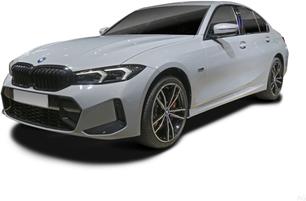
A hybrid BMW 3 Series makes sense now that everything is going electric. And the BMW 330e M Sport is the plug-in hybrid version of the 330i petrol variant. What's not to like, then?
Well, that's what we're here for because this review of the BMW 330e M Sport will reveal everything we've discovered about the car and will help you decide if it really does make sense to make it your next car.
We've covered everything from practicality to on-road performance, features and prices. And yes, we've run a fuel test to see just how efficient this plug-in hybrid is to live with in the real world.
The Honda ZR-V has always been an engaging and fun car that’s the right size for many people. The frugal hybrid powertrain has always been the pick too.
It’s great that Honda has finally introduced more affordable hybrid trims with this update which addresses one of my biggest criticisms of this car previously.
If you’re willing to forgo some luxury features, this entry-level hybrid trim is a fantastic car that still offers enough creature comforts to be driven daily.
Hopefully Honda has some renewed sales success with this car as I believe it’s a clear benchmark for the segment.
The 330e M Sport is an excellent car, but it could be a much better hybrid.
In Australia, where driving distances can be vast, a car that's as comfortable and easy to live with as this one is welcome. But for the electric range to dissipate so quickly, and not recoup again at a fast enough rate without plugging into a charger, is disappointing.
There are other plug-in hybrids, even among the more affordable mainstream brands, which can return charge to the battery incredibly quickly and effectively on the go.
If you are looking to make the step into a hybrid, then perhaps consider a fully electric car. There isn't a battery electric 3 Series on the market in Australia (yet), but BMW does sell the iX1 small SUV for less money than a 330e or the iX3 for a tad more.
Both are pure electric SUVs and have a range of between 400-500km. You'll never need petrol again, which makes a hybrid seem outdated.
The exterior of the ZR-V has always left me feeling quite… meh. It’s a mundane and generic look that doesn’t stand out from the crowd, but that's no bad thing because not everyone wants a flashy car.
That said, I’m still not a fan of the front grille, which makes it look like this car has a moustache.
The dark red paint looks nice, though when it’s paired with these generic-looking grey alloy wheels and black wheel arch cladding, it cheapens the look. The top-spec e:HEV LX looks more attractive.
Inside, it’s similarly standard and doesn’t break the mould. Everything is where you’d expect it to be, which is great for functionality.
The wildest part of the interior is the centre tunnel which features a push-button gear selector and a split console section including a small storage area underneath that’s big enough for a phone.
Looking around, it’s a sea of black finishes, which is a bit boring. However, I do like the mesh panel that spans the dashboard and houses the air vents. It’s a premium touch.
Once upon a time sedans were all we drove, well mainly. Then SUVs became the style of car most people wanted. In fact, three out of four new cars sold in Australia today are SUVs.
So, I commend you on your choice of not just doing what everybody else does, and you'll be rewarded with better driving dynamics, and ownership of an iconic BMW - the four door, 3 Series.
And even though this is a plug-in hybrid version of the 3 Series it's identical in styling to the petrol variants. Only the light blue border around the BMW roundel is the indication that it's an electric vehicle. That and the charging flap near the left front wheel.
The M Sport pack adds some very sexy features such as the M Sport aerodynamic body kit, the door sills and M Sport seats, but the M Sport Pro Pack our car came with adds a black gloss grille, boot lid spoiler and the snazzy seat belts.
The cabin's double screens are impressive but I miss analogue gauges and found the digital instrument cluster overly busy and led more by cool design than functionality.
In base-model form, it’s expected the ZR-V will have fabric upholstery. However, the seats still feel premium and are deliciously padded. They’re manually adjusted but I was still able to find a good driving position with ease.
One feature I was looking for was heated seats, especially on these brisk Melbourne mornings. It’s rare for a car with fabric seats to get heated seats, though. If you want them that badly, they’re available on higher trims.
Ahead of the driver is a leather-wrapped steering wheel which feels lovely. I particularly like the tactile feel of the buttons and switches.
The digital instrument cluster is clear and crisp. It offers multiple views to customise it, as well as a range of infographic pages to cycle through. I wish you could see the fuel consumption and hybrid system graphics at the same time, but thankfully they’re just a single scroll away from each other.
Moving across, the central touchscreen multimedia system is looking a small in 2026, measuring only 9.0 inches, although it’s still high-resolution and the colours are vibrant.
It appears computing power has been given a boost along with the integration of Google Built-in, as jumping from menu to menu has never been snappier.
Speaking of Google Built-in, it’s great to have the flexibility of using the integrated Google Maps and apps like Spotify and Apple Music, without needing your phone.
However, it’s still nice having Apple CarPlay and Android Auto, though the latter is strangely only offered in wired form. With my iPhone 15 Pro Max, the wireless connection was rock solid, though known interference points did cause CarPlay to stutter.
It’s great to see Honda retaining a physical climate control cluster as it’s intuitive to use. The dials in particular have a satisfying click when twirled.
In terms of storage there are two cupholders, two USB-C ports, a big centre console box, as well as an adequately sized glove box. It’s worth noting this trim level forgoes a wireless charger, meaning you’ll need to plug in to charge your phone.
Moving to the second row, there’s a surprising amount of space, even for adults. At a leggy 182cm, I have plenty of legroom and headroom.
You would easily be able to get two adults in the second row, though you’d be pushing it to fit three as the middle seat is narrow and raised. Kids will be fine, though.
Adding to the annoyance of the middle rear seat, the seat belt is mounted from the roof, which can obstruct rear visibility.
In terms of amenities there are air vents on the back of the front centre console, two USB-C ports, map pockets on the back of each front seat, as well as a fold-down centre armrest with cupholders.
There are also ISOFIX points on the two outboard seats, as well as top-tether child seat anchorages on all three rear seats.
Around the back it’s expected the entry-level hybrid will feature a manually operated tailgate. It’s light to open and close.
With the rear seats upright there’s 380L of boot space available, which is decent for this size of car. This figure includes a small underfloor section.
If you fold the rear seats the boot space expands to 1312L, which is cavernous for this type of car. The rear seats cleverly fold forwards and down at the same time, creating a seamless flat floor.
Boot-related amenities include a number of hooks, a 12V socket plus some lights. As is the case with many hybrids, the ZR-V e:HEV doesn’t come with any spare wheel. You need to make do with a tyre repair kit, which is nowhere near as handy if you have a proper puncture away from a tyre repair shop.
People will tell you SUVs are more practical than sedans... and they're right, but not in as many ways as they probably think.
The cabins of sedans and SUVs of the same size are close in terms of space, but the 330e comes with excellent storage - better than many SUVs I've tested, featuring enormous door pockets, and a deep centre console storage bin.
There are four cupholders, too. Two in the fold down armrest in the back and another two up front.
There's also wireless charging up front, plus USB ports for the back passengers. The second row also has its own climate control and directional air vents.
Legroom is excellent in the back and I can sit behind my driving position with plenty of room to spare. Headroom is also excellent thanks to the tall roofline of the 3 Series.
Where a sedan isn't as practical as an SUV is its ride height, which makes getting in and out of the latter easier (although the 330e's doors open very wide) and its boot opening.
SUVs have hatch-like openings and that offers a wider and taller aperture for carrying cargo.
The 330's boot was still big enough to fit our two largest CarsGuide suitcases (see the video), but the location of the battery means cargo capacity has been reduced from 480 litres in a petrol 330i to 375 litres in this 330e.
Honda has shuffled the ZR-V line-up for 2026, decreasing the petrol variants to a single, entry-level trim, while increasing the hybrid grades from one to three.
On test here is the ZR-V e:HEV X, which is the cheapest hybrid. It’s priced from $43,400, drive-away, which is $3500 more than the base petrol trim and $8500 less than the top-spec hybrid option.
This is priced keenly against entry-level versions of the Hyundai Kona Hybrid and Toyota Corolla Cross Hybrid, while undercutting the Nissan Qashqai e-Power hybrid.
For the price you get standard 18-inch alloy wheels, adaptive LED headlights, a 10.2-inch digital instrument cluster, a 9.0-inch touchscreen multimedia system with wireless Apple CarPlay and wired Android Auto, dual-zone climate control and cloth upholstery.
Now standard across the ZR-V line-up is Google Built-in which allows for Google Maps integration, the Google Assistant, plus you can download a number of apps, including Spotify, from the Google Play Store.
If you’re after features like a power tailgate, premium sound system, wireless charger, leather upholstery, plus heated seats with electric adjustment, you’ll need to look higher in the line-up. These are largely all nice-to-haves than musts, anyway.
The BMW 330e M Sport lists for $97,400, which is $4000 more than its 330i petrol twin.
The M Sport part of the name is there because the 330e comes standard with the M Sport pack. And that gives you a tough body kit, M Sport suspension, M Sport seats and aluminium trim, as well as M Sport door sills.
The car we tested and the one you can see in the video and images also comes with the 'M Sport Pro Package'. It costs $2800 and adds a boot-lid spoiler, glossy black grille and tail pipes, and M Sport seat belts, among other goodness.
This car also had the optional 'Visibility Package' fitted. It costs $4800 and adds a sunroof and adaptive LED headlights.
There's no direct rival for the 330e in Australia now. Mercedes Benz used to have a C300e, a plug-in version of its C-Class, but retired it locally some time ago.
The standard features of the 330e M Sport are identical to the 330i M Sport.
So, along with that M Sport pack also coming standard on the 330e is a head-up display, a 12.3-inch digital instrument panel, a 14.9-inch media screen with sat nav, Apple CarPlay and Android Auto, three zone-climate control, wireless phone charging, digital radio and power adjustable front seats.
Is it good value? There's a stack of equipment, tech, beautiful M Sport additions and it all feels superbly high quality. But knowing you can have a 330i for less means you're paying more just for the hybrid system. So, let's talk about that...
Power in the ZR-V hybrid continues to come from a 2.0-litre four-cylinder petrol engine with two electric motors. Total system outputs are 135kW and 315Nm.
This is sent to the front wheels only via an electronic continuously variable transmission (eCVT).
The Honda hybrid system positions the engine primarily as a generator for the battery pack at lower speeds, however once you reach 60-70km/h it can couple with the front axle and directly power the wheels.
It’s a smart system that allows for an electric zippy feel at lower speeds with the backing of a petrol engine at higher speeds.
The 330e M Sport has a 2.0-litre petrol engine and an electric motor. The engine makes 135kW while the motor produces up to 80kW, for a combined dollop of 215kW. Total torque is more than sufficient at 420Nm.
Acceleration to 100km/h from zero feels as quick as the 5.8 seconds BMW claims and that's also about a tenth of a second brisker than the 330i.
The 'XtraBoost' function combines the total output of both the engine and motor briefly providing that great acceleration.
An eight-speed automatic shifts gears smoothly with the drive going to the rear wheels.
I like all this very much - the responsive engine, the fantastic transmission, the extra oomph from the motor and the way it all works together seamlessly. It's just a shame it's not as efficient as some other new plug-in hybrids.
Honda claims the ZR-V hybrid consumes an average of 5.0L/100km on the combined cycle, according to ADR testing.
In practice, I’ve seen way less than this, which is fantastic. On one particular drive around the city I achieved a mind-boggling average of 3.7L/100km, but my overall average hovered around 4.5L/100km.
There is a 57L fuel tank and a minimum of 91 RON regular unleaded petrol is required.
You should easily be able to travel more than 1000km per refill, so don’t expect to be visiting servos very often.
The 330e M Sport is a plug-in hybrid which must be connected to an external power source regularly to charge its 12kWh battery.
The charging flap is located on the left side of the car near the front passenger door, which worked well for me as I could steer the 330e into my driveway and connect to a powerpoint on the wall using the charging cable provided.
It took me about six hours to charge the battery to 100 per cent from zero and that gives you a maximum 57km of electric driving range.
During my four days with the 330e Sydney's summer temperatures were hitting 34-degeres Celsius and with the climate control keeping the cabin at a hospitable 18C electric range was seriously cut short to about 40km.
I drove the 330e in hybrid mode nearly all the time - this is a hybrid after all. But there is a 'Sport' mode for more grunt and a 'Battery Hold' mode to save the charge for later.
I started with a full charge and a full tank of petrol, and for four days I lived with the 330e as I do with all my test cars.
I didn't aim to get the best fuel economy ever, nor was I wasteful with fuel. My wife and I, plus our two kids, just used it as our family car, doing trips to the beach, endless laps of the supermarket car park looking for a space, a birthday party, the lot.
I drove 154.7km over those four days and charged it on the second day after the battery was drained completely before driving another 70km or so over the next couple of days.
When I filled up after this it needed 7.74 litres to reach full again - it's a small 41 litre tank.
That converts to average fuel consumption of 5.0L/100km, which is bang on double the 2.5L/100km BMW says you should get.
I don't doubt you could get 2.5L/100km, but you'd have to be doing short trips and charging almost every time you weren't driving. And not use the climate control on an icy blast setting.
I've tested other plug-in hybrids that achieved much better mileage and that's because their on-board charging capabilities were excellent.
Some were even able to use the petrol engine to power the motor in reverse and therefore act as a generator to recharge the batteries fully.
The 330e M Sport doesn't do a good job of charging its battery while on the go. Sport mode does recoup charge to the battery, but again, if you're doing a long motorway trip that charge evaporates fast.
I don't think this type of plug-in hybrid is suited well to our country where we don't blink an eye at travelling 100km for Christmas lunch and then drive back again.
Also think about if you ever go on a trip away and don't have access to a power point or public charger. It's happened to me.
The ZR-V’s hybrid powertrain has oodles of zip, thanks to there being two electric motors which handle a lot of the low-speed grunt.
It’s surprising how much of the driving can be done on electric power alone, provided there’s enough battery charge. Even at highway and freeway speeds the engine will switch off and coast on electric power alone.
When the petrol engine kicks on, you can barely feel it in the cabin or through the accelerator pedal. Instead you’ll only hear a familiar CVT-like drone as the engine charges the battery.
The petrol engine drone is noticeable but the note it makes more pleasant than a Toyota hybrid. Plus when you push the accelerator that bit harder it pretends to shift through gears, making the driving experience more engaging.
At higher speeds there’s plenty of oomph as the petrol engine and electric motors work in tandem. It feels like the powertrain is never stressed, making for an effortless touring feel.
There are a number of different regenerative braking modes accessed via the paddle shifters. The default is the weakest which allows you to coast more like a regular, pure-combustion car.
You can ramp up the intensity of the regenerative braking but there is no 'one-pedal' driving mode and you’re required to use the brake pedal to come to a complete stop.
From the driver’s seat you have a commanding view of the road ahead thanks to the elevated driving position. There are also large side mirrors and a big rear envelope, giving good all-around visibility.
Around town the ZR-V has a nimble feel thanks to its light-ish steering. This translates to a dynamic feel with a touch more weight out on the open road.
It’s surprising how engaging and fun this car is to drive, especially because it’s a regular SUV with no obvious sporty characteristics.
The suspension errs towards soft, but this helps soak up sharper bumps. This car never feels uncomfortable from behind the wheel which is at least partially down to the 18-inch alloy wheels being the right diameter for a car of this size.
The 330e M Sport is outstanding to drive. The driving position is superb, the steering is effortless and accurate, handling is excellent and the ride is beautifully comfortable.
Brake pedal feel is surprisingly good for a hybrid - some have a wooden sensation.
The transition from electric motor to petrol engine is also remarkably smooth.
Acceleration in Sport mode is sudden, with the engine and motor combining their mumbo to move you. There is a 'fake' or synthesised exhaust note in Sport mode, but it sounds convincing.
Speaking of sounds at lower speeds, in fully electric mode the 330e emits a warning tone to alert pedestrians of your presence. It's quite loud in car parks and does actually make people turn around looking for a UFO.
The Honda ZR-V received a four- out of five-star ANCAP safety rating based on testing conducted by Euro NCAP in 2023.
Despite this, the entire line-up is stacked with standard safety equipment. Highlights include 11 airbags, autonomous emergency braking (AEB), blind-spot monitoring, rear cross-traffic alert, lane-keep assist, adaptive cruise control, front and rear parking sensors as well as a reversing camera.
It’s worth noting a surround-view camera is reserved for the top-spec hybrid trim only, which is a little annoying.
However, the ZR-V doesn’t have any annoying beeps and bongs that play while you’re driving. All the safety systems are well calibrated and only interact or engage when required.
The 3 Series was awarded the maximum five-star ANCAP rating when it was tested in 2019. The 330e comes standard with AEB, lane keeping assistance, blind-spot warning and rear cross-traffic alert.
There are excellent cameras front and rear and LED headlights, too.
Adaptive cruise control is also standard on the 330e M Sport.
ZR-V owners receive a five-year, unlimited-kilometre warranty as standard, whereas the high-voltage battery is covered for eight years.
If you service at Honda dealers when required, however, the standard warranty coverage is extended to eight years. This is more on par with many mainstream brands.
Speaking of servicing, it’s required every 12 months or 10,000km. The latter may be troublesome if you do a lot of kilometres.
The first five services are capped at $199. This is very affordable and on par with Toyota.
There are close to 90 'Honda Centres' across the country covering state and territory capitals as well as key rural and regional centres.
The 330e M sport is covered by BMW's five-year/unlimited kilometre warranty. The hybrid battery is covered by a six-year/100,000km warranty.
BMW offers a five-year/80,000km service package for the 3 Series for $2150.
Service intervals are condition-based, and the car will let you know when it's time for a check-up.