What's the difference?
Nobody saw this coming.
Honda’s first electric vehicle (EV) in Australia, the Kei-car based Super-One, sold out within the first five hours of going on sale back in August.
Granted, buyers swallowing up all 130 units in record time does not mean we’re in for an endless summer of Super-One love.
But it has been a big hit elsewhere, too, selling 10 times Honda’s original forecasts in Japan.
So, what does this hot retro runabout have, and why are people so excited, when Australia is now awash with affordable EVs?
Time to find out.
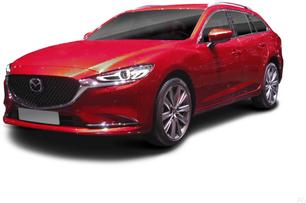
Has it really been 20 years since the humble Mazda6 station wagon hit our roads? You betcha, but I was more shocked that I remembered when it did!
I have a sudden flashback of questionable fashion choices, glittery butterfly hair clips and how Skipper was making a play at being the coolest 'Barbie' (she wasn't).
I've always had a soft spot for wagons, they are the forgotten heroes for family hauling. It's hard not to glide over them when the market is dominated by SUVs but if you happen to remember they still exist (albeit, barely) you might remember why they were popular back in the day.
Being a 20th Anniversary Edition means there are some nods to the past in this model but unlike the low-slung jeans of my youth, they're stylishly done. With some luxuriously-appointed rivals to contend with, like the Skoda Octavia and Volkswagen Passat, does it offer enough to be considered by a modern family?
My little family of three has been in it all week to find out for you!
Honda is on a roll, with the Super-One reflecting the brand’s excellent engineering essence more vividly than any other model.
On paper, the Kei-car based EV is big on price but small on power, space, battery capacity and range. Chinese brands must be laughing.
Yet the Super-One punches well above its (commendably low) weight for style, charm, fun and efficiency, while delivering larger-car levels of comfort, refinement and features.
Given the premium pricing is well beneath other premium retro EV rivals like the Mini Cooper and Fiat Abarth 500e, the Super-One even makes a convincing value-for-money pledge for itself.
We can’t wait to drive it more. Little wonder this has been such a big global hit.
Note: CarsGuide attended this event as a guest of the manufacturer with meals provided.
So, what did my family think about the Mazda6 20th Anniversary wagon? Firstly, I like that it drives well and how many luxe features are up front. The trims and body paint look divine but there's a disconnect with family practicality in the back seat. Besides the multimedia system, which 100 per cent needs to be improved, I don't mind the retro-feeling elements in the cockpit but my husband's first comment was that it looked old.
It may be better suited to a smaller and older family that isn't carting around a stack of gear but you get a lot of features for your cash in this model. So, this gets a 7.0/10 from me.
My son didn't spend heaps of time in this one but he liked the colour of it and the seats. He gives it a 7.0/10.
Honda has performed a minor miracle beefing up its baby N-One into the Super-One you see before you.
The brief called for devising a ‘fun’ EV, but using the standard narrow Kei-car architecture wouldn’t cut it design-wise.
The result sees wider tracks, a fat new body kit with LED ring lights, blanked-out grille and bold blistered wheel arches boxing in larger wheels and tyres. These extend width and benefit stance substantially, while air intakes and tailgate spoiler improve aero.
Additionally, there are mods to the steering with stronger wheel hubs and suspension with a stronger rear beam and uprated springs and dampers, and a chip upgrade for more power when the purple “e-Booster” button is pressed.
Compared to the N-One, the Super-One’s length increases 185mm to 3582mm and width by 100mm to 1573mm. Height and wheelbase are 1616mm and 2520mm respectively.
That all said, the body remains the same dimensionally, but those colourful sports seats, retro-style cassette-player climate-control design and ambient lighting make the petite interior feel premium.
At first glance there's not a lot that separates this from its siblings, it's not until you get up close that you notice more shiny chrome accents on the grille, those special anniversary badges on the side and its limited colour options – I hope you like red or white, as those are your only choices!
The wagon manages to look sporty with its 19-inch alloy wheels, full LED exterior lights and the classic protruding nose that Mazda seems known for now.
It's far more obvious in the interior though with the beautiful tan Nappa leather seats, synthetic suede trims and special embossing on the front headrests.
Surprisingly, the dashboard is still headlined by the older 8.0-inch touchscreen multimedia system. There's also the traditional gear-shifter and buttons/dials to deal with. All of which manage to nod to its long history while starting to feel like relics for such a special edition.
Overall, its pleasant and handsome but don't expect to be wowed, Mazda hasn't broken new ground with this one.
Generous apertures, a high roof and big doors that open nearly 90 degrees combine to make entry and egress easy.
The Kei-car narrowness is immediately obvious but, unless you’re more than 180cm tall, you’re unlikely to feel cramped. Deep windows, thin pillars and a lofty seating position help provide a pleasantly airy environment with excellent all-round vision.
Those bolstered sports seats are unique, and are superbly comfortable and supportive in a big sports car way. They could be out of a Prelude.
There’s little about the angular, layered and boxy dashboard that’s diminished by the Super-One’s diminutiveness.
Fit and finish are first class, all controls are within easy reach, physical buttons take care of most of important functions like that cool and very effective climate control set-up, and the 9.0-inch touchscreen, which will be familiar to other current Honda owners, is child’s play to operate.
Storage is sufficient, with door pockets capable of carrying a medium-sized bottle, while Honda provides simple access to USB-C ports.
Size does not compromise the Super-One, unless you’re above average height, as those brilliant front seats do not slide back far enough. And the steering column does not adjust for reach, adding a further hindrance.
Further back, things do become plainer, like Honda forgot to upgrade the second row from the donor N-One.
Plain (yet comfy) monochrome material is the overriding theme, yet there is abundant space in all directions for two adults (this car is strictly a four-seater), on a comfy pair of seats that recline slightly.
Plus, lots of light, overhead grab handles, a reading light and one map pocket.
Otherwise, it’s pretty bare back there. Don’t bother searching for cupholders, a centre armrest or air vents.
Those twin backrests fold down low and flat, Honda Jazz ‘magic seat’ style, to provide a huge cavity that goes from just 162 litres in four-person mode to 618L VDA to the window line and 967L to the ceiling. Combined with a tall tailgate and low bumper load height, and this doubles up as a stubby panel van. Plus, there’s a useful underfloor cavity too.
The only fly in this dinky ointment is the lack of a spare wheel, relying on a hopeless tyre-repair kit instead.
The interior is comfortable and well-proportioned but front passengers will enjoy the most room. You'll still feel like you'll be jostling for premium armrest position, though!
Up front, the individual storage is adequate and the open utility tray is large but my phone slid around in it, making it hard to use the wireless charging pad.
There are enough charging options throughout the car to satisfy four people, with two USB-A ports in each row. Curiously, you can only utilise the backseat USBs when the armrest is down, which makes this feel more suited to a smaller family.
The 8.0-inch touchscreen is small and the graphics aren't super clear. You can use it as a touchscreen or opt for the rotary dial but I found switching between the two awkward. Especially, since the touchscreen is disabled while using the (wireless) Apple CarPlay or (wired) Android Auto.
The back seat is quite lean when it comes to amenities and storage. Although, the heated outboard seats are a nice touch, but again, you can only access the controls when the armrest is down.
You can fit up to three (skinny) child seats but with the low roofline, you might not want to be bending over to buckle them in. The door apertures are not too wide either but my six-year-old had no trouble climbing in and out.
For this class, the boot is an okay size at 506L. There is a temporary spare wheel under the level loading space and it's great how the cargo-blind lifts up and away from the space because it's attached to the boot lid.
Unfortunately, this doesn't come with a powered tailgate and I did miss having that feature this week.
OK. $36,900 drive-away is steep in anybody’s language for a city car a whole size smaller than a Toyota Yaris. Particularly when it has one of the smallest batteries in the business at 29.6kWh offering just 202km of WLTP range.
Yet there is a certain logic to the Super-One’s appeal.
Yes, several larger EVs from China cost less, and even the smallest have bigger battery packs with better range.
Along with the Geely EX2 from $26,490 (all prices are before on-road costs unless stated otherwise), this even includes the base BYD Atto 1 Essential.
Previously Australia’s cheapest-ever EV from $23,990, that’s now been temporarily slashed to nearly half the Honda’s price, from $19,990 drive-away, creating this country’s cheapest new car, outright.
Who cares about resale values, anyway!
If you’re all about saving cents and sensibility, then the Super-One is a super bust.
On paper, it’s even dearer than that other adorable but pricey pint-sized EV, the Hyundai Inster. Now from a more palatable $35,990 drive-away, that’s had a $6000-plus haircut.
However, for us anyway, the penny dropped.
If you’re seeking a cheaper rival to BMW’s Mini Cooper SE or Fiat’s Abarth 500e – and, less face it, from about $60K, these are premium EVs bought with hearts, not heads – then the Honda starts making sense.
Think about it. All three are retro takes on beloved mid-century designs. All are four-seater sub-B superminis. And, of course, all embrace their respective unique cultural heritage.
In the Super-One’s case, it is exquisitely Japanese, being Kei-car born and based. But it also transcends those strict footprint and output limits, brandishing greater width, length and muscle, the latter courtesy of a power boost function.
Plus, the Honda is highly equipped, featuring:
• A decent level of advanced driver-assist safety systems
• 9.0-inch touchscreen with reverse camera
• Wireless Apple CarPlay and Android Auto
• Bose premium audio with eight speakers and subwoofer
• Heated steering wheel
• Heated, bolstered front sports seats
• Google Built-in
• Honda’s Connect app for remote car access with free subscription for the warranty period
Among the premium EV superminis, then, the Super-One represents its own special brand of value.
Plus, nothing else on the road quite looks like this boxy little tearabout.
As the name suggests, this is a special edition and it bumps the Atenza from its usual 'top spot' in the model line-up. Yet, for a top-model it is spectacularly well-priced at $54,935, before on-road costs.
That places it below the Volkswagen Passat 162TSI Elegance ($57,190) and above the Skoda Octavia RS 180TSI ($53,090) wagons.
You get all of the features of the Atenza, like the luxurious heated and ventilated front seats, heated rear outboard seats, heated steering wheel and a sunroof.
Then, you'll also be enjoying the 20th Anniversary badging on the exterior, tan Nappa leather seats with that same badging embossed on the headrests and a delightful synthetic suede trim on the dashboard.
Other features include some nice tech, like wireless Apple CarPlay and wired Android Auto, dual-zone climate control and a premium Bose sound system with 11 speakers, but more on tech below.
Being based on an internal combustion engine platform, you won’t find a frunk under the bonnet, which is choc-a-block full with a 47kW/168Nm electric motor.
It’s a good thing this only weighs 1093kg, which is about 300kg less than most rival EVs.
Press that e-Booster button, and power jumps to 70kW, slashing the 0-100km/h time from 14.5 seconds to ten-flat. Drive is sent to the front wheels via a single-speed transmission. Top speed is just 135km/h.
Boost is one of five driving modes.
There’s Econ for optimising range thanks to four regenerative braking levels via paddle shifts, City with unique single-pedal driving/braking and four regen brake levels, Normal that’s back with the six regen brake levels, and Sport that – along with Boost – swaps in simulated seven-speed manual ratios, complete with artificial exhaust note.
This shares the same engine with the Atenza and that's a 2.5-litre, four-cylinder turbo-petrol one. It has a max power output of 173kW and 420Nm of torque. Plenty of oomph to get you (and your gear) to where you need to go.
The 20th Anniversary edition is a front-wheel-drive and has a six-speed auto transmission. It's not the smoothest combination at lower speeds but let it stretch its legs and you'll be happy with the results.
The Super-One has a WLTP range of 202km. The combined average energy consumption is just 12.1kWh/100km, though our hard-driven test car with air-con on a sunny day in peak-hour traffic displayed around 20kWh/100km.
Faster charging is the advantage of having a compact battery pack.
Using a 400-volt architecture, Honda claims its 29.6kWh Lithium-ion unit can be charged using a common 50kW DC charger from 15 per cent to 80 per cent in about half an hour.
More sensibly, plugged in at work/home overnight should only require about eight hours to 100 per cent full, or around four hours with a circa-7kW wall box.
Maximum AC power charging is 6.6kW in single-phase and 10kW in three-phase modes.
Let's talk about efficiency. It has a combined cycle fuel figure of 7.6L/100km but I only managed to achieve 10.9L. I reckon that's pretty thirsty considering how much open-road driving I did this week but it's not outrageous for a turbo. Expect a higher figure in an urban setting.
Based on the combined figure, you should be able to get a driving range of around 816km, which is perfectly respectable for those wanting to do a road trip.
At last, we’re behind the wheel of Honda's first EV for Australia, and the Super-One certainly lives up to its name.
Even though it only boasts 47kW of power, it is amply gutsy around town, which is where our brief launch drive was limited to.
Acceleration is lively, scooting eagerly off the line, relying on its instant torque and relatively light weight to make the most of what is available.
There is plenty in reserve for immediate and effortless darting about in and out of traffic gaps.
And that’s in Econ mode. Press the purple e-Booster button, and the Super-One feels supercharged, leaping into action with stronger responses across the board, thanks to a 23kW boost. Performance within the 80km/h confines we tested it in seemed rapid.
The Honda does certainly feel more than racy enough given its sporty aspirations.
Meanwhile, the Super-One’s beautifully tuned steering and controlled suspension also provide an enjoyable and easy balance around town.
It's sharp enough for the driver to get involved, and yet smooth enough for parking to be a cinch, aided by a tight turning circle and great all-round vision. This is the Samantha Jones of dinky superminis: it owns the city.
The ride quality is a fine compromise, too. Firm yet never hard or crashy, it soaks up the bumps well enough, while also being surprisingly quiet.
We wonder whether road and tyre noise intrusion is as muted out on the open road?
We even enjoy the artificial noise coming from the powertrain.
After our all-too-brief first drive, it is clear that the Super-One is the first cheap-ish EV that feels designed and developed for driving pleasure.
It's not a sports car. It's no Civic Type R, and it isn't meant to be. Instead, this is a charming, well-rounded and highly enjoyable urban runabout with style, class and sophistication.
We can’t wait to drive it more. On first impressions, the Super-One has exceeded expectations.
This is a car that knows what it is and stays in its lane. It's not trying to be the best but it certainly comes close with how it handles itself.
The lower centre of gravity and responsive steering make it hug corners and the car feels firmly situated on the road.
There's enough power that this is a comfy open-roader and you're confident overtaking or getting up to speed but you do feel like you're starting to dig when you hit steeper slopes.
The suspension is a little firm but your backseat passengers will feel that more than you will. Still, it absorbs enough of the bumps that you feel cushioned, even on rough country roads!
The cabin space is fairly quiet but you will get wind noise at higher speeds. Otherwise, all passengers should be able to chat without raising their voices.
I didn't find this to be a bother to park but the 360-degree view camera is terrible. It's very blurry and on the 8.0-inch screen, the image looks small, too.
That said, I love the 11m turning circle and the front and rear parking sensors. Overall, you won't have much trouble parking this one.
There is currently no ANCAP crash-test rating.
Honda says that the Super-One hasn't been crash tested independently as ANCAP hasn't asked for one.
But the company does fit a selection of safety-related technologies that at least match most of the competition, including autonomous emergency braking (AEB), forward collision warning, lane departure warning, lane keep assist, traffic jam assist, road departure mitigation system and adaptive cruise control with low-speed follow, as part of its advanced driver-assistance systems (ADAS) set-up.
In 90 minutes of peak-hour urban schlepping about town, not once did we experience any ADAS intrusion. No unwelcome tugging interference from the steering. No traffic sign shrieking. No adaptive cruise control fails when we finally picked up some extra speed along Melbourne's M1 heading back into the city.
Honda says that this car was tuned in Japan, but also tested in Australia and the UK prior to launch, and its nuanced ADAS behaviour shows.
Honda says that it has also worked hard on making the body as strong as it possibly can with beefed-up pillars.
Plus, six airbags are fitted, along with a pair of ISOFIX and child-seat tether anchorage points in the rear seats.
Safety is important on any car, but more so on a family one. I'm happy this has the usual specs, like daytime running lights, lane keeping aid, lane departure alert, blind-spot monitoring, rear cross-traffic alert, 360-degree view camera, front and rear parking sensors and intelligent seatbelt reminders.
I like the fact the adaptive cruise control now has a stop and go function and that traffic sign recognition and a head-up display are included.
The autonomous emergency braking (and forward collision warning) with car, pedestrian and cyclist detection, is operational from 10–80km/h (a little slower than the average 5.0km/h).
It has a maximum five-star ANCAP safety rating but it was done a while ago in 2018. It only has six airbags which is a bit low for a family vehicle now but that does include curtain airbags covering both rows.
There are ISOFIX child seat mounts on the outboard rear seats and three top-tether anchor points across the back. You may get lucky with three skinny child seats but two will fit best.
A 0-4 rearward facing child seat can be installed but will encroach on front passenger comfort, especially if they're tall.
The Super-One comes with a five-year, unlimited kilometre warranty.
But if you choose to have it serviced at a Honda dealer, that increases to eight-years/unlimited. Intervals are 12 months or every 10,000km.
For the first five years, it will cost $199 per service, providing good value for money.
Currently there are 75 Honda dealers throughout Australia.
The ongoing costs match the purchase price for their affordability. This has a five-year/unlimited km warranty, which is pretty normal for this class.
However, on the five-year servicing plan, services average $501 per service - which is very competitive for this class! Servicing intervals are also reasonable at every 12 months or 15,000km, whichever occurs first.
You're not even getting hit with the fuel pricing you can see on other mid-range models because this accepts a minimum of 91 RON petrol and is even E10 suitable.