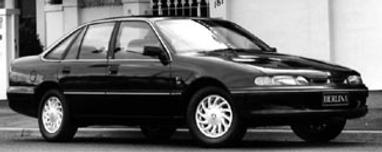
Holden Commodore 1997 Problems

Are you having problems with your 1997 Holden Commodore? Let our team of motoring experts keep you up to date with all of the latest 1997 Holden Commodore issues & faults. We have gathered all of the most frequently asked questions and problems relating to the 1997 Holden Commodore in one spot to help you decide if it's a smart buy.

Used Holden Commodore review: 1997-1999
By Graham Smith · 23 Jan 2009
Holden execs were given the best Christmas present possible in 2002 with news that sales of the Commodore had reached record levels, surpassing even the benchmark set by the HQ back in 1973. Indirectly the record new car sales is also good news for buyers of second hand cars with a glut of used Commodores threatening to flood the market giving buyers the perfect environment in which to haggle with dealers.Many dealers don’t want to take on any more VR and VS Commodores, most of them have one or two gathering dust in their yards because they’re getting hard to shift at a price that delivers them a profit. The good news is that the VT Commodore is also becoming hard to shift, not because it’s a bad car, but simply because there are so many on offer that buyers can afford to be choosy, and can afford to negotiate hard.MODEL WATCHThe VT was an all-new Commodore launched in August 1997, the result of a $600 million spend by Holden as the company moved to reinforce its position as number one carmaker in the country.The VR and VS Commodores before it had been well accepted by buyers and the VT built on the success of those two models.Holden’s styling boss, Mike Simcoe, hit the jackpot with the VT, designing a elegant shape that had a hint of sportiness. With a longer wheelbase and wider track it had well balanced proportions and an aggressive stance on the road. The smooth dynamic front end flowed through to a substantial rump, and for once the body was allowed to hug the wheels in a way that’s normally only associated with BMW.With the current VY Commodore another facelift of the shape originally introduced with the VT, the VT has not yet dated and still looks good. Some even rate its smoother lines and elegant shape more appealing than the new car.The all-new VT body was stronger and more rigid that any Holden before it, and that translated into improved crash protection, more responsive handling and greater overall refinement.Safety of the VT was also boosted by the fitment of a driver’s airbag as standard across all models – a passenger airbag was optional – pyrotechnic seat belt pretensioners that worked in tandem with the airbag, and a lap/sash belt for the centre passenger in the rear seat.Security upgrades including remote deadlock release, free-turning door lock cylinders, a steering column lock that was designed to slip when forced, and an immobiliser made the VT harder to steal.Engine choices included Holden’s 5.0-litre V8 and a supercharged V6, but the 3.8-litre ECOTEC V6, which gave it plenty of punch, delivered the primary source of power in the VT. Boasting a power peak of 147 kW at 5200 revs, and maximum torque of 304 Nm at 3600 revs, the fuel-injected overhead valve 90-degree V6 would power the VT from standstill to 100 km/h in 8.5 seconds.There was a choice of a five-speed manual gearbox or a four-speed electronic auto transmission, with drive through the rear wheels.Suspension was by MacPherson Strut at the front and semi-trailing arm independent at the rear, and there was a sports suspension option available at extra cost.Brakes were discs all round, with ABS available as an extra cost option, and steering was power assisted.Velour trim was a feature of the comfortable interior, which featured new ergonomically designed seating and improved instrument panel.All models had power height adjustment for the driver’s seat, cushion tilt adjustment, trip computer, power mirrors and remote boot release.Air-conditioning, anti-lock brakes, traction control, passenger airbag, power windows, CD player were all available at extra cost.The Acclaim was equipped to appeal to private buyers, and boasted dual airbags, anti-lock brakes and auto trans as standard, but air-conditioning remained an extra cost option.IN THE SHOPBetter design integrity and improved build quality mean that VTs generally stand up well in service and most with be tight with few squeaks and rattles.Look for oil leaks from the engine, which is prone to leakage from the rear main oil seal, oil pan and front timing cover seal.Oil leaks are also a problem from the power steering pump and rack so have a good look under the car.Rear tyre wear can be high with the independent rear suspension of the VT. This is more of a problem with cars powered by the V8 engine, particularly if they’re driven hard as they tend to be. It’s not such a problem with the V6 because the cars generally aren’t driven as hard, but the tyre wear problem was a major incentive for Holden to introduce the much needed extra toe-link, or Control Link, on the rear suspension of the VX Series II.The attractive interior trim stands up well to the ravages of the harsh Aussie sun and there’s little problem there.LOOK FOR• strong new car sales means plenty of choice for used car buyers.• contemporary look without the new car price tag.• well equipped Acclaim the best choice with standard auto, airbags and anti-lock brakes.• strong rigid body means few squeaks and rattles in older cars.• punchy performance from 3.8-litre V6.
Read the article
Used Holden Commodore Berlina review: 1996-1997
By Graham Smith · 09 Oct 2004
If the theory holds true that the last model in the line is the best to buy, then the VS is the pick of the second-generation Commodores.  The theory is that by the end of a model the carmaker has ironed out all the production wrinkles, fixed problems that have surfaced during servicing and developed the car to its peak.If that's true, it's better to buy a VS Series II than a VT.  It's also said to be better to buy an optioned-up model than a bare-bones base car. You'll find it easier to sell later on.The used car buyer can buy a better model for not much more than a base car.  The Berlina, for instance, is the next model up from the Executive. A VS II Berlina cost $8230 more than an Executive when new, but now costs only about $2000 more.MODEL WATCHTHE final second-generation Commodore was the VS II, released in 1996. It was designed to keep attracting buyers until the all-new VT arrived in 1997.  The model began with the VR in 1993 and took in the VR II update in 1994 and VS in 1995.It was an improved car compared with the previous VN and VP models, but they were still being built to a tight budget.  VR was a major breakthrough. It was much more refined, better built and better equipped.The VS built on that success and the VS II update added gloss to a brilliant success story.  The big news in the VS was introduction of the smooth ECOTEC V6 engine. The same 3.8 litres in capacity, the engine produced more power (147kW) and used less fuel (six per cent).For those wanting more punch the 5.0-litre V8 was optional.  Buying a Berlina was about more comforts: velour trim, automatic airconditioning, cruise control, power boot release, power mirrors, power steering, trip computer, sports seats and radio cassette sound with six speakers.  Remote central locking improved security, ABS improved the braking, and alloy wheels improved its looks.IN THE SHOPBUILD quality improved dramatically with the VR and VS. A new paint shop in South Australia had a huge impact.  The ECOTEC V6 is generally quite reliable. Look for oil leaks around the timing cover, rocker covers and oil pan.Make similar checks on the V8. Problem areas are the power-steering pumps, which leak oil and are known to fail; the electric fuel pump in the fuel tank, which is known to break down; and the power-steering rack, which is known to leak oil.When checking the power-steering rack, check the rubber boots carefully for damage, tears, splits and cracks.  Damage to the boot allows grime in and that can cause damage to the rack and its joints.Many Berlinas were leased by company executives who could afford the upgrade. They were usually turned over quickly, but often received minimal servicing, so check for a service record.CRUNCH TIMEWITH the VS Acclaim and Calais, Holden was the first local carmaker to fit dual airbags, though the Berlina had a standard driver's airbag.OWNER'S VIEWSKIM Maxwell loves the power of the V8 in her 1997 Berlina, but not its fuel consumption.  Kim and husband Garry have owned it since new and it has been very reliable over 180,000km.  The engine hasn't missed a beat, but a noisy diff required rebuilding at 125,000km.THE BOTTOM LINEWELL-equipped Berlina better value for money than Executive, but Acclaim makes more sense with ABS, IRS and airbags standard.LOOK FORVALUE for money in extra optionsBETTER resale potentialCOMFORTABLE family transportRELIABLE, smooth, economical V6POWERFUL but thirsty V8
Read the article
Used Holden Commodore Ute review: 1995-2000
By Graham Smith · 23 Jan 2009
The Holden ute was a favourite work wagon for farmers, tradesmen and small business owners from the day of its introduction in 1951 it was a sad day when it disappeared from Holden showrooms with the demise of the WB in 1984. While Holden launched a new Commodore-based VG ute in 1990 it was not the worker of old.Where the traditional Holden ute was a real workhorse with a tough full chassis and useable payload the Commodore ute was a bit of a lightweight softie by comparison. It was based on the long wheelbase Commodore, so there was no chassis, and it had coil springs in the rear instead of leaf springs. The payload of 710 kg was well down on the payload of the old utes, particularly the hugely popular one-tonne chassis-cab.The Commodore-based ute had plenty to live up to given that the series of utes that kicked off with the HQ in 1971 and ran through to the WB in 1984 were tough old trucks that stood up to the abuse of daily life on the work site for years and years.Tradesmen, farmers, small business people were quickly attracted to them for their combination of performance, comfort and ability to carry a real workload, while in recent years they have become a favourite of a new generation looking for a cool escape vehicle for weekend getaways.Those who held the old Holden utes in such high regard thumbed their nose at the Commodore-based ute when it first arrived on the scene and it wasn’t immediately accepted as a real workhorse. It was the ute driven to the work site by the boss, not the workers. It was more likely to carry the lunches than the tools of trade.The VS ute introduced in 1995 was the final evolution of the original Commodore-based ute before the all-new VU model came in 2000. It remained something of a softie in work terms but had gained greater popularity as a sports ute that was a cool daily driver that could carry the sports gear at the weekend.MODEL WATCHThe VS was a facelift, but much refined version of the VR ute which first saw the light of day in 1993.Like its passenger car cousins the VS utes were little different on the outside from their predecessors, most of the changes took place under the skin.The big news was the ECOTEC V6 engine which, while seemingly almost identical to the 3.8-litre V6 it replaced, was almost entirely new being smaller, lighter, smoother and more fuel efficient than its predecessor.Capacity remained at 3.8 litres, but it had a new block, heads, manifolds, and an all-alloy cast sump. The electronics were upgraded with a new computer, as well as a hot-wire air-mass sensor and sequential fuel-injection. It all added up to 17 kW more power, which was now 147 kW at 5200 revs with peak torque of 304 Nm at 3600 revs, but there was also a six per cent improvement in fuel consumption while meeting exhaust emission rules.Transmission choices were a five-speed manual ’box and four-speed electronic auto.A Series II upgrade came in 1996, which can be identified by Series II badges and oval shaped side blinker repeater lights. It also brought a number of small improvements, among which was a new five-speed German Getrag manual gearbox for the V6.Mid-1998 saw a Series III upgrade, identified by Series III badges and clear side blinker repeater lights. There were also a number of interior upgrades, and for the first time there was a 5.0-litre Holden V8 SS model to complement the previous range which was limited to the standard Commodore and S models.A neatly integrated body kit, made up of front bumper and side skirts, distinguished the SS. There was also a polished alloy rear sports bar, 16-inch alloy wheels, fog lamps and SS decals.The SS V8 gave the hottie ute plenty of tail-wagging performance with 168 kW driving the rear wheels through a five-speed manual and a limited-slip diff. ABS and sports suspension helped keep it in line, which was nice when the rear inevitably stepped out under enthusiastic acceleration.Inside there was a leather wrapped sports steering wheel, hand brake and gearshift knob. The seats had SS identification on the seats, and power windows and air-conditioning was standard.The arrival of the SS was a clear indication that the Holden ute had become as much a lifestyle vehicle as it was a hard worker.IN THE SHOPThe Holden ute’s body and chassis are robust and reliable and little trouble is reported from the field.Likewise the V6 engines are generally robust with a number of owners reporting untroubled motoring well above 200,000 km. Look for oil leaks from the rear main crankshaft seal and around the oil pan, and also from the power steering pump.Fuel pumps tend to fail around the 200,000 km mark.One owner was less than happy when his engine had to be replaced because of a worn camshaft at quite low mileage, and he says the telltale noise is back again.Overheating in autos in VS II utes can lead to transmission problems at around 100,000 km. It can’t be fixed simply by changing the oil, and Holden rebuilt or replaced a number of transmissions in problem vehicles. Holden fixed the problem by releasing an oil cooler kit, which can be retro fitted to prevent the problem.Noisy diffs are also a widespread problem. It’s important to use the Holden recommended oil in diffs to prevent a howling rear-end. Diff seals can also be a problem.OWNER’S SAYAlan McKenzie runs a cleaning business in Sale and uses his VS II Commodore S ute as his daily driver, usually with a trailer in tow.He bought it new and has done some 110,000 km in it. He admits he makes it work hard and doesn’t spare it at all, and says he’s happy with it overall despite having the V6 engine replaced due to a worn camshaft after 67,000 km.He’s had no trouble with the manual transmission or diff, and praises its comfort, drivability and handling.Would he buy another one? He says he’d happily have another, but says when he comes to buy his next ute price will be the crucial decider that will determine whether it’s a new Falcon or Commodore ute.LOOK FOR:• cool styling• tail wagging performance• overheating auto trans• howling diff• worn camshafts
Read the article
Used Holden Commodore review: 1996-1997
By Graham Smith · 23 Jan 2009
If the popular theory holds true that the last model in the line is the best to buy then the VS model is the pick of the second generation Commodore. The theory is that by the time a carmaker releases the last model they’ve worked all the production wrinkles out of it, fixed the problems that have surfaced in service, and have developed it to its peak.According to the theory the last model of one generation is a better buy than the first of the next generation. Going by that it’s better to buy a VS Series II than it is to buy a VT Series.So if you value build quality and reliability above new cosmetics and gimmicks, it’s better to gamble on the older car.It’s also said to be true that it’s better to buy an optioned up model than a bare bones base car. Do that and you’ll find it easier to sell later on.For the used car buyer, the second owner, it’s often true that you can buy a better model without paying much more than you would if you were to buy a base car. It’s not only the value of the car that devalues, the add-on cost of buying an optioned up model also depreciates at the same time so the more expensive model can become more affordable as time passes.The Berlina, for instance, is the next model up the line from the Executive. The VS II Berlina cost $8230 more when new, but now costs little more than $2000 more than an Executive.While the extra equipment cost more when new, it doesn’t often cost much more when buying second hand. But what it can do is make the car more saleable as a second hand vehicle.MODEL WATCHThe final fling in the second generation Commodore line was the VS II released in 1996. It was designed to keep the old model fresh enough to keep attracting buyers until the all-new VT arrived in 1997.The second generation of the modern Commodore began with the VR model in 1993, and also took in the VR II update in 1994, and the VS, which hit the road in 1995.It was a much improved car compared to the previous generation of VN and VP models, which had Holden heading in the right direction after coming close to collapse in the late 1980s, but they were still being built to a tight budget.VR was a major breakthrough for Holden. It was much more refined, better built, and better equipped. Sales raced ahead and Holden was again in a position to threaten for the lead in the annual sales race.VS built on that success, and the VS II update simply added some more gloss to what was already a brilliant success story.The big news in the VS was the introduction of the smooth ECOTEC V6 engine. The same 3.8 litres in capacity, the new engine was an all new unit that was much smoother than its predecessor, produced more power (147 kW) and used less fuel (six per cent).For those who wanted more punch the 5.0-litre Holden V8 was optional. The all-Aussie V8 was coming to the end of the line, it was eventually replaced by the American Gen III 5.7-litre V8 in VT II.Although it dated back to 1968, the Holden V8 had been regularly updated over its long life span and was a much loved powerplant by those who appreciated its low down punch and pulling power. In VS II it put out 168 kW.A four-speed auto trans was standard, and the rear axle was a live unit.Buying a Berlina was about buying more creature comforts. Inside, the Berlina buyer got velour trim, automatic climate control air-conditioning, cruise control, power boot release, power mirrors, power steering, trip computer, sports seats, and a radio cassette sound system with six speakers.Remote central locking improved security, ABS improved the braking, and alloy wheels improved its looks.It was a model aimed at those who wanted more than was on offer in the Executive, but didn’t want to go all the way to the Calais which had all there was to offer in the Commodore family.IN THE SHOPHolden build quality improved dramatically with the VR and VS models. A new paint shop was commissioned in time for VR II production at the Elizabeth plant in South Australia, and that had a huge impact on paint quality.The ECOTEC V6 is generally quite reliable. Look for oil leaks around the timing cover, rocker covers, and oil pan. Make similar checks on the V8.Problem areas are the power steering pump, which leaks oil, and is known to fail, the electric fuel pump in the fuel tank, which is known to break down, and the power steering rack, which is known to leak oil.When checking the power steering rack, check the rubber boots carefully for damage, tears, splits, cracks etc. Damage to the boots allows road grime in and that can cause damage to the rack and its joints.Look carefully at the front and rear bumpers, and their mountings, for possible minor bingle damage. Look for misalignment where bumpers might have been poorly reattached after repairs.Many Berlinas were leased by company execs, who could afford more than a base model. They were usually turned over quite quickly, but often received minimal servicing, so check for a service record.IN A CRASHHolden became the first local carmaker to fit dual airbags to its car when it made driver’s and passenger’s airbags standard in the VS Acclaim and Calais. Sadly the Berlina had to make do with a standard driver’s airbag, the passenger’s airbag was an option.According to the recent used car survey of real life crashes, the VS Commodore performs pretty well. It has better than average crashworthiness, and is on a par with the fleet average in terms of its impact on the occupants of other cars.OWNERS SAYKim Maxwell loves the power of the V8 in her 1997 Berlina, but not the fuel consumption that goes with it. Maxwell and her husband, Garry, have owned the car from new and say it has been very reliable in the 180,000 km it has now done. The engine hasn’t “missed a beat”, Garry says, but a noisy diff required rebuilding at 125,000 km, the radiator, and worn suspension bushes have had to be replaced, and the silver paint has a few blotches.LOOK FOR• Value for money in extra options• Better resale potential than base model• comfortable family transport• reliable, smooth, economical V6• powerful but thirsty V8THE BOTTOM LINEWell equipped Berlina better value for money than Executive, but Acclaim makes more sense with ABS, IRS and airbags standard.RATING60/100
Read the article
What kind of fuel am I?
Answered by Graham Smith · 05 May 2005

I WOULD run it on regular unleaded all the time. That's what it was developed to run on and it does it without any problem. You can use PULP, but in my view that's a waste of money in the VS Commodore. I can't say one unleaded is better than another, except that I would make sure the one you use has no more than the 10 per cent ethanol allowed under the law. Some small outlets have been known to use up to 20 per cent ethanol, which can have an adverse effect on fuel system components. I would recommend you use one of the well-known brands.

Cranking up commodore
Answered by Graham Smith · 24 Jun 2004

CHECK the oil levels in the engine and transmission and the fluid level in the power steering. Other than that, I wouldn't be changing anything, but if it was 12 months I would definitely replace the engine oil, coolant and brake fluid and I'd re-gas the aircon.

Torn between two cars
Answered by Graham Smith · 20 Jan 2006

I LIKE the more sporty two-door Prelude, but can understand the practical appeal of the Commodore. Both will have high odometer readings, so you will need to choose carefully, particularly in the case of the Honda, which is more inclined to suffer if not well serviced.

Sitting comfortably
Answered by Graham Smith · 09 Jul 2009

GIVE Recaro a call. They specialise in car seats for people like your wife.

Diagnostic check
Answered by CarsGuide team · 21 Jun 2007

PUMPING the accelerator can help a car with a carburettor, but it is no help at all on a car like yours with fuel injection. In fact, it can cause problems by confusing the car's computer. There must be a problem and I suggest you take it to a mechanic who has the facilities to run a full diagnostic check.

A gassy commodore v6
Answered by Carsguide.com.au · 09 Jul 2009

THE dealers will always advise against converting because they don't want any comebacks should something go wrong. They have no control over the expertise of the person doing the conversion or the quality of the work. The converters have heaps of experience and will say cars such as yours can be done without a problem. In this case follow their advice, but ensure it's done by a competent converter.

Disclaimer: You acknowledge and agree that all answers are provided as a general guide only and should not be relied upon as bespoke advice. Carsguide is not liable for the accuracy of any information provided in the answers.
Have a new question for the CarsGuide team?
More than 9,000 questions asked and answered.
Complete guide to Holden Commodore 1997
Complete guide to Holden Commodore 1997 CarsGuide Logo
Reviews, price, specs and more