What's the difference?
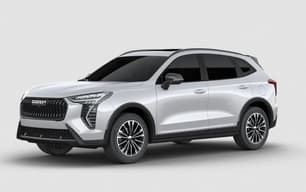
The new GWM Haval Jolion Lux sits second from the bottom in the Jolion line-up but offers a longer features list than most of its competitors. A boast that stands it in good stead from the outset.
But the question is how do those features perform in the real world? In this review we unpack how the new Jolion handles urban life.
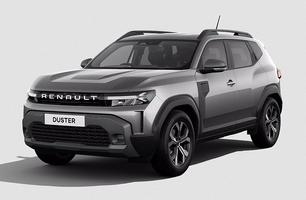
The Dacia Duster, a well-liked small SUV in Europe, has been available in overseas markets for about 15 years and it’s now here, albeit rebadged as the Renault Duster.
At a time when people increasingly want to escape the modern-day rat race, vehicles such as the Duster offer a family- and budget-friendly way of achieving just that.
A new small 4x4 that actually might be somewhat capable off-road and with a manual gearbox? How refreshing.
But is the Duster a legitimate rival for something like the Suzuki Jimny?
Read on.
The GWM Haval Jolion Lux offers affordability in a modern, attractive package. However, the execution of some of its features isn’t always convincing. So yes, it’s sharply priced but it also feels underdone in some respects which doesn’t necessarily equate to value. But if affordability is at the top of your priority list and one or two shortcomings doesn't mean the end of the world, this could be the urban SUV you're looking for.
The Renault Duster 4x4 Evolution (manual) is a driver’s car. Lots of fun for day-to-day duties and a real visceral experience if you like to have a few laughs on loose-dirt and gravel tracks. And it’s adequately capable for off-roading adventures. It also has more than its fair share of cheeky charm.
Obviously it’s not anywhere near the most capable off-road vehicle available. That’s not what it’s intended to be. But it’s one of the most fun to drive on- and off-road.
And for $36,490 (excluding on-road costs), you’ll still have cash enough for a set of all-terrain tyres and some accessories.
The Jolion is now longer and wider than it's rivals at 4472mm long, and 1874mm wide. The next largest 'small' SUV is the Kia Seltos at 4385mm long and 1800mm wide which does the Jolion a whole lot of favours for internal passenger space and kerb-side appeal.
The Jolion looks substantial and well-shaped, with enough bells and whistles in the design to keep it fresh; like the swoopy LED DRLs at the front and a curvy behind that’s accentuated by a black spoiler.
The interior has interesting features, like the rotary-dial gear selector, push-button starter and minimalist button panel that sits below the large technology screen.
The dashboard juts out into the cabin and the low-key design is too pared back for my taste. But the cabin looks nice and new with lots of tactile accent panels and shiny screens.
There is still too much plasticky-looking styling to elevate it properly, but for its grade level this is almost luxurious.
From the outside, the Duster 4x4 Evolution has that special ‘something’ that draws your eye. It’s unassuming, yet somehow eye-catching.
It’s a chunky little AWD with ‘Renault’ across the front grille and its raised stance gives the Duster a rugged presence.
Hard angles and nifty touches, such as the concealed rear door handles on the C-pillar, add to its funky exterior.
The Duster’s interior continues the minimalist theme with hard plastic surfaces everywhere – including the dash and door armrests – and black and grey cloth upholstery, all amid a neat but uncluttered layout.
The 10.1-inch multimedia touchscreen , angled slightly towards the driver, dominates up front and caps off what is an unpretentious, functional cabin.
It's a running theme but the practicality of the Jolion doesn't always land. However, what it does well, it does very well.
Take the access and space for passengers. Both rows offer class-leading head- and legroom for its occupants, even middle seaters should be happy considering the transmission tunnel isn't tall.
Despite the manual passenger seat being set too high and both seats lacking lumbar support, front seaters still enjoy the most comfort. The heated front seats are also a pleasant surprise for the grade level, although their function is buried deep within the multimedia system and I mostly forgot about them.
The rear seat is fairly hard and doesn't offer much side bolstering, although the middle armrest helps to secure outer passengers in corners.
Storage is solid throughout the cabin with a reasonably sized glove box that can hold a thick manual, middle console and dedicated phone shelf, as well as a second phone 'slot'.
There is a sunglasses holder (sunnies rattle when stored, though) and a cubby underneath the centre console that can hold a small handbag but anything stored might interfere with the USB ports housed there.
There are two cupholders up front but you can't fit two cups side by side. Two cupholders, a couple of map pockets and storage bins finish up the storage in the back seat.
The boot capacity sits at 337 litres and while large enough for a good grocery haul it falls on the lower end for the class. By comparison, the Kia Seltos offers 433L.
Now, on to what the Jolion doesn't do all that well. It's new 10.25-inch multimedia screen and 7.0-inch digital instrument cluster look the part - all shiny and new-looking - but their usability falls somewhat short.
The media touchscreen is responsive but a punish to use on the go as most functions, including climate control, are accessed via the screen. A few dedicated buttons would be welcome, so changing bits on the road doesn't leave you flustered.
The digital instrument cluster isn't customisable and is set to a dark display screen with a typeface that looks blurry on some key displays, especially the speedometer.
There is a rather large and in-your-face driver monitoring camera installed on the A-pillar which feels too much like you're under surveillance while driving (not a fan, clearly).
Charging options include four USB-A ports and a 12-volt socket but that's it and it would be good to see a newer, faster USB-C port somewhere in the car.
A feature the Jolion does get right is the wired Apple CarPlay as it maintains a steady connection and is very quick to set up. The Lux also has wired Android Auto.
You don't get a powered tailgate and you might miss it as the boot lid is fairly heavy.
The interior in Evolution trim matches the Duster’s no-nonsense adventure-focussed approach. It’s spartan but user-friendly.
The front seats are manually adjustable and the cloth upholstery looks like it’s hard-wearing and likely able to cope with the utter messiness of life.
I had trouble getting my phone to work via the 10.1-inch multimedia unit, but otherwise I have few complaints about the system as it’s easy enough to operate. There’s a wireless-charging pad below the screen. There are also two USB-C charging ports up front and two for rear-seat passengers, as well as two 12-volt sockets one in the front and another in the rear cargo area.
There is a mix of physical buttons and on-screen controls to operate various in-cabin functions, such as air-con.
For storage there is a glove box, a deep centre console, two cupholders, and a small shelf for your pocket clutter.
The second-row seats are roomy enough for two adults or three teens across the row and while passengers there have access to two USB-C charging ports and air vents, there’s no fold-down centre armrest.
The rear cargo area is accessed via a manual tailgate and is claimed to offer 358 litres of cargo volume when the rear seat is in use and 1424 litres when the second-row seat is stowed away.
Payload in the Duster Evolution 4x4 is listed as 503kg. The cargo area has a light, cargo hooks and a 12V socket. This Duster has a 215/70 R16 spare stored underfloor.
The Jolion line-up consists of six variants and the model on test here is the Lux, which sits second-from-the-bottom.
Its $29,990, drive-away, price tag positions it as one of the more expensive options compared to its nearest rivals with the MG ZS Excite the most affordable at $25,083, drive-away and the Mitsubishi ASX ES next at $27,990, drive-away.
Despite a similar specification, the Kia Seltos Sport+ FWD is hamstrung on price as it sits a way up the price ladder at $38,890, drive-away, but comes with the longest servicing schedule.
Premium equipment for the Lux includes synthetic leather upholstery, an electric driver's seat, heated front seats, dual-zone climate control, keyless entry and start, a 360-degree view camera system and rear parking sensors.
Other standard features include a 7.0-inch digital instrument cluster, four USB-A ports, a 12-volt socket, a 10.25-inch touchscreen multimedia system and (wired) Apple CarPlay and Android Auto.
A fixed cargo cover and temporary spare tyre round out its features list. Not bad at all considering it's almost a base model but the usability of those features can be hit or miss.
The 2026 Renault Duster is available as a 4x2 (automatic) or 4x4 (with a six-speed manual) in two trim levels – the Evolution and the Techno – with a choice of a turbocharged 1.3-litre four-cylinder engine (for the 4x2) or a turbocharged 1.2-litre mild-hybrid three-cylinder engine (for the 4x4).
Our test vehicle, the 4x4 Evolution, has a manufacturer suggested retail price of $36,490, excluding on-road costs.
Standard features include a 10.1-inch multimedia touchscreen (with wireless Apple CarPlay and Android Auto), a wireless smartphone charger, 7.0-inch digital instrument cluster, six-speaker Arkamys sound system, dual-zone climate control, 17-inch alloy wheels, Continental Cross Contact 215/65 R17 tyres and a 215/70 R16 spare.
There’s also a range of accessories available including Rhino Rack and Thule storage platforms and racks.
Exterior paint choices include the no extra cost 'Solid White' as well as 'Khaki Green', 'Pearlescent Black', 'Terracotta', 'Cedar Green', 'Sandstone' and 'Shadow Grey'. All metallic or premium paint adds $750 to the Duster’s price.
The Jolion Lux has a 1.5-litre, four-cylinder, turbo-petrol engine that produces 105kW of power and 210Nm of torque.
The Lux is a 2WD and has a seven-speed dual-clutch automatic transmission which isn’t always smooth with its gear changing but power is sufficient if you don't expect it to be zippy.
The Duster 4x4 Evolution has a 1.2-litre three-cylinder turbo-petrol engine with a 48V mild-hybrid system (producing 96kW at 4500rpm and 230Nm at 2250rpm) matched to a six-speed manual gearbox.
As I said earlier, a new small 4x4 SUV with off-road capability and a manual gearbox is refreshing.
This Duster has an all-wheel drive system and the little 1422kg SUV can do the 0-100km/h sprint in a claimed 11.94 seconds.
The Haval Jolion Lux has an official combined (urban/extra-urban) fuel cycle figure of 8.1L/100km and based on its 55L fuel tank, theoretical driving range is around 680km, which is respectable for a little SUV.
My real-world usage came in at 7.8L/100km after mostly open-road driving, with a smattering of urban stuff. Overall, it's a solid result.
Official combined cycle (urban/extra-urban) fuel consumption is 5.7L/100km.
On test, we recorded 6.7L/100km but we did do a half-day of light off-roading.
This Duster 4x4 has a 55-litre fuel tank so, going by that on-test fuel figure, you could reasonably expect a driving range of about 820km out of a full tank.
The turbocharged 1.2-litre mild-hybrid three-cylinder engine requires 95 RON premium unleaded petrol.
The Jolion's on-road experience is underwhelming and unsophisticated most of the time. It's strictly an A to B style car, which will work well for some people.
The power and its delivery are okay but this car doesn't get close to zippy and its well of performance feels decidedly shallow on the open road.
The engine whines loudly when trying to get up to speed and its gear changes can come a tad too swiftly, especially between first and third.
The accelerator and brakes are touchy, and until you get used to them the Jolion can feel a little jerky in the city. But the steering is on the right side of firm and that at least feels direct and responsive.
Suspension is hard and you get all the bumps which also translates into a loud cabin. Your senses take a battering on a longer trip and kids in the back will ask you to repeat yourself.
The Jolion is redeemed somewhat by an excellent 360-degree view camera system but you miss out on front-parking sensors.
It’s small enough that it’s not hard to park and for an urban dweller that is a big plus as it's quite suitable for a dash to a busy shopping centre car park.
My kids are learning to drive in a manual because I reckon being able to drive a manual vehicle remains an important skill to have. I only own manual cars at this point in time and it’s nice to see new cars with manual gearboxes haven’t been done away with just yet.
This all-wheel drive adventure machine is light at 1422kg and punchy, working through a turbocharged 1.2-litre mild-hybrid three-cylinder engine (producing 96kW at 4500rpm and 230Nm at 2250rpm) and a six-speed manual gearbox.
It’s sporty, with precise steering, crisp throttle response and nicely controlled ride and handling. And it’s a whole lot of fun to drive on sealed surfaces.
Throwing it around corners at (legal) speed is a barrel of laughs and driving on fast loose-dirt tracks is damn good for rally-style hilarity, all with the gruff backing track of this little AWD’s tractable petrol engine. Driving the 4345mm long, 2069mm wide and 1650mm high Duster feels like you’re punching a go-kart around a track, in a good way.
The Duster’s suspension deserves a mention here because this package, including an independent multi-link set-up at the rear, yields a firm but well-balanced overall feel.
Its tight turning circle makes it supremely easy to accomplish quick manoeuvres without fuss and it’s also a cinch to park.
Visibility from the driver’s seat is somewhat reduced through different angles to the rear and back along the vehicle’s side, but you get used to that. It doesn’t help that the camera view is muddy looking on the screen.
Those niggles aside, did I mention it’s fun to drive?
It’s not too shabby in low-speed off-road scenarios, either. The Duster is similar to Subaru’s Crosstrek and XV or the Jimny, in that this Renault’s intended use is not as a hardcore rock-crawling beast, it’s not engineered for that sort of thing.
The Duster's all-wheel drive system is well calibrated and quietly effective at detecting wheel-slip and delivering a smooth response. Driven with care, this AWD SUV is capable of off-roading at a level that will surprise some.
It has a 4x4 terrain control system with five modes – 'Auto', 'Eco', 'Mud & sand', 'Snow' and 'Off-road' – as well as a hill descent control system. None of these are engineered to turn the Duster into an off-highway mongrel but they ensure it's able to cope with mild to less-mild off-roading.
The Duster’s ground clearance (212mm) and off-road angles (31-degree approach and 36-degree departure) make it better suited to tackling off-road terrain of the light-to-moderate variety rather than door-sill deep mud holes and the like.
For reference, the Suzuki Jimny has 210mm of ground clearance and approach and departure angles of 37 and 49 degrees. The Crosstrek has 220mm of ground clearance, and approach and departure angles in the off-road-focussed Wilderness of 23.5 and 25.5 degrees.
But it’s still very capable if driven with consideration and well within the limits of its physical dimensions and off-road traction control.
Light off-roading (well-maintained gravel roads and dirt tracks in dry conditions) is fine because that’s well within the Duster’s capabilities and it results in little to no wear and tear on the vehicle.
While the Duster can handle short bursts on firm-packed sand (which I test here), sand-driving puts extra stress on any vehicle, and AWDs don’t have a lot of ground clearance, so they’re prone to bellying out on tall crests in between deeper wheel ruts on a beach.
My advice? Avoid anything beyond a well-maintained dirt track in dry weather and don’t take on any ‘4WD/ high ground clearance only' tracks, prolonged sand-driving or rock-crawling. Anything more rigorous than that and you risk damage to the vehicle’s underbody at a minimum, and mechanical damage and personal injury at worst. You’ve been warned.
The Duster’s off-road capabilities could easily be further enhanced with a set of decent light truck all-terrain tyres but, be aware, even aggressive rubber won’t turn it into a gung-ho off-roader.
For the record, it has unbraked trailer towing capacity of 750kg and braked towing capacity of 1500kg. Maximum towball download is listed as 75kg.
A bonus for Duster owners is that it can be kitted out for adventure via either Renault’s range of accessories – including all-weather floor mats, roof box, roof racks etc – or through Australia’s aftermarket industry.
The Jolion has a maximum five-star ANCAP rating from testing done in 2022 and has seven-airbags, including a front-centre bag.
Standard safety equipment is good for the grade level and includes blind-spot monitoring, driver attention alert, tyre-pressure monitoring, forward collision warning, LED DRLs, rear cross-traffic alert, lane departure alert, lane keeping aid, traffic sign recognition, an intelligent seatbelt warning, adaptive cruise control, a USB outlet near the interior mirror for a dashcam, a 360-degree camera view system and rear-parking sensors.
Despite featuring a robust safety list a running theme has emerged this week. Everything sounds good on paper but the execution is another matter.
Its not enough to just have all of these safety systems in place, they also have to work well for everyday driving. And some of the systems are annoying and intrusive.
There are lots of bings, bongs and chime alerts from the driver monitoring system, traffic sign recognition tech and lane keeping aids.
You also get nonsensical text boxes displayed on the multimedia screen asking non-binary (open) questions requiring a yes or no response.
For families, you get two ISOFIX child seat mounts and three top tethers across the back seat but two seats will fit best.
The Jolion has AEB (operational from 1.0 to 85km/h) including pedestrian, cyclist and back-over detection. It's usual to see this type of system operating from 4.0km/h, so that's excellent.
The Renault Duster 4x4 Evolution (manual) does not have an ANCAP safety rating because it has not been tested.
Standard safety gear includes six airbags, AEB, driver attention alert, lane-keep assist, lane departure warning, traffic sign recognition, rear parking sensors and a reversing camera.
The Duster range does not have adaptive cruise control (only regular ol’ cruise control) or rear cross-traffic alert.
The rear seat has two ISOFIX points and three top-tether child-seat anchorage points.
The Jolion is offered with an excellent seven-year/unlimited km warranty.
There is a five-year capped priced servicing program and services average $310 which is mid-range for the class.
The first service is before 10,000km but thereafter, servicing intervals are at every 12-months or 15,000km, whichever occurs first.
A five-year/unlimited-kilometre warranty with five years of roadside assistance applies to the Duster. That's average for the mainstream market.
Servicing appointments are set at 12 months/30,000km intervals, whichever occurs soonest.
Capped price servicing applies to the first five services with a total cost calculated at $2475 for the all-wheel Duster, with an average per-service cost of $495, which is getting up there for a car in this price bracket.
Renault has more than 70 dealerships across Australia.