What's the difference?
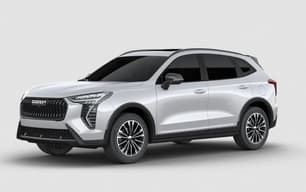
The new GWM Haval Jolion Lux sits second from the bottom in the Jolion line-up but offers a longer features list than most of its competitors. A boast that stands it in good stead from the outset.
But the question is how do those features perform in the real world? In this review we unpack how the new Jolion handles urban life.
GAC might still be a new name to a lot of Aussie new car buyers, but the Emzoom Luxury isn’t here to quietly blend in. It’s sharply styled, keenly priced and carries just enough attitude to turn a few heads - which is a good start in a crowded small SUV segment.
It also keeps things simple. There’s just the one trim level on offer locally, and it comes in swinging against some well-established rivals like the GWM Haval Jolion Premium, Kia Seltos Sport+ and MG ZS Vibe Turbo.
But standing out on paper is one thing, backing it up with enough personality to stay interesting over time is another.
The GWM Haval Jolion Lux offers affordability in a modern, attractive package. However, the execution of some of its features isn’t always convincing. So yes, it’s sharply priced but it also feels underdone in some respects which doesn’t necessarily equate to value. But if affordability is at the top of your priority list and one or two shortcomings doesn't mean the end of the world, this could be the urban SUV you're looking for.
GAC isn’t messing around with the Emzoom Luxury. It’s undeniably eye-catching, priced well and carries just enough of a premium aesthetic to draw attention.
Is it the best small SUV I’ve driven? No. It does enough to avoid being overlooked, but it’s not quite reinventing the wheel.
What it does well is deliver a comfortable, easy urban runaround with strong equipment for the price. However, the safety calibration and overall breadth of systems feel like areas that still need attention.
All up, it gets a lot right for the money, but doesn’t quite land a knockout punch.
It's a running theme but the practicality of the Jolion doesn't always land. However, what it does well, it does very well.
Take the access and space for passengers. Both rows offer class-leading head- and legroom for its occupants, even middle seaters should be happy considering the transmission tunnel isn't tall.
Despite the manual passenger seat being set too high and both seats lacking lumbar support, front seaters still enjoy the most comfort. The heated front seats are also a pleasant surprise for the grade level, although their function is buried deep within the multimedia system and I mostly forgot about them.
The rear seat is fairly hard and doesn't offer much side bolstering, although the middle armrest helps to secure outer passengers in corners.
Storage is solid throughout the cabin with a reasonably sized glove box that can hold a thick manual, middle console and dedicated phone shelf, as well as a second phone 'slot'.
There is a sunglasses holder (sunnies rattle when stored, though) and a cubby underneath the centre console that can hold a small handbag but anything stored might interfere with the USB ports housed there.
There are two cupholders up front but you can't fit two cups side by side. Two cupholders, a couple of map pockets and storage bins finish up the storage in the back seat.
The boot capacity sits at 337 litres and while large enough for a good grocery haul it falls on the lower end for the class. By comparison, the Kia Seltos offers 433L.
Now, on to what the Jolion doesn't do all that well. It's new 10.25-inch multimedia screen and 7.0-inch digital instrument cluster look the part - all shiny and new-looking - but their usability falls somewhat short.
The media touchscreen is responsive but a punish to use on the go as most functions, including climate control, are accessed via the screen. A few dedicated buttons would be welcome, so changing bits on the road doesn't leave you flustered.
The digital instrument cluster isn't customisable and is set to a dark display screen with a typeface that looks blurry on some key displays, especially the speedometer.
There is a rather large and in-your-face driver monitoring camera installed on the A-pillar which feels too much like you're under surveillance while driving (not a fan, clearly).
Charging options include four USB-A ports and a 12-volt socket but that's it and it would be good to see a newer, faster USB-C port somewhere in the car.
A feature the Jolion does get right is the wired Apple CarPlay as it maintains a steady connection and is very quick to set up. The Lux also has wired Android Auto.
You don't get a powered tailgate and you might miss it as the boot lid is fairly heavy.
Up front, the Emzoom offers the most space and it’s where it feels most comfortable. The seats are supportive enough for longer trips, and while only the driver’s side is electrically adjustable, that’s not unusual at this price point. Wide door apertures make getting in and out easy and there’s enough elbow room so it doesn’t feel cramped.
In the rear, space is also surprisingly generous for the segment. The flat floor helps with legroom and headroom remains good despite the panoramic sunroof.
Storage is well thought through and generous. Up front, there’s a glove box, a deep centre console and a dual-phone tray that incorporates a ventilated wireless charging pad. There are two cupholders and a drink holder in each door storage bin. You also get an additional shelf underneath with both USB-A and USB-C ports, which helps keep cables and clutter out of the way.
In the rear, amenities are solid, with rear air vents, a fold-down armrest with two cupholders, map pockets and even small device pockets for added practicality. There's a drink bottle holder in each door and a single USB-A port behind the centre console.
Around the back, the boot offers a wide opening and a level load space, making it easy to use day-to-day. Capacity sits at 341 litres, which is enough for a weekly grocery run or a weekend away. There’s a spare tyre tucked under the floor and a powered tailgate is standard.
The tech is easy to live with, too. The media system is intuitive with clear graphics and a responsive touchscreen. Wireless Apple CarPlay connects quickly without fuss, and there’s also wireless Android Auto. Sound quality from the six-speaker system is crisp and the digital radio and Bluetooth hold a steady connection (where some rivals can struggle).
The Jolion line-up consists of six variants and the model on test here is the Lux, which sits second-from-the-bottom.
Its $29,990, drive-away, price tag positions it as one of the more expensive options compared to its nearest rivals with the MG ZS Excite the most affordable at $25,083, drive-away and the Mitsubishi ASX ES next at $27,990, drive-away.
Despite a similar specification, the Kia Seltos Sport+ FWD is hamstrung on price as it sits a way up the price ladder at $38,890, drive-away, but comes with the longest servicing schedule.
Premium equipment for the Lux includes synthetic leather upholstery, an electric driver's seat, heated front seats, dual-zone climate control, keyless entry and start, a 360-degree view camera system and rear parking sensors.
Other standard features include a 7.0-inch digital instrument cluster, four USB-A ports, a 12-volt socket, a 10.25-inch touchscreen multimedia system and (wired) Apple CarPlay and Android Auto.
A fixed cargo cover and temporary spare tyre round out its features list. Not bad at all considering it's almost a base model but the usability of those features can be hit or miss.
For now, the GAC Emzoom range is about as simple as it gets. There’s a single, well-specified Luxury grade on offer, priced from $25,590, before on-road costs.
That puts it right in the mix with key Chinese rivals like the GWM Haval Jolion Lux, which starts at $28,990 (MSRP) and the MG ZS Vibe Turbo at $24,990 (MSRP). It also significantly undercuts more established mainstream options such as the Kia Seltos Sport+, which opens at $37,550, before on-roads.
The Luxury arrives well equipped. You get an electric driver’s seat with ventilation, synthetic leather upholstery, a panoramic sunroof with tilt and slide function, and auto-flush door handles. There’s also a leather-wrapped steering wheel, a 360-degree camera system, parking assist and a blind-spot view monitor.
Technology leans towards the premium end, too. A 14.6-inch central display is paired with a 7.0-inch digital instrument cluster, along with ambient lighting, wireless Apple CarPlay and Android Auto and a wireless phone charger. There are two USB-A ports, a single USB-C port up front, a 12-volt socket and a six-speaker DTS sound system.
It’s the smaller details that round things out nicely. Auto LED headlights, rain-sensing wipers, dual-zone climate control, a temporary spare tyre and a powered tailgate are all included as standard.
All up, it’s a strong package for the price.
The Jolion Lux has a 1.5-litre, four-cylinder, turbo-petrol engine that produces 105kW of power and 210Nm of torque.
The Lux is a 2WD and has a seven-speed dual-clutch automatic transmission which isn’t always smooth with its gear changing but power is sufficient if you don't expect it to be zippy.
The Emzoom Luxury is front-wheel drive and powered by a 1.5-litre turbo-petrol engine producing 125kW and 270Nm.
That gives it a slight edge over the GWM Haval Jolion, which sits at 105kW and 210Nm and puts it more in line with the MG ZS Vibe Turbo and Kia Seltos Sport+. On paper at least, it’s competitive for the segment and suggests there’s enough performance on tap for daily driving.
It’s paired with a seven-speed dual-clutch auto transmission. Around town, it can feel a little clunky at lower speeds, particularly in stop-start traffic, but it settles down as you pick up pace and feels much smoother on the open road.
The Haval Jolion Lux has an official combined (urban/extra-urban) fuel cycle figure of 8.1L/100km and based on its 55L fuel tank, theoretical driving range is around 680km, which is respectable for a little SUV.
My real-world usage came in at 7.8L/100km after mostly open-road driving, with a smattering of urban stuff. Overall, it's a solid result.
The Emzoom Luxury has a 47-litre fuel tank and a claimed combined cycle (urban/extra-urban) consumption figure of 6.6L/100km, which gives it a theoretical driving range of up to 712km. That’s more than enough to comfortably get through a week of mixed driving.
In the real world, my trip computer returned 6.2L/100km after a mix of mostly urban driving and a longer highway run. That’s a strong result and reinforces its credentials as an easy urban runabout.
The Jolion's on-road experience is underwhelming and unsophisticated most of the time. It's strictly an A to B style car, which will work well for some people.
The power and its delivery are okay but this car doesn't get close to zippy and its well of performance feels decidedly shallow on the open road.
The engine whines loudly when trying to get up to speed and its gear changes can come a tad too swiftly, especially between first and third.
The accelerator and brakes are touchy, and until you get used to them the Jolion can feel a little jerky in the city. But the steering is on the right side of firm and that at least feels direct and responsive.
Suspension is hard and you get all the bumps which also translates into a loud cabin. Your senses take a battering on a longer trip and kids in the back will ask you to repeat yourself.
The Jolion is redeemed somewhat by an excellent 360-degree view camera system but you miss out on front-parking sensors.
It’s small enough that it’s not hard to park and for an urban dweller that is a big plus as it's quite suitable for a dash to a busy shopping centre car park.
On the road, the Emzoom has enough power to feel spritely and capable, whether you’re darting around town or merging onto the highway. That said, the way it delivers that power at lower speeds can feel a little inconsistent. There were moments where lifting off the accelerator didn’t translate to an immediate response, with the car continuing to surge forward briefly. Which made for a few 'eek…' moments during the week.
Handling is on the sharper side for the segment. The steering and suspension are well judged, giving it a slightly zippy, eager feel through corners without tipping into harshness. Braking, however, can feel a touch spongy underfoot, which takes away from that otherwise confident set-up.
Visibility is a mixed bag. Thick pillars, a relatively low window line and a small rear view can make it feel hemmed in from the driver’s seat. Though, the blind-spot camera feed popping up on the display takes some of the guesswork out of lane changes.
Ride comfort is solid overall. It handles bumps well enough, and a longer drive proved comfortable, although there is a low level of road noise that creeps in at higher speeds.
Where the Emzoom really shines is around town. It’s easy to manoeuvre, with an 11.2-metre turning circle that makes tight streets and car parks feel manageable. The 360-degree camera system is clear and makes parking a relatively stress-free experience.
The Jolion has a maximum five-star ANCAP rating from testing done in 2022 and has seven-airbags, including a front-centre bag.
Standard safety equipment is good for the grade level and includes blind-spot monitoring, driver attention alert, tyre-pressure monitoring, forward collision warning, LED DRLs, rear cross-traffic alert, lane departure alert, lane keeping aid, traffic sign recognition, an intelligent seatbelt warning, adaptive cruise control, a USB outlet near the interior mirror for a dashcam, a 360-degree camera view system and rear-parking sensors.
Despite featuring a robust safety list a running theme has emerged this week. Everything sounds good on paper but the execution is another matter.
Its not enough to just have all of these safety systems in place, they also have to work well for everyday driving. And some of the systems are annoying and intrusive.
There are lots of bings, bongs and chime alerts from the driver monitoring system, traffic sign recognition tech and lane keeping aids.
You also get nonsensical text boxes displayed on the multimedia screen asking non-binary (open) questions requiring a yes or no response.
For families, you get two ISOFIX child seat mounts and three top tethers across the back seat but two seats will fit best.
The Jolion has AEB (operational from 1.0 to 85km/h) including pedestrian, cyclist and back-over detection. It's usual to see this type of system operating from 4.0km/h, so that's excellent.
The GAC Emzoom hasn’t been tested by ANCAP yet and is unrated. It comes with six airbags, which is on the lower side for this class, and there are a few notable omissions.
Features like rear cross-traffic alert, side exit assist and emergency call functionality aren’t included. While there is a blind-spot view monitor that displays a live camera feed when you indicate, it doesn’t appear to have a traditional blind-spot warning system with indicator lights in the side mirrors.
The core safety suite is there. You get autonomous emergency braking, forward collision warning, lane- keeping aid and lane-departure warning, along with seatbelt reminders for all seats, a tyre pressure monitoring system and hill descent control. There are also two ISOFIX points and three top-tether anchor points for child seats.
Where it falls short is in execution. The steering assist function tied to the adaptive cruise control is overly intrusive, with noticeable inputs that make it difficult to use comfortably. Given the amount of highway driving I do each week, it’s not a system I found myself wanting to rely on.
Overall, the safety offering doesn’t feel as comprehensive or as well calibrated as it could be, which takes some shine off an otherwise well-equipped package.
The Jolion is offered with an excellent seven-year/unlimited km warranty.
There is a five-year capped priced servicing program and services average $310 which is mid-range for the class.
The first service is before 10,000km but thereafter, servicing intervals are at every 12-months or 15,000km, whichever occurs first.