What's the difference?
If you're in the market for a premium-style four-wheel drive wagon with eight seats and a petrol V8 engine and you live in Australia, your choices have been rather limited. You'd be looking at something like the Nissan Patrol or the Land Rover Defender 130.
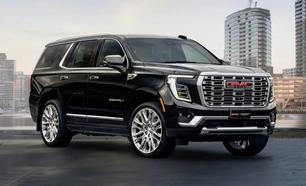
Well, that has now changed as General Motors Specialty Vehicles (GMSV) is importing the GMC Yukon Denali to Australia. This top-of-the-range Yukon arrives here as a left-hand drive vehicle and is converted to right-hand drive at a facility in Victoria to suit our market.
The Denali has a price tag just under $175,000, though, and that makes it a lot more expensive than most vehicles that could be considered rivals in the Aussie market. Is it worth it?
Read on.
Aussie buyers could be excused for being wary of SsangYong, given the marque’s chequered history involving numerous ownership changes, crippling debts and in 2021 its rescue from the jaws of receivership by Korean industrial conglomerate KG Group.
However, the KG Group’s corporate rehabilitation of the troubled carmaker was completed in 2022, allowing the renewed SsangYong Motor (renamed KG Mobility in Korea) to hopefully focus on its core business of producing 4x4 SUVs and pick-ups, with increasing use of electrification planned for future model development.
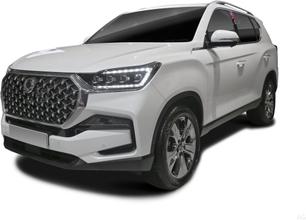
As part of this renewal, in late 2023 SsangYong Australia announced MY24 updates to refresh its local 4x4 Musso ute and Rexton seven-seater SUV ranges, which, combined with a Merv Hughes-hosted marketing campaign, is aimed at building brand appeal and sales through its 70-plus national dealer network.
We were recently handed the keys to the latest Rexton, which competes for buyers in Australia’s fiercely competitive ‘Large SUVs under $80K’ segment that hosts more than 20 rivals.
The 2025 GMC Yukon Denali is a big, comfortable, eight-seat 4WD with few rivals in the Aussie market. However, while it may occupy its own niche, it doesn't offer enough in terms of premium look and feel and towing capacity over what could be considered its rivals – and it all comes back to that price tag.
While it lacks a competitive warranty and its price puts it way out of reach of a lot of 4WD buyers, if you are in the market for a big premium-style wagon with a V8 and eight seats – and the Nissan Patrol and Land Rover Defender 130 aren’t your cup of tea – then the Yukon Denali just might be the right choice for you.
But when all is said and done, for the price of the Denali, you could buy two Nissan Patrols – maybe not brand-new ones – and a camper trailer and a couple of cartons of beer.
If KG Group can provide the long-term stability and new model investment that has eluded SsangYong for so long, the brand could have a promising future in Australia judging by the MY24 Rexton Adventure. It’s a solid package and what it lacks in benchmark ANCAP safety and third-row comfort is offset by a compelling driveaway price, generous warranty and national dealer network. So, if you’re looking for a feature-packed 4x4 seven-seater SUV for less than $55K, you might be pleasantly surprised by this competent Korean.
The 2025 GMC Yukon Denali is 5337mm long (with a 3071mm wheelbase), 2378mm wide, 1943mm high and has a kerb weight of 2813kg.
Suffice it to say, it’s big.
The signature Denali grille – with LED headlights and chrome accents – is the size of a house and it’s eye-catching.
In terms of design, the rest of the Denali is standard SUV, but it's so massive it can't help but have plenty of presence on the road.
This 4WD has 24-inch rims, which are not suited to off-roading at all, but I’ll get to that later.
The Denali’s dual exhaust system, with polished stainless-steel tips, adds to the street-cool aesthetic.
The rest of the Denali exterior works – but it’s an in-your-face kind of success.
Inside, the space is cavernous and with leather upholstery, wood-look trim and soft-touch surfaces you’d expect it to feel like a plush, well-appointed cabin. But it doesn’t quite hit the mark.
Sure, all three rows of seats offer enough in terms of comfort and amenities but, for a $175,000 vehicle, the cabin lacks a distinctive premium feel, as you'd assume it should in a vehicle at this price point. That's a bit of a disappointment.
With its 4850mm overall length and 1960mm width, the Rexton rides on a 2865mm wheelbase with a compact 11-metre turning circle.
Its smooth ride comes from four-coil suspension with double-wishbones up front and an independent multi-link arrangement in the rear. For those venturing into the rough stuff, it has 20.5 degrees approach and departure angles, 20 degrees ramp break-over angle and 203mm of ground clearance.
Looks are subjective, of course, but we reckon it has attractive and cohesive styling, with its prominent and ornate diamond-style grille complimented by distinctive side-body contours that can’t be mistaken for other SUVs.
The interior has a premium look and feel, with lots of exposed stitching along soft-touch seams and a tasteful blend of contrasting surfaces including chrome, satin chrome, piano black and textured patterns.
There’s good attention to detail and build quality is excellent, but there are some annoying design quirks like the need for the front passenger to access a touchscreen menu just to adjust the audio volume.
The second-row of seating has a/c vents in the centre console and is spacious even for tall people like me (186cm). When sitting behind the driver’s seat in my position, there’s about 60mm of clearance between my knees and the driver’s seat backrest, which combined with ample head and shoulder room makes for a comfortable ride.
By contrast, the third-row seating is strictly for young kids, as there are no adjustments for the second-row’s backrest angle or fore/aft base cushion positioning to accommodate taller frames like mine. The side windows in the thick rear roof pillar are also conspicuously small, which adds to a claustrophobic feel.
Fortunately, access to the third-row is made easier by the 60/40-split second-row, which can be folded and tumbled forward.
However, given I’ve found tolerable third-row comfort in some rival seven-seaters, the Rexton’s third-row is my only gripe for those with longer limbs.
The Denali has retractable sidesteps, which is a big help to hobbits, such as me, and it also has big grab handles, again a welcome addition for the purposes of easier ingress for those on the wrong side of tall.
Once you climb inside, it’s easy to appreciate the fact that this wagon’s interior is vast, functional and comfortable, with plenty of storage spaces for everything – glove box, centre console, sunglasses case, door pockets etc – and plenty of charge points for your array of smart devices, even a wireless charge pad.
It’s a well-designed cabin but, as mentioned earlier, the Denali lacks the prestige fit and finish and even build quality usually showcased in something at this price-point.
Instead, there are expanses of hard plastic throughout, storage receptacles with flimsy lids, and lacklustre fit and finish here and there.
The vertically-oriented 16.8-inch touchscreen multimedia system is simple enough to use, even when the road gets bumpy, although it sometimes took a few stabs of my finger to get the system to register a command.
Climate control switches and the like are located under the screen.
The three rows of seats offer more than adequate levels of comfort – the front seats are heated and ventilated and the second row’s outboard seats are heated – and each row also has the appropriate amount of amenity to suit its occupants, including cupholders, USB-C sockets, map pockets and the like.
The second-row seats even have 12.6-inch HD colour touchscreens – one on the back of each front-row headrest – with which to enjoy… whatever. Those units also have wireless headphones so everyone else in the vehicle doesn’t have to listen to… whatever.
Those in the third row get air vents, a USB-C plug and two cupholders on both sides.
Rear cargo volume with all seats up is 722 litres. With the second row folded that number expands to 2056 litres, and with only the front seats left standing you have a 'yuge' 3480 litres to play with.
The boot area has tie-down points, a shallow section of underfloor storage and plenty of packing potential. The tailgate door is power-assisted with remote open and close.
As I mentioned, the Denali’s interior is very functional and very comfortable and that includes the second and third row, which offer plenty of space.
Overall, my thoughts on the Denali’s cabin interior boil down to “massive”, “comfortable” and “feels cheap”.
With its 2130kg kerb weight and 2960kg GVM, our test vehicle has a sizeable load capacity of up to 830kg, which should be ample for five occupants and their luggage.
It’s also rated to tow up to the class-benchmark 3500kg of braked trailer and its 350kg maximum tow-ball download is compatible with that requirement.
Plus, its generous 6460kg GCM (or how much it can legally carry and tow at the same time) means it can legally tow its maximum trailer weight while carrying its maximum car-load, which is a practical set of numbers for just about any recreational requirement.
Front-row cabin storage includes cup/bottle-holders and a small bin in each front door, plus a single glove box. The stylish centre console has a bin up front with sliding-lid, two cupholders in the middle with another sliding-lid, plus a box at the rear with hinged padded-lid that doubles as a driver’s elbow rest.
Those seated in the second-row get a cup/bottle holder and bin in each door, plus pockets on each front seat backrest. The fold-down centre armrest has two more cupholders and a handy hidden compartment that’s ideal for small items. Third-row occupants get storage bins on each side but no cup/bottle holders.
Accessing the cargo area through the power tailgate reveals 236 litres (VDA) of load volume with the third-row seats upright. This expands to 641 litres with the third-row folded flat and 1806 litres (or more than 1.8 cubic metres) with the second and third-rows folded.
The cargo area’s rear floor has a two-tiered design, with the top floor lying flush with the third-row seats when folded but it can be removed to reveal a lower floor that provides a second level of storage. There’s also a usefully large bin in the right-hand-side wall cavity. The only things missing are sturdy load-anchorage points at floor level to secure cargo nets or straps.
The 2025 GMC Yukon Denali is a top-shelf, eight-seat, 4WD V8-powered wagon with a price-tag of $174,990, before on-road costs.
The standard equipment list is a comprehensive and its more notable features include a 16.8-inch touchscreen multimedia system (with wireless Apple CarPlay and Android Auto - but no sat-nav), a 14-speaker Bose sound system, power-adjustable heated and ventilated leather-accented seats, a head-up display, 12.6-inch rear HD touchscreens for the second-row passengers, a panoramic sunroof and an auto-sense power rear door.
It also has a 360-degree high-definition camera system (with up to 11 camera views), power-retractable sidesteps, 24-inch machined and painted 'pearl nickel' alloy wheels (on Bridgestone all-season tyres), all-around adaptive air suspension and a maximum braked towing capacity of 3628kg (when it has a 70mm ball and weight-distribution hitch).
Exterior paint choices include 'Onyx Black', 'Summit White', 'Titanium Rush Metallic', 'Volcanic Red Tintcoat' (on the test vehicle and costs $2000), 'Downpour Metallic', 'White Frost Tricoat' and 'Sterling Metallic'.
Our test vehicle is the new ‘Adventure’ model, which serves as the middle-grade offering between the entry-level ELX and top-shelf Ultimate.
It’s equipped with the same 2.2-litre four-cylinder turbo-diesel, eight-speed automatic and part-time 4WD as other Rextons, for a drive-away price of only $54,000 (our 'Space Black' metallic paint is a $595 option).
That pricing looks razor-sharp compared with mid-grade 4x4 seven-seaters offered by segment leaders like the Isuzu MU-X LS-U ($61,400), Ford Everest Trend ($66,790) and Toyota Prado GXL ($69,530).
And they are 'list' prices (not including on-road costs) whereas the Rexton is 'drive-away-no-more-to-pay'.
The MY24 upgrades include a new dash layout and high-mounted 12.3-inch multimedia touchscreen with Apple/Android wired connectivity. There’s also a restyled dual-zone climate control hub with touchscreen, plus new lower body mounts for improved ride quality.
The Adventure brings numerous luxuries like a walk-up welcome system (mirrors unfold and puddle lamps illuminate), touch-sensing front door locks with walk-away auto door-locking, power tailgate and soft-touch synthetic leather seats with the fronts offering power adjustment, heating and cooling.
The second-row outer rear seats and steering wheel are also heated, plus there’s speed-sensitive power steering and tyre pressure monitoring.
These appointments are in addition to the base ELX’s generous standard equipment list including 18-inch 'diamond-cut' alloy wheels with 255/60 tyres and a full-size alloy spare, LED dusk-sensing headlights/DRLs/front fog lights/tail-lights, heated door mirrors, a four-way-adjustable leather steering wheel and 12.3-inch driver's digital instrument display.
There are also four USB-C ports (two front and two in second row centre console), three 12-volt outlets (front console box, second row centre console and cargo area), electric parking brake, reversing camera, front and rear parking sensors and more. It's fair to say the Rexton Adventure is feature-packed.
The GMC Yukon Denali has a naturally-aspirated 6.2-litre V8 petrol engine – producing 313kW and 624Nm – and that’s matched to a 10-speed automatic transmission.
This is an impressive set-up – the Denali is punchy off the mark, smooth and refined at highway speeds and overall it offers a composed and comfortable driving experience.
The Denali has a full-time 4WD system, selectable driving modes include 'Normal', 'Sport', 'Off-road' and 'Tow' and an electronic limited-slip differential is standard.
The quiet and refined 2.2-litre, four-cylinder, turbo-diesel, which meets Euro 6 emissions standards, produces 149kW at 3800rpm and 441Nm across a 1000rpm-wide torque band between 1600-2600rpm. It provides energetic response in city and suburban use.
This engine is paired with an equally refined eight-speed torque converter automatic, with overdrive on its sixth, seventh and eighth ratios ensuring low-rpm operation and optimum fuel economy at highway speeds.
Sequential manual-shifting is available using the steering wheel-mounted paddles and there's a choice of three drive modes ('Power'/'Winter'/'Eco') which can be selected using a console button.
The part-time, dual-range 4WD system is controlled by a console dial, offering the choice of 2H (2WD high-range), 4H (4WD high-range) and 4L (4WD low-range). It also has an auto-locking rear diff to optimise traction as required.
Obviously, with such a big vehicle – almost three tons – driven by such a big V8 engine, fuel consumption is a concern. The 2025 GMC Yukon Denali has a listed fuel consumption figure of 12.8L/100km (on a combined, urban/extra-urban cycle).
I recorded 16.2L/100km on this test. I did a lot of high- and low-range 4WDing and this wagon was never working hard.
The Denali has a 91L fuel tank so, going by my on-test fuel-consumption figure, you could reasonably expect a driving range of about 560km from a full tank.
SsangYong claims an official combined cycle average of 8.7L/100km. At the completion of our 307km test, which comprised mostly city and suburban driving with a bit of highway travel, mostly in Eco mode with up to five occupants on some trips, our figure calculated from fuel bowser and trip meter readings came in at 11.0L/100km.
Although higher than SsangYong’s claim, it was within the usual 2.0-3.0L/100km discrepancy between official and ‘real-world’ figures. So, based on our numbers, you could expect a driving range of more than 600km from its 70-litre tank, which is not bad. Based on the official figure, driving range extends to around 800km.
The Denali is imported to Australia as a left-hand drive vehicle and then Walkinshaw's subsidiary company Premoso remanufactures the US 4WD wagons to right-hand drive at their facility in Clayton, Victoria.
And that mob has done a commendable job.
Firstly, the Denali is very impressive on general driving duties – settled and composed, that V8 just rumbles along. It’s pretty close to flawless on the open road - smooth and refined.
But off-road is a different story – especially in low-speed technical low-range 4WDing – and a lot of that has to do with the Denali’s sheer bulk and its 24-inch wheels.
The big pizza plate rims and paper-thin Bridgestone all-season tyres (285/40) aren't suited to four-wheel driving as they don’t offer the grip of a decent all-terrain and you can’t drop air pressures because there isn’t enough tyre there. Worth noting the spare is a Maxxis Bravo HT-750 (265/70R17).
In its favour, though, the Denali has a range of drive modes – one of which is Off-road and that seems well calibrated for a variety of 4WD situations – as well as high- and low-range gearing and an electronic limited slip diff.
Steering has a nice balance to it at low speeds, throttle response is quite impressive and controlled. And you can call on that 624Nm from the big 6.2-litre V8 pretty much as you see fit, and it delivers it smoothly and in a controlled fashion.
This top-shelf variant has air suspension – that does some levelling out of even major imperfections in the road or track surface – and it does have a special damper system also working away to even out ride and handling.
In terms of off-road measurements, the Denali offers approach, departure and rampover angles of 24.8 degrees, 20.5 degrees and 22.5 degrees, respectively.
Ground clearance is listed as 205mm, wading depth is not quoted, but likely a guesstimated 700-800mm, and turning circle is 12.4m.
And again, this is a big vehicle – 2813kg – so it requires more consideration, more patience, more skill and probably more experience than perhaps some smaller four-wheel drives do.
The Denali's payload is listed as 634kg, which is not a lot for a massive vehicle like this. Its towing capacities are 750kg (unbraked) and 3500kg braked.
If you do, however, put a 70mm tow ball and a weight-distribution hitch on the Denali, you can tow as much as 3628kg legally (braked).
That's not a lot more than something like the Nissan Patrol, which is 3500kg, or the equivalent 4WD wagon or ute available in Australia already. So the extra towing capacity in the Denali is not that big of a selling point. GVM is 3447kg and GCM is 6577kg.
Ultimately, even though the Denali has sound four-wheel drive mechanicals and reasonable off-road traction control, it's hampered by its gargantuan dimensions and let down by its 24-inch wheels and paper-thin tyres.
If you got rid of the standard wheel-and-tyre combination and replaced it with a set of decent, aggressive all-terrain tyres on 17 inch or 18 inch, or even (if you had to) 20 inch wheels, those changes would go a long way to making this over-sized 4WD capable in some off-road scenarios.
In its current state, however, the Denali is a tow vehicle playing at 4WDing rather than the other way around.
The Rexton’s overall refinement and build quality are evident when you get behind the wheel. It offers good adjustability for driver comfort and the fundamentals of the vehicle are sound, as there were no red flags during our test.
The engine is smooth and quiet with good all-around performance, the automatic transmission shifts quickly and smoothly, the steering is nicely weighted and communicative, the brakes provide reassuring response and the ride quality is supple over bumps yet disciplined enough to provide good handling response.
It’s also pleasantly quiet at highway speeds, with low tyre and wind noise. Engine noise is also minimal, given that it requires only 1600rpm to maintain 110km/h, ensuring low-stress cruising.
Most of our driving time was spent in Eco mode, as we found performance in this setting more than adequate for our purposes. We did briefly use the Power mode but didn’t notice any significant change in response.
The GMC Yukon Denali does not have an ANCAP safety rating because it has not been tested.
Standard safety features include six airbags (including full-length curtain airbags for all three rows) and a full suite of driver-assist tech includes AEB (with pedestrian detection), adaptive cruise control, blind-spot monitoring, lane-keep assist, rear cross-traffic alert, front and rear parking sensors, tyre-pressure monitoring, a surround-view camera, trailer sway control, trailer hitch guidance with hitch view and more.
No ANCAP rating (as yet). Even so, it comes with numerous passive and active safety features highlighted by dual front, side and curtain airbags plus a driver’s knee protection bag (but no centre airbag between driver/front passenger).
There’s also AEB, lane assistance, blind-spot warning and rear cross-traffic alert, trailer sway control, hill descent control, front/rear parking sensors, reversing camera and more, but a notable absentee is speed-sign recognition and the cruise control is non-adaptive. There are also ISOFIX child seat anchorages on the two outer second-row seating positions plus top tethers for all three.
The 2025 GMC Yukon Denali has a three-year/100,000km warranty – which is on the wrong side of ordinary in this day and age.
Roadside assistance is available for three years but check with your dealership for more details on that.
Servicing is scheduled for every 12 months or 12,000km. The first three workshop visits come in at $398.33, $420.33 and $506.48, including GST. Not outrageous for such a hefty beast.
Warranty cover is seven years/unlimited km warranty plus seven years roadside assist.
Scheduled servicing is every 12 months/15,000km whichever occurs first.
The first seven scheduled services run to $375 each, up to seven years/105,000km, for a total of $2625.