What's the difference?
Hold back your tears. The Ford Everest Ambiente and Trend have been dumped and a new variant, the Active, is now the entry-grade in a revamped Everest line-up.
The Active has a newly offered 2.0-litre four-cylinder turbo-diesel engine, which produces less power and torque than the twin-turbo engine it replaces – down 29kW and 95Nm, respectively.
So, does the new engine make the Everest any better or worse on- and off-road? And does it yield improved fuel economy?
Read on.
First launched in 2008, the BMW X6 created history (and a new car category) with its coupe styling on an SUV framework.
It was a polarising effort but one that opened up the SUV market for those wanting the size and presence of an SUV without compromising on the sporty styling of a smaller car.
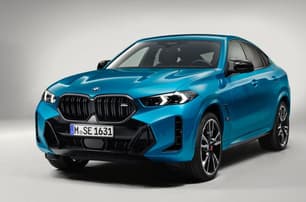
The 2024 X6 has had a facelift and that brings a more athletic and robust kerb-side appeal that might swing a few fence sitters onto the side of liking it.
The already pleasant interior has been polished with extra customisations available on trims and accents. The technology has seen the biggest upgrade and it now features a more streamlined mild-hybrid component to the engine. It all positions the X6 well and truly within the rank of luxury.
For the last week I’ve been driving the mid-spec xDrive40i M Sport variant to see how the facelifted model holds its own against rivals, the Audi Q8 55 TFSI Dynamic Black and Mercedes-Benz GLE450 4Matic Coupe.
The Ford Everest has always been an impressive 4WD wagon, with useful day-to-day driveability and real off-road capability.
As standard, it has a lot going for it. It’s quiet and refined on-road, very capable off-road and it’s packed with features.
The 2.0-litre single-turbo Active is a solid entry-point into the Everest line-up and, though it lacks the polish of its higher-spec stablemates and doesn’t yield the kind of improvement in fuel economy you might have hoped for, it makes a strong case as a touring vehicle with plenty of aftermarket-build potential.
I was not expecting to like the BMW X6 xDrive 40i M Sport as much as I do. The styling is still polarising but the facelift will throw more people towards the liking rather than disliking side of the fence. The cabin and boot are super practical and the X6 nails all the premium elements you expect at this level. It’s driving and handling are what win me over, though.
My son loves this one and doesn’t want to hand it back. My husband also noted how nice he thought the X6 was… and that’s saying something for a born and raised 'country boy'!
In terms of design, the Everest’s exterior and interior remain largely unchanged although some minor trim elements have been made darker in colour, and there are some new alloy wheel designs and exterior paint options on higher-spec variants.
Otherwise the Everest retains its chunky presence and recognisable profile. At 4914mm long (without the tow receiver installed), 2207mm wide (with its wing mirrors out), and 1876mm high, the Everest is not an insubstantial 4WD wagon but it manages to avoid being showy about it.
The cabin is a clear, well-laid out space and in design terms it errs more towards function than fashion – more about that soon.
Inside and out, the Everest is familiar in a good way and outshines many of its rivals.
SUV coupe styling with its raised platform and pinched bum just doesn’t do it for me usually but I like it on the new X6 model. The facelift helps the X6 appear more athletic and just plain meaner than the previous version.
The front end sees the most change with new adaptive LED headlights and a bigger 'kidney' grille. The kidneys are illuminated, which adds to its night-time presence and the extended blacked-out intake vents at the front and around the car make it look sharp as hell.
The weird prong on the side mirrors has been dropped in favour of a more seamless design (hurrah) and the 22-inch alloy wheels give total va-va-vroom sport-vibes.
On the interior, the dashboard has been revamped with a more pronounced shape and a curved display panel that houses the 12.3-inch digital instrument cluster and 14.8-inch multimedia system.
The air-vents now blend more into the dash but the little knobs for them might not be everyone’s cup of tea.
The ambient lighting is customisable and the quilted seats look beautiful but purists will wince on learning it’s synthetic leather, especially at this price point, but it feels and looks very nice.
The Active, being the entry-level Everest, has a well-laid out cabin and, as mentioned earlier, it errs more towards function than fashion.
If you’ve spent any time in an Everest cabin you’ll know.
Being the base variant the Active misses out on leather everything – though the seats are 'leather accented' – and most other things I would consider frippery are absent, but you do get all the things you actually need in a car.
Of note here is the fact the Active is a five-seater as standard but can be optioned up with seven seats; our test vehicle having the extra two-seat option.
There are plenty of storage spaces throughout the cabin (cupholders everywhere you’d expect, as well as map pockets and bottle holders in the doors) and charging points (USB-A, USB-C and 12-volt ports) and everything is easy to find, access and use.
The large portrait-style touchscreen takes pride of place upfront and can be used to control pretty much everything onboard, except your obnoxious teenagers.
All seats are comfortable, with that level of comfort – as well as space – dropping marginally as you move from the front seats to the second row and on to the less-spacious back row.
All rows have adjustable air vents. The second row has ISOFIX child-seat anchors in the two outboard seats, and three top-tether points. The third row has two top-tether points.
In terms of cargo space, with all seven seats in use, there is a claimed 259 litres. With the third row stowed away, there is 898 litres, and with the second and third row stowed away, there is a listed 1823L of room for your luggage.
Payload is 855kg in the Active and that’s the MY2026.50 Everest line-up’s biggest payload.
You know you’re in a large SUV when you slide into the X6 because the cabin has a lot of space in both rows.
But also because of the higher centre console design, you feel tucked into the car despite the higher seating position. It makes it feel far sportier than your typical SUV.
Even back rowers enjoy decent legroom and headroom, despite the panoramic sunroof and sloping roof design. Six-footers should be relatively comfortable in both rows but it's best to reserve the middle seat as a sometimes position for adults. The raised floor won’t allow true comfort for a longer trip.
Let’s chat luxury because there’s plenty to be had with the electric front seats and their cloud-like comfort.
The electrically-adjustable side bolsters and adjustable lumbar support makes it feel like you’re being cuddled by the seat and also hold you in place in a turn. The extendable under-thigh supports minimise leg fatigue on a longer trip.
However, the back seat is almost as comfortable as the fronts in terms of cushioning. You also sit in, rather than on top of the seats which is a nice change for an SUV.
Individual storage is great in both rows and up front you get a dual-opening middle console, glove box and a handy utility area that houses the cupholders and two phone pockets.
There is also a storage nook on the driver’s side that will comfortably hold a wallet.
In the rear you enjoy two map pockets on the front seat backs and retractable cupholders in the fold-down armrest.
The armrest houses a shallow device holder and sits at a good height. Both rows enjoy deep storage bins in each door and a large drink bottle holder.
Happily, the holder is tilted towards the user, rather than away which is what you usually see.
The boot is a great size at 580L with all seats in use. There’s a little lip that has practical metal scuff plates but otherwise the loading space is level.
The hands-free powered tailgate is welcome and the handy 40/20/40 split on the back row opens up your storage options.
You get a temporary spare tyre underneath the floor and it’s cool how the floor has a gas strut, which makes the area much easier to access.
The concertina-style cargo cover is a bit dicky to use but I like how solid it is. It could easily double as a shelf by itself.
Charging options are abundant with a total of two 12-volt ports, a USB-A port, three USB-C ports and a wireless charging pad to choose from throughout the car. But it is annoying to use the pad when the front cupholders are in use.
I like having hardened kickplates on the backs of the front seats because my seven-year old loves putting his feet on everything.
The higher ground clearance makes this an easy car to get in and out of but it also makes for a great view for my son. He finds the doors a little heavy to close but the massive door grab handles help!
Amenities in the rear row make it a pleasant space to be in for kids and adults alike. You have reading lights, map pockets, two storage shelves and directional air vents.
There is manual climate control in this row, too, but it feels at odds with the rest of the high tech in the car.
On that note, the updated technology looks gorgeous.
The head-up display is clear and the digital instrument panel offers plenty of customisation. It's a super handy feature to access your recent call log via the steering wheel controls and see it pop up on the instrument cluster.
The touchscreen multimedia system is responsive but you can also use the rotary dial to get around it. There is a stack of information in it, though, which will take a bit to get your head around. Can’t fault its graphics, it looks hot, but some users may feel flustered at first.
The system has built-in satellite navigation that features an augmented reality feature, which overlays dynamic instructions on the video feed. What makes it practical is how it can be viewed on your instrument cluster, which means more on-road focus for the driver.
There is wired Android Auto and wireless Apple CarPlay, with the latter being simple to connect to. You don’t have the important climate control buttons/dials up front and I find it annoying to access the multimedia screen to change climate and fan speed settings.
What you lack in controls there is more than made up for in the centre console. There are a lot of buttons, from the push-button starter, rotary control wheel and everything in between.
Even after a week, my mind still has a mini freeze looking at them while on the go.
The Ford Everest Active is available with a 2.0-litre four-cylinder turbo-diesel engine or a V6 turbo-diesel.
The 2.0-litre version, as per our test vehicle (125kW/405Nm, part-time 4x4), has a manufacturer suggested retail price of $58,990, before on-road costs, while the 3.0-litre V6 Active (184kW/600Nm, full-time 4WD) has a MSRP of $66,990, before on-roads.
Standard features in the Active include a 12.0-inch touchscreen multimedia system (now standard across the range), leather-accented seats, tinted rear windows, tyre-pressure monitoring and six drive modes (not for the four-wheel drive system).
All Everests now have LED headlights, power mirrors, roof rails, a powered driver’s seat, dual-zone climate-control and an electronic park-brake.
The standard wheel-and-tyre package is an 18-inch alloys and all-season tyre combination, but our test vehicle has a stack of extras onboard including a towing pack ($2000), third-row seating ($1350), 18-inch alloy wheels shod with 255/65 Goodyear All Terrain tyres and matching spare ($750) and prestige paint ($750).
Exterior paint choices include the no-cost Arctic White, or the extra-cost prestige shades - Meteor Grey, Aluminium (aka silver) or Shadow Black.
This base-spec Everest ranks well in the value-for-money stakes against its rivals, such as the GWM Tank 500, Isuzu MU-X, Mitsubishi Pajero Sport and Toyota LandCruiser Prado.
There are three variants for the X6 before you jump up to the performance M grade. Our test vehicle is the mid-spec xDrive40i M Sport model and will cost you $144,900 before on road costs.
That places it in the middle of its rivals and you get a well-specified model for the price tag but our test vehicle has also been fitted with a few extras, like the 'M Sport Package Pro' which adds a darkened grille and accents throughout the car, an M Sport exhaust system, red M Sport brake calipers and the M Sport signature colour stitching in the seat belts. All of that adds $2308.
Our test model also has the 'Enhancement Package' which tacks on $4616 but you get some great items like the crystal glass accents on the rotary dial and push-start button and a premium Harman Kardon surround sound system.
It also adds big 22-inch alloy wheels, a tyre pressure monitoring system and a temporary spare tyre which replaces the standard run-flat tyres on the base model.
Oh, and the 'M Brooklyn Grey Metallic' paintwork adds $1539. Just sayin’ it will cost you a pretty penny but it’s not outrageous for a luxury SUV.
Other standard equipment includes synthetic leather trims, electric front seats with heat function, electrically adjustable steering wheel, sports paddle shifters, M Sport styled scuff plates and badging, exterior puddle lamps and a full suite of LED lights including adaptive headlights.
You also enjoy a panoramic sunroof, adjustable lumbar support on both front seats, as well as extendable under-thigh support.
The drivers seat features two memory positions and comfort entry/exit functions (the seat and steering wheel slide back for you to get in and out of car).
For practicality, there is a hands-free powered tailgate, pre-entry climate control with programable entry time and a boot floor that features a gas strut for easy access.
We’ll touch on the tech later but the highlight is a new curved display panel that houses the 12.3-inch digital instrument screen and 14.8-inch touchscreen multimedia system.
The big news here is that the single-turbo has replaced the twin-turbo and power and torque figures are down as a result.
The new engine – developed to improve fuel economy – produces 125kW at 3500rpm and 405Nm at 1750-2500rpm, compared to the 154kW and 500Nm that the outgoing Ford 'Bi-Turbo' engine produces.
There’s no discernible difference in the two engines in general daily driving, although there is some lag under foot with initial acceleration.
The 10-speed automatic transmission is now standard across the Everest range.
The Active’s 4WD system offers 2WD, 4WD high-range, and 4WD low-range – it does not have '4Auto', which means you can’t drive this vehicle in 4WD on high-traction surfaces, as you can in some higher-spec variants.
Selectable Drive Modes – including Normal, Eco, Tow / Haul, Slippery, Mud / Ruts, and Sand – all adjust engine outputs, throttle, transmission, braking, traction and stability controls to best suit the driving conditions.
The Active misses out on the Rock/Crawl drive mode that the higher-grade Tremor V6 gets, but it does have a rear diff lock.
The xDrive40i M Sport has a 3.0-litre, inline six-cylinder turbo-petrol engine with maximum outputs of 280kW and 540Nm. That’s 30kW and 90Nm up from the previous model.
It has a smooth eight-speed auto transmission and is all-wheel-drive.
The facelift sees the addition of a new mild-hybrid system which makes for almost imperceptible stop/start functionality when idling and a smidge better on-road fuel economy.
With a 0-100kmh sprint time of 5.4-seconds, it’s obvious that it has plenty of power to have fun with.
Official fuel consumption for the combined (urban/extra-urban) cycle is 7.1L/100km and our fuel consumption on this test was 8.9L/100km.
The Everest has an 80-litre fuel tank so, going by those figures, you could reasonably expect a driving range of about 900km out of a full tank.
Worth noting this Everest will need an AdBlue top-up (18.5-litre tank) every few thousand kilometres.
Expectations for a thirsty engine were high, considering the hefty power available, but this version of the X6 has proved to be quite economical.
The xDrive40i M Sport variant has an official combined cycle fuel economy figure of 9.3L/100km but my real-world usage averaged 8.8L/100km.
That’s after mostly open-road driving with only a little ‘city’ thrown in but I didn't hesitate to use the power, so I'm happy with the result.
The X6 has a big 83-litre fuel tank and based on my usage, you’d see a driving range of around 943km, which is great.
BMW only recommends a minimum 95 RON petrol to be used.
The Everest hasn't lost a step on road. It’s still very refined and very comfortable.
It is a large 4WD wagon, but never feels too cumbersome to manoeuvre, mostly due to its well-weighted steering.
The front seats are manually adjustable, as is the reach- and rake-adjustable steering wheel, so as a driver you can precisely dial-in your preferred position.
Though the engine loses out on some power and torque, you don't notice that during general driving, although there is a bit of lag under the right foot from pressure down to take off, but it's merely noticeable at times, not terrible.
Otherwise, this single-turbo engine is as capable as its twin-turbo predecessor of delivering smooth and sustained power and torque at low and high speeds.
Good news is the 10-speed auto works well here. And in even more good news the Active gets a proper auto shifter not Ford's 'e-Shifter', which is kind of an overgrown toggle switch.
As mentioned, the Everest offers a smooth and refined drive for myriad reasons, other than the engine and auto.
The suspension set-up, including coil springs all-round, helps smooth out road- or track-surface bumps, resulting in sure-footed ride and handling.
And well managed NVH (noise, vibration, harshness) levels mean it’s quiet in the cabin, with the intrusion of few noises other than low-level wind-rush around the sizeable wing mirrors.
There is one crucial difference between the Everest Active and some higher-spec variants. This base-spec vehicle misses out on 4Auto, which allows vehicles equipped with it to be driven in what is essentially 4H even on sealed surfaces without any risk of transmission wind-up. And that affords vehicle occupants a little more safety and security in, for example, the rain when the road or track surface may be slippery.
As for 4WDing, well… the Everest has always had ample potential as an off-road touring platform and, in Active spec, it loses none of the range’s efficacy on rough terrain, but does away with some of the frills and keeps the functionality.
The Everest has always been an impressive off-roader, whether it's been powered by a 2.0-litre twin-turbo or a V6 – and this 2.0-litre single-turbo engine is perfectly adequate. It gives you the ability to truck along through light to moderate off-roading and even on the fringe of more difficult 4WDing.
There is plenty of low-down torque on tap here, and the driver-assist tech and 4WD mechanicals are an effective combination.
The Active’s off-road- and touring-related drive modes – including Tow/Haul and Slippery – tweak throttle response, transmission, and traction controls to match the task and the prevailing driving conditions. It has a locking rear differential for when the terrain requires it.
The Everest has a listed length of 4914mm (with a 2900mm wheelbase), a width of 2015mm, and a height of 1876mm. It has a turning circle of 11.8m and an official kerb weight is 2245kg.
So, while it feels highly manoeuvrable, even on narrow overgrown tracks, it still requires the driver’s full and sustained attention.
Approach angle is 30.4 degrees, departure angle is 25.3 degrees, and ramp break-over is 22.2 degrees. The Everest has a long wheelbase so its undercarriage is vulnerable to hitting the ground on more severe terrain, so to avoid belly-scraping and sidestep run-ins with rocks, tree stumps or exposed tree roots, keep that in mind. Ford has put solid steel underbody protection on all 4×4 variants, so the vehicle is able to cop a knock or two.
The standard Active gets bush-suitable 18-inch alloys and all-season tyres, although 18-inchers on Goodyear Wrangler Territory (255/65R18) all-terrain tyres are an option, as per our test vehicle.
Off-road angles could be boosted with a mild lift and, while the tyres are good enough, you could always opt for more aggressive light-truck construction all-terrains with gnarlier tread and shoulder block bite.
The Everest is rated to tow a 750kg unbraked trailer, and 3500kg braked. Gross vehicle mass (GVM) is 3100kg and GCM (gross combined mass) is 6250kg.
The X6 is a thoroughbred on the road. It’s wide stance and massive wheels provide a well-balanced and grippy on-road ride experience.
Seriously, the tyres feel glued to the road even in the wet. Confidence is high with this one.
There is plenty of power to enjoy and you don’t feel like you’re digging deep for it, either, when you have to get up to speed or overtake.
It has the handling and power of a much smaller and sportier car but at no point does it feel wild or reckless to drive. It’s got a certain elegance and maturity to its handling.
Despite those massive wheels, the ride comfort is fantastic with the adaptive suspension. You still feel the road but you’re not knocked about by it. It’s very much a driver’s car in that sense but passengers still feel well-cushioned.
The cabin is insulated and you get basically no road noise or wind noise but occasionally you get some feedback from the tyres depending on the road surface. Longer journeys are comfortable and quiet.
The steering is light enough that you don’t feel like you’re hauling a massive SUV around but is still responsive. Meaning you can tackle a winding road or urban traffic easily.
When it comes time to park it, you’ll love having the 360-degree view camera system. It’s the best and clearest system I’ve sampled.
Add the front and rear parking sensors and no car space is an issue. But if you’re unsure, you can use the Park Assist feature to help out.
The Everest has the maximum five-star ANCAP safety rating based on assessment of the closely-related Ranger ute in 2022.
As standard, it has nine airbags and a full suite of driver-assist tech including AEB (Auto Emergency Braking), front and rear parking sensors and a tyre pressure monitoring system. The Active does get adaptive cruise control but not a 360-degree camera view.
The X6 has an extensive safety list and I like the SOS emergency call button and front cross-traffic alert. Both are great to have but the latter is particularly useful on a large SUV like this, especially in the city or driveways.
Other standard safety equipment includes blind-spot monitoring, autonomous emergency braking, LED daytime running lights, forward collision warning, side collision warning, rear cross-traffic alert, lane keeping aids, lane departure warning, intelligent seat belt reminders, front and rear parking sensors, 360-degree view reversing camera, traffic sign recognition, driver fatigue monitor, and adaptive cruise control with stop and go functionality. As well as an SOS emergency call button and stolen vehicle tracking.
The X6 hasn’t been tested by ANCAP, so it’s unrated but it is based on the X5, which achieved a five-star rating in 2018. However, it only features six airbags which is low for a family car.
There are ISOFIX child seat mounts on the outboard seats and three top tethers in this row. Two seats will fit best but I reckon you could squeeze a third in if you had to.
There’s plenty of room for front passengers when you install a 0-4 rearward facing child seat, too, which is good.
The Everest is covered by a five-year/unlimited kilometre warranty and comes with 12 months of roadside assistance, which is extended every time your Everest is serviced at a Ford dealership for up to seven years.
Service is scheduled for every 12 months or 15,000km and costs a reasonable $399 per workshop visit.
Ford Australia has more than 180 dealerships around the country.
The ongoing costs are surprisingly reasonable for a large luxury SUV! Like its rivals the X6 enjoys a five-year/unlimited km warranty.
However, you can pre-purchase a servicing plan for up to five years or 80,000km, whichever occurs first, for a flat $2400. Or an average of $480 per service which is inexpensive for this class.
Service intervals are also good at every 12 months or 15,000km, whichever occurs first.