What's the difference?
Have you seen that new Ford television commercial filled with its three most adventurous vehicles - the Ranger, Everest and Bronco - driving across a variety of Australian landscapes as people old and young alike have fun in a trio of the Blue Oval’s finest?
No? That’s probably because it doesn’t exist, because Ford Australia doesn’t sell the Bronco SUV here despite the fact it’s the third member of ‘T6’ family alongside the Ranger and Everest.
No vehicle sums up the state of Ford Australia better than the Bronco. It’s a rugged, capable SUV that would seemingly appeal to the Australian market and it’s built on the same underpinnings as the Ranger/Everest (the so-called ‘T6’ platform) that was developed here, in Australia by Ford’s engineering and design teams based in Melbourne.
And yet, despite that, and the fact it obviously has the capability to be made in right-hand drive, Australians are denied access to this reborn icon (Ford’s words).
The problem, it seems, is the Bronco’s popularity in the US market, with orders stretching well beyond a year the company, understandably, wants to make sure it has that resolved before it expands.
At least, that’s what Ford’s global CEO, Jim Farley told CarsGuide in September 2022, leaving the door wide open for the Bronco to eventually make its way down under.
“We can do Bronco and Bronco Sport for the globe for sure,” Farley said. “But we have, like, a year or two order bank so we have a lot of work to do on our capacity before we can even consider something like that.”
He added: “Of course it can be engineered, just like Mustang, but you have to invest in the capacity and it’s like the first or second inning of building up the Bronco line-up.
"It’s a whole family, we’ve just come out with the Heritage, we’ve got Everglades, there’s going to be a lot of iterations so just give us some time.”
And it’s the Bronco Heritage that Mr Farley referenced that this reviewer just spent several days behind the wheel of in the USA, taking it on a cross-country road trip through the country’s south-east and up into Washington.
It was the ideal drive to find out, once and for all, if the Bronco has real potential for the Australian market or if we’re daydreaming on something unworthy of our attention.
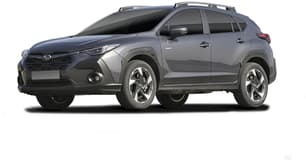
Among the many strange new car brands and names we're increasingly confronted with Subaru is an established and trusted beacon along with Honda, Hyundai, Mazda and Toyota. And Subaru’s Crosstrek SUV competes against rivals such as the Honda HR-V, Hyundai Kona, Mazda CX-30 and Toyota Corolla Cross.
So, what does the Crosstrek give you for your money and what’s different or better about the Crosstrek compared to those rivals?
We tested the mid-grade Crosstrek 2.0S and rediscovered what this small SUV does so well and what could probably be improved.
In many respects the reasons the Bronco is not available to Australian buyers are clear and understandable - demand remains high in the US market and it’s unclear just how many Ford Australia could sell. A pessimist would point to the modest sales of the Jeep Wrangler but an optimist would point out the sales gap between the Ford Ranger and the Jeep Gladiator and ask why Ford doesn’t think it could out-sell its competition.
Having spent so much quality time with the Bronco it’s clear it would have some major appeal to Australian buyers. The strong sales of the Ranger and Everest, as well as the entire off-road SUV market - the likes of the Isuzu MU-X, Mitsubishi Pajero Sport, etc - it’s obvious we love a rugged, adventurous vehicle.
Ford’s strength in that area, with the Ranger/Everest combination, would seemingly strengthen the case for the Bronco to join its ‘T6’ siblings, but only time will tell.
Having spent an extended period behind the wheel I’m more convinced that the Bronco would find a strong market in Australia. Both with the off-road set and those who like a Land Rover Defender to take the kids to school.
This is an SUV with capability and personality and that should be enough to make it a success in Australia. But for now, we need to play the waiting game…
Note: CarsGuide attended this event as a guest of the manufacturer, with travel, accommodation and meals provided.
The Crosstrek is good to drive with great ground clearance and an excellent all-wheel drive system for light off-road adventures. I’m also a fan of the styling and features for the money. But The letdowns comes in the form of limited boot space and cabin storage, a short warranty and pricey servicing. Still, it’s great to see Subaru has updated the car's safety systems, the most important part of any car.
While we don’t have a history with the Bronco in Australia, it’s an iconic model in the US that was introduced in the 1960s to compete with the likes of the Jeep CJ-5 and Toyota LandCruiser.
It evolved throughout the 1970s, ‘80s and into the ‘90s eventually becoming an F-150-based SUV before being discontinued in ‘96.
For this revived Bronco Ford has gone back to its roots, taking inspiration from the ‘60s and ‘70s but also creating a car that is also very much contemporary.
It’s a great example of using retro design elements without getting lost in nostalgia.
It’s also hugely functional, with a removable roof and doors, which is a popular feature in the US where it’s legal to drive without the doors in place, and has deliberately short front and rear overhangs for improved approach and departure angles.
The Heritage edition takes this a step further with its pumped out Sasquatch flared guards, which are both functional and add to the chunky look of the Bronco.
Notably, the Bronco does not feature a Ford ‘blue oval’ badge, instead it only uses the ‘F-O-R-D’ on the grille and the rest of the badges are the ‘bucking Bronco’ - an alternative take on the ‘striding Mustang’ logo used for the iconic pony car.
The interior of the Bronco is interesting, showing very little commonality with the Ranger and instead embracing its unique history and design language.
The Heritage version also pops with its Oxford White dashboard inset, complete with bright red ‘Bronco’ lettering in front of the passenger.
While SUVs tend to come in either a tall and boxy or coupe-like shape, the Crosstrek has a uniquely sleek and sporty wagon look that has stayed much the same over three generations.
Also while the Crosstrek competes with the Honda HR-V, Hyundai Kona, Mazda CX-30 and Toyota Corolla Cross the Subaru is the most off-road suitable thanks in part to its high 220mm ground clearance
As if to signal those adventurous aspirations the Crosstrek has a more rugged appearance with robust-looking plastic guards and chunky roof rails.
Inside the Crosstrek looks so much the same as most other new Subarus it's hard to work out which one you’re in. The materials are dark and soft, there is not much in the way of glitzy trimmings but there’s a high quality feeling throughout.
The Bronco is a big vehicle so you do need to climb up into it, but Ford has considered that and integrated handles into the side of the dashboard to help you in.
That’s just one of several small but thoughtful touches around the cabin that show the company has been very considered in designing the Bronco.
The option to have either removable soft- or hard-top is another one of those design touches that show Ford was determined to ensure the Bronco appealed to a broad market of buyers.
It does mean some peculiarities, though, such as the window and mirror controls being on the centre console, instead of the doors.
It also cuts down on small item storage space, as the doors only have small netted areas rather than any meaningful space.
In fact, small item storage is limited to just two cupholders and two small areas up front and in the car there are no cupholders at all in the rear.
Instead, rear passengers are left with the small nets in the doors and nothing else. However, rear passengers do get a USB and power outlet which will no doubt come in handy for owners.
Back in the front the instrument display combines an analogue speedo with a small digital screen that displays the rest of the information.
It’s not a particularly clear layout, with a vertical rev counter next to several other readouts making it tricky to glance at on the move, and unfortunately it cannot be changed like some other digital displays.
The 8.0-inch media screen is a good size and offers Ford’s intuitive SYNC 4 operating system, which is a plus.
In terms of space the Bronco offers reasonable interior room, albeit less than you might expect when you look at how big it is outside.
The front seats are comfortable and offer good visibility of the road ahead, while the rear offers adequate legroom and generous headroom thanks to the tall and squared-off roofline.
The boot measures a very healthy 1008 litres according to Ford, which seems generous based on our real world experience.
It certainly coped well, accommodating several large suitcases and smaller bags, though, so it doesn’t lack for luggage capacity even if its on-paper claim may be grandiose.
Obviously there’s the full-size spare mounted on the rear tailgate in case you need it. The tailgate itself opens in two parts, with the lower half coming out to the side while the glass lifts up, which is necessary because of the removable roof (with the glass section coming off with the top).
The Crosstrek is a small SUV but its low and sleek shape doesn’t do it any practicality favours in terms of exiting and entering or storage in the boot.
Boot capacity is 291 litres which is very small compared to its rivals which have capacities closer to 350 or 400 litres.
People space inside, however, is good, and even for a tall (189cm) person like me there’s plenty of space up front and behind my driving position.
Storage space is passable with three cupholders and thin door pockets and a decent-size console bin.
Given the Crosstrek’s adventurous intent, the cabin should be more reflective of that rugged aspiration.
Ford offers an extensive range of Broncos in the US market, with two-door and four-door variants, as well as the choice of removable hard or soft-tops before you get to the trim lines.
The range actually begins with a model variant simply known as ‘Base’ which has only the basic features, even simple steel wheels, so it can be used as a blank canvas for owners to customise with their own aftermarket additions for the ultimate off-roader.
But the Bronco isn’t a cheap vehicle, with even the Base starting at US$39,890 (approx. $52,000) and running all the way up to US$86,580 (approx. $132,000) for the high-performance Raptor.
In between there are seven other variants with some memorable names - Big Bend, Black Diamond, Outer Banks, Badlands, Heritage, Wildtrak and Heritage Limited.
The Heritage we tested starts at US$47,105 - roughly $70,000 in Australian money - which isn’t cheap but you do get plenty of car for the money.
In terms of standard Bronco equipment there’s a 4x4 system with Ford’s ‘HOSS 1.0’ off-road suspension system, terrain management system and 'EcoBoost' engine, plus keyless entry and ignition, dual-zone climate control and Ford’s 'SYNC 4' multimedia system on an 8.0-inch touchscreen.
Unique touches for the Heritage edition include a two-tone paint job with 'Oxford White' accents on the removable hard-top, front grille and 17-inch alloy wheels.
It also gets the huge squared-off fender flares from the 'Sasquatch' package that Ford offers for the Bronco, which also increase the track by approximately 50mm.
The Heritage treatment also includes a unique ‘plaid’ cloth trim for the seats, an Oxford White inlay in the dashboard and front and rear rubber floor mats.
The Crosstrek range is divided into three petrol variants and two hybrids. With a list price of $43,990, our test Crosstrek 2.0S sits at the top of the petrols and second from the top of the line-up under the Crosstrek AWD Hybrid S flagship.
Standard features on our 2.0S include 18-in alloy wheels, roof rails, LED headlights and tail-lights, dual-zone climate control, push-button start, proximity unlocking , 10-speaker audio, wireless phone charging, Apple CarPlay and Android Auto, an 11.6-inch media touchscreen and leather-trimmed seats.
If you’re looking to save a few thousand dollars the 2.0R is almost as well equipped.
Is it worth stepping up to the hybrid? Not in my opinion. The hybrid is the 'mild' kind and doesn't offer a great deal in terms of real-world fuel savings. You can read more on fuel efficiency below.
The Heritage edition is powered by Ford’s EcoBoost 2.3-litre four-cylinder turbocharged petrol engine and can be paired with a 10-speed automatic.
However, our test car was equipped with a seven-speed manual gearbox, but not in the way you might think. Instead of seventh gear being an overdrive for highway cruising, the extra ratio is actually for extremely low-speed off-road use.
Known as the ‘Crawler’ gear Ford says it makes the Bronco ‘almost unstallable’ when you find yourself in a tricky spot.
Specifications for the engine aren’t quite as straightforward as you’d like, with Ford offering power and torque figures for US standard and premium grade fuels.
With the former the 2.3-litre makes 205kW/427Nm, while if you put better petrol in you’ll get 223kW/440Nm - so it will pay to spend a bit more at the pump.
The Crosstrek 2.0S uses a 2.0-litre, four-cylinder, horizontally-opposed 'boxer' petrol engine which makes 115kW and 196Nm. A continuously variable transmission (CVT) with eight 'speeds’ isn’t the most exhilarating automatic but all Subaru now use CVTs.
The boxer engine has advantageous in terms of a lower centre of mass and helps deliver better driving feel thanks to more adept handling. Boxer engines also sound better to my ears with their throaty burble.
Not surprisingly a large SUV powered by a relatively small, turbocharged petrol engine is not particularly fuel efficient.
The USA’s Environmental Protection Agency estimates the EcoBoost four-cylinder will use 11.7 litres per 100km on the combined urban/highway cycle.
That didn’t ring true in our real-world test, which did include long highway stretches as well as a lot of urban running around, with the car’s trip computer saying we’d used 13.6L/100km.
While that’s not particularly miserly, at least there’s a 64-litre fuel tank to provide a driving range of nearly 550km, so you can cover some distance.
The Crosstrek 2.0S's combined cycle (urban/extra-urban) fuel consumption is 7.2L/100km which aligns closely with our real-world test average of 8.7L/100km returned over mainly urban and city driving. That’s not bad, but given the price of fuel as well as the availability of EVs and excellent hybrids from other brands the Crosstrek is seriously behind the times.
Yes, yes, there is a hybrid Crosstrek, but it’s a mild-hybrid and the electric motor doesn't drive the wheels and doesn’t save much fuel. The hybrid Crosstrek has a claimed combined cycle consumption figure of 6.5L/100km, so there’s not much difference between the efficiency of the two. When you consider the price premium you need to pay it’s not worth stepping up into the hybrid.
The Bronco is designed for off-road use, it isn’t a ‘soft-roader’ and has been created specifically for those who enjoy getting off the beaten path.
Ford claims an approach angle of 43.2 degrees, a breakover angle of 29.0 degrees and a departure angle of 37.2 degrees, plus 294mm of ground clearance and up to 850mm of water fording capability.
We, unfortunately, didn’t get a chance to drive the Bronco that way, instead spending three days behind the wheel driving it through US cities, along highways and winding our way through some picturesque mountain roads.
But despite being out of its element, the Bronco felt perfectly at home.
The fundamental qualities of the ‘T6’ platform, that makes the Ranger such a capable and popular offering with Australian buyers, shines through with the Bronco, too.
It steers with accuracy and has nicely weighted steering, rather than feeling too heavy and slow as some off-roaders can.
The ride is comfortable, too, which isn’t too surprising as it rides on 17-inch alloy wheels with huge 35-inch tyre, with bumps soaked up with ease.
Ford’s drive select system has modes for on-road - 'Normal', 'Sport' and 'Eco' - as well as off-road - 'Mud/Ruts', 'Sand' and 'Rocky' - so you’re covered whatever you want to do.
As for the powertrain, the EcoBoost engine does an admirable job most of the time, feeling powerful enough around town to move this sizable SUV.
However, there are times it will struggle and labour, most obviously when needing to overtake or climb a hill. There were several instances when we found ourselves shifting down from sixth to fourth gear to keep momentum up.
I’ve never met a new Subaru that wasn’t good to drive, apart from that time a friend sent me his 30-year old Brumby minus brakes. But even that was fun, until it was time to stop… Anyway, in my view the Crosstrek is better than its rivals in multiple areas except one, which I’ll get to in a moment.
The Crosstrek 2.0S is comfortable to sit in and its ride and handling balance is exceptional for a vehicle in this class. Honestly, the ride quality, body control and steering outshines the HR-V, Kona, CX-30 and Corolla Cross in my view.
A big call out has to go to the Crosstrek's all-wheel drive system, which is exceptional. I have tested this vehicle in some pretty adventurous settings and the kind of terrain it can devour would frighten its rivals.
But the one area that lets the experience down is the CVT auto. I feel this way about this type of transmission in any car and I’m not alone. CVTs provide smooth acceleration and deceleration but if you’re hoping for an engaging, sporty experience you’ll be left wanting.
That said, my wife also drove the car and thought it was perfect for city traffic. And I agree, it’s just on the motorway where you might notice the lack of oomph when overtaking.
Visibility is good and you sit quite high for a little SUV. That small size makes it easy to park and manage in the city’s tighter spaces.
In the US market the Bronco gets front, side and curtain airbags, with rollover sensors, as well as a reversing camera as standard equipment across the range.
But if you want more active safety features you need to add some optional safety packages, including on this high-grade Heritage edition.
That means items like pre-collision warning with autonomous emergency braking, blind spot monitoring and lane keeping assist are all additional extras.
For the Bronco to work in Australia, the company would need to offer a higher level of standard safety equipment in line with market expectations.
Part of the reason we're testing the Crosstrek is because it was updated with more safety tech and equipment towards the end of last year. This safety boost means the Crosstrek continues to boast a maximum five-star ANCAP rating.
The big change was to the 'Eyesight' sensor system with better traffic sign recognition and enhanced AEB systems. An emergency vehicle stop system has also been added to bring the car to a halt if the driver becomes unresponsive.
The rest of the Crosstrek’s features carry over including AEB, lane-keeping assistance, front and rear cross-traffic alert (with braking) and blind-spot warning.
For child seats there are two ISOFIX points and three top tether anchor mounts across the second row.
There is a spare where but it's a temporary type which will get you to a repair place.
These are questions for another time unfortunately, with Ford Australia still unlikely to add the Bronco to the range in the near future.
Subaru’s five year united kilometre warranty is becoming less appealing as other brands offer seven or even 10 years of coverage.
Servicing is recommended every 12 months/15,000km and a capped schedule is pricey relative to its competitors at more than $2400 over five years or about $400 on average per service.
The brand is represented by a long-established and stable network of close to 130 dealers covering metro, rural and regional locations across every state and territory.