What's the difference?
The Ducato originated in 1981 through a joint venture between Fiat and PSA Peugeot-Citroen, which are both now part of the recently formed Stellantis conglomerate. The Ducato has evolved through four decades and several generations, with more than 2.6 million sold in a variety of body styles (including popular motorhomes) and wheelbases.
The current generation van, which competes in the 3501-8000kg GVM commercial class, is also marketed as the Peugeot Boxer, which was tested at maximum GVM by CarsGuide in 2020. Despite many similarities between them, the latest iteration of the Ducato is more than just a badge-engineered version of its French sibling.
The MY21 Fiat Professional Ducato Series 7 is equipped with an all-new drivetrain, updated safety and convenience features and a class-leading two-tonne-plus payload capacity, which we recently put to the test.
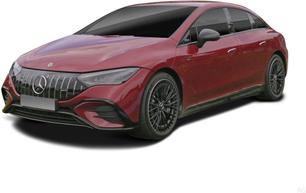
The EQE is more than an important car for Mercedes. Not only is it the German titan’s latest electric offering, on all-new underpinnings, but it represents the very future of its passenger car range.
It adopts a completely new shape and design language, but it also puts its fastest foot forward, launching with the 53 AMG variant first in Australia, by the end of 2022.
We travelled to Europe to sample it for the first time ahead of its Australian arrival to find out what the future of Mercedes feels like, but also how its go-fast AMG division has managed to leave its mark on an electric car.
The latest Fiat Ducato, in MWB MR configuration with optional nine-speed auto, is a competent competitor in the 3501-8000kg GVM segment. Its class-leading two-tonne-plus payload rating would have considerable appeal for those who need to carry exceptionally heavy loads and we couldn’t find any major flaws in its design and performance. However, the warranty is short and there are niggling issues in terms of driver comfort, which if addressed would increase the Ducato’s appeal.
In the wild new world of fully electric cars there isn’t really an ‘average’ of what to expect. If there was, I’m sure the EQE 53 would exceed it. Its electrification brings the ambiance of a luxury car, while its performance reminds you of what AMG is capable of.
There’s a bit of the mechanical engagement of AMG missing, a relatively small boot, and some won’t be sold on the function-over-form looks, but the EQE 53 is a pleasantly surprising look at the future of fast Mercedes.
The MWB MR's front-wheel drive chassis rides on a 3450mm wheelbase with 12.5-metre turning circle. It’s 5413mm long, 2050mm wide and 2539mm tall, so like numerous van rivals in this GVM class it can’t access shopping centre and underground carparks which typically have a 2.2-metre height limit.
Underpinnings are simple and rugged, combining coil-spring strut front suspension with a leaf-spring rigid-tube rear axle that’s well designed for heavy load-carrying, with compressible rubber cones between body and axle that provide a second stage of support. There’s also four-wheel disc brakes, power-assisted rack and pinion steering and ample hard-wearing black plastic protecting the most vulnerable areas of the bodywork from scrapes and dents.
A sealed steel bulkhead separates the cabin from the cargo bay, insulating driver and passengers from load area noise and doubling as a robust cargo barrier. Its sliding window is ideally positioned to allow the driver or passenger to make a quick over-shoulder glance to check that their load is secure. Leg room for the centre passenger is unusually generous, even for tall adults, which would be appreciated by a crew of three.
Interestingly, the rear barn-door windows are heated but there are no wiper/washers fitted. At first this appeared to be an oversight, but having driven the Ducato in heavy rain we were surprised at how spray-free the rear screens remained and how clean they were afterwards.
Our only gripes are that the driver’s left footrest is so short you can only rest your toes on it. It’s a shame the excellent full-length one that resides in the passenger footwell (which of course is the driver’s footwell in LHD models) can’t migrate across the cabin for RHD versions. Driver comfort would be further improved with more rake adjustment in the base cushion.
The small 5.0-inch infotainment screen also makes it difficult to see much detail in the vision provided by the reversing camera. The optional 7.0-inch screen would be an improvement here, but is only available as part of the Comfort and Tech Pack.
The EQE is certainly a departure from the classic lines of the current E-Class sedan. Mercedes-Benz has chosen to take a completely new approach for the electric era, embracing the need for ultra-low drag designs, and a corresponding newfound love for curvaceous surfaces.
It’s fairly imposing too with enormous wheels and an abundance of panels. Needless to say some will find this new design direction challenging. It proved quite controversial in the CarsGuide office, at any rate.
I can say it looks a bit more approachable when witnessed in the metal, and the AMG branded 53s I sampled for this review added a few more much-needed points of interest to this single curve of a design.
This is particularly notable around the rear of the EQE 53 which adds a little tail spoiler and glossy rear diffuser, which help accentuate the width and terraced design of the rear window.
Around the front is a little more featureless, with the blanked-out grille losing the intricate three-dimensional appeal of this car’s combustion equivalents. There’s just something a bit plain about the EQE’s face, although Mercedes has tried to spice it up with interesting headlight clusters.
The inside is spectacular, with a smorgasbord of screens and lights to match an abundance of glossy touch-based surfaces. Some may not be sold on the over-the-top approach, but it feels as futuristic as an EV should be.
The material choices are nice, too, with soft-touch materials atop the dash, doors, and running down the centre console. The ambient lighting is particularly flashy, and works in with the consistent single-piece sort of design which makes up the whole dash.
While the LEDs might be a little too much for some, there are some more subtle detailing points, like the way the centre air vents are delicately worked into the flow of the dash, and the rotor designs of each vent at the edges are intricate pieces.
The Ducato’s 2060kg kerb weight and 4250kg GVM results in a huge 2190kg payload rating which dwarfs rivals we've tested including the Mercedes-Benz Sprinter, Ford Transit and its Peugeot Boxer sibling. It's also rated to tow up to 2250kg of braked trailer but given that Fiat does not publish a GCM (Gross Combination Mass) number, we can’t confirm if it can tow that weight while carrying a full payload.
The cargo bay, with a competitive 11.5 cubic metres of load volume, has an unprotected load floor that’s 3120mm long and 1870mm wide with 1422mm between the wheel housings. Therefore, it can easily carry two 1165mm-square standard Aussie pallets or three 1200 x 800mm Euro pallets, held in place by eight sturdy load-anchorage points.
There’s also ample forklift access through either the rear barn-doors, which can swing open to 270 degrees with a combined 1562mm-wide opening, or the sliding side doors with their 1250mm-wide openings.
All doors and walls are lined to mid-height and the raised roof cavity allows even tall adults to stand inside without stooping. It also provides a large and very useful storage area over the driver’s cabin, which is ideal for stowing ropes, straps, load-padding etc.
There’s plenty of cabin storage too, with large-bottle holders and two levels of storage bins in each front door. The dashboard offers numerous open storage bins plus small-bottle/cup holders, a glovebox, large overhead map shelf and storage tray under the driver’s seat. The centre seat’s backrest also folds forward to reveal a handy work desk on the back of it, complete with a spring-loaded clip to hold documents in place, a pen holder and two more small-bottle/cup holders.
The EQE is plenty practical up front, with an odd SUV-like seating position providing a commanding view of the road. This seat positioning isn’t an accident or a necessity of facilitating batteries under the floor, but a deliberate design decision by the brand to try to emulate some design choices which have made SUVs so popular.
The result is surprisingly effective, but doesn’t help the view out of the rear of the car, which is a restricted letterbox aspect courtesy of a slinky roofline and tall boot lid.
Still, peering down on the road lets you position and park this large EV more easily. Adjustability isn’t bad for the front passenger, and space is healthy both in terms of width and height. One dimension which can’t be altered is the particularly tall dash height, and while this is largely overcome by the taller-than-average seat, it could be an issue for shorter drivers.
Storage is great, with a big bottle holder and bin in the doors, a huge cutaway below the floating centre console for storage, with an elastic strap for tying down objects. There are a further two bottle holders in the centre console and a bay with a wireless charger, too, and the split-opening armrest box is deep.
One of the more divisive points of this car’s practicality offering is the screen-based functions. Everything has been moved into the massive centre screen. There are no tactile buttons or dials for this car’s functions, with it all controlled through context menus.
To be fair, with the amount of real estate on offer, the touch elements can afford to be massive, and there is a permanent set of climate controls at the base of the screen, but adjusting these functions on the fly is never as easy without physical feedback.
The same goes for the touch-centric wheel controls. Benz says the idea with the four-zoned touch panels on the wheel is to offer unrivalled ability to control the car’s functions even when the wheel is at an angle, but it is also easy to accidentally hit various touch functions, and they can require some delicate action to use properly.
The back seat is impressive. It maintains the tall seating position of the front, letting you look down on the road as though you’re in an SUV, and the comfortable seating and surfaces continue. Legroom is particularly impressive, with leagues of space behind my own driving position. Headroom is even okay considering the descending roofline. It’s quite dark in the EQE 53 we tested thanks to its black-on-black trim, giving the illusion of a space which is smaller than it actually is.
Storage is good, too, with a big bottle holder in the door cards, quad-zone climate control, complete with a separate touch panel for rear passengers, adjustable air vents, and solid clamshell pockets on the backs of the front seats.
The EQE has a boot capacity of 430 litres which doesn’t seem enormous given the footprint of this car, and no doubt has a lot to do with its slinky aerodynamic design around the rear. There’s no ‘frunk’ either so this is a car perhaps more focused on driving and being driven in than its ability to carry things.
Our white test vehicle is the MWB MR, which translates to Medium Wheel Base Mid-Roof. It’s one of four Ducato van configurations featuring medium, long and extra-long wheelbases and two roof heights.
They’re all powered by a new 2.3 litre turbo-diesel engine, with a list price of $48,300 for the MWB MR with standard six-speed manual or $51,190 with the optional new nine-speed torque converter automatic like our test vehicle. It also has an extra side-sliding door that adds another $1190.
A few of the standard features include 16-inch steel wheels with heavy-duty 215/75 R16C tyres and a full-size spare (16-inch alloys optional), infotainment system with 5.0-inch touchscreen, USB/AUX connectivity and steering wheel controls, power-adjustable and heated exterior mirror, dual passenger seat with three-point central seatbelt, single cargo bay side-sliding door, twin rear barn-doors with 270-degree opening, reversing camera/rear parking sensors plus an upgraded safety suite headlined by AEB.
There’s also a wide choice of colours and other options including the Comfort and Tech Pack which for an additional $2190 brings a larger 7.0-inch infotainment touchscreen with DAB digital radio, Apple CarPlay/Android Auto, plus sat-nav, LED daytime running lights, automatic climate control and tyre pressure monitoring.
For the same price you can also get a Safety Plus Pack comprising rain/dusk sensor, auto high beam, traffic sign recognition, blind-spot monitoring and rear cross-traffic alert, fog lights, traction control and all-season tyres.
We don’t yet know which EQE variants will be offered in Australia. The car we drove for this review, the EQE 53 AMG is the top of the range, and will be the launch variant in Australia, but the brand is yet to settle on how it will fill the line-up underneath.
Representatives said to expect at least two more Mercedes-Benz (as opposed to AMG) branded variants, with the option of a rear-wheel drive entry model and an all-wheel drive mid-grade. Whether they adopt the same spec level as the European-market EQE 350 remains to be seen.
As for the EQE 53, CarsGuide understands a price north of $200,000 is likely when it arrives before the end of 2022.
Its rivals will include other high-end four-door models like the Porsche Taycan, Audi e-tron GT, and the updated Tesla Model S. In the coming years this segment will continue to heat up with the yet-to-launch Hyundai Ioniq 6 and Polestar 5.
The EQE is fairly large, offering dimensions comparable to that of the CLS which came before it, and is quite unconventional in a host of areas.
The standard suite of equipment we sampled is impressive, too, with performance enhancements on the 53 including four-wheel steer, adaptive dampers, a performance brake package, and torque-vectoring all-wheel drive.
Massive 21-inch alloy wheels featured on our car, and there is also the option overseas for even higher performance carbon ceramic brakes.
Outside also features LED headlights, DRLs, and tail-lights, while inside impresses with the massive dash-spanning ‘Hyperscreen’ with panels for the digital dash, centre multimedia screen, and a third panel for the front passenger.
This set-up is optional on the EQE range in Europe, but we’ll have to wait and see what becomes standard for the Australian market. The car we sampled had wireless phone mirroring tech, wireless charging pads, built-in navigation with augmented reality directions, a head-up display with configurable panels, and full USB-C connectivity throughout.
Quad-zone climate also features, as does the brand’s latest steering wheel, in our case clad in Alcantara and leather trim.
The seats, even on the EQE 53 ship standard with the ‘Artico’ synthetic leather trim, although they can also optionally be upgraded to full Nappa leather. Electrical adjustment is standard for the front seats.
It’s a flashy cabin which feels primo, and little touches like unique materials for the EQ range across the dash and ambient lighting configurable to any colour you can dream up are neat, too.
Check in closer to the EQE’s local arrival time before the end of 2022 for more accurate pricing and spec, as well as the list of option packs.
The all-new drivetrain features Fiat’s latest 2.3 litre four-cylinder turbo-diesel with Multi-Jet 2 electronically-controlled common rail direct injection, variable-vane turbocharging, intercooler and Euro 6-emissions compliance using AdBlue. It produces 130kW at 3500rpm and (in automatic models) 450Nm of torque which peaks at 1500rpm. In case you’re wondering, the red ‘180’ body badges denote European metric horsepower.
The new ZF nine-speed torque converter automatic is a sweet-shifting transmission which Fiat claims is designed to optimise the engine’s torque delivery and fuel economy. It has a sequential manual-shift function if required, which could be useful if hauling big payloads in hilly terrain, but works most efficiently when left alone.
The EQE 53 punches out huge power, with the standard car producing 460kW/950Nm from its dual electric motor set-up, or with the 'AMG Dynamic Plus Pack', producing even higher figures of 505kW/1000Nm.
Clearly, AMG’s electric vehicles will safely outrun their dramatic combustion predecessors. In fact, with the Plus Pack, the EQE 53 is capable of moving its bulk from 0-100km/h in just 3.2 seconds. Extreme for something carrying a whopping 90.6kWh of batteries under the floor.
Enhancements include torque-vectoring all-wheel drive, all-wheel steer, adaptive dampers, and the choice of standard performance brakes or a carbon ceramic package.
Fiat does not publish a combined average consumption figure for the Ducato, but the dash display was claiming 10.2L/100km at the end of our test, which covered almost 300km of which more than a third was with a heavy payload. We also had the auto stop-start function switched off. That consumption figure was very close to our own, calculated from fuel bowser and tripmeter readings, of 10.6L. So, based on our numbers you could expect a real-world driving range of around 850km from its 90-litre tank.
Electric vehicles appear to have the same issues as their combustion counterparts, in that they still drop in efficiency the more powerful you make them. In the case of the EQE 53, this means an average WLTP-rated consumption number between 20.3kWh/100km and 23.2kWh/100km.
'Thirsty' for an EV, although it is on par with the Porsche Taycan and still below Audi’s e-tron S.
When it comes to charging the EQE 53 can charge at a rate of 11kW on the AC standard, or a whopping 170kW on DC - allowing 180km of range to be added every 15 minutes. It also has the convenient option of a 22kW AC charger, a welcome inclusion if you intend to charge your car often at public outlets.
Total range for the 90.6kWh battery is 513km on the WLTP cycle.
There’s a commanding view for the driver thanks to a panoramic windscreen and clear eye-lines to the truck-sized door mirrors. There’s also reasonable but cluttered vision through the central rear-view mirror, which is partly obscured by the centre seat’s headrest.
The cabin bulkhead is effective in all but eliminating cargo bay noise and engine/wind noise volume is commendably low even on the highway. The highest audible intrusion at those speeds comes from the front tyres, which is acceptable on smooth bitumen surfaces but increases on coarser grades.
Its leather-rimmed steering wheel is nice to use and thanks to the driver’s door moulding and fold-down in-board armrest, there’s evenly balanced elbow support to relieve strain on the neck and shoulders.
The engine and nine-speed auto transmission are well matched, providing energetic performance when prodded and crisp, decisive shifting. Long-legged highway gearing allows 100km/h at 1500rpm (which is also bang on maximum torque) and less than 1700rpm at 110km/h. Ride quality when empty or lightly loaded can get bouncy on bumpy roads, which is not unexpected from suspension with a two-tonne-plus payload capacity.
Our main criticism is insufficient rake adjustment in the driver’s seat base cushion. There’s not enough angle available to stop the driver sliding forwards, requiring constant repositioning that becomes tiring after a while. More rake in the base cushion, combined with a decent-sized left footrest, would solve this issue.
Also annoying is the audible lane-departure warning, which is too loud and sounds like you’re being zapped by a ray-gun in an old sci-fi movie if you step out of line. A less confronting warning would be welcome.
The way the EQE 53 drives was deeply unexpected. Just looking at this massive sedan, I would have expected it to feel burdened by its batteries, and with its length and shape, cumbersome in the corners. That wasn’t the case at all.
The EQE 53 feels remarkably coherent from behind the wheel. The seating position works well to give a nice view of the road, the steering feels a tad artificial but still direct with some AMG magic having worked its way in.
What surprised me most is how agile it feels. Once you gather some speed and attack some corners, this car shrinks. Control is excellent thanks to the massive tyres, all-wheel drive system, and all-wheel steering. It sounds like a lot of complexity, but you don’t notice any of it. Each system does its part to allow you to simply point the car where you want it to go at pretty much any speed. It is very impressive.
The ride feels supple, too, thanks to adaptive dampers, but offers plenty of control. The speed is Tesla-style violent. Put your foot to the floor in Sport or Sport+ mode and you’re thrown to the back of your seat as the car enters a state of warp. AMG says there won’t be a 63 version of this car, and I can’t imagine why you could possibly need anything faster or more capable than this 53 version. 1000Nm of torque!
This overwhelming number perhaps makes it more impressive that it’s hard to extract a squeak from the tyres. Sure there’s torque-vectoring magic at play, but even at full acceleration they hold on for dear life.
It also makes a noise. AMG is very specific about what went into making the soundscape for the EQE because in the electric era its performance can be achieved silently, and the brand knows full well its badge usually comes hand-in-hand with aural drama.
I stuck it in the stock mode and varied my driving from 'Comfort' to 'Sport+.' The sound builds as the car gains speed, but it also interacts with your accelerator and brake inputs, as well as being one of few EVs with a specific noise for regenerative braking. It sounds… odd.
There’s certainly a kind of drama to it, and to me, it’s better to have it as a way of gaining some feedback from the car. But, its artificial nature and loudness became a little too much for sustained driving in Sport + mode. I found the best balance in the more regular ‘Sport’ mode, or even toned down to ‘Balanced’ which puts it in the background.
This leaves quite a void, though. While the sound is welcome, and the throttle alarming, there’s just something missing from the usually brash AMG badge promise.
As an EV, the EQE 53 has three regen modes quite distinct from one another. Mercedes says the choice to have just three modes is deliberate, as it didn’t want to dilute the personality of the car with an overwhelming choice of regen. The three modes include: basically no regen, moderate regen, and the full regen, essentially a single-pedal driving mode. I preferred the strongest setting for efficiency's sake (plus it brakes for you as you let off!).
The EQE 53 is surprising in so many areas, and much more engaging to drive than its exterior visage might suggest. I’m impressed.
There’s no ANCAP ratings for this GVM division and above, but the latest Ducato is equipped with AEB, forward collision alert, lane departure warning, rear parking sensors, reversing camera plus driver and dual-passenger airbags as standard. Buyers can also option the Safety Plus Pack mentioned earlier.
We don’t yet know what standard safety equipment will arrive on Australian-delivered EQE variants, but you can expect a high-end suite of gear including auto emergency braking to freeway speeds, lane and blind spot assistance, driver and road monitoring tech, as well as the brand’s rather good autonomous cruise suite.
The EQE pairs the expected set of airbags with an additional driver’s knee airbag and centre airbag for some markets, as well as a second set of side impact airbags for rear passengers. There are dual ISOFIX mounts on the rear outboard seats, and expect there to be the usual three top-tether mounts in Australia, too.
Stay tuned closer to the EQE’s arrival toward the end of 2022 for more accurate specification.
Three years/200,000km warranty looks undercooked compared to the five years/unlimited km offered by some rivals. Scheduled servicing, though, is excellent for hard-working vans at 48,000km/12 months whichever occurs first. Five years of Fiat Professional servicing, based on a total distance of 240,000km, equals $6756.99 or an average of $1351.40 per year.
Mercedes-Benz in Australia currently offers a range-wide five-year and unlimited kilometre warranty, a standard which is spreading to other premium brands.
We don’t know what the service schedule or running costs will look like for the EQE range yet, but expect it to be most affordable when chosen with a multi-year prepaid service plan at the time of purchase. Check back closer to its launch time to see the full details.