What's the difference?
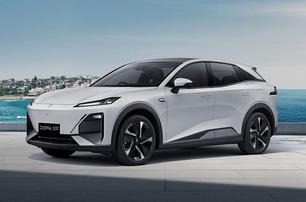
You’re getting flooded with new electric mid-size SUVs from China, I know. But if you’re struggling to recall them all, just remember – this is the good-looking one.
It’s the Deepal S07, the spearhead for the Deepal brand's new presence in Australia, and I reckon it looks damn sharp.
But is there substance to match the style? And can it take on the likes of the Kia EV5, Tesla Model Y and XPeng G6?
Let's find out, shall we?
Farizon, the commercial vehicle division of Chinese automotive maker Geely, is a new competitor in Australia’s van market having recently launched its full-electric V7E.
Designed to attract buyers in the popular mid-size (2.5-3.5-tonne GVM) commercial van segment, Farizon claims its V7E has the payload capacity, cargo volume and pricing needed to compete with traditional diesel rivals.
We recently spent a working week aboard this new Chinese contender to see how it measures up as a potential tool of trade for tradies, couriers, SMEs, fleets and other commercial van buyers.
The Deepal S07 has the makings of a great family friendly EV, but with some quirks that really need to be ironed out.
These are early days for Farizon in Australia and the V7E is indicative of that. Although it offers attractive sub-$54K drive-away pricing, peppy performance and substantial payload/cargo volume ratings, it lacks refinement in ride and handling, elements of cabin design and active safety calibration which detract from the driving experience. Whether this newcomer’s negatives outweigh its positives, though, only a potential buyer can decide.
If you’re left a little underwhelmed from the bland same-sameness of so many new SUVs, I reckon you’d like the Deepal S07 in the metal. Because boring it ain’t.
It’s sharp and purposeful and full of lovely creases and angles, and it stands out on the road — especially in this 'Sunset Orange' colour.
Deepal says it was designed in Turin, Italy, but I'm not sure that matters much. I mean, being in Italy doesn’t guarantee design success – just look to the modern Lancia range for proof – but I guess it’s something for a newish Chinese brand to hang its hat on.
Inside, the design is lovely, too. I like the materials used, the extended dash and the size of the central screen (though it tilting towards you or the passenger is probably overkill). And the flat-bottom wheel is a nice touch.
I'd like to know where the air con was designed, though. It feels massively underwhelming on a piping hot Sydney day. The main outlet is at the bottom of the dash, which is perfectly positioned to chill absolutely nothing, and you can’t really change the direction of the vents, either. Or, at least, I couldn't figure out how to.
The V7E rides on a 3200mm wheelbase and features minimalist yet purposeful squared-off styling that’s a key factor in its big load volume.
Its light and airy cabin has a slimline dash design that’s free of protrusions to allow ‘walk through’ access from either door, which is handy for delivery work. It also features physical ‘piano key’ buttons for the climate controls, which are preferable to more fiddly touchscreen prompts.
The cabin also presents a tasteful blend of colours and surface finishes including the seats, although anecdotal evidence suggests the light grey tone of their fabric trim would be prone to showing grime and stains over time in a hard-working van.
At first glance the passenger seat appears to be a two-passenger bench but only one seatbelt is provided. Therefore, what would normally be the backrest for a centre passenger is purely vertical storage for the fold-down centre armrest (see Practicality).
At just over 4.7m long and 1.9m wide, with a 2.9m wheelbase, the Deepal is a sizeable proposition, which means good passenger room and decent luggage space.
Starting at the boot, you’ll find 445 litres with the rear seats in place, but with the seats folded flat that number grows to 1385 litres. There’s a frunk up front, too, that holds another 125 litres.
In the back, the room is ample for full-size adults. When sitting behind my own 175cm driving position, I had more than enough knee and headroom to sit comfortably.
There’s also a heavy pulldown divider that’s home to twin cupholders, and there are two more up front, and USB connection points galore. Bonus points for the back seat riders being able to adjust their own air temps, too.
Its 1942kg kerb weight is relatively light for a full-electric commercial which combined with its 3150kg GVM results in a substantial 1208kg payload rating.
However, it’s only rated to tow up to 1000kg of braked trailer and given Farizon does not quote a GCM figure (how much it can legally carry and tow at the same time), we can’t confirm if it can carry its maximum payload while towing its maximum trailer weight.
Internally,the cargo bay is more than 2.8 metres (2865mm) long, 1690mm wide and 1435mm high, which combined with 1251mm between the rear wheel housings allows it to carry up to two standard Aussie pallets or up to three Euro pallets.
And its impressive 6.95 cubic metres of load volume is larger than mainstream mid-size rivals including the Ford Transit Custom SWB (5.8), Hyundai Staria Load (4.9) and segment-leading Toyota HiAce LWB (6.2).
The cargo bay is accessed via sliding doors on each side with generous 1100mm openings, or through twin-swing rear doors which open to a full 270 degrees with ‘ball and socket’ magnetic stays to hold them there.
The floor has a relatively low 510mm loading height and is protected by a thick composite floor liner with a shiny metal-like appearance complete with non-slip ‘chequer plate’ finish. There’s also a full-length roof lining, bright LED internal lighting, fully lined walls and doors and a handy V2L 240V three-pin plug socket.
Cabin storage includes a large bottle holder and bin in each door, open shelving across the full width of the dash, a single glove box and the previously mentioned fold-down centre armrest containing two cupholders.
There’s also twin USB ports and a 12V socket in the lower dash fascia and enough space beneath the passenger seat to store the portable AC charger cable.
It’s easy picking in the Deepal range, given there’s one model with just the one trim level, simply called the S07.
It’s currently $58,521 drive-away in NSW, or $53,900 before on-road costs. And that’s probably about right. You can get an entry-level Kia EV5 for $56,770, though with less range and kit, or the XPeng G6 Standard Range for $54,800, though that’s before on-road costs. The new Model Y is a bit of a jump, at $63,400 on the road.
For that you get 19-inch alloys, a fixed sunroof with a sun shade, LED lighting all around and a powered boot.
Inside, there’s a giant 15.6-inch touchscreen that can swivel towards the driver or the passenger, wireless Apple CarPlay and Android Auto, a 14-speaker Sony stereo and wireless device charging.
There’s dual-zone air con, the seats (heated and ventilated up front) are trimmed in synthetic leather and there’s an interior camera with gesture control, so you can use a kind of sign language to take a photo, control the stereo or answer or hang up the phone. It's weird and makes you look like a turkey, which is why I used it once and once only, but you might like it.
The V7E is available in two specifications defined by the size of their propulsion batteries (and therefore their driving ranges/charging times/kerb weights/payload ratings) with the entry-level Standard Range equipped with a 50kWh lithium-ion battery for $49,990, drive-away.
Our example is the premium Extended Range, which with a larger 66kWh battery is priced at $53,990, drive-away. Its Phantom Blue metallic finish is one of two premium paint options which (at the time of testing) are available at no extra cost.
Our test vehicle’s sub-$54K drive-away price is competitive with Chinese full-electric mid-size vans like the LDV e-Deliver 5 SWB ($52,621 driveaway) and lower than legacy brand offerings like Ford’s E-Transit Custom Trend ($77,890, plus on-road costs) or Kia’s PV5 Cargo ($55,990 + ORCs). Its standard equipment menu includes:
The S07 is powered by a single 160kW/320Nm rear-mounted electric motor and it's rear-wheel drive. That’s enough output, says Deepal, to push the S07 to 100km/h in 7.9 seconds — not bad for a two-tonne-plus SUV.
The V7E is powered by a single electric motor with up to 110kW of power and up to 230Nm of torque, with a choice of Normal or Eco drive modes and light or heavy regenerative braking.
This motor, which drives the front wheels through a single-speed automatic transmission, has an electronically limited top speed of 120km/h.
The V7E rides on double-wishbone front and rigid beam/leaf spring rear suspension with four-wheel disc brakes and electric power-assisted steering.
The 79.97kWh ternary lithium battery delivers a claimed driving range of 475km. It is, however, set up for just 92kW DC fast charging, which means going from 30 to 80 per cent will take just over half an hour. That’s at an appropriate DC fast charger, of course. Your 7.0kW AC home wallbox will take 11 hours, or eight hours if you can draw 11kW.
Our Extended Range test vehicle has an official (WLTP) driving range of up to 329km from its 66kWh LFP (Lithium Ferro Phosphate) battery. Farizon claims AC charging from 15-100 per cent takes around five hours while DC fast charging from 20-80 per cent trims that to 33 minutes.
It was displaying 100 per cent charge and 332km of estimated driving range when we collected the vehicle, after which we drove 187km in typical metro traffic with average energy consumption of 20.2kWh/100km, leaving 47 per cent charge and 195km estimated range.
We used DC fast charging to go from 47-100 per cent charge in 42 minutes resulting in an optimistic 422km range estimate.
On this second charge we drove another 163km, of which more than 100km was hauling its near-maximum payload, resulting in higher consumption of 22.4kWh/100km. We completed our test with 40 per cent charge and 165km range remaining.
So, based on our consumption figures, you could expect a real-world driving range of more than 300km which aligns with its official WLTP-based figure, but is short of full-electric rivals like Kia’s smaller PV5 Cargo with more than 400km achievable in similar conditions.
Binging, bonging safety systems aside, the Deepal S07's drive experience is relatively peaceful.
It can feel heavy, and isn't dynamically perfect through tighter bends, and even in the city the suspension - which does a good job ironing out most road imperfections - can clang over sharper, bigger stuff, especially if you're too enthusiastic with a speed bump.
But provided you're not asking too much of it on some twisting pass, and you're gentle enough over really big bumps, the S07 behaves much as you'd expect a big, wafty electric SUV might.
That is, with a smooth flow of power, steering that isn't overly direct, but not overly sharp either and with comfort the order of the day.
There are some annoying quirks, though, that would seem easy enough to iron out. The safety systems are often intrusive – and other Chinese brands can get them to be far less annoying – but I also found the tech and user interface annoying and fiddly, which again would be easy enough to fix.
The driving position is more bus-like than car-like in terms of its steering wheel positioning and the seat has no adjustable lumbar support. There’s also no left footrest to brace against, so it can feel like you’re sliding towards the front of the seat at times which would benefit from some rake adjustment in the base cushion.
We also noticed the steering column shaft (complete with universal joint) passes through the driver’s floor to the left of the brake pedal, which restricts where you can rest your left foot. The driver’s door mirror also doesn’t pivot outwards far enough, so about one third of the mirror’s view is filled with the side of the van.
It’s quiet at speeds up to 80km/h thanks to the near silence of its drivetrain but noise from the Chinese-made Wanli tyres increases and becomes intrusive at highway speeds, where wind buffeting around its large door mirrors was also detected.
Thanks to its relatively light kerb weight, the V7E offers energetic acceleration around town when unladen with acceptable ride quality on smooth bitumen. However, it starts to lose its composure on bumpy roads with excessive bouncing of the suspension, which could benefit from refinement of spring and damper settings.
To test its GVM rating we forklifted 975kg into the cargo bay, which with driver resulted in a total one-tonne-plus payload of 1065kg that was about 140kg less than its legal limit.
The stout rear leaf springs only compressed about 25mm but such a big increase in sprung weight failed to iron out the suspension’s excessive bouncing, resulting in harsh and at times unwieldy ride and handling on uneven road surfaces.
Some of the active safety systems were also overly intrusive, particularly the lane keeping function with its unnerving fluctuations in turning weight and forceful steering inputs.
Combined with relentless warning chimes, often with no obvious visual confirmation of what they were warning about, we decided that the most annoying of these offenders were best left switched off.
Handing out a low score for a five-star ANCAP car seems harsh, but bear with me.
All the major bases are covered, the standard spec including auto emergency braking (AEB) with car-to-car and 'vulnerable road user' (pedestrian, backover, cyclist, motorcycle) detection, blind-spot monitoring, lane-departure warning, lane keeping assist and more. And there are front, front side (chest), side curtain and front centre airbags.
But the single biggest drawback of the Deepal experience has to be the most annoying, infuriating active (crash-avoidance) safety systems I’ve ever come across. Honestly, it has to be experienced to be believed.
For one, whenever I wear sunglasses it gives me an “occlusion” warning, which I genuinely had to Google, but that’s nothing compared to the driver attention monitor, which seems rigged to go off if you so much as blink, sending chimes binging and bonging throughout the cabin, increasing in number like a bomb about to go off.
And if you have to turn them off every time you get in, you have to wonder if they have any business being there at all.
So yes, it wears a maximum five-star ANCAP rating from assessment in January this year, but it’s a tree falling in the forest, kind of vibe, like if a car has every active safety system known to man, and you want to switch them off every time you get in, is it any safer than a car that doesn’t have any systems at all?
The Farizon V7E, which is yet to be assessed by ANCAP’s Commercial Van Safety Comparison, comes standard with passive and active safety features including:
The S07 is covered for seven years or 160,000km, while the battery is covered for eight years or 240,000km.
Servicing is required every 12 months or 10,000km, and the brand’s capped-price servicing program covers the first seven services (or eight, if you include the initial 5000km check-in, which is free), for a total $2981.43 (or an average of $426 per paid workshop visit).
The Farizon V7E comes standard with a five year/200,000km vehicle warranty and the lithium-ion propulsion battery is covered by a separate eight year/200,000km warranty.
There’s also five years of complimentary roadside assist.
Scheduled servicing is every 12 months/30,000km whichever occurs first. Capped pricing for the first five years/150,000km totals $2385 or an average of $477 annually.
Farizon has a national network of seven dealerships (sales/service) represented in all states except Tasmania and is expanding its national vehicle servicing network through an approved third-party provider.