What's the difference?
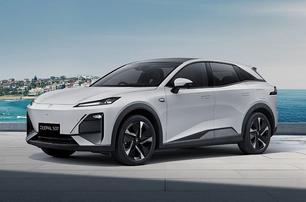
You’re getting flooded with new electric mid-size SUVs from China, I know. But if you’re struggling to recall them all, just remember – this is the good-looking one.
It’s the Deepal S07, the spearhead for the Deepal brand's new presence in Australia, and I reckon it looks damn sharp.
But is there substance to match the style? And can it take on the likes of the Kia EV5, Tesla Model Y and XPeng G6?
Let's find out, shall we?
Another new mid-size SUV from China has landed in Australia, but this time from a brand you might already be familiar with.
The GWM Haval H7 is the third Haval-badged SUV to land in Australia built on the unfortunately-named LEMON platform, following the Jolion small SUV and the H6 mid-size SUV.
Speaking of unfortunate names, 'H7' seems a little dull when you consider its native name in China is ‘Big Dog’.
GWM says the H7 lands between the family-friendly H6 and the more rugged Tank 300, but with only a single front-wheel-drive variant available, is this dog more bark than bite?
The Deepal S07 has the makings of a great family friendly EV, but with some quirks that really need to be ironed out.
The H7 might struggle to secure a big chunk of the mid-size SUV market, which is probably why GWM is only offering one variant, but if you like the way this Big Dog looks, there’s a decent SUV underneath the boxy surface.
While it’s no dynamic masterpiece, there are no big issues in day-to-day driving, and even though the boot space is small it’s an otherwise decent interior to live with, if you don’t mind the busy design.
Being just a little more expensive than the more traditional looking H6 means the H7 feels well-placed to find itself in the driveway of those few buyers who want their family car to look a little more rugged, even if the car doesn’t have the off-road chops to back it up.
If you’re left a little underwhelmed from the bland same-sameness of so many new SUVs, I reckon you’d like the Deepal S07 in the metal. Because boring it ain’t.
It’s sharp and purposeful and full of lovely creases and angles, and it stands out on the road — especially in this 'Sunset Orange' colour.
Deepal says it was designed in Turin, Italy, but I'm not sure that matters much. I mean, being in Italy doesn’t guarantee design success – just look to the modern Lancia range for proof – but I guess it’s something for a newish Chinese brand to hang its hat on.
Inside, the design is lovely, too. I like the materials used, the extended dash and the size of the central screen (though it tilting towards you or the passenger is probably overkill). And the flat-bottom wheel is a nice touch.
I'd like to know where the air con was designed, though. It feels massively underwhelming on a piping hot Sydney day. The main outlet is at the bottom of the dash, which is perfectly positioned to chill absolutely nothing, and you can’t really change the direction of the vents, either. Or, at least, I couldn't figure out how to.
The aforementioned colours, Golden Black, Moon Grey and especially Dusk Orange don’t contrast as strongly as the white with the extensive black trim on the H7, which includes its badging and sections like the grille surround.
The main selling point of the H7 compared to the H6 is, of course, the way it looks.
GWM claims the H7 is for "a bit more adventure" thanks to its “off-road inspired design”, but the real point is to “stand out”. And that it does. Some fake-bolted wheel arches and a decent 210mm ground clearance make the H7 look more ready to hit the trails than it probably is.
The boxy, squared-off silhouette and trim elements separate it both from the majority of the GWM line-up and from many other new mid-size SUVs.
The front grille and headlights look closely related to the GWM Tank 300, but the grille inserts that flank the Haval badge look a little ‘Mustang RTR’. The rear, too, looks familiar with the rounded shape and tail-light arrangement having a hint of Mazda MX-30 to them.
Step inside, and a visual assault of different materials in a busy cabin belie how useful the space in the H7 actually is. Fake carbon fibre, fake aluminium, fake bolts and a fair bit of plastic could certainly have made way for something more subtle.
At just over 4.7m long and 1.9m wide, with a 2.9m wheelbase, the Deepal is a sizeable proposition, which means good passenger room and decent luggage space.
Starting at the boot, you’ll find 445 litres with the rear seats in place, but with the seats folded flat that number grows to 1385 litres. There’s a frunk up front, too, that holds another 125 litres.
In the back, the room is ample for full-size adults. When sitting behind my own 175cm driving position, I had more than enough knee and headroom to sit comfortably.
There’s also a heavy pulldown divider that’s home to twin cupholders, and there are two more up front, and USB connection points galore. Bonus points for the back seat riders being able to adjust their own air temps, too.
While the space inside the H7 looks rather busy, there’s actually a very usable space on offer, with plenty of storage and decent ergonomics.
Perhaps most importantly, the tech is smooth to use and doesn’t distract from the main point of the car - driving. GWM’s current software (despite still using a huge screen) doesn’t suffer from unclear sub-menus and has easy shortcuts.
It’s not perfect - it’s still essentially an iPad you need to use while on the move - but it’s better than some systems from rivals, including manufacturers that have been around for decades.
Physical climate controls that bring up the corresponding menu when pressed are a welcome addition, and wireless phone mirroring works flawlessly if our test was anything to go by.
The driver display is clear, and the seating position is nicely malleable thanks to the seat’s electric adjustment and manual steering wheel adjustment.
Controls are all within reach, and after a quick familiarisation the placements and functions all make sense.
The space also provides more storage than is probably necessary for most. There’s a space under the centre console, the central storage bin is huge and has a cooling fan, there are two cupholders and one can deepen for a tall bottle, there are strapped bottle holders on the doors to stop them shaking around and there’s more door storage space next to that.
There’s of course also the glovebox and phone charging pad, then in the rear there’s more door storage space and an armrest with two cupholders again.
Second-row space is generous, even a tall adult will find plenty of legroom (and foot room under the front seats) and headroom isn’t an issue.
Behind that, the boot space is compromised by the hybrid battery so it’s not huge, and the load height is tall. Its 483L of boot space expands to 1362L with the rear seats folded, and there’s unfortunately no spare wheel under the floor.
It’s easy picking in the Deepal range, given there’s one model with just the one trim level, simply called the S07.
It’s currently $58,521 drive-away in NSW, or $53,900 before on-road costs. And that’s probably about right. You can get an entry-level Kia EV5 for $56,770, though with less range and kit, or the XPeng G6 Standard Range for $54,800, though that’s before on-road costs. The new Model Y is a bit of a jump, at $63,400 on the road.
For that you get 19-inch alloys, a fixed sunroof with a sun shade, LED lighting all around and a powered boot.
Inside, there’s a giant 15.6-inch touchscreen that can swivel towards the driver or the passenger, wireless Apple CarPlay and Android Auto, a 14-speaker Sony stereo and wireless device charging.
There’s dual-zone air con, the seats (heated and ventilated up front) are trimmed in synthetic leather and there’s an interior camera with gesture control, so you can use a kind of sign language to take a photo, control the stereo or answer or hang up the phone. It's weird and makes you look like a turkey, which is why I used it once and once only, but you might like it.
Available in a single Vanta Hybrid grade at launch, the Haval H7 costs $46,990 drive-away, with no option for other drivetrains, but a long list of standard features.
At $3000 more than the similar grade of H6, the H7 comes with a lot of the same kit like a leather-accented interior with heated and ventilated electrically adjustable seats, a big 14.6-inch multimedia touchscreen and a head-up display.
A combination of wireless Android Auto and Apple CarPlay, wireless phone charger and an eight-speaker sound system make for a solid media setup, while a panoramic sunroof and ambient lighting help create a fun vibe.
The H7 also boasts 19-inch machined alloys, LED auto headlights, daytime running lights, tail-lights and fog lights. There’s also keyless entry and an automatic tailgate with handsfree opening via a ‘kick sensor’ for convenience.
Premium colours that aren’t ‘Hamilton White’ (pictured) are all $495.
The S07 is powered by a single 160kW/320Nm rear-mounted electric motor and it's rear-wheel drive. That’s enough output, says Deepal, to push the S07 to 100km/h in 7.9 seconds — not bad for a two-tonne-plus SUV.
The H7 has just the one drivetrain, as mentioned, consisting of a turbocharged 1.5-litre, four-cylinder petrol engine assisted by an electric motor and mated to a nine-speed dual-clutch transmission.
It drives the front wheels only, providing 179kW of power and 350Nm of torque.
The 79.97kWh ternary lithium battery delivers a claimed driving range of 475km. It is, however, set up for just 92kW DC fast charging, which means going from 30 to 80 per cent will take just over half an hour. That’s at an appropriate DC fast charger, of course. Your 7.0kW AC home wallbox will take 11 hours, or eight hours if you can draw 11kW.
GWM claims the Haval H7 consumes 5.7L/100km under the combined cycle, though during testing we saw a figure of 7.1L/100km after a spirited drive.
The H7 has a 61-litre fuel tank and requires 91 RON fuel at a minimum. With careful driving and in the right conditions, you could theoretically get around 800km from a single tank.
Binging, bonging safety systems aside, the Deepal S07's drive experience is relatively peaceful.
It can feel heavy, and isn't dynamically perfect through tighter bends, and even in the city the suspension - which does a good job ironing out most road imperfections - can clang over sharper, bigger stuff, especially if you're too enthusiastic with a speed bump.
But provided you're not asking too much of it on some twisting pass, and you're gentle enough over really big bumps, the S07 behaves much as you'd expect a big, wafty electric SUV might.
That is, with a smooth flow of power, steering that isn't overly direct, but not overly sharp either and with comfort the order of the day.
There are some annoying quirks, though, that would seem easy enough to iron out. The safety systems are often intrusive – and other Chinese brands can get them to be far less annoying – but I also found the tech and user interface annoying and fiddly, which again would be easy enough to fix.
One of the first things I noticed is that the hybrid system’s initial burst of torque has the potential to overpower the front wheels from a stand-still, especially if it’s wet or you’ve got some lock on to turn out of a driveway.
But once rolling, the power delivery is smooth and doesn’t lack in pull even once up to highway speed. The H7 is also stable when it comes to day-to-day driving, with its suspension striking a good balance between communication and comfort.
Big bumps and rough roads neither unsettle nor rattle the H7 too much, though given it’s a front-drive hybrid we wouldn’t be testing just how rough a road it can handle - the H7 is not an off-roader despite its looks.
If you start trying to push the SUV along a twisty road it’ll lean more than some rivals through cornering. Not to an unsafe degree, given if it’s happening you’re probably pushing it more than you should. The steering feel itself isn’t anything to write home about, but for a family car it’s accurate enough and predictability is key when you’ve got a car full of humans.
Road noise and wind noise are present, the latter more so than you’d like given we tested the car on a relatively still day, but it’s not unacceptable.
Ergonomically, the driving position and visibility provide comfort and safety, though the rising shoulder line towards the rear slightly limits visibility on shoulder checks.
Handing out a low score for a five-star ANCAP car seems harsh, but bear with me.
All the major bases are covered, the standard spec including auto emergency braking (AEB) with car-to-car and 'vulnerable road user' (pedestrian, backover, cyclist, motorcycle) detection, blind-spot monitoring, lane-departure warning, lane keeping assist and more. And there are front, front side (chest), side curtain and front centre airbags.
But the single biggest drawback of the Deepal experience has to be the most annoying, infuriating active (crash-avoidance) safety systems I’ve ever come across. Honestly, it has to be experienced to be believed.
For one, whenever I wear sunglasses it gives me an “occlusion” warning, which I genuinely had to Google, but that’s nothing compared to the driver attention monitor, which seems rigged to go off if you so much as blink, sending chimes binging and bonging throughout the cabin, increasing in number like a bomb about to go off.
And if you have to turn them off every time you get in, you have to wonder if they have any business being there at all.
So yes, it wears a maximum five-star ANCAP rating from assessment in January this year, but it’s a tree falling in the forest, kind of vibe, like if a car has every active safety system known to man, and you want to switch them off every time you get in, is it any safer than a car that doesn’t have any systems at all?
The H7 hasn’t been tested by ANCAP, but there’s a decent list of features on paper that show GWM hasn’t half-baked the H7 when it comes to safety.
Seven airbags cover the front and side in the first row, there are curtains down the sides too and the all-important central airbag.
The H7 has a strong list of active safety features like collision avoidance thanks to lane-keeping and departure warning, front collision warning with pedestrian and cyclist detection, junction assist for its auto emergency braking (AEB), adaptive cruise control with traffic jam assist, plus there are features like traffic sign recognition and driver monitoring.
The H7 also has parking sensors front and rear as well as a surround-view parking camera.
Its safety features all work well without being too distracting or intervening unnecessarily, although its lane-keep can be a little stubborn and the default speed limit warning is ‘0km/h’ over the limit, however, thankfully that can be adjusted.
The S07 is covered for seven years or 160,000km, while the battery is covered for eight years or 240,000km.
Servicing is required every 12 months or 10,000km, and the brand’s capped-price servicing program covers the first seven services (or eight, if you include the initial 5000km check-in, which is free), for a total $2981.43 (or an average of $426 per paid workshop visit).
The H7 is covered by a seven-year, unlimited-kilometre warranty, as is standard for GWM.
Additionally, the high-voltage battery pack is covered by an eight-year, unlimited-kilometre warrant. GWM also has a five-year roadside assist program, and capped-price servicing for five years.
Servicing costs a total of $2145 over five years, with intervals each 12 months or 10,000km, averaging $429 per service, which isn’t incredibly cheap.
GWM started 2025 with 113 dealerships across Australia, and aims to have 125 by the end of the year.