What's the difference?
You’re getting flooded with new electric mid-size SUVs from China, I know. But if you’re struggling to recall them all, just remember – this is the good-looking one.
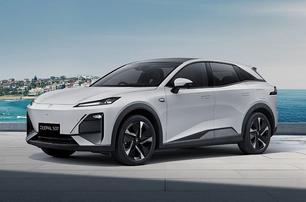
It’s the Deepal S07, the spearhead for the Deepal brand's new presence in Australia, and I reckon it looks damn sharp.
But is there substance to match the style? And can it take on the likes of the Kia EV5, Tesla Model Y and XPeng G6?
Let's find out, shall we?
GWM has launched its first plug-in hybrid for Australia and in comes in the form of their mid-size SUV, the Haval H6 GT Ultra PHEV.
There's been a growing coolness towards EVs and their middle-ground counterparts of late but with a class-leading electric driving range of 180km, the new H6 GT Ultra may just warm you up.
The Deepal S07 has the makings of a great family friendly EV, but with some quirks that really need to be ironed out.
The new GWM Haval H6 GT Ultra PHEV has got to be one of the few plug-in hybrids that makes sense to me, given I live in a regional area. The longer electric driving range and DC charging capability offers far more convenience and practicality than the usual plug-in hybrids I’ve sampled.
It’s well-priced and has enough features for the average family. So, while I don’t love everything about it, it offers decent value for money.
If you’re left a little underwhelmed from the bland same-sameness of so many new SUVs, I reckon you’d like the Deepal S07 in the metal. Because boring it ain’t.
It’s sharp and purposeful and full of lovely creases and angles, and it stands out on the road — especially in this 'Sunset Orange' colour.
Deepal says it was designed in Turin, Italy, but I'm not sure that matters much. I mean, being in Italy doesn’t guarantee design success – just look to the modern Lancia range for proof – but I guess it’s something for a newish Chinese brand to hang its hat on.
Inside, the design is lovely, too. I like the materials used, the extended dash and the size of the central screen (though it tilting towards you or the passenger is probably overkill). And the flat-bottom wheel is a nice touch.
I'd like to know where the air con was designed, though. It feels massively underwhelming on a piping hot Sydney day. The main outlet is at the bottom of the dash, which is perfectly positioned to chill absolutely nothing, and you can’t really change the direction of the vents, either. Or, at least, I couldn't figure out how to.
The H6 GT is the better-looking cousin to the regular H6 SUV because the swoopy rear end adds some much-needed personality.
It's the 19-inch alloys, Michelin tyres and red brake calipers that add to the sporty vibe.
It looks quite large for the segment and while I’m not a massive fan of the heavy plastic moulding around the base of the car, it’s got enough charm to appeal to a wide audience.
Head inside though and you're immediately hit by a strong plasticky presence, whether it be from actual plastics in the dash and door panels or the synthetic feeling of the upholstery itself.
The sunroof and red-stitched 'GT' on the seats add something but its all rather plain and lacks some personality inside.
I do like though that there’s no transmission tunnel, which means more legroom for middle seaters in the rear.
At just over 4.7m long and 1.9m wide, with a 2.9m wheelbase, the Deepal is a sizeable proposition, which means good passenger room and decent luggage space.
Starting at the boot, you’ll find 445 litres with the rear seats in place, but with the seats folded flat that number grows to 1385 litres. There’s a frunk up front, too, that holds another 125 litres.
In the back, the room is ample for full-size adults. When sitting behind my own 175cm driving position, I had more than enough knee and headroom to sit comfortably.
There’s also a heavy pulldown divider that’s home to twin cupholders, and there are two more up front, and USB connection points galore. Bonus points for the back seat riders being able to adjust their own air temps, too.
The most practical aspect of the H6 GT's cabin is its sheer size. It's a spacious cabin for the class and that translates to lots of passenger room in each row. Which is only let down by the relatively small boot capacity of 392L (when all five seats are in use).
The boot does feature a level loading space, a 12-volt power socket, retractable cargo cover and a powered tailgate. The latter I always appreciate with kids in tow.
There are lots of individual storage options with the front featuring a glove box large enough for an owner's manual, a middle console, two cupholders and two drink bottle holders. There's also a large shelf underneath the centre console, a dedicated phone cradle and a sunglasses holder.
In the rear there are two drink bottle holders, two map pockets and a couple of cupholders in a fold-down armrest. So plenty of choices for passengers.
Surprisingly, the most comfortable seats are in the rear which feature thick padding, good lumbar support and long seat beds. The electric front seats have heat and ventilation functions, as well as adjustable lumbar support but the lumbar sits too low and the seat backs curve in too far for them to be called comfortable on a longer journey.
The tech is made up of a 12.3-inch touchscreen multimedia system and 10.25-inch digital instrument panel and while they look nice, they're basic at best. The multimedia system is simply laid out but lacks any real customisation and doesn't have sat nav.
The touchscreen can be laggy and there is wired Apple CarPlay and Android Auto. GWM has confirmed that wireless phone mirroring is due sometime later this year.
Charging options include four USB-A ports (but no USB-C ports), two 12-volt sockets and a wireless charging pad but the pad didn't always work for my iPhone 15 Pro Max (whether that is a user or software issue, I'm not sure).
It’s easy picking in the Deepal range, given there’s one model with just the one trim level, simply called the S07.
It’s currently $58,521 drive-away in NSW, or $53,900 before on-road costs. And that’s probably about right. You can get an entry-level Kia EV5 for $56,770, though with less range and kit, or the XPeng G6 Standard Range for $54,800, though that’s before on-road costs. The new Model Y is a bit of a jump, at $63,400 on the road.
For that you get 19-inch alloys, a fixed sunroof with a sun shade, LED lighting all around and a powered boot.
Inside, there’s a giant 15.6-inch touchscreen that can swivel towards the driver or the passenger, wireless Apple CarPlay and Android Auto, a 14-speaker Sony stereo and wireless device charging.
There’s dual-zone air con, the seats (heated and ventilated up front) are trimmed in synthetic leather and there’s an interior camera with gesture control, so you can use a kind of sign language to take a photo, control the stereo or answer or hang up the phone. It's weird and makes you look like a turkey, which is why I used it once and once only, but you might like it.
There is only one grade available for the H6 GT, which is the Ultra and it's available with two powertrains - a 2.0L turbo-petrol engine or the 1.5L turbo-petrol plug-in hybrid powertrain of our test vehicle.
Its sharp drive-away pricing of $53,990 makes it very competitive against its rivals. The BYD Sealion 6 Premium sits at $52,990 MSRP and you have to jump into the Mitsubishi Outlander PHEV Exceed ($69,290 DA) if you want to match on some of the standard equipment of the H6 GT Ultra.
While the PHEV offers a class-leading electric driving range of up to 180km, it features pretty much the same equipment as it's non-hybrid sibling but is $9000 more expensive.
The premium features include a panoramic sunroof, synthetic leather and suede upholstery, electric front seats with heat and ventilation functions, a heated steering wheel, a powered tailgate, powered and heated side mirrors and rear tinted glass.
Technology includes a keyless entry/start, 10.25-inch digital instrument cluster, dual-zone climate control, 12.3-inch touchscreen multimedia system, coloured head-up display, four USB-A ports, two 12-volt sockets, a wireless charging pad, FM/AM radio, Bluetooth, and wired Apple CarPlay and Android Auto.
However, it doesn't have a spare tyre (just a repair kit) or sat nav and there's no wireless phone mirroring. At least, not yet but GWM has confirmed that they are working on getting the phone functionality up and running sometime later this year.
The S07 is powered by a single 160kW/320Nm rear-mounted electric motor and it's rear-wheel drive. That’s enough output, says Deepal, to push the S07 to 100km/h in 7.9 seconds — not bad for a two-tonne-plus SUV.
The new H6 GT Ultra has a plug-in hybrid powertrain that combines a 1.5-litre four-cylinder turbo-petrol engine with three electric motors, two at the front and one at the rear.
Together they produce a combined power output of 321kW and 762Nm of torque. That gives this 4WD a 0-100km/h sprint time of 4.9 seconds. So it's a quick SUV but somehow it doesn't manage to feel 'blow-your-hair-back' quick.
The engine is paired with a two-speed dedicated hybrid transmission (DHT) and the switch between the electric and engine components is practically seamless.
The 79.97kWh ternary lithium battery delivers a claimed driving range of 475km. It is, however, set up for just 92kW DC fast charging, which means going from 30 to 80 per cent will take just over half an hour. That’s at an appropriate DC fast charger, of course. Your 7.0kW AC home wallbox will take 11 hours, or eight hours if you can draw 11kW.
The new H6 GT has a ternary lithium battery with a large 35.43kWh capacity. It also has a Type 2 CCS charging port, which is pretty rare but welcome on a plug-in. This system can accept up to 6.6kW on an AC charger and up to 48kW on a fast DC charger, which is great.
It means you can plug in at a DC fast charger during a road trip like a normal EV and that improves overall efficiency.
The combined fuel cycle figure is just 0.8L/100km and with the 55L fuel tank, you’ll get a theoretical driving range of over 1000km. That’s just something to consider right there. The considerable pure electric driving range of up to 180km also ensures that you can do your daily errands and school run without really touching the fuel tank.
Which I totally proved this week after doing 469km of open-road driving and my daily 'urban' errands and only using 2.3L of fuel all week. I had two full charges during my week and that means my real-world usage beats the claimed figure at 0.49L/100km. Haval H6 GT for the win.
Binging, bonging safety systems aside, the Deepal S07's drive experience is relatively peaceful.
It can feel heavy, and isn't dynamically perfect through tighter bends, and even in the city the suspension - which does a good job ironing out most road imperfections - can clang over sharper, bigger stuff, especially if you're too enthusiastic with a speed bump.
But provided you're not asking too much of it on some twisting pass, and you're gentle enough over really big bumps, the S07 behaves much as you'd expect a big, wafty electric SUV might.
That is, with a smooth flow of power, steering that isn't overly direct, but not overly sharp either and with comfort the order of the day.
There are some annoying quirks, though, that would seem easy enough to iron out. The safety systems are often intrusive – and other Chinese brands can get them to be far less annoying – but I also found the tech and user interface annoying and fiddly, which again would be easy enough to fix.
The new powertrain took a few days to get used to because it doesn't behave like some of the PHEVs I've driven before. The emphasis is on EV driving rather than the ICE components. The pedals are quite stiff which takes a moment to adjust to, but the auto-hold braking and strong regenerative braking means it's difficult 'creep' forward like you can in a regular ICE car.
The one-pedal function is true one-pedal driving and if you time your deceleration right, you won't touch the brake pedal. You'll either like that or you won't but it's been nice to use this week.
The power delivery is prompt and there's a lot of power available. It doesn’t feel wicked quick like a performance EV but it certainly has enough punch to satisfy. You don’t notice when it switches between the engine or motor, which makes it a very smooth powertrain.
The steering is a little spongy but responsive enough to feel spry for quick lane changes. It's just not particularly dynamic on a winding road with the combination of the firmer suspension and soft steering.
Road noise can creep up at higher speeds and there is an annoying whirring sound from the motors that my son likened to a dull aeroplane engine roar.
The suspension is on the firmer side and you notice the bumps but you also don’t wince when you hit one. Visibility is okay but the thick A-pillar can get in the way when you're scanning the road at intersections, and the back window is narrow. A digital rear-view mirror would be a handy feature for the model.
The H6 GT Ultra PHEV is pretty easy to park because it has a clear 360-degree view camera system and parking sensors at the front and rear. The 12-metre turning circle makes it pretty friendly in a carpark, too.
Handing out a low score for a five-star ANCAP car seems harsh, but bear with me.
All the major bases are covered, the standard spec including auto emergency braking (AEB) with car-to-car and 'vulnerable road user' (pedestrian, backover, cyclist, motorcycle) detection, blind-spot monitoring, lane-departure warning, lane keeping assist and more. And there are front, front side (chest), side curtain and front centre airbags.
But the single biggest drawback of the Deepal experience has to be the most annoying, infuriating active (crash-avoidance) safety systems I’ve ever come across. Honestly, it has to be experienced to be believed.
For one, whenever I wear sunglasses it gives me an “occlusion” warning, which I genuinely had to Google, but that’s nothing compared to the driver attention monitor, which seems rigged to go off if you so much as blink, sending chimes binging and bonging throughout the cabin, increasing in number like a bomb about to go off.
And if you have to turn them off every time you get in, you have to wonder if they have any business being there at all.
So yes, it wears a maximum five-star ANCAP rating from assessment in January this year, but it’s a tree falling in the forest, kind of vibe, like if a car has every active safety system known to man, and you want to switch them off every time you get in, is it any safer than a car that doesn’t have any systems at all?
The Haval H6 GT has a maximum five-star ANCAP safety rating from testing done in 2022 and scored 90 per cent for adult protection, 88 per cent for child protection, 73 per cent for vulnerable road users and 81 per cent for safety assist.
It features seven airbags, including a front centre airbag.
There are seatbelt reminders (all seats), hill-start assist, tyre pressure monitoring, front and rear parking sensors, surround-view camera system, adaptive cruise control with stop and go, rear cross-traffic alert, lane keeping aid, lane departure alert, rear collision warning, forward collision warning, traffic sign recognition and a driver monitoring system.
The autonomous emergency braking (AEB) with cyclist, pedestrian, car and junction turning assist is operational from 5.0 - 85km/h (up to 150km/h for car detection).
There are two ISOFIX child seat mounts and three top tether anchor points and the rear seat is wide enough to accommodate three child seats side by side.
The driver assist features seem to work smoothly most of the time but I did find the driver attention monitor a bit annoying, as you get a few more chimes than you need and the lane keeping aid feels too jerky.
The S07 is covered for seven years or 160,000km, while the battery is covered for eight years or 240,000km.
Servicing is required every 12 months or 10,000km, and the brand’s capped-price servicing program covers the first seven services (or eight, if you include the initial 5000km check-in, which is free), for a total $2981.43 (or an average of $426 per paid workshop visit).
GWM offers the H6 GT with a seven-year unlimited kilometre warranty, which is becoming the normal term for the class and you will enjoy five years of roadside assistance through Allianz.
There is also a five-year capped-price servicing program that costs $1680, which is competitive. The first service is at 10,000km but subsequent intervals are spaced at every 12 months or 15,000km.