What's the difference?
Timing is everything.
For instance, with all the bad publicity the man behind the brand is generating, right now might be the perfect time if you’re in the market for a Tesla Model Y alternative.
And that’s especially so if said alternative happens to be around the same price… such as the all-new Cupra Tavascan.
No, not an antacid for relief from indigestion, but the Volkswagen Group’s Spanish brand’s first medium-sized electric SUV.
Is it good enough to catapult Cupra into the big time in Australia?
Time to find out!
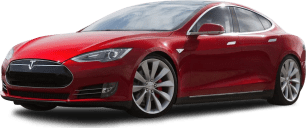
If you have even a passing interest in the Tesla Model S, you'll have seen the endless internet videos where someone has lined up a Ferrari, Lamborghini, or another fast exotic car you could name, to race against it.
There's a long build-up, usually involving men who can't operate a baseball cap, a drag strip and idiotic words in the headline like "destroys" or "rips", or whatever. There's usually a bunch of honking bros with bad haircuts watching on, already planning their next viral video where they set a perfectly good mobile phone on fire.
It's facile and idiotic and doesn't give you any real clue as to the depth of whatever supercar it has "humiliated" or, just as importantly, the depth of the Model S and its spectacular engineering.
So, I won't be spending the next thousand words building up to the conclusion that the Model S P100D with Ludicrous Mode is up there with the world's fastest production cars from 0-100km/h, because I'll tell you now that it is, and it does it in a claimed 2.7 seconds.
Now that's out of the way, there's quite a bit more to the Model S than a "broken" Nissan GT-R owner weeping into their bento box.
Like most Cupras, the Tavascan is affordable, stylish, practical, fun to drive and just that little bit different.
And it is clear the Volkswagen Group is trying hard to make the brand a success. That it can bring that formula to the medium EV SUV market with as much aplomb might just be enough to lure more than a few would-be Model Y buyers Barcelona’s way.
Definitely one to strongly consider.
Note: CarsGuide attended this event as a guest of the manufacturer, with travel, accommodation and meals provided.
I spoke to a friend who bought a Model S before one had even hit the ground here in Australia. He chuckled when I told him how much this car cost but then said something I'd already suspected. "My mates who own a P100D would never drop that kind of money on a normal car. Buying a Tesla is like buying shares in the company, you're buying into the future."
And that's kind of the point. A $300,000 Audi RS7 (fully-loaded, obviously) is a bit slower in a straight line, looks just as good, is extremely well-built and emits noises that make people like me go as weak at the knees (just as the Model S' acceleration does). And would probably win a 10 lap race with the Tesla around Mount Panorama.
The Tesla is the future of cars. It may still be decades before the internal combustion engine is gone, but Tesla buyers are getting the jump, and today the Model S is the best car in which to make that leap.
Although this mid-sized SUV is full of German VW Group DNA underneath, there are unique Cupra styling elements that do strive to evoke Spanish expression.
Designed in Barcelona, standout points include an insectoid trio of LEDs making up the headlights and tail-lights, an aggressive nose featuring a V-shaped bonnet bulge and lower-bumper treatment, a rising swage line in profile and pronounced rear diffuser.
While we appreciate the Tavascan’s styling flourishes, with the Manga-esque vent ‘eyes’, copper trim and floating wing-look upper dash-pad all gelling together nicely, the unique central spine design looks downmarket if not cheap, with an alien look and sheeny reptilian scale finish. There are too many things going on at once.
Built on the VW Group’s MEB EV architecture, the Cupra shares its platform with the VW ID.4, Skoda Enyaq and Audi Q4 e-tron SUVs within the VW Group, providing a sound engineering base, but also a tall, narrow appearance when seen rear-on.
Maybe that’s why the Tavascan achieves such an impressive drag coefficiency of 0.26.
Dimensions are 4644mm (length), 1861mm (width), 1597mm (height) and 2766mm (wheelbase), while ground clearance is a low 154mm.
For a so-called “Coupe Utility Vehicle” (CUV), all translate to quite acceptable interior space and practicality.
The Model S is definitely the looker of the three Tesla models on sale (the Model 3 might be some way from release, but you can reserve one and it's... weird-looking). With a slinky, Jaguar XF/Audi A7 roofline and low-slung stance, it looks the business. Like the X, the detailing of the car's surfacing and panel gaps aren't where other $200,000+ cars are, but it has improved a lot over the last couple of years.
The cabin has improved even more than the exterior.
The styling is quite sparse, really. Teslas look like computer renders in real life, especially in white, with little in the way of jewellery or detailed design elements. And that's probably the idea. It's a cleaner design than when first launched, with a simpler, flatter snout that brings out the headlights better.
The cabin has improved even more than the exterior. It's still the same minimalist design, but it fits together much more tightly than it used to. The 17.0-inch portrait screen is still there in its central but skewed-to-the-driver position and is now up to version 8. It's an impressive interface, covering off the vast majority of functions in the car, and is mostly easy to use. The responsiveness is key to its usability. If it was underpowered, you'd quickly start demanding real buttons.
Now, with all that CUV stuff in mind, the Tavascan manages to look and feel sporty whilst also offering a decent level of family friendly functionality.
Wide doors and a high hip point offer easy entry and egress, in a roomy and accommodating cabin, on seats that are brilliantly comfy and supportive – even in the base Endurance. These are of the integrated ‘tombstone’ variety with bolstered sides to help keep you snug and secure. They’re great.
So is the driving position, with its grippy little wheel, readily accessible switchgear (including the knobs on the spokes), clear view of the modestly sized digital instrumentation pod and angled touchscreen.
After all the criticism that the VW Group’s earlier iterations of this system had garnered – including in other Cupras – the Tavascan’s interface proved to be simple to navigate, fast to respond and pleasant to look at.
Furthermore, even with that rising window line, vision out is AOK and ventilation is fine, too.
The aforementioned central spine’s shape appears to come at the expense of storage, as there’s less of it than expected in an EV SUV. The small glovebox is disappointing. We’re not fans of the driver’s door power window switch bank, necessitating a distracting press of a ‘rear’ button to operate the back windows. And one of the test cars suffered from dash squeaks.
Moving on to the rear, with seating for five, there’s actually ample space for people up to about 180cm tall, while all the usual amenities apply, such as vent outlets, a pair of USB-C ports, a folding armrest with cup holders and overhead lighting. Nothing seems to be missing.
However, there is one important thing missing further back.
Yes, the Tavascan’s boot offers a handy 540 litres of cargo capacity, with a low, wide and flat floor capable of swallowing all sorts of stuff. And, of course, the 60/40 rear backrest fold down, boosting those numbers to between 1579L and 1604L depending on specification.
But, as with almost all EVs, there is no spare wheel. The aforementioned tyre mobility kit is bad news if you experience a severe puncture. Even a space-saver spare would be infinitely preferable.
The Model S is a rare car in this class in that it has an almost completely flat floor, meaning rear seat passengers don't have to negotiate a transmission tunnel. The two motors run physically independently of each other so there's no crankshaft to get in the way.
The floor is thicker than a normal car, it's like a big skateboard underneath. That means your knees are up higher, which might cause numb bum on a long trip. The rear seats are comfortable enough, but middle seat occupants might feel like the outboard passengers are falling into them.
With all that torque, when you do load it up, the extra kilos barely make a dent on the performance.
The view out isn't too bad given the rising window line, and if you've got the big two piece sunroof (without cover, irritatingly... ), it's quite airy out back. And hot (with the sunroof), but you do get rear air-con vents.
The boot is an eminently sensible 744 litres with the seats up and 1795 with the seats down, although the floor doesn't fold flat. While it's a big boot, it's relatively shallow so your suitcases go in on their sides. Up in the front boot (or froot) there's another 150 litres, so you can pack a lot in to the Model S. And with all that torque, when you do load it up, the extra kilos barely make a dent on the performance.
Kicking off from $60,990 (all prices are before on-road costs) in base Endurance grade, this is a single-motor, rear-wheel-drive (RWD) with a usefully larger battery for better range than almost all competitors above as well as below its price point.
There’s also the flagship VZ with dual motors and all-wheel drive (AWD) from $74,490.
Not cheap, then, but the Endurance is highly competitive when you consider how ably the it traverses the axis of price, size and battery capacity.
Consider that while the Cupra does cost more than France’s superb Renault Megane E-Tech from $54,990, as well as the Kia EV5 (from $56,770), Xpeng G6 ($54,800), Smart #3 ($57,900) and BYD Sealion 7 ($54,990), that all hover from around the mid-$55K mark, it is only a tad exxier than the Model Y RWD from $58,900 and closely related Volkswagen ID.4 from $59,990, and cheaper than the equivalent Ford Mustang Mach E ($64,990), Toyota bZ4X ($66,000), Hyundai Ioniq 5 ($69,800), related Skoda Enyaq ($69,990), Subaru Solterra AWD ($69,990) and Kia EV6 ($72,590).
Note, however, that aside from the #3 and EV5, all are slightly larger than the Barcelonan mid-sizer.
Still, the swoopy Tavascan significantly undercuts other, more-premium Euro-branded propositions with a similar propensity for style, like the Polestar 4, BMW iX2, Volvo XC40 and (also related) Audi Q4 e-tron Sportback. All are well north of $75K.
Such pricing is possible partly due to this being the first Cupra – and only the second Volkswagen Group Australia model after the 2004 Polo Classique sedan – to be made in China, as part of a joint venture with JAC. This model is not built anywhere else on the planet.
Base equipment levels, however, are not quite up to Chinese standards.
The Endurance includes auto entry/start, adaptive cruise control, three-zone climate control, sports front seats, a heated steering wheel, a 15-inch touchscreen with a rear camera, wireless Apple CarPlay and Android Auto, 5.3-inch digital instrumentation, wireless phone charging, a quartet of USB-C ports, a hands-free powered tailgate, front and rear parking sensors, and 19-inch alloys.
Cupra reckons the Interior Package for an additional $4500 will be a popular option, since it adds a surround-view camera, microfibre-trimmed, heated and powered front seats with memory, broader ambient lighting, terrific 12-speaker Sennheiser audio, 20-inch wheels and more.
The VZ, meanwhile, features most of the above and then steps up with the second electric motor, AWD, 21-inch alloys, adaptive dampers, a glass roof (thankfully with a sunshade), adaptive matrix LED headlights.
Another $8K buys the Extreme package, bringing Nappa leather upholstery, racier front seats with ventilation, and unique alloys shod with performance tyres.
Sadly, no Tavascan grade comes with a spare wheel, just a tyre mobility kit.
Unsurprisingly, all boast advanced driver-assist tech, such as autonomous emergency braking (AEB) and lane-support systems, along with a handy vehicle exit warning and seven airbags, including a front-centre item. Find out more in the Safety section below.
Nothing too radical in the specification stakes, then. But Cupra reckons the Tavascan will offer one extra-special benefit that no rival can – and that’s Barcelona-bred design flair – when Aussie deliveries commence in May.
Time to take a closer look.
Tesla is basically a technology company - well, a battery company - that makes cars, so the features and options reflect that. It's a gadget-laden five-door hatch powered exclusively by electricity and seemingly full of things that will drain the batteries quickly.
If you view the car's price purely through its standard features list and the cost of options, you're missing the point. If it had a 3.0-litre turbo six, there's no way you'd pay this kind of money for the Model S. But it doesn't have that, it has a bleeding edge battery pack and propulsion system.
The Model S can be had for as little as $118,652 for the 60 offering 400km range, rear-wheel drive, and 5.8s 0-100km/h (but move quickly, Tesla has just axed this model), or as much as this P100D which starts at $250,582.
Standard are a seven-speaker stereo, leather-like trim, 19-inch alloys, reversing camera, 17.0-inch touchscreen, keyless entry and start, forward collision warning, digital dashboard, electric front seats, sat nav, auto LED headlights, auto wipers, internet connectivity via included SIM card, power mirrors and windows and air suspension.
Our P100D came with 21-inch grey 'Turbine' wheels ($6800), panoramic roof ($2300) multi-coat pearl paint (white, $2300) and carbon-fibre interior trim bits for $1500, as well as a carbon lip spoiler for another $1500.
We also had the 11-speaker audio upgrade (with neodymium magnets, don't you know) for $3800 and the 'Subzero Weather Package' (seat heaters, heated steering wheel, wiper blade defrosters and washer nozzle heaters) and on-board high-power charger (speeds up charging with the 'Tesla Wall Connector', $2300).
There was also 'Enhanced Autopilot' ($7600) and 'Full Self-Driving Capability' ($4600). The former is meant for highway running, and comes with four cameras (up from one) and 12 ultrasonic sensors around the car, as well as upgraded processing power to run it all.
The full self-driving is meant for around town. The idea is you punch in a destination, or speak to the computer or passive-aggressively stay silent, which triggers the car to check your calendar and take you to the address in the appointment. Part of the extra cost of that is yet more cameras (up to eight), more sensors, and more number-crunching power.
A 'Premium Upgrades' package adds the overkill of a 'Bioweapon Defense (sic) Mode' that knocks out 99.97 per cent of exhaust particulates and other contaminants.
We would love to tell you how all that worked, but being Tesla 'Hardware 2', it's not ready yet. While these features are being fleet-tested by 1000 cars in the US, your car will run it all in "shadow mode" for data and behaviour validation. One day you'll go to your car and a software update will be ready to download and install the functionality.
Unusually, you can retrofit both of these features for about $1500 more (each) than if you order them up-front. That's very cool and Tesla is probably the only car company in the world that will let you do it.
The 17.0-inch screen's software is regularly updated, like a mobile phone's. Also like a mobile is the sometimes less successful update, in this case the slightly bewildering and difficult-to-use music interface that is very keen for you to make a selection with voice commands, but not ones that go through your phone.
A 'Premium Upgrades' package adds the overkill of a 'Bioweapon Defense (sic) Mode' that knocks out 99.97 per cent of exhaust particulates and other contaminants, using two activated carbon air filters for other nasties like NO2 and hydrocarbon exhaust fumes.
LED turning lights and fog lights, real leather on the armrests, steering wheel and lower dashboard (if you also have leather seating), nappa leather and Alcantara on the dashboard, soft LED interior lighting, power tailgate and backlit door handles for $5300. Thankfully, the silly self-opening front doors in the Model X's pack aren't in this little lot.
Grand total? $297,792. On the road in, say, NSW... $313,013. Youch.
Don’t go searching for more boot space under the bonnet – there isn’t any.
Plus, the main electric motor – a permanently excited synchronous unit – is located on the rear axle, driving the rear wheels via a single-speed transmission.
Tipping the scales at 2238kg, the Endurance makes 210kW of power, to offer a power-to-weight ratio of 94kW per tonne, as well as a 0-100km/h sprint time of 6.8 seconds, on the way to a top speed of 180km/h.
Meanwhile, the VZ also has a smaller, asynchronous 80kW/134Nm electric motor over the front axle, channelling up to 30 per cent of the SUV’s total power to the front wheels as traction requires, and upping the combined power maximum to 250kW. Tipping the scales at 2284kg, the VZ offers 109kW/tonne, while the 0-100km/h time slips to 5.5s. Both offer a 545Nm torque maximum.
The 400-volt MEB platform consists of MacPherson-style struts up front and a multi-link rear end. The VZ adds adaptive dampers. Braked towing capacity is 1000kg in Endurance and 1200kg in the VZ.
The P100D ships with two electric motors fed by a huge battery pack which triples as the bulk of the chassis and a super-strong crash structure. It's also shared with the Model X SUV.
Combined power output is 568kW with more of it out the back rather than up front. Torque is quoted at 1000Nm, but it's likely more than that. Claimed 0-100km/h time is a mildly unbelievable 2.7 seconds, with a further two-tenths to be shaved off when you press and hold Ludicrous Mode and accept a warning that you'll wear the car out faster if you use it.
With 'Ludicrous Mode' comes not just software but a higher capacity fuse that allows more power to be drawn from the batteries for longer to provide the searing acceleration.
The Tavascan employs an 82kWh Lithium-ion battery pack, offering a useable capacity of 77kWh.
Mounted down low in the structure to provide extra rigidity as well as balance, it helps the Cupra achieve a near-ideal 49/51 front/rear weight distribution.
The battery is also separated in 12 removable modules for easier repair and parts replacement.
When the accelerator is lifted or in ‘B’ mode, the electric motor acts as a generator to feed energy back into the battery. Three levels of brake energy recuperation is also available via the steering wheel’s paddle-shifters.
Cupra says that the Endurance RWD offers a WLTP range of 540km, while the circa-60kg heavier VZ AWD drops that to 499km, or 463km with the Extreme Package’s grippy high-performance tyres.
Officially, the combined average energy consumption figures are between 15.2 and 16.0kWh/100km in Endurance and between 16.5 and 16.8kWh/100km in the VZ.
Driving around Adelaide and beyond in the beautiful wine country, we managed between 15.0 and 22kWh/100km, as indicated on the Tavascan’s trip computer, which isn’t too bad.
The Cupra features an AC charging capacity of 11kW and DC charging capacity of 135kW.
Charging from empty to full when plugged in at home or work can take nearly 40 hours, or about 12.5hr with an optional 7.4kW wallbox, while a 10-80 per cent top-up using a standard 50kW fast charger needs about 75 minutes, or under half an hour if you find a super-fast 150kW outlet.
Zippo. Obviously with the new rules for Tesla Superchargers, it's not as cheap to own and run a Tesla as it was before (from January 2017, all new orders don't get free juice after the first 400kWh), but if you charge it at home (and can get away with it), it'll probably be cheaper than using Tesla's chargers. If you look, there's a company offering $1 per day charging for electric cars.
If I'd charged the car to 100 percent rather than the 80 percent recommended by Tesla for most charges (past that mark, the charge rate drops and the software has to slow to a trickle, doling out the electrons to the different cells), I would have managed just over 400km on the charge.
Cupra prides itself as a builder of sporty, stylish and offbeat vehicles, and insists that the Tavascan is no exception.
With its design, interior presentation and powertrain supporting such expectations, the acid test is now how the Tavascan performs out on the road.
The really encouraging news is that, on our launch drive experience at least, Cupra’s coupe SUV serves up sportiness and a whole lot more besides.
Let’s start with performance.
Aided by a fine driving position, the Tavascan almost goes out of its way to normalise the EV operating experience, with the now-familiar VW Group column-mounted gear selector being reassuringly straight forward. You’re not left wondering if this thing is even on.
Choose the default Comfort drive setting, and the Cupra whooshes forward with eager yet measured forcefulness, so you’re spared unpleasant jerkiness. Speed builds up quickly and smoothly as the road opens up ahead. So far, so good.
Need extra muscle for overtaking or joining freeway traffic? There’s ample in reserve, revealing the real-world pace and response that even the least-expensive Tavascan offers. The Endurance is a deceptively brisk machine for the money. And that’s before the sportier driving modes are engaged.
Speaking of which, the steering is simply superb, offering sharp yet progressive cornering capabilities. You feel connected to the car, and that translates into very predictable handling and reassuring roadholding. Cupra is starting to shape up as one of our favourite non-German German-owned brands.
But the biggest shock is the Tavascan’s ride quality.
Now, though wearing 19-inch wheels and on steel springs, Cupra’s sporty leanings meant we expected the base grade to ride with tolerable firmness at best.
Instead, over Adelaide’s suburban streets leading into the hills (and then beyond), the suspension provided a sophisticated blend of suppleness and control, ably dealing with the rough stuff without any real abruptness.
Our only note here is that you can hear the suspension working underneath, in an endearingly old-fashioned mechanical way. Odd, but not to a distracting point.
Plus, while there are three levels of regen-braking assistance, we’d like the option of single-pedal driving capability.
Much the same dynamic flair applies to the Interior Package option that swaps out for 20s, except that the ride is clearly just that little bit firmer. But tyre and road drone do seem to drown out the suspension noise at times, but not to any alarming degree. Just in a typically German-engineered vehicle sort of way. No revelations here.
Switching to the VZ is equally revealing.
As you might expect, the extra power and additional (undisclosed) torque from the front electric motor are immediately obvious, elevating its performance significantly. Point, squirt, shoot. This thing really hustles along.
Yet it is the flagship’s balance and control of the chassis that came as a surprise.
Usually, the additional weight of two motors and 21-inch wheels detract from the driving pleasure of many an EV SUV with their shifting mass and heavier feel, but the VZ seemed to contain those tightly, and instead dishes up speed with agility and finesse.
Better still, the top spec’s standard adaptive dampers also seem to help deliver a supple and isolated ride, soaking up bigger potholes and that sort of thing, in a superior way that – we suspect – even the Endurance on 19s likely could not.
Factor in the beautifully nuanced and thoughtfully-tuned driver-assist tech systems, and – after months of driving at-times infuriating SUVs from China – the Chinese-made Tavascan feels anything but rushed or half-baked.
We’re impressed, at least on this first drive.
Ultimately, even after hours and hours behind the wheel, the Tavascan left us wanting more in a good way, not less. That’s a sure sign that the recipe is fundamentally right.

The first time I drove a Model S, I enjoyed the acceleration and the silence of the electric motor (this was back in the Dark Ages when even the P90 only had one motor). And that has remained, with the air suspension providing a firm but comfortable ride despite the P100D's 21-inch rims and very low profile tyres. Electric motoring in any electric car is addictive.
Much progress has been made (yes, I'm getting to the acceleration, stay with me) in the way it drives. The earlier cars felt too computer gamey, with little feel through the wheel or the seat of your pants. The steering is better, especially in Sport mode, but not a lot gets through the air suspension, so it takes a while to build confidence in the chassis.
One passenger became quite emotional, almost crying. And not just because they were stuck in a car with me.
On the freeway (look, you can read ahead if you must) it's amazingly quiet, with just a bit of a rustling around the mirrors. Well, of course it's quiet, it's electric. For chassis and NVH (noise, vibration and harshness) squashers, not having the marvellous engine noise means much harder work to dull the other noises you just don't hear when there's an internal combustion engine.
And there's the acceleration. As the driver, you obviously know it's quick. Mash the throttle and the response is instant, the horizon closing in on you like you're attached by a very stretched and immensely strong bungee strap that's just been released. The way cars disappear in your rear vision mirror is hilarious.
It's more fun as a passenger, though. The Model X elicited whooping and laughing, but the P100D's extra 0.6s-worth of acceleration over the P90D, delivered with a truckload more G-force, equals silence. One woman said she was glad I'd caught her before dinner rather than after, before bursting forth with a range of expletives. One passenger became quite emotional, almost crying. And not just because they were stuck in a car with me.
The Tavascan also delivers an impressive showing on the safety front, scoring a five-star EuroNCAP safety rating.
A whole raft of advanced driver-assist tech is available, including autonomous emergency braking (operable from 5km/h) for pedestrians, cyclists and other vulnerable road users as well as car-to-car, lane departure warning/assist (from 65km/h), rear-cross-traffic alert, blind-spot warning, exiting-vehicle alert tech, adaptive cruise control, a driver-attention monitor and tyre pressure indicators.
There are seven airbags, including dual front, front-side, head and a front-centre item to help mitigate lateral occupant collision injury, as well as rear outboard occupant side and head coverage.
A trio of child-seat anchorage are fitted across the back seat, along with ISOFIX child-seat anchorages in the front passenger seat and two in the rear outboard positions.
The Model S comes with six airbags, ABS, stability and traction controls, three ISOFIX points, rollover sensors, emergency power disconnect. Additionally, when the software arrives, you'll have full AEB (ours was limited), self-driving and an ultra-clever active cruise that'll change lanes and overtake if the car you're following falls below your set speed.
The Model S scored five ANCAP stars, the maximum available, in April 2015 via the sharing arrangement with EuroNCAP.
Here’s where the Tavascan loses some steam.
Each Tavascan is covered by a five-year/unlimited-kilometre warranty, which is only average nowadays and below the seven and even 10 years that some other EV brands provide. Free roadside assistance is provided for five years.
Service intervals are every two years or 30,000km, at a listed cost of $485 per visit. Alternatively, owners can pre-purchase six-year and 10-year service packages from $1310 and $2190 respectively.
An eight-year/160,000km battery warranty also applies.
Finally, Cupra also provides owners with the option of organising home or workplace AC charging solutions via Jetcharge, offering an $1800 ‘Lite’ or $2300 ‘Maxi’ charger, including installation.
Are all these enough to get the Tavascan over the line for you?
Tesla offers a four-year/80,000km warranty with a parallel eight year/unlimited kilometre warranty for the battery and drive units. Roadside assist applies for the four year warranty period.
Tesla offers two maintenance plans, three and four years in length. The three year plan costs $2100 and the four year $3175. Paying for the services individually over the same period will cost $2300 and $3425 respectively. That includes a wheel alignment (if needed), but it isn't particularly cheap when compared with 'normal' luxury cars.
Your first 400kW/h of recharging is free using Tesla's supercharger network, so that would be four full charges from empty (which you wouldn't do, obviously), or about 1600km worth. After that, it's 35c per kWh or $35 for a full charge.