What's the difference?
Cupra is not trying to fit in.
In a car market that is getting more and more crowded the Volkswagen Group-owned Spanish performance brand is looking to stand out. Which is why its refreshed Leon hatchback range has added the most unlikely of new models - a small wagon.
The conventional hatchback is struggling to survive against the onslaught of SUVs, and almost every brand has abandoned the wagon in all its sizes, but not Cupra. It has added the Leon Sportstourer to its facelifted Leon hatchback range, giving buyers looking for something different a new alternative.
This new compact wagon is powered by a plug-in hybrid powertrain and joins the Leon hatch in a three-pronged line-up initially, with the Leon S mild-hybrid and VZx hot hatch. A red hot VZx version of the Sportstourer and plug-in hybrid hatch are locked in to join the local Cupra range in 2026, but for now we’ll focus on this trio.
Let’s make one thing clear from the very beginning - this new Mercedes-AMG GLC63 S E Performance is technically superior to the model it replaces. Whether it’s actually better or not, is the real question at the heart of the matter.
Why? Because, like the C63 sedan stablemate, AMG has opted to replace the previous model’s 4.0-litre twin-turbo V8 engine with a new 2.0-litre four-cylinder hybrid powertrain. It was a move brought about in part because of increasingly stricter emissions standards in Europe, but also ties-in with the German firm’s success in modern Formula One racing.
While the new hybrid system offers more power, more torque and better fuel economy, as the lukewarm response to the C63 has demonstrated, the hard reality for AMG is that its buyers associate it with V8 and even V12 engines. That emotional pull is hard to replace with logic, even if the new model offers technical superiority.
But how does the new powertrain suit the GLC63 - is it just technically better or is it holistically improved?
There's a lot to like about the updated Leon line-up, but probably not by lots of people. It won't be a best-seller, Cupra doesn't need or even want it to be. What it will do is offer something different, and in the case of the Sportstourer something very rare.
The S and VZx will face stiffer competition in the hatchback markets, primarily from Volkswagen, Audi and even Skoda, and it's hard to pick an area where they really stand out from the competition, apart from the unique styling. Not that they aren't pleasant cars to drive, it's just a crowded market.
Which is why the Sportstourer, especially with its plug-in hybrid powertrain, has a chance to be something that really sets Cupra apart from its rivals. Dynamic, efficient and different, it won’t fit in - and that’s exactly what the brand is hoping for.
Note: CarsGuide attended this event as a guest of the manufacturer, with meals provided.
Like I said right from the start, this new, hybrid version of the AMG GLC63 is technically superior to the model it replaces in every meaningful way. It is faster, more powerful and more fuel efficient and therefore a better performance SUV than the model it replaces.
Is it a better model than the one it replaces? Ultimately that will come down to how much stock you put into the soundtrack and your feelings on an AMG not powered by a V8 engine.
Because if you can see past that, then the AMG GLC63 is an absolutely fantastic performance SUV. Not only does the new powertrain make it faster in a straight line, but the chassis is very well-balanced, making for an engaging driving experience.
For those who can look past the smaller engine they will be rewarded with an incredibly fast and rewarding-to-drive member of the AMG family.
Note: CarsGuide attended this event as a guest of the manufacturer, with travel, accommodation and meals provided.
Design is a key tenet of Cupra’s ethos, because while it may share Volkswagen mechanical DNA, the Spanish brand wants to really stand apart when you look at or sit inside the Leon.
While it may be the same size as a VW Golf, it certainly doesn’t look or feel like one. Yes, there’s the typical Volkswagen build quality to the fit and finishes, but overall it has a unique Spanish style to it.
On the exterior, Cupra has given the Leon a major visual overhaul with the front end featuring a new-look grille, bumper and headlights. At the rear the tail-lights have been redesigned and now incorporate the logo into a single horizontal light bar that runs the width of the rear.
Inside there’s some new materials, but the most notable change is the introduction of a 12.9-inch multimedia screen. Ambient lightning available on all three models helps to highlight the cabin design.
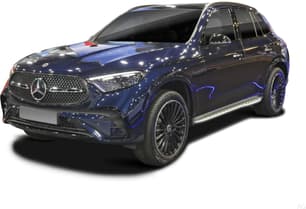
The GLC63 is unmistakably an AMG from the moment you first lay eyes on it. That’s thanks to the AMG-specific elements, starting with the grille with vertical strikes and the AMG crest on the bonnet; which is now a signature item for the performance sub-brand.
The GLC63 is also fitted with the Night Package II design kit; this adds a darkened grille and black chrome badging to further enhance its visual appeal.
The AMG-specific alloy wheels and more aggressive stance do mean the GLC63 stands out from the rest of the GLC range, helping it look fast even when it’s standing still.
While we’re talking about two different bodystyles here - hatch and wagon - the front seats are the same. So you are treated to Cupra’s stylish but thoughtful layout, which looks nice but also has good practicality.
The seats themselves are comfortable, even after extended periods behind the wheel, while there’s cupholders, sizeable door pockets, a lidded centre console box and a wireless smartphone charging pad.
The previously mentioned 12.9-inch multimedia screen dominates the centre console, sitting proudly at the top of the fascia. Unfortunately, Cupra (like Volkswagen) has fallen to the modern trend of ‘touch controls’ rather than physical buttons.
Not to sound like an old man yelling at clouds, but these touch-sensitive sliders are simply not as user-friendly, especially in a moving vehicle, as a traditional physical button or dial. While the multimedia system is easy to use, especially with Android Auto or Apple CarPlay fully integrated, adding dials for the stereo (on/off and volume) and the climate control would have been great.
Otherwise, the 12-speaker Sennheiser sound system with subwoofer and 390W amplifier sounds great, offering a premium in-car entertainment experience to match the Cupra’s price and positioning.
As for space in the back, which is obviously where the hatch and Sportstourer vary. There isn’t a lot to split them in terms of passenger space. These are both small cars, so neither offer the kind of room you’d get from an equivalent-sized SUV. The real difference is the cargo capacity, the hatch pair offer 344L (or 888L with the rear seats down) whereas the Sportstourer has a more generous 470L/1045L.
Inside the GLC63 is clearly a derivative of the rest of the range, with its C-Class-inspired design and layout, but there’s enough AMG-specific elements to ensure it looks and feels special. This starts with the AMG steering wheel, which comes not only with a thick rim wrapped in Alcantara, but also some AMG special dials to adjust the various performance settings for the powertrain, suspension and transmission.
Then there are the AMG-specific seats, which look good and offer good support for the driver and front seat passenger. The rear seats offer decent space for what is a mid-size SUV, with room enough for two adults or teenagers or three smaller kids.
Those in the back aren’t particularly well looked after though, with only rear air-con vents and small door pockets but no USB charging ports or other small item storage.
The boot is 590 litres, down from 620L in the rest of the range, thanks to the addition of the rear-mounted electric motor. There’s also no room for the temporary spare the rest of the GLC range gets and instead you have to make do with a puncture repair kit.
Knowing that hatchbacks and wagons aren’t big sellers and Cupra’s desire to stay boutique rather than mainstream, the line-up is relatively simple.
The Leon S kicks off the range at $46,990 (all prices listed exclude on-road costs) and comes with 18-inch black and silver alloy wheels, LED headlights, keyless entry and ignition, heated sports bucket seats, tri-zone climate control and a six-speaker sound system with Apple CarPlay and Android Auto.
The Leon VXz starts at $64,990 and includes 19-inch black and copper alloy wheels, multi-link rear suspension, adaptive dampers, front locking differential, upgraded brakes, quad exhaust and Cupra drive modes. There’s also leather-appointed seats and a 12-speaker Sennheiser sound system.
The VZe Sportstourer completes the line-up priced at $69,990 featuring unique 19-inch black and copper alloys, LED headlights and tail-lights, a power tailgate with handsfree opening and black roof rails. Inside it gets leather-appointed sports seats, heated front seats and steering wheel, tri-zone climate control, native navigation, Apple CarPlay and Android Auto plus the 12-speaker Sennheiser stereo.
The power and torque figures aren’t the only numbers that have risen sharply, with the GLC63 clearly impacted by a double whammy of inflation and the usual new-car price rise.
The GLC63 now starts at more than $191,814 for the SUV and $198,415 for the Coupe, which represents a nearly $30k increase over the old V8-powered model, which was priced at $164,600 just two years ago. Even for luxury car buyers that’s a big jump, especially when you’re trying to convince people of the merits of the four-cylinder powertrain.
That also means it's more expensive than all of its key competitors, including the BMW X3 M Competition, Maserati’s Grecale and the outgoing, petrol-powered Porsche Macan GTS.
To help explain some of this price increase Mercedes-Benz Australia has opted for a high level of standard specification for local cars. Standard equipment includes 21-inch alloys, AMG composite braking, a panoramic sliding sunroof, a unique AMG steering wheel, power-adjustable sports seats in Nappa leather, a head-up display, dual-zone climate control, wireless smartphone charging and a Burmester 3D Sound system.
Also included is the AMG Track Pace suite, for those who want to unleash their GLC on the racetrack.
There’s also a limited run, AMG Edition 1 Package available too, for an additional $12,900. On the outside you get Manufaktur graphite grey magno paint, foiling with colour gradation and large AMG logo on the sides, an AMG Aerodynamics Package, unique alloy wheels with Edition 1 and AMG branding, yellow brake calipers and an AMG fuel filler cap in silver chrome with AMG lettering.
Inside there’s AMG Performance seats, AMG Nappa leather in black with yellow contrasting stitching, AMG illuminated door sills, carbon-fibre AMG trim highlights, yellow seat belts and a unique AMG Performance steering wheel wrapped in carbon-fibre and microfibre.
The three Leon models all feature a different powertrain, as each is targeting a distinctly different buyer.
The Leon S is powered by a 110kW/250Nm 1.5-litre turbocharged petrol engine with mild-hybrid assistance.
The Leon VZx gets a more potent 2.0-litre four-cylinder turbo-petrol engine that makes 221kW/400Nm, to put it right at the heart of the hot hatch market.
The Leon VZe Sportstourer manages to combine efficiency with performance, with a 1.5-litre turbo-petrol engine paired to an electric motor to make an efficient 200kW and 400Nm.
The one thing all three have in common is a seven-speed dual-clutch transmission and front-wheel drive.
This is what lies at the heart of the AMG GLC63’s success or failure. As I mentioned at the beginning, the previous generation’s 4.0-litre twin-turbo V8 has been replaced by an F1-inspired plug-in hybrid powertrain.
But don’t think that means AMG is suddenly focused on efficiency over performance. When AMG says the powertrain is inspired by the brand’s success in Formula 1 racing, what it means is the battery and electric motor provides a significant performance boost to support the internal combustion engine, not just save fuel.
To that end the combination of the turbocharged 2.0-litre four-cylinder petrol engine and the rear-mounted electric motor produces an impressive 500kW and 1020Nm. That’s a massive jump over the 375kW/700Nm made by the outgoing V8.
Naturally, the three different powertrains provide three very different fuel economy numbers.
The mild-hybrid system in the Leon S allows it to use just 5.4L/100km, which provides a theoretical range of up to 833km thanks to its 45-litre fuel tank.
The VZx is the thirstiest member of the range, not surprisingly, using 7.6L/100km. With its 50-litres tank it has a theoretical driving range of approximately 650km.
Finally, the Sportstourer VZe manages a claimed 0.4L/100km on paper, thanks to its 20kWh battery providing up to 121km of electric-only driving range. Obviously achieving that claimed figure in the real world is incredibly difficult (as it is with any PHEV) but we still managed to use just 2.4L/100km on our mostly extra-urban test drive, which is still a good return.
Mercedes makes no secret that the battery is designed for performance, not saving fuel. It only has a 14km EV range but can recharge quickly on the move to provide a power boost when needed.
But despite all that, the GLC63 is actually significantly more fuel efficient than the old V8, using a claimed 7.3L/100km, which is a massive 4.9L/100km improvement over the old model. Although, on our day-long test drive we didn’t manage to come close to that claimed figure and instead saw returns around 11L/100km, albeit after a lot of spirited open-road driving.
Obviously there are three very different variants in the Leon range, with three different powertrains and two different body styles, and yet there is a familiar feeling between all three when you’re behind the wheel.
This is arguably the ‘most Volkswagen-y’ element of the Cupras, with the solid, stable Volkswagen underpinnings coming through. This is, of course, not a criticism, but rather highlights the positive connections between Cupra and its parent company, which has allowed it to make an immediate impression on the Australian market.
However, it also means the Leons feel so familiar that they don’t leave you with a unique impression and driving character.
For example, the VZx is almost too good, too quick and too clinical. It lacks the excitement and engagement rival hot hatches offer, notably the Hyundai i30 N and Honda Civic Type R, but instead compensates by just being really capable.
Obviously, that may not be seen as a negative by everyone and for those who want that sort of engaging, dare I say ‘fun and edgy’, driving experience the Leon VZx may not be precisely what they are looking for. Still, the engine is potent and even the lack of all-wheel drive doesn’t dampen its performance abilities too significantly compared to the likes of a VW Golf R or Audi S3.
The Leon S offers a different proposition, a warmed up hatch, rather than something hot. On that front it delivers, providing a well-mannered drive but without the punch of the VZx.
The Sportstourer is arguably the pick of the range, with its combination of sharp driving dynamics and very efficient powertrain. At no point do you feel like Cupra compromised its sporty intent to make the Sportstourer save fuel. Instead, the PHEV powertrain offers plenty of performance when you need it but is otherwise quiet and efficient the rest of the time, helping it to sip fuel at a much lower rate than its Leon hatchback alternatives.
Anyone who still believes in the adage ‘there’s no replacement for displacement’ hasn’t driven a modern turbocharged and hybridised engine. The GLC63 is a demonstration of the metaphorical and literal power of modern technology, combining an extremely efficient and potent internal combustion engine with an electric motor to make enormous real-world performance.
To be blunt, the GLC63 feels like a rocketship out of corners, launching with a ferocity and relentlessness the old V8 simply can’t match. It shouldn’t come as a surprise, a mid-size SUV with 1020Nm was always going to have plenty of performance, but even so it’s a shock to the system every time you give the GLC63 full throttle. Officially AMG claims it takes just 3.5 seconds to run 0-100km/h and has an electronically limited top speed of 275km/h - mighty impressive figures for a five-seat mid-size SUV.
To help get all that torque to the road, AMG deploys torque distribution technology that allows for it to be split an even 50/50 front/rear all the way to 100 per cent to the rear tyres.
Other technologies deployed to enhance its handling include AMG Ride Control suspension with adaptive damping and rear-axle steering. There’s also eight AMG Dynamic Select driving modes and four AMG Dynamics settings (Basic, Advanced, Pro and Master), so it’s a complex vehicle that is designed for the enthusiast.
While it’s easy to drive around town, once you get out on the open road you can really get a sense of the GLC63’s performance potential. Beyond just its powertrain the suspension offers good body control and the rear-axle steering helps it feel agile and responsive.
It’s not perfect though. At times the complexity of the system does lead to some hesitation when you put your foot down. It certainly lacks the linear power delivery of the old V8 and makes for a slightly trickier driving experience at times.
As for the sound, which is one of the biggest elements missing from the V8, Mercedes has added AMG Real Performance Sound, which features a pressure sensor in the exhaust that picks up on the engine note and plays it through the speaker system. It certainly helps make for a louder, more noticeable engine noise, but it still sounds more like an A45 than the previous GLC63 and for many would-be buyers, that’s a major turn-off.
The Cupra trio come loaded with plenty of safety features including 10 airbags for excellent passive protection plus autonomous emergency braking, front and rear cross-traffic alert, blind spot warning and driver fatigue monitoring.
For convenience and safety there’s also adaptive cruise control, front and rear parking sensors and even self-parking.
As the Leon has had no major structural changes, the original 2021 five-star ANCAP rating still applies. However, it should be noted that ANCAP updated its testing protocols in 2023, so that five-star rating is different to a five-star rating applied since then.
The GLC63 comes standard with a comprehensive suite of safety features including 'Distronic' (Mercedes’ name for adaptive cruise control), 'Active Lane Keeping Assist', 'Blind Spot Assist', 'Traffic Light Assist' and 'Adaptive Highbeam Assist'. It also includes Mercedes’ 'Pre-Safe' accident anticipation system - which pre-tensions the seat belts and will even play a white noise to protect your ears if it senses a crash is imminent.
A parking system that includes a 360-degree camera and active parking assist is also included.
The GLC range was awarded a five-star ANCAP rating in 2022, which pre-dates the latest testing protocols, so doesn’t provide a like-to-like comparison for vehicles tested after that date.
All three Leons are covered by Cupra Australia’s standard warranty, which covers the first five-years/unlimited kilometres. Which is good, especially for a new and more premium brand, even if it’s obviously short of the best-in-market.
Servicing is required every 12 months/15,000km, whichever comes first, and Cupra is offering a servicing pack special until the end of 2025, of $1990 for five years. That works out to an average of $398 per year.
Cupra is expanding its dealer network in Australia too. The Leon drive event we attended began at the newly-opened Cupra Macarther in Sydney’s growing west. There’s also a new dealership at Melbourne’s Essendon Fields.
Of course, one of the key advantages that Cupra has over many other new brands to Australia is its Volkswagen/Audi connections, which allows its models to be serviced at those dealerships as well. That provides a much larger footprint for customers to find somewhere convenient to service their car, which cannot be underestimated.
The GLC63 is covered by Mercedes Australia’s usual five-year/unlimited kilometres warranty.
As for maintenance, Mercedes offers service plans, spanning three to five years. Three years will cost you $5025, $6455 for four years and five years is priced from $7180. Servicing intervals are 12 months or 20,000km, whichever comes first.