What's the difference?
Citroen is a brand in a state of flux as it, once again, finds itself fighting to find a distinct identity from its Peugeot sister brand under its new Stellantis parent company.
It’s also had a shocker of a year in Australia, racking up just over 100 sales in 2021, but the brand is promising new beginnings, and a new crossover-y identity as it heads into 2022.
Leading the charge is the new-generation C4, which has morphed from a funky hatchback to a funkier SUV-like shape that it hopes will set it apart from related cars like the Peugeot 2008.
Other Citroens are set to follow in its footsteps in the immediate future, so is the Gallic marque onto something? We took the new C4 for a week to find out.
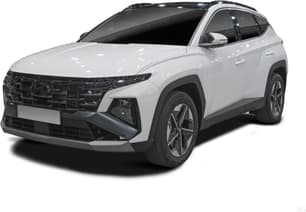
For the first time in Australia, the mid-sized Hyundai Tucson is being offered with a hybrid powertrain – which combines its spritely turbo-powered engine with a fuel efficiency-improving electric motor. And it might be enough to swing you to becoming a hybrid fan.
The new powertrain makes the Tucson a proper competitor against Australia’s darling, the Toyota RAV4 but the Nissan X-Trail e-Power and Kia Sportage remain strong rivals.
This week I’m family-testing the mid-spec Elite Hybrid with the N Line option pack to see how the newly updated Tucson handles family life.
It’s weird, wonderful and fun, in more ways that one. I think every segment could use an oddball alternative like the C4. Citroen has successfully transformed it from a hatch to a small SUV with a difference. It’s not going to be for everyone – few Citroens are – but those who are willing to take a chance will be rewarded with a surprisingly competitive little package that stands apart from the crowd.
The updated Hyundai Tucson Elite Hybrid N Line offers families space, features and easy-enough handling for everyday stuff and the occasional weekend adventure pursuits.
The price point is higher than the previous non-hybrid model but you get a lot of bang for your buck and my family was comfortable this week.
It’s really hard to stand out in Australia’s busy marketplace, especially in this small SUV space, where there doesn’t really seem to be as much of a design rulebook as there is in other segments.
Rooflines are wildly different, as are beltines and light profiles. While some may decry the fall of the hatchback to these more high-riding options, at least some of them are bringing fresh design ideas to the car world.
Our C4 is a great example. An SUV perhaps in profile only, it sports a slinky descending roofline, tall, contoured bonnet, a frowny-face LED profile, and characterful plastic claddings, which are a continuation of Citroen’s ‘Airbump’ elements, which gave cars like the previous-generation C4 Cactus such a unique look.
The rear is this car’s most confronting angle, with a post-modern approach to the light profile, and in reference to C4s past, a spoiler integrated into the rear tailgate.
It looks cool, contemporary, and I think is successful in its aim to blend the sporty elements from the hatch world with the sought-after high-riding elements of an SUV.
It certainly caught a few eyeballs in my time with it, and if nothing else, a bit of attention is something the Citroen brand desperately needs.
In the past you could rely on this brand to give you a funky interior, but one that sadly also came with its fair share of sub-par plastics and strange ergonomic. So I’m pleased to report that the new C4 dips into the better looking and feeling Stellantis parts catalogue for a still interesting yet more coherent experience this time around.
The modern look and feel of this car continues with interesting seat designs, a high-riding dash with a higher degree of digitization than before, and improved ergonomic features (even over some notable Peugeots). We’ll talk more about those in the practicality section, but the C4 feels as weird and different from behind the wheel as you’d hope , with an odd dash profile, a fun and minimalist steering yoke, and attention-to-detail elements, like a detail strip that runs through the door trims and across the seats.
These elements are welcome and help separate this Citroen from its Peugeot siblings. It will need this going forward, as it also now shares much of its switchgear and screens with its sister brand.
This is largely a good thing, with the 10-inch screen looking and feeling good and slotting into this car’s design nicely.
The Hyundai Tucson has seen a minor facelift on the exterior but most of the changes are in the cabin.
The N Line pack means that you get 19-inch alloy wheels over the standard 18-inch version as well as extended body panelling instead of black plastic trims. There is N Line badging across the car too, but N Line option pack does limit you to just four exterior colour choices.
The front features new stacked LED DRLs which tie in with the fang-like design of the rear LEDs. The origami-styled panelling looks more severe than the previous model which helps it stand out in a class that’s heavy on rivals.
The cabin features a completely reconfigured dashboard and now sports a large curved display panel that houses those upgraded tech screens and a new 6.6-inch climate control panel.
The centre console has been redesigned to look like it’s floating and now adds an extra-large storage cubby underneath it.
The upgraded interior makes the Tucson a leader for the mid-sized SUV segment and is very pleasant to spend time in.
The C4 brings some interesting practicality elements. There are a few areas where it’s even better than the improved layouts of recent Peugeot models.
The cabin feels spacious, with the C4’s relatively long wheelbase providing ample room in both rows. Adjustability is good for the driver, although it is worth noting that the seats have an odd blend of manual adjust for sliding fore and aft, contrasted with electrical adjust for seat height and tilt.
Comfort is superb from the memory-foam stuffed and thick synthetic-leather-clad seats. I don’t know why more cars don’t adopt this approach to seat design. You sink into these seats and are left feeling like you’re floating above the ground rather than sitting on something. The feeling here is unmatched in the small SUV space.
The massage function is a wholly unnecessary addition, and with the thick seat cladding, it didn’t really add much to the experience.
The seat bases aren’t too high either, unlike some cars in the SUV class, but the dash design itself is very tall, so people shorter than my 182cm height might find extra adjustment is required to see over the bonnet.
There are large bottle holders in each door with a very small bin; dual cupholders in the centre console, and a small armrest console box.
There’s also an odd little two-tiered shelf under the climate unit, with a removable base for extra storage underneath. It seems to me that the top shelf is a missed opportunity to place a wireless charger, although connectivity is handy with the choice of USB-C or USB 2.0 to connect to the wired phone mirroring.
A big win is the presence of a full dial set for not just volume but the climate unit too. This is something the Citroen scores over some of the new Peugeots, which have moved the climate functions to the screen.
Somewhat less wonderful are the digital dash cluster and holographic head-up display. These seem to be a bit redundant in the information they display to the driver, and the digital dash has no customisation, leaving me wondering what the point of it is.
The C4 also has some interesting innovations on the front passenger side. It has an unusually large glovebox and a neat little sliding tray, which looks like something from a Bond car.
It also has a slide-out tablet holder. This odd little thing lets you securely mount a tablet to the dash to provide a multimedia solution for the front passenger, which may be good for entertaining larger kids on longer journeys. Or adults who don't want to talk to the driver. It’s a neat inclusion, but I’m not sure how many people will use it in the real world.
The back seat offers a remarkable amount of room. I’m 182cm tall and had heaps of knee room behind my own driving position. The nice seat trims continue, as does the patternwork and detailing, which is the kind of attention to detail you don’t always get from rivals.
Headroom is a little limited, but you also score dual adjustable air vents and a single USB port.
The boot comes in at a hatch-sized 380-litres (VDA). It’s a neat, square shape with no little cutaways at the sides and is just big enough to fit our full CarsGuide demo luggage set, but leaves no room to spare. The C4 features a space-saver spare wheel under the floor.
The cabin up front is spacious with plenty of head- and legroom on offer. You also won’t jostle for elbow room either when you have a passenger.
The seats are comfortable with their heat function but you might still get fatigue on longer trips as you only get adjustable lumbar on the drivers side and it's simple at best.
The back seat has really good space for the class and no matter the passenger, they were comfortable back there. The seats in the rear are well-padded and access to this row is good for sliding in a child seat as the door aperture is wide.
Other amenities are average with directional air-vents, a single reading light, and a fold-down armrest. My seven-year-old son found the window sills to be quite high, so he didn’t get the view he wanted.
The individual storage is excellent for the class with the redesign as you get a dedicated storage shelf in front of the front passenger and a massive cubby that easily fits a handbag underneath the mid-sized centre console.
There are two cupholders and two drink bottle holders per row but the rear storage bins are skinny. The rear row also gets map pockets but again, these are shallow.
The upgraded technology is a must have and the new multimedia system is easy to use once you spend time with it and looks great with its graphics. The system has built-in satellite navigation, over-the-air updates and wireless connectivity for Apple CarPlay and Android Auto.
Connecting the CarPlay is simple and maintains a strong connection.
Charging options are great with two USB-C ports per row and the front also gets a wireless charging pad and a 12-volt socket to choose from. The centrally located position of the charging pad is handy and the liner grippy - so no phone movement.
Rounding out the practicality is the boot, which has a wide aperture and a loading space level with 582L of capacity available with all seats in use, which is good for the class.
The back row has a 60/40 split but don’t fold flat – they sort of spring up a bit, which might annoy when you do a big Bunnings run.
There is a 12-volt socket, a space-saver spare tyre underneath the floor and you get a powered tailgate in this model – which I always like.
In recent memory, Citroen’s offerings (the smaller C3 hatch in particular) have decidedly missed the mark on value. It’s not enough to be a niche player in Australia anymore – we have too many brands for that - so Citroen has had to have a re-think of its pricing strategy.
The resulting C4 that launches in Australia comes in a single, highly specified trim level, at a price that is remarkably competitive for its segment.
Wearing an MSRP of $37,990, the C4 Shine is positioned to compete with rivals like the Subaru XV (2.0i-S $37,290), Toyota C-HR (Koba hybrid - $37,665), and equally funky Mazda MX-30 (G20e Touring - $36,490).
For the asking price you also get the full list of available equipment, including 18-inch alloys, full LED exterior lighting, a 10-inch multimedia touchscreen with wired Apple CarPlay and Android Auto connectivity, built-in navigation, a 5.5-inch digital dash cluster, a head-up display, dual-zone climate, full synthetic leather interior trim, and a top-down parking camera. This leaves only a sunroof ($1490) and metallic paint options (everything but white - $690) as available extras.
The Citroen also packs some unusual items that represent surprising value – the front seats have a massage function and are stuffed with a very nice memory foam material, while the suspension system packs a set of hydraulic dampers to iron out the ride.
While the C4 faces tough competition in the small SUV segment, I think it represents pretty solid value at the price, so long as you’re chasing a virtue like comfort over hybridisation. More on that later.
There are now six variants for the Hyundai Tucson with the release of the hybrid powertrain and all six have the choice of being either a front-wheel-drive or all-wheel drive with either the petrol engine or hybrid powertrain. And every grade gets the option of adding the N Line style pack. So, there is no excuse for not getting the combo you actually want now.
The model on test is the mid-spec Elite Hybrid with the N Line option pack and its priced from $55,100 before on-road costs. That positions it towards the top end of the market but you get an SUV that's more feature-heavy than most of its rivals.
The standard equipment for the upgraded Elite Hybrid N Line now includes dual 12.3-inch technology screens, wireless Apple CarPlay and Android Auto, as well as a 6.6-inch climate control touchpad.
Other equipment includes a powered driver’s seat, heated front seats, suede/leather upholstery, dual-zone climate control, wireless charging pad, digital radio, four USB-C ports, keyless entry, push-button start, space-saver spare wheel and a powered tailgate.
The Kia Sportage SX hybrid is more affordable at $45,950 MSRP but unlike the Elite Hybrid it misses out on wireless connectivity for phone charging and phone integration apps.
The Toyota RAV4 XSE AWD is priced from $52,585 MSRP but misses out on the newer and bigger technology screens that the upgraded Elite Hybrid has.
The Nissan X-Trail Ti 4WD e-Power is the closest rival in terms of price ($55,090 MSRP) and available features.
The C4’s single trim level has a single engine, and it’s a good one; a peppy 1.2-litre three-cylinder turbo.
It appears elsewhere in the Stellantis catalogue and has been refreshed for the 2022 model year with a new turbo and other small refinements. In the C4 it produces 114kW/240Nm and drives the front wheels via an Aisin-sourced eight-speed torque converter automatic transmission.
No dual-clutches or CVTs to be found here. This sounds good to me, but is it good to drive? You’ll have to read on to find out.
The Elite Hybrid N Line model features a hybrid powertrain that combines an electric motor with a 1.6-litre four-cylinder turbo-petrol engine. They combine to produce 172kW of power and 367Nm of torque. Which is more than enough to make the mid-sized Tucson feel spirited.
This particular variant is AWD and uses a six-speed automatic transmission, which can over rev at times but is mostly smooth with its gear changes.
Despite the little turbocharged engine and the abundance of ratios in that transmission, the Citroen C4 disappointed me a little bit when it came to real-world consumption.
The official/combined consumption sounds reasonable at just 6.1L/100km, but after a week of driving in what I would consider realistic combined conditions my car returned 8.4L/100km.
While it’s not terrible in the wider context of small SUVs (a segment that is still packed with naturally aspirated 2.0-litre engines), it could be better.
The C4 also needs at least mid-shelf 95RON unleaded fuel and has a 50-litre fuel tank.
The official combined cycle fuel consumption figure is a low 5.3L/100km, and my real-world usage came out at 6.0L after doing a lot of open-road driving where hybrids tend to be at their least efficient, so that is an excellent result.
The Tucson hybrid is the second best for fuel usage after the Toyota RAV4 hybrid, which sits at 4.8L/100km for combined usage. Overall, the new hybrid powertrain has proven itself to be pretty frugal.
Based on the official combined fuel cycle and 53L fuel tank, expect a theoretical driving range of up to 981km, which is great for a family road tripper.
Driving the C4 is an interesting experience because it approaches the road a little differently from most of its rivals.
It really leans into Citroen’s newfound comfort-focused niche with the seating and suspension. This results in an overall experience that is a bit unique in the market, and quite pleasant, too.
The ride really is quite good. It’s not a fully hydraulic system but has dual-stage dampers that essentially smooth out corrugations and much of the nasty stuff that comes into contact with the tyres.
It’s odd because you can hear the big alloys crashing about on the road, but ultimately you feel little of it in the cabin. What’s more impressive is Citroen has managed to imbue the C4 with this floating-on-the-road feeling, while maintaining enough of a ‘real’ driving position to make it feel like you’re sitting in the car and not on it.
The overall result is impressive. The comfort extends to the seats, as mentioned, which really do still feel floaty and supportive even after hours on the road. It also extends to the steering, which has a very light tune. This is a bit unsettling at first, as it feels like it has a large dead-zone in the centre, but it is also speed dependent, so once you’re cruising it regains a significant amount of feel. You can also manually bring back a bit of firmness by setting this car to its Sport drive mode, which is unusually good.
This means you can have an ease of operation in tight quarters while maintaining enough feel to make it fun to drive when you need to ask more of it. Clever.
Speaking of fun, the revised 1.2-litre three-pot is a hoot. It has a distant but entertaining gruff tone under pressure, and surges forward with just enough urgency to not leave you really wanting for power.
It’s not what I would call quick, but it has a raucous attitude paired with a well-behaved torque converter auto to make it truly entertaining. When you push it, there’s a moment of turbo lag followed by a lump of torque, which the transmission lets you ride out before decisively snapping into the next gear. I like it.
Again, it's not quick, but it punches just enough above its weight to leave you with a smile when you stick your boot in. To have that in a car otherwise so focused on comfort is an unexpected pleasure.
The dash cluster could use some work, as could visibility out of the cabin. The small aperture out the rear and tall dash line could leave some drivers feeling a bit claustrophobic. While the engine is fun to engage with, the turbo lag could potentially be a source for annoyance at times, too.
Brief negatives aside, I think the C4's drive experience really brings something unique, fun, and comfortable to the small SUV space.
The new hybrid powertrain offers respectable power delivery that makes the Tucson feel zippy in the city and a relaxed cruiser on the open road.
There can be some over-revving when you’re trying to get up to speed and the accelerator and brake feel touchy at first until you get used to them.
On the hybrid side of things the Elite Hybrid has regenerative braking and there are moments of pure EV mode but it kicks in seemingly when it feels like it. When it is on, there’s practically no engine noise but when it's off, the cabin still remains fairly quiet.
My family went off the paved stuff this week and hit muddy and gravel roads on our quest to find a cool picnic spot, and the Elite Hybrid impressed with how it handled the different terrains. It’s not an off-roader but you can still do mini adventures.
The Tucson is mid-sized and has a very clear reversing camera with front and rear parking sensors, so it’s not too hard to manoeuvre or park.
The real negative feedback is that on three separate occasions, our test car randomly shifted into neutral while driving and to clarify, this did not occur while trying to shift into or out of 'drive' but while on the road, already in drive.
The first time it happened, I thought I had somehow bumped the column shifter but on the other two occasions, I happened to be watching my husband drive and he didn’t touch the shifter.
This is probably just a fault on out test car and not indicative of the model in general but it wasn't fun.
There's not such a good story to tell here. While the C4 comes with today’s expected suite of active-safety items, it just fell short of a five-star ANCAP rating, scoring just four stars upon its launch.
Active items on the C4 Shine include auto emergency braking, lane-keep assist with lane-departure warning, blind-spot monitoring, adaptive cruise control, and driver-attention alert.
Some active items are notably missing, like rear cross traffic alert, rear auto braking, and more cutting-edge items like junction alert for the AEB system.
What cost this car its five-star rating? ANCAP says the lack of a centre airbag contributed, but the C4 also fell short on protection for vulnerable road users in the event of a collision, and its AEB system also had marginal night-time performance.
FINALLY! Hyundai has listened to the people.
They have found a workaround for the annoyingly intrusive beeping alerts associated with the traffic sign recognition and speed alert tech. Yes, they still alert unless you turn them off and yes, you still have to turn the damn thing off every time you get in the car, but you not longer have to access five to six menu pages to do so. Hurrah.
The Hyundai Tucson Elite Hybrid N Line has a robust safety features list and includes equipment like blind spot monitoring, driver attention monitoring, safe exit warning, rear occupant alert, forward collision warning, LED daytime running lights, rear cross-traffic alert, lane keeping aid, traffic sign recognition, intelligent seatbelt warning, adaptive cruise control, a reversing camera, and front/rear parking sensors.
Our test model misses out on lane departure alert and the lane keeping aid is too intrusive for every day driving. It gets to the point where you wonder who is driving, you or the car.
The Hyundai Tucson has a maximum five-star ANCAP safety rating from testing done in 2021 and the hybrid variants are covered by this as well. It has seven airbags, including, the newer front centre airbag.
The Tucson has two ISOFIX child seat mounts and three top-tethers.
Auto emergency braking (AEB) is standard and features car, pedestrian, cyclist and junction assist detection which is operational from 5.0 – 80km/h (85km/h for car) but it's usual to see a higher top speed for the car detection (usually 180km/h).
Ownership has always been a tough topic for unusual Euros like the C4, and that seems to continue here. While Citroen offers a competitive five-year and unlimited-kilometre warranty for all its new products, it’s the service costs that will hurt the most.
While most Japanese and Korean brands are competing to really keep these numbers down, the C4’s average yearly cost, according to the provided schedule, comes in at an average of $497 for the first five years. That’s nearly double the cost of Toyota’s C-HR!
The C4 Shine will need to see a service centre once a year or every 15,000km, whichever occurs first.
Hyundai offers the Tucson with a five-year/unlimited km warranty and the battery is covered by an eight-year/160,000km warranty which is pretty standard for the class now.
You can pre-purchase servicing for up to five years and the breakdowns are as follows.
Three years or up to 30,000km for $1240 (average $413 per service).
Four years or up to 40,000km for $1700 (average $425 per service).
Five years or up to 50,000km for $2040 (average $408 per service).
The five-year pricing is comparable to its rivals and not outrageous for the class.
Servicing intervals could get annoying if you put a lot of kilometres on your car as they sit at every 12 months or 10,000km, whichever occurs first.