What's the difference?
You may be sensing an increasing level of hype around hybrid and full battery-electric vehicles. In fact, it feels like the automotive world has gone full-fat bananas over ‘electro-mobility’.
At least car manufacturers have, with Tesla’s entertaining antics disrupting the status quo, and causing virtually every mainstream brand to get on board the zero-emissions express.
But of course, the other side of that equation is demand. The rush to meet ever tightening emissions regulations (and save the planet in the process) fails to recognise the fact that not everybody wants a ZEV… yet.
The days of big-bore, more is good, internal combustion propulsion aren’t over yet, and Chrysler, like the rest of the ‘Murican Big Three’ is keeping traditional muscle car enthusiasts happy.
In fact, we’re in the midst of a US horsepower arms race not seen since the late 1960s and early ‘70s, and Chrysler’s SRT (Street & Racing Technology) performance subsidiary is leading from the front with a variety of over-the-top Hellcats, Demons and Red Eyes.
Australia has recently picked up a whiff of that action with the utterly mad 522kW Jeep Grand Cherokee Trackhawk, but the only slightly unhinged SRT version, and this car, the Chrysler 300 SRT, have been around for some time.
Launched here in 2012, the second-generation version of the 6.4-litre naturally aspirated sedan was discontinued in the USA in 2014. But sensing a large sedan-sized opportunity as local manufacturing from Ford, Holden and Toyota went the way of the Dodo, the local FCA team negotiated a continuation deal.
Think of the 300 SRT as America’s M5 or E63. A full-size performance sedan with a thick layer of luxury laid over the top, but at around one third the price.
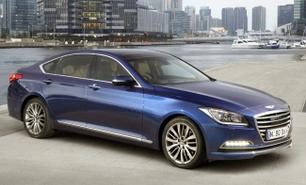
Anybody who doubts that Hyundai is gunning for the number one in the world has rocks in their head. Big heavy ones. Korean companies do not settle for anything less than number one. The second-generation Genesis (our first taste here in the Antipodes as the gen-one had its steering wheel on the wrong side) is proof.
What's different about Hyundai's unstoppable rise is the way they're going about it. They've always done their own thing in Korea, reinventing themselves time and again when they strayed off the beaten path.
The Genesis is a gamble for a Korean company in foreign markets whose default setting for luxury is marked, Britain or Germany. If Hyundai gets the Genesis wrong there will be howls of derision, or at best patronising pats on the back - "Nice try, you'll get there one day". But if they get it right...
The Chrysler 300 SRT is a big, fast, well-equipped and super-comfortable point-to-point tourer that’s also able to soak up the stresses of a city commute with ease. It’s also showing its age in terms of design, obscenely thirsty, dynamically flawed, and offered with a bottom-of-the-class ownership package. A fun place to visit but make sure you’re ready for permanent residency.
The Genesis is not quite a match for cars twice its price but it makes you think what's possible. It doesn't have the dynamic brilliance of a BMW or the self-assured faultless execution of a Mercedes. Lexus ought to be worried, though - why would you have an LS when you could have this? The only answer is 'badge'.
The Genesis is an epoch-making car for the Korean manufacturer. As the company has got better, there are fewer excuses for overlooking it. While the Genesis is pitched into a shrinking market, it's not really meant for the average i30 buyer to buy, but to see.
It's bristling with tech and is not only a halo car but a shot across the bows of both Lexus and the Germans. Attached to that shot is a note: "We're coming for you." In other words, Hyundai got it right.