What's the difference?
SUVs have become the default choice of families on the hunt for a seven-seater, but BYD’s plug-in hybrid M9 now makes that a harder choice.
People movers are having a renaissance after the segment contracted so hard it left the Kia Carnival as the only valuable option.
Now a wave of plug-in hybrid and electric Chinese machines, including the BYD M9, Denza D9, GAC M8, Xpeng X9 and Zeekr 009 are striving to bring the big van back as the default choice of big families like it’s the glory days of the Toyota Tarago.
None have managed to nudge the Kia Carnival off its lofty perch, but BYD has the mettle to take the fight to the biggest name in the game.
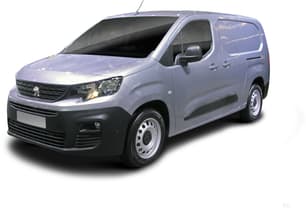
In 2023 Peugeot commands around 50 per cent of sales in Australia’s small (under 2.5-tonne GVM) commercial van segment with its Partner range, which offers a choice of wheelbase lengths and model grades.
The French marque has recently introduced its first fully electric variant to the Australian market called the e-Partner, even though this van has been on sale in Europe since 2021.
We recently put one to work for a week, which included loading it up to the max, to see how it compares to its petrol-powered sibling.
The BYD M9 offers power, pampering and a premium living space, but at a price.
Surprisingly nimble and agile around town the M9 is fuel-efficient if operated properly. It's backed by a solid warranty but servicing is relatively expensive.
The M9 won’t win any beauty contests, but in the battle of substance over style it triumphs.
Note: CarsGuide attended this event as a guest of the manufacturer with accommodation and meals provided.
It’s a lot of money for a small commercial vehicle that’s well into its current model cycle in Europe, falls short on benchmark safety and requires convenient charging infrastructure to minimise inconvenience for owners. However, its emissions-free drivetrain is quiet and competent under load, with a range that should comfortably cater for the daily urban use small van operators typically require. Whether those positives outweigh the negatives, only a potential buyer can decide.
The M9 isn’t winning any beauty contests. Substance it has in spades but style it is sorely lacking.
To be fair, this is a trait of most people movers. It is hard to make a brick look chic.
The front is a big slab of grille, with some slim headlights and side air intakes. But 18-inch alloy wheels and a floating roof and lights that run the length of the rear add a bit of pop.
It’s a big beast, measuring 5145mm long, 1970mm wide and 1805mm high with a 3045mm wheelbase (the distance between front and rear axles).
The single electric motor is positioned at the front where it drives the front wheels. The 50kWh lithium-ion battery that provides its energy is located beneath the cargo bay’s load floor to ensure that the total load volume, floor loading heights, etc, are identical to the petrol version.
The same applies to its compact 2975mm wheelbase, 4753mm length, 1921mm width and car park-friendly 1880mm height.
The e-Partner rides on MacPherson strut front suspension and coil-spring trailing-arm rear suspension, with electric power steering and four-wheel disc brakes. Its 11.4-metre turning circle is larger than we expected.
There are unpainted dark grey plastic finishes in all the places where bumps, scrapes and wear usually occur in working vans including hubcaps, bumpers, body side-mouldings, door mirrors and handles. The charging port is located above the left rear wheel.
A sealed metal bulkhead with central window separates the cabin and cargo bay, which minimises tyre noise emanating from the rear-wheel housings and doubles as a cargo barrier.
The cabin architecture, with two bucket seats and wipe-clean vinyl floor, is outwardly the same as the petrol version but the driver’s analogue instrument display has been reconfigured for the electric drivetrain.
This includes continual display of energy consumption levels, comprising 'Eco' (minimum consumption), 'Power' (maximum consumption) and 'Charge' (energy recovery from regenerative braking).
It also displays energy consumption by the cabin heating/air-conditioning and battery charge-level, while the dash’s central touchscreen includes an ‘electric menu’ that monitors live energy flows and consumption statistics plus allows scheduling of delayed charging if required.
If the brief for your next car is space for days and moving your family around in peace and comfort, this M9 hits it out of the park.
The front row is roomy and has great forward vision.
Auto sliding side doors grant access to the second and third row with just the push of a button or by pulling the handle. My kids loved this, all they wanted to do was open and close the doors, which then became a bit annoying.
Crucially, getting into the vehicle is so much easier than an SUV, with a giant opening and modest step up that’ll make loading kids and grandparents a stress-free experience.
There is a mini hallway between the two captain’s chairs to get into the third row. It’s tight for adults but kids can scramble in easily.
The captain’s chairs give you a lot of flexibility in the cabin layout. They have plenty of back and forth movement, which means you can expand the third row legroom if needed or give second row passengers some more space. You can also split it in case you have one longer-legged passenger in the back and one shorter.
Child seats can be fixed to the captain’s chairs and the left-most seat in the third row with ISOFIX and top-tether anchor points.
The back of the front seats have tray tables where you could put tablets, colouring books or anything to occupy the kids.
Every row has air con vents and USB charging ports, with an additional wireless device charger up front.
A huge panoramic sunroof lets the light in, and also has a proper cover to keep the heat out in Australia’s scorching summer.
With all seven seats deployed there is still decent boot space. Its 470-litre capacity is less than the Carnival’s 627 litres, but we fitted all we needed for a weekend away with two young children, including a travel cot, travel pram and a few overnight bags.
Fold down the third row and it balloons out to 2036-litres. The captain’s chairs can not be stowed away.
Payload is just 624kg, so a family with all the accoutrements will probably push it to the max. Towing is just 1500kg for a braked trailer and don’t take it off the road, with just 140mm of ground clearance it won’t handle more than a gravel driveway.
There is no spare tyre, with only a fiddly tyre repair kit, which is a bad result for owners.
There are no physical buttons on the dashboard, with everything controlled via the 15.6-inch touchscreen.
The e-Partner’s 1632kg tare weight is about a quarter of a tonne (247kg) heavier than its 1385kg petrol-engine equivalent, largely caused by the lithium-ion battery pack.
So, even though the electric model has more power (100kW vs 96kW) and torque (260Nm vs 230Nm), the battery ensures it has an inferior power-to-weight ratio, with the e-Partner carrying 16.3kg/kW compared to the petrol’s 14.4kg/kW.
The e-Partner’s 753kg payload rating is also 182kg less than its petrol sibling, so be mindful of these differences if payload is important.
The e-Partner is also rated to tow up to 750kg, but given Peugeot does not publish a GCM figure (how much it can legally carry and tow at the same time) we don’t know if it can haul its maximum payload while towing its maximum trailer weight.
The cargo bay, with 3.9 cubic metres of load volume, is a window-free zone accessed by a sliding door on each side and asymmetrical rear barn-doors that open to 180 degrees for optimum loading access.
With its 2167mm length, 1527mm width, 1243mm height and 1229mm between the rear-wheel housings, it can carry one standard Aussie pallet or two Euro pallets held in place by a choice of six load-anchorage points.
The cargo bay is lined to mid-height and there’s protective mesh over the bulkhead window. However, the bulkhead protrudes into the sliding door openings given the need to allow sufficient cabin space for the seat backrests.
There’s also no load-floor protection provided as standard, so to avoid scratches and dents we’d recommend fitting a floor-liner like the thick rubber one fitted to our test vehicle.
Cabin storage includes a full-width shelf above the windscreen and bins in the base of each door. The dash offers small bottle/cupholders on each side plus a lidded upper glove box and open storage on the passenger side.
The dash extension, where the gear-selector and electronic handbrake reside, offers more open storage as does the floor-mounted centre console.
Our criticisms include the lack of a dedicated storage place for the charging cable, which is supplied in a zip-up vinyl bag.
Although it was sitting on the passenger floor when we collected the vehicle, it was difficult to find a secure place to store it with a passenger aboard. It ended up unsecured in the cargo bay.
The rear barn-doors also do not have any stays to keep them open when positioned at 180 degrees.
As a result, the slightest breeze swings them shut.
And due to the lack of any dedicated bottle-holders in the front door bins, bottles tend to topple onto their sides and can be difficult to extract when driving.
For now the M9 is available in a single Premium grade starting at $72,990, before on-road costs, which is a fair chunk of change compared to the base Kia Carnival hybrid ($56,310). Albeit the M9 gets plug-in hybrid power compared to the Carnival’s self-charging hybrid.
It is competitively priced against the GAC M8 plug-in hybrid ($76,590) and electric XPeng X9 ($89,900).
BYD said it will have a cheaper Dynamic grade in showrooms before the end of the year, which will drop the price of entry into the M9 range to $61,990.
That cheaper grade changes the game, but for now we can only judge the Premium.
It has a 2+2+3 layout and is packed to the rafters with standard kit.
Seats are wrapped in real leather, with the front pair power adjustable, heated and ventilated with a memory function. The driver’s has a massage function.
The second row ditches the usual bench seat for a pair of captain’s chairs that have the same features as the driver’s seat with the addition of an adjustable leg rest.
The Dynamic will revert to a bench pew for the second row, giving it a 2+3+3 seat configuration.
Other standard features include:
Our test vehicle is available in only one specification, based on the ‘Pro Long Auto’ which means it’s the more work-focused ‘Pro’ model grade with long wheelbase and automatic, which in this application is a single-speed transmission.
With a 100kW/260Nm single electric motor and 50kWh lithium-ion battery, it has an eye-opening list price of $59,990, plus on-road costs.
That represents a substantial 56 per cent increase over its petrol-powered equivalent ($38,388) and optional metallic paint like ours adds $690.
However, the e-Partner has more power and torque with zero drivetrain emissions. It also comes standard with work-focused 16-inch steel wheels and 215/65R16 Michelin tyres with a full-size spare, a toggle-style gear selector, electric parking brake, reversing camera, two-way adjustable leather-rimmed steering wheel, 12-volt accessory socket and USB port plus a four-speaker multimedia system with 8.0-inch touchscreen, digital radio and multiple connectivity including Apple and Android devices.
The M9 uses a 110kW 1.5-litre turbo-petrol engine paired with a 200kW/315Nm single electric motor that combine for 218kW. The Dynamic will make 191kW from the same set-up. Both are front-wheel drive only.
BYD claims it can hit 100km/h from a standstill in 8.5 seconds.
The single electric motor and 50kWh lithium-ion battery combination produces 100kW of power and 260Nm of instant torque.
It also offers three switchable drive modes including Eco (60kW, 190Nm) for minimal performance and energy use, Normal (80kW, 210Nm) which is a happy medium for everyday use and Power (100kW, 260Nm) for maximum performance when hauling heavy loads.
The gear-selector controls Park, Reverse, Neutral, Drive and Brake functions. There's also a button marked B which engages regenerative braking for optimum battery top-ups when driving.
The Mode 3 Type 2 wall-box/public station charging cable is supplied as standard, but buyers can also purchase a domestic wall socket cable for home-charging.
Quickest charge time from 0-80 per cent is 30 minutes using a 100kW DC charger while a 0-100 per cent charge using a single-phase wall-box (7.4kW) takes about 7.5 hours.
Home-charging from 0-100 per cent using a domestic wall socket (2.3kW) takes about 24 hours.
The M9 Premium uses a 36.6kWh LFP battery that delivers a WLTP-verified driving range of up to 145km. The cheaper Dynamic will use a 20kWh battery that allows for an electric range of up to 80km.
The battery can absorb up to 73kW via a DC charger and 7.0kW when plugged into an AC connector.
BYD claims the M9 will drink 0.4L of 91RON fuel per 100km when its battery is holding sufficient charge. This jumps to 7.3L/100km when the battery dips below about 20 per cent.
Total combined range reaches 790km and 850km, respectively.
Realistically, if you are diligent with charging the battery you’ll likely only need to fill the 50-litre fuel tank every few months. But if you are a more relaxed charger, or do longer trips you’re better off with a diesel.
Peugeot claims an official WLTP driving range of 258km. The dash display was showing a projected driving range of 280km when we collected the vehicle.
A few days later when we stopped to top-up the battery at a public charging station, after 135km of unladen city and suburban driving, it was displaying average consumption of 20.4kWh/100km.
When charging was completed, the dash display was claiming 270km of driving range. This had dropped to 194km the following day when we stopped to load the vehicle for our GVM test. Average consumption had also dropped to 19.0kWh/100km.
We then drove 52km with a heavy payload in busy traffic, during which consumption dropped again to 18.8kWh/100km with regular switching between the drive modes.
After unloading and then returning the vehicle to Peugeot, there was still 96km of range remaining and energy consumption had dropped again to 18.4kWh/100km.
So, we covered a total of 271km during our test, of which about one quarter was with a heavy payload.
So, based on its lowest consumption figure, Peugeot’s claimed 258km range in real world driving conditions is pretty accurate by our measure.
Climb into the driver’s seat and you are met by well bolstered seats that are supportive and have plenty of adjustment. This is paired with a steering that moves up, down, in and out so you can find a seating position to fit all shapes and sizes.
BYD’s petrol-electric combo can be driven in three different modes.
EV mode uses the 200kW/315Nm motor only to drive the front wheels.
Two hybrid modes include Series and Parallel operations. In Series mode the engine is used to charge the battery only, but in Parallel it blends power with the electric motor to drive the wheels.
The driver doesn’t need to choose the mode, the vehicle will select the best option for driving conditions and the level of battery charge.
The Premium grade has a combined 218kW on tap, which is about right for a 2.6-plus tonne vehicle. It’s perky but not express.
Smooth is one word I’d use to describe the M9’s drive experience. The linear power delivery in all drive modes makes for a comfortable commute.
It was adept in all conditions, whether that was driving through the city, along motorways and up to the Blue Mountains outside of Sydney.
Steering was well balanced but the M9 wasn’t the most dynamic through the corners, which is expected when piloting something shaped like a barge or a brick.
It did have a tendency to want to push wide through bends at moderate speed limits.
The suspension did a great job of controlling the M9’s heft. McPherson strut suspension up front paired with a sophisticated multi-link rear set-up helped reduce lean through corners and iron out bumps and lumps along the way. That said, small consistent road imperfections weren’t its friend, with it jiggling over them at speed.
It was quiet inside, with minimal road noise and wind shear. Even when the engine was working it was a dull rumble rather than an overpowering assault on the senses. Both kids had a nap on longer trips, no problem.
What surprised me the most was how easy the M9 was to park and generally navigate tighter streets. I can’t recall a seven-seat SUV that was this easy to park, and it didn’t feel that big on the road despite its more than five metre length.
Safety tech was properly calibrated, too, with minimal beeps and bongs. There were plenty of warnings on the screen but with no accompanying noises, which is important not to wake kids nodding off.
It has a comfortable driving position thanks to a reasonably spacious cabin, two-way adjustable steering wheel, left footrest and fold-down inboard armrest.
However, the base cushion feels a tad short for proper upper-thigh support and does not have rake adjustment.
The flat top of the rectangular steering wheel provides a clear view of the instrument display while the flat bottom allows ample driver clearance.
The electric motor with its muted hum delivers a liquid-like flow of acceleration that’s different to a petrol engine.
The lack of engine noise also makes other sounds more prominent, including tyre roar on coarse bitumen surfaces and thumps from the rear suspension over larger bumps.
The extra battery weight is not a noticeable hindrance in stop-start traffic, given the instant torque of the electric motor.
Its location under the load floor also contributes to a low centre of gravity which makes the e-Partner feel well-planted on the road. Even so, it takes a leisurely 11.2 seconds to accelerate from 0-100km/h.
To test its payload rating we forklifted 650kg into the cargo bay which with driver was just under its 753kg limit. The rear suspension compressed 70mm, but there was no bottoming-out over bumps due to large rubber cones positioned inside the coil springs that assist in supporting heavy loads.
We covered more than 50km with this weight in city and suburban driving and its performance was good in all modes including the energy-saving Eco. Energy consumption did not spike as expected.
Our only gripes from a driver’s perspective are the absence of blind-spot monitoring and rear cross-traffic alert, which should be mandatory in all solid-walled vans given the huge blind-spot over the driver’s left shoulder. Relying only on the relatively small passenger door mirror is potentially hazardous.
The other is the cruise control stalk located on the steering column, which is hidden from view by the steering wheel arm. Therefore, it must be operated purely by feel, which can be fiddly and distracting when driving.
BYD has ticked all the safety boxes with the following standard equipment:
Only four from a possible five ANCAP stars for the e-Partner (achieved 2018) and the lack of blind-spot monitoring, rear cross-traffic alert and adaptive cruise control, etc, highlight a safety menu in need of updating.
Even so, it does have front, side and curtain airbags for driver and passenger plus AEB, lane-keeping, audible low-speed pedestrian alert and tyre under-inflation warning.
BYD backs the M9 with a six-year/150,000km guarantee. The battery is covered by an eight year/160,000-km warranty and the drive unit an eight year/150,000km agreement.
A five-year capped price servicing program will cost $2880, which is on the pricier side. Beware the fourth service. That’ll set you back $1145.
The frequency of your workshop visits will depend how often you use the petrol engine, which is not ideal. You’ll need to front up every 12 months or 20,000km (total odometer reading) or 10,000km (hybrid usage reading), whichever occurs first.
There are currently 126 BYD dealers across the country with three 'pop-up' locations - Box Hill, Chadstone and Melton in Victoria - on top of that.
Warranty is five years/200,000km plus eight years/160,000km for the battery. There are also three-year paintwork and 12-year corrosion warranties.
Scheduled servicing is every 12 months/25,000km, whichever occurs first.
The pre-paid service plan price of $1000 covers the first five scheduled services, or just $200 per service.