What's the difference?
We appear to have reached a tipping point in the acceptance of electric vehicles in this country. The early adopters have made their switch but the technology has become more widely accepted, so now carmakers need to woo buyers with conventional means.
That means the tried and tested methods for making any car more appealing to a customer - lower cost and more equipment.
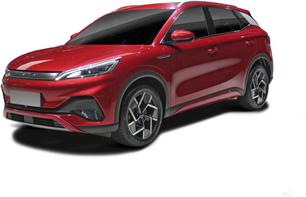
No car demonstrates this better than the BYD Atto 3, which is one of the most popular electric vehicles in Australia. But after an initial surge of buyers happy for a more affordable EV, BYD needs to find fresh ways to attract new customers.
So, for this updated 2024 Atto 3, BYD has made it cheaper and added some key new equipment, while retaining its previous strengths in terms of value and technology.
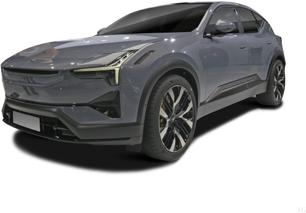
If you know anything about superheroes, you'll know the biggest and best are always born out of adversity. And while it might not be wearing a cape (though the big rear roof spoiler makes it look a bit like Superman in flight), Polestar is very much hoping its new electric SUV will be the hero it has been waiting for.
Cursed to commence life in Australia with the good but compromised Polestar 2, which launched as a lift-back sedan (remember those?), and which felt a lot like a repurposed internal-combustion engine (ICE) vehicle inside, complete with a bulky transmission tunnel that cut rear-seat legroom in half, it has long felt like the second wave of Polestar vehicles would be the one to put the brand on the map.
That wave has at last broken in Australia, with the Polestar 3 finally here. It's a large SUV (good start), but it promises not to drive like one (even better). And in the Long Range Single Motor guise we've tested here, it promises to travel more than 700km on a full charge.
So, is this the vehicle that will kick off the Swedish brand's run in Australia?
BYD hasn’t made dramatic changes to the Atto 3 for 2024, but has it done enough to lure in more buyers?
The additional equipment, namely the larger infotainment screen and new tyres, will certainly help make the Atto 3 more appealing. And the technology behind EVs is more understood by the average motorists, so the barriers to making the switch to electrification are dropping.
But the single biggest factor is likely to be the price. At a time when inflation (and other reasons) is driving the cost of new vehicles up, having your updated model go in the wrong direction will only help make potential buyers take notice.
Especially when you consider Toyota’s closest rival to the Atto 3, the bZ4X, starts at $66,000, while the Tesla Model Y is priced from $55,900, making both significantly more expensive propositions. Heck, the cheapest Toyota RAV4 hybrid model starts at $42,260, only marginally cheaper than the Atto 3 Standard Range.
So, if BYD can make its value argument strongly it will help lure more new buyers to take the plunge into the world of EVs.
With the kind of driving range, dynamics and comfort that could convince even the EV doubtful to give it a crack, the Polestar 3 – and specifically this Long Range Single Motor – feels like it was worth waiting for.
In a couple of words, not really. At least when it comes to the exterior design.
In fact, the biggest design change for 2024 is actually the colour of our test car, the new Cosmos Black. Apart from that, the rest of the Atto 3 is unchanged visually, which is becoming something of a trademark for EVs, at least from newer brands like BYD and Tesla.
Instead of worrying about adding a new grille, different headlights or an alternative alloy wheel design, brands like BYD are focusing on updating batteries, the technology and other software enhancements to keep their models fresh.
The only exterior change is at the rear, where the previous 'Build Your Dreams' lettering has been replaced by a simple 'BYD' badge.
As for the interior design, kudos to BYD for not following Tesla down the cost-saving-disguised-as-minimalist-design path, but personally the design aesthetic and the variety of colours and trims used aren’t to my taste, but I can see why others may love it. The ‘guitar string’ door pockets are likely a particularly polarsing design choice.
BYD has added a new interior option, with a black/blue trim for the examples finished with grey and black exteriors, while white and blue painted cars get a blue/grey interior.
I think the Polestar 3 looks great – big, but not looming, and still somehow svelte enough to look sporty.
The brand takes a unique approach to marrying design and aerodynamics, with a lip at the edge of the bonnet that allows for airflow. But it doesn't look like a purely functional element.
Instead it accentuates what Volvo would call the 'Thor's Hammer' (but I think Polestar calls them 'Twin Blade') headlights, which are mirrored below with black venting.
In fact, looking at the 3 front-on is a bit like looking into a reflection in a crystal-clear lake, with the lighting signature perfectly reflected in the lower half of the front end.
If it sounds like I'm waxing lyrical, it's because I am. I think the Polestar 3 is among the best looking vehicles in its segment and one of the better looking SUVs, period.
Inside, though, it's a study in minimalism, which while very neat and tidy, makes it feel a little less luxe than you might expect from a vehicle at this price point. In fact, at a quick glance, it doesn't look that far removed from the relatively cheap-as-chips MG4's cabin.
The materials are thoughtful and lovely, though. Leather-like materials are used sparingly, replaced by what Polestar calls "Bio-Attributed MicroTech Charcoal with Repurposed Aluminium Deco". A far easier way to describe it, though, would be as reminiscent of a wetsuit.
Elsewhere, it's a fairly pared-back affair, with just the huge portrait-style central screen and the landscape driver screen grabbing your attention. Dig deeper, and there are some really nice, gentle details, like the ambient interior lighting that illuminates a little strip along the door panel, including the Bowers & Wilkins logo. A similar line of light spans the entire dash, too.
And I love the metallic-look panel along the dash which, one can only assume, is the 'Repurposed Aluminium Deco'.
The Atto 3 remains classified as a ‘Medium SUV’ but blurs the line between mid-size and small in terms of dimensions, especially inside. It’s not in the same size game as the Toyota RAV4 or Mitsubishi Outlander, but is close in size to the likes of the Honda ZR-V and Mazda CX-5.
While there’s a few key practical storage spaces, there aren’t as many as some newer rivals, which does suggest the Atto 3 design is starting to date or just wasn’t well thought-out enough in the first place; such as putting all the switchgear in the centre console rather than on the dashboard.
This was probably done, at least in part, to accommodate the rotating touchscreen, which seems like a poor design and practicality choice to me. Especially the new one, which at 15.8-inches when rotated to the portrait mode it starts to interfere with your vision and the layout is more user-friendly in landscape mode - both when using the native multimedia system or your smartphone connection.
Space is respectable in the back seats, and there’s both a USB-A and USB-C port for charging devices. While out the back the boot measures 440 litres, which is a respectable amount of space for an SUV this size, but there’s only a tyre repair kit instead of a spare wheel.
Polestar has done a solid job of disguising the dimensions of the Polestar 3, because while it looks sleek and sporty it's still a big boat, stretching a sizeable 4900mm in length, 1968mm in width and 1618mm in height.
That size is most noticeable in the back seat, which is properly cavernous, helped further by a fully flat floor which lends even more airiness. Sitting behind my own 175cm driving position there's plenty of headroom and tons of knee room, giving the Polestar 3 official adult-friendly status.
The ISOFIX attachment points are located beneath two pop-off plastic covers, which makes fitting a child-seat base super easy. This is something I wouldn't have cared about at all exactly 22 weeks ago, but now I care a lot, and this was among the fastest and easiest systems I've used.
Happily, there is no major back seat compromise, either. The pews are comfortable and supportive, with the window seats separated by a pull-down divider home to two pop-out cupholders.
There are twin USB ports for rear-seat riders, too, as well as air vents with temperature controls, and – thanks to that Plus Pack – rear seat heating.
There's storage aplenty, too, with a total 597 litres in the boot with the rear seats in place, and 1411 litres with them folded flat, including a handy 90-litre hidden storage spot under the boot floor. Up front, there's a soft-bag-ready 32-litre frunk.
As we just mentioned, price has been a critical tool for carmakers looking to keep demand for EVs rolling along as the early adopters fade, and BYD is not immune from this. Earlier in 2024 the Atto 3 Extended Range, the model we’re testing here, started at $50,011 before on-road costs. Then in April 2024, BYD announced a drive-away deal for $45,990 for pre-registered demos.
Now this updated model is priced from $47,499 (plus on-road costs), which is a jump up from the sale price, but is more than $3500 cheaper than the Atto 3 was at the start of 2024. Meanwhile, the Standard model is priced from $44,990 (plus on-road costs), which is also a saving of more than $3000 on the previous model.
The key difference between the Standard and Extended Range models are the batteries, so the specification is similar. Both variants are equipped with LED headlights, power tailgate, synthetic leather upholstery, power-adjustable front seats, 5.0-inch digital instrument panel and in-built satellite navigation.
One of the big ticket item changes for 2024 is the upgraded 15.8-inch multimedia touchscreen, which comes with BYD’s signature trick - rotating between portrait and landscape modes. This is upsized from 12.8-inch in the old model. Wireless Apple CarPlay and Android Auto are now standard too.
I'm going to get this out of the way early. I am a touch surprised with the pricing on the Polestar 3 range.
With Tesla having now stepped on a million metaphorical rakes, and with a leader now slightly less popular than actual skunk musk, the stage seemed set for a rival brand to steal its crown, and its customers.
But I can't see too many making the leap from the $60K-$70K Tesla Model Y to the $118,420 asking price of the admittedly bigger Polestar 3 Long Range Single Motor - which is the cheapest way into the brand's large SUV.
Instead, Polestar will be taking aim at brand's like BMW, Mercedes-Benz, Porsche and Cadillac, leaving its Chinese corporate cousins (think Zeekr and Geely) to chip away at Tesla's market share.
So, premium product, then. But do you get premium stuff?
Ours gets the 20-inch 'aero' alloys, but you can spec those up to 22-inch wheels if you don't like your spine very much, along with Brembo brakes. Plus there's is LED lighting all around, a big glass roof and retractable door handles.
Inside, the Long Range gets heated front seats, triple-zone climate control, wireless device charging, and a big 14.5-inch central screen with Apple CarPlay and Android Auto (run by Google built-in) joined by a second 9.0-inch driver information screen above the steering wheel.
Our car was also equipped with what Polestar calls the 'Plus Pack', a cool $9.0K on top, which adds things like a 25-speaker Bowers & Wilkins for Polestar stereo (replacing the standard 10-speaker set-up) , a head-up display, heating for the rear seats, steering wheel and wiper blades as well as soft-close doors.
The as-tested price for our car, by the way, is $131,640, before on-road costs.
As with the design there isn’t much to say about what’s powering the Atto 3 because it’s the same as the 2023 model. Both the Standard and Extended Range use the same front-mounted electric motor, which makes 150kW/310Nm and drives the front wheels through a single speed transmission.
With 0-100km/h times of 7.9 seconds and 7.3 seconds respectively for the Standard and Extended Range, the Atto 3 won’t shove you back in your seat, but it has adequate performance for a mid-size SUV.
The Long Range Single Motor tag hints at what's powering this Polestar 3, with a single, rear-axle mounted (so, rear-wheel drive) motor producing 220kW/490Nm and a fairly sedate sprint from zero to 100km/h of 7.8 seconds.
The Standard Range has a rated driving range of 345km (WLTP) from a 49.92kWh ‘Blade’ lithium-iron phosphate (LFP) battery while the Extended Range’s bigger 60.48kWh unit increases that to 420km.
Charging is capped at 70kW (DC) for the Standard and 80kW (DC) for the Extended.
One of the major hurdles for EV brands is convincing people that they won’t run out of charge every day. At 420km the Extended Range Atto 3 will get most people through multiple days of commuting, so even with public charging you shouldn’t worry about range anxiety.
Those drivers with commutes longer than 420km per day should be looking at something other than an electric car (and probably a job closer to home).
How far is far enough before you'd consider an EV? Because I've got to say, if I owned the Polestar 3, I'd probably have to plug it in once a week, if that.
A sizeable 111kWh lithium-ion battery provides the charge here, and unlocks a claimed WLTP driving range of 706km. Now, it's worth pointing out these numbers are rarely realistic. For example, WLTP testing is conducted with the climate control switched off, but a real-world result of 600km or more, depending on how you drive, is still a large number.
The battery is the same as in the dual-motor variant, but this RWD car is lighter and less powerful, and it has a lower top speed (180km/h), reducing its energy usage to 17.6kWh-20.3kWh/100km (from 19.6-21.8kWh/100km).
The Polestar 3 has a 400V architecture, meaning hyper-fast charging speeds are out of the question. Instead, it's capped at a maximum 250kW (still more than most public chargers in Australia can produce) which means a 10-80 per cent charge in 30 minutes.
At home, an 11kW charger will take more like 11 hours, or an estimated 16 hours using a regular 7.0kW wallbox.
According to Canstar Blue, the average price per kW for residential power in NSW at the moment is about $0.34. So, using my admittedly questionable maths skills, it would cost around $37 to take your Polestar 3 from empty to full at home.
Driving the updated Atto 3 feels… fine. Nothing special or class-leading, but within the expectations buyers should look for in a mid-size SUV. Which is meant as a compliment to BYD, as it is still a relatively new brand in this very competitive market and there are certainly some noticeably worse rivals in this same segment.
The Atto 3 may not be the most comfortable, most powerful or most dynamic mid-size SUV, but it’s a perfectly nice thing to drive and it will get you from Point A to Point B quietly and smoothly.
Another of the major changes for 2024 is BYD’s decision to ditch the fantastically named, but not very good Atlas Batman tyres, replacing them with Continental rubber. The Atlas tyres were a major drawback on the old model, lacking grip and detracting from the driving experience, with the new ‘Contis’ solving those problems.
The Polestar 3 is that rarest of beasts – a big and sumptuous SUV that's genuinely engaging to drive.
This is going to sound odd given we're talking about 2.5-tonnes of Swedish metal but I reckon the fact it's not lightning-fast makes it more fun to drive. It somehow (and yes, this is a crazy thing to say) gives off Mazda MX-5 vibes, in the sense that, while some EVs feel utterly scientific in the way they accumulate speed, this rear-drive Polestar feels fun, perky and like you're actually driving it.
Don't get me wrong, there's more than enough power on offer here to get the 3 up and moving, especially the way it accelerates from low to mid speeds, but it's more than powerful enough to feel like you can push it a little bit harder without risking a visit to the undertaker.
The ride is good, too, leaning into its sporty nature without vibrating your eyeballs through suspensions stiffness, and the steering is direct and predictable. Speaking of which, you can dial up the sportiness of the accelerator (responsiveness) and steering (weight), too.
I also like the three-stage brake regeneration (off, medium and full 'one-pedal' driving) accessed through a permanent button at the base of the screen, and I prefer that it isn't as brutal as it can be in other vehicles. The cabin is also impressively quiet, though how much of that is owing to the Plus Pack's upgraded stereo arriving with active noise cancellation is a mystery.
There is no shortage of weight on board, though, and get too aggressive with the steering wheel and you'll get that disconcerting top-heavy tipping feeling so common with big SUVs.
I'm not convinced by the Polestar 3's software, either, with a couple of weird warnings popping up during my time with the car. The first warned that the driver assistance systems had failed, and told me to book a service, and the second even weirder issue is it liked to warn me there was "no valid key detected" despite it being in the centre console, and that "restart would not be possible".
Neither warning seemed accurate, to be fair, as the safety one went away on its own after a while and I had no problem starting the car.
In terms of safety, both Atto 3 variants get a comprehensive list of both passive and active safety features, enough to score a five-star ANCAP rating.
There’s airbag coverage for all occupants, 360-degree parking cameras, adaptive cruise control, autonomous emergency braking, forward and rear collision warning, blind spot detection, lane departure warning, lane keeping assist, rear cross-traffic alert, rear cross-traffic brake and door open warning.
Most of these systems behaved themselves during our testing, although the forward collision warning did seem overly sensitive at times, and sounded alarms over potential accidents that simply weren’t a problem. Still, compared to some modern brands, the BYD systems performed well.
The Polestar 3's safety story is a good one, and it begins with nine airbags covering all seating rows. The grille of the 3 is home to what the brand calls its 'SmartZone', which is where it hides the cameras, sensors and radars necessary for its AEB (with cyclist and pedestrian detection), cross-traffic alert with braking, blind spot alert with steer assist, lane departure warning and assist and active cruise control. The list goes on and on.
In the cabin, two infrared cameras monitor the driver, while four motion-sensing radars scan the rest of the interior for left-behind pets or children.
It scored the full five stars in Euro NCAP testing, and scored the highest child occupant protection rating of any passenger car tested by Euro NCAP in nine years.
BYD offers a six-year/150,000km warrant for the vehicle, with eight years/160,000km coverage for the batteries.
Service intervals are every 12 months of 20,000km and while a minor service is only $165, every second visit is more expensive, ranging from $498 to more than $600. There may be less oily bits under the bonnet but there’s still a cost to owning an electric car.
Another tick for the Polestar here. While I advocate for longer warranties (kudos to brands like Nissan, MG and Mitsubishi), the 3's five-year, unlimited-kilometre warranty and eight-year, 160,000km battery warranty is on par with its premium competitors.
The first five years or 100,000km of servicing is on the house, too (it's required every two years or 30,000km after that) and five years' roadside assistance is thrown in, as well.