What's the difference?
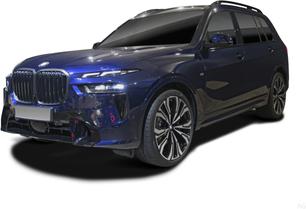
Large family-friendly luxury SUVs tend to be handsome in design but somewhat restrained. Until now. BMW has introduced a major facelift for its flagship SUV, the six- or seven-seat X7. Emphasis on face.
The new X7 adopts the striking but controversial front-end from the new 7 Series sedan, but the big, bold SUV is hiding some rather significant changes under the skin. Aside from a beefier diesel that now comes with mild hybrid tech, there’s also a redesigned cabin, massively upgraded tech, more standard features, oh, and a price increase.
Nobody really needs to drink beer and absolutely nobody needs to go skydiving. You don’t need tattoos nor to eat ice cream, nor put art on their walls, and absolutely nobody needs to play Stairway to Heaven, badly, on guitar. Likewise, nobody needs to buy a Chevrolet Camaro.
And there’s your answer if anybody has a go at you for arriving home in this big American muscle car, because if we only did things we needed to do, I’m pretty sure we wouldn’t be having as much fun.
The Chevrolet Camaro has been the Ford Mustang’s recurring nightmare since 1966, and this latest, sixth generation of the Chevy icon is available to continue the fight here in Australia, thanks to some re-engineering from HSV.
The SS badge is also legendary and was emblazoned on our test car, although it’s really a 2SS, and we’ll get to what that means below.
As you’re about to see, there are many good reasons to buy the Camaro SS and a few that might make you reconsider, but think about this – within the next two decades it’s entirely possible a car like the Camaro, with its 6.2-litre V8, may be banned because of emission regulations. Outlawed. You also never know how much longer HSV will continue to sell it in Australia. Maybe that’s reason enough to get one? Before it's too late.
When lined up against its direct rivals, the expensive X7 xDrive40d represents reasonable value for money.
It has a unique and bold look and a sumptuous, visually striking and well-appointed interior that has acres of space for family, friends, or for ferrying frequent flyers to the airport.
That wallop of performance from the big beefy diesel is the cherry on the top. This is how you do a mid-life update.
The Camaro 2SS is a real-life Hot Wheels car. This beast looks amazing, sounds incredible and is not overpowered, making it usable as a daily driver.
Now about that score. The Camaro 2SS lost big marks for not having AEB, lost more marks for the short warranty and no capped-price servicing and also some for its price, because compared to the Mustang it’s expensive. It’s also impractical (space and storage could be better) and uncomfortable to drive at times, but this is a muscle car, and a great one at that. It's not for everybody, but truly perfect for some.
There’s quite a bit that’s interesting about the X7’s design. Especially looking at it front on.
BMW certainly took a bold step when it introduced its toothy grille design for the X7 and the 4 Series range.
But the Bavarian brand has made some even braver design moves recently by introducing a blocky front-end with split headlights on its new-gen 7 Series flagship sedan. That look has now found its way onto the face of the updated X7.
As with the 7 Series, it won’t be to everyone’s taste. But you can’t deny it has a lot of presence.
The tail-lights have been tweaked and look good, but the sheer size of the X7 - it’s 5.2 metres long and 1.8 metres tall - means there’s no disguising the fact that it is a big, boxy SUV.
Inside the update ushers in significant design changes. The old dash and cowl is gone in favour of the ‘Curved Display’ that connects the instrument cluster and multimedia.
New slimline air vents, LED backlit ‘X7’ graphics on the passenger side of the dash, and a new gear shift toggle that replaces the old shifter elevate the cabin and give it a much more modern vibe than the old X7 - one that’s in keeping with the excellent iX electric SUV.
As was the case with Ford’s Mustang, something seemed to go bizarrely weird in the styling of the Camaro in the early 2000s, but by 2005 the arrival of the fifth generation saw a design that re-imagined the original (and I reckon the best) 1967 Camaro. Now this sixth-generation car is a sharper resolution of that, yet not without causing a bit of controversy.
Along with styling changes, such as redesigned LED headlights and taillights, the front fascia was also given a tweak, which involved repositioning the Chevy ‘bow-tie’ badge from the upper grille to the black-painted cross bar that separates the top and bottom sections. The reaction from fans was enough for Chevrolet to quickly redesign the front and move the badge back.
Our test car was the version with the ‘unpopular’ face, but I reckon it gets away with the look, thanks to the body colour being black, which means your eye isn’t drawn to that cross bar.
Here’s some pub ammo for you – Chevy calls the ‘bow tie’ on this Camaro a ‘Flow Tie’ because its hollow construction means air can pass through it to the radiator.
Big on the outside but small inside, the Camaro’s dimensions show it to be 4784mm long, 1897mm wide (not including mirrors) and 1349mm tall.
Ford’s Mustang is elegant, but Chevy’s Camaro is more macho. Big haunches, long bonnet, flared guards, nostrils. This is one mean-looking monster. Those high sides and ‘chopped’ roof design may also make you assume the cabin is more cockpit than lounge room.
That assumption would be right and in the practicality section further down I’ll tell you just how cozy the interior is, but for now we're just talking about looks.
I’m not sure what David Hasselhoff’s apartment looks like, but at a guess I reckon it would have a hell of a lot in common with the interior design of the Camaro 2SS’s cabin.
Soft, black leather seats with SS badging, giant metal air vents, door handles that look like chrome exhaust tips and a display screen that is oddly tilted towards the floor.
There’s also an ambient LED lighting system that lets you choose from 1980s-neon colour palettes, the likes of which we haven’t seen since Ken Done’s outstanding depiction of a Koala family sitting down to a barbecue lunch.
I’m not knocking it, I love it, and even though the guys in the office thought it would be hilarious to set the lighting to hot pink, I kept it that way because it looks awesome.
Regardless of the price point, a three-row SUV needs to be super practical and capable of family duties.
And if you want a BMW X5 but need a lot more space, this is the next logical step.
Let’s start in the front row. As mentioned, the new X7 gains the screen and tech set-up from other new BMW models like the iX and updated 3 Series. The Curved Display combines a 12.3-inch digital instrument cluster with digital speedo and a 14.9-inch multimedia screen.
You can customise the cluster layout and move things around on the multimedia screen, too. The latter is a touchscreen but you can also find what you need via the 'iDrive' controller in the console.
I have had some experience with this system in the iX and while it’s not without its flaws, it is a top notch system. There’s a lot to wrap your head around, but the use of app icons helps. And you can swipe through to your chosen screen.
It took far too long to work out how to find the trip computer, something that should be much easier to access, as well as a couple of other functions. And the climate controls are housed in the digital screen. I would always prefer a separate space with buttons for air-con.
But the graphics and displays - including the excellent head-up display - are excellent.
Other tech you get with the X7 includes the BMW’s 'Digital Key', which is an app that allows iPhone users to lock and unlock their car remotely, and BMW ID driver profile.
If you buy this car, just allow yourself some time to familiarise yourself with all that tech.
Elsewhere up front there’s a lovely new three-spoke steering wheel, and cute touches like the metal air vent toggles, black and metal touches and the choice of inserts.
The front seats are luxurious and comfortable and offer loads of side and thigh support. They have memory functions, too. There’s no shortage of headroom up front, either.
Storage-wise, the door will fit the largest of bottles, as well as other items thanks to generous door bins, while the central lidded box is also sizeable.
What about that second row?
The X7 xDrive40d usually comes standard with seven seats, but our test car was fitted with the $1500 captain’s chair option which drops seating capacity down to six people.
If you need the extra seating this is not the option for you, but it is great for families with bigger kids, and it would make for an excellent airport transfer car.
The seats are unbelievably comfortable and can be adjusted to suit your preference. They also have ISOFIX points and armrests.
Rear seat occupants have access to their own climate controls, air vents, USB ports, cupholders and ample door storage.
There is a massive amount of occupant space as well - stretch those legs out and enjoy it!
One of the X7’s selling points is that it is a genuine three-row SUV. That third row is not just for occasional use for very small children, like so many seven-seat SUVs. That row can be used every day.
Even with my six foot stature, I could easily climb in and out of the third row. That’s made even easier thanks to the mechanical seat functions.
Just hit the lever at the top of the second row seat and the motor moves the seat forward and up to ensure there’s a big enough aperture to get in and out of the rear seats.
You can also raise and lower the third row electronically via buttons on the boot wall - and they stow flush into the boot floor. Neat!
Once in the third row, there’s air vents, USB ports, bottle holders and storage and quite comfortable seats with more than enough leg and head room.
There’s even a third row section of the sunroof, operated from the second row. Lots of clever touches that people who use the third row will appreciate.
The boot has a few cool features, too, including a split tailgate.
You can even sit on the lower section - it can handle a load of up to 250kg - a perfect place to sit and watch the polo.
You can lower the suspension to aid loading larger items, and the X7 comes with a space-saver spare wheel.
Capacity is 300 litres with all seats in place, and I easily fit a pair of smaller suitcases in with that configuration. It increases to 2120L with the two rear rows folded.
The Camaro 2SS’s cabin is cozy for me at 191cm tall, but even with a similarly proportioned photographer riding shotgun it wasn’t too cramped. Believe it or not, we were able to carry all his equipment and lights, plus batteries for our night shoot (have you seen the video above – it’s very good). I’ll get to the boot size in a moment.
The Camaro 2SS is a four-seater, but those rear seats are only going to suit small children. I was able to fit my four year old’s car seat into place with a bit of gentle persuasion, and while he could sit behind my wife, there was zero space behind me when I was driving. As for visibility, we’ll get to that in the driving section below, but I can tell you he couldn’t see much from his tiny porthole.
Cargo capacity of the boot is small, as you’d expect, at 257 litres, but the space is deep and long. The problem is not the volume, however, it’s the size of the opening, which means you’ll have to cleverly angle larger items to get them in, like pushing a couch through your front door. You know, houses are big, but their openings aren’t. I know, profound.
Cabin storage is also limited, the door pockets were so thin my wallet couldn’t even slide into it (no, it’s not the wads of cash), but there was just enough room in the centre console storage bin for it. There are two cupholders, which are more like elbow holders, (because this part wasn’t swapped over in the conversion and that’s where your arm lands while driving) and a glove box. Rear-seat passengers have a large tray to fight over in the back.
The 2SS doesn’t have a wireless-charging pad like the ZL1, but it does have one USB port and a 12V outlet.
We are way out of Kluger and Sorento territory with the BMW X7. This is a bus for cashed-up families.
The upper-large SUV was introduced in mid-2019, but as part of the mid-life update, BMW has changed up the model grades. There are still two, but the xDrive30d and M50i have been replaced by the diesel-powered xDrive40d M Sport, and the performance-focused V8 petrol-powered M60i.
For the purpose of this review, we drove the 40d M Sport, which gets a power boost over the outgoing 30d - more on that in a bit.
As a result of the significant update, BMW has increased pricing on both grades. For the xDrive40d, it now starts at $174,900, before on-road costs, which represents an increase of more than $30,000 over the old 30d.
If you’re after a bigger dollop of performance, the M60i will cost you $205,900.
While the xDrive40d pricing seems steep, it undercuts a couple of other big luxury diesel SUVs including the Mercedes-Benz GLS400d ($179,500 BOC) and the Toyota LandCruiser-based Lexus LX F Sport ($176,091 BOC).
The most affordable diesel-powered version of the new-generation Range Rover starts from $226,806, so in that regard, the X7 40d is the best value in its class!
As well as the updated powertrain and in-car tech, the X7 xDrive 40d now comes with a hefty standard features list including metallic paint, 22-inch wheels, the M Sport pack, five-zone climate control, Harman Kardon 16-speaker sound system, a drive recorder, comfort seats, ‘Comfort Access’, roof rails, electric sunblinds, panoramic glass sunroof, digital radio, a head-up display, ambient lighting, wireless Apple CarPlay and Android Auto, and leather interior.
Our test car was fitted with a number of options that pushed the price to just under $185,000. The extras included huge 23-inch alloy wheels ($3500), BMW Individual 'Dravit Grey' body paint ($2400), a trailer tow hitch ($2500) and second row captain’s chairs ($1500).
Note that if you opt for that tow hitch, you’ll lose the ability to open the hands-free tailgate with a kick motion.
You know how people talk about cars not always being a rational purchase? This is the type of vehicle they’re talking about. The Camaro 2SS lists at $86,990 and the total tested price of our car was $89,190, because it was fitted with the optional 10-speed auto for $2200.
In comparison, the V8 Ford Mustang GT with the 10-speed auto is about $66K. Why the big price difference? Well, unlike the Mustang, which is built as a right-hand-drive car in the factory for places such as Australia and the UK, the Camaro is only built as a left-hand drive. HSV puts about 100 hours into converting the Camaro from left to right-hand drive. That’s a big job and involves gutting the interior, taking out the engine, swapping the steering rack and putting it all back together again.
If you still think $89K is a lot to spend on a Camaro, then think again because the top-of-the-range hardcore race-car-for-the-road ZL1 Camaro lists for about $160K.
Those are only the two grades of Camaro in Australia – the ZL1 and 2SS. The 2SS is a higher-specified version of the 1SS sold in the US.
Standard features in the 2SS include an eight-inch screen, which uses Chevrolet’s Infotainment 3 system, a nine-speaker Bose stereo, Apple CarPlay and Android Auto, head-up display, rear-view camera and rear camera mirror, dual-zone climate control, leather seats (heated and ventilated, plus power adjustable in the front), remote start, proximity key and 20-inch alloys.
That’s a decent amount of kit and I’m particularly impressed by the head-up display, which you don’t get in the Mustang, and also with the rear-vision-mirror camera, which turns the entire mirror into an image of what’s behind the car.
The X7 xDrive40d is powered by a 3.0-litre, in-line six-cylinder turbo-diesel engine, that gets a boost in power - it pumps out 259kW of power and 720Nm of torque - 64kW/100Nm more than the 30d.
It now also comes with 48-volt mild hybrid tech, which uses an electric motor integrated in the eight-speed automatic transmission.
It drives all four wheels via BMW’s 'xDrive' all-wheel drive system and it is fitted with air suspension for a cushy ride. Towing capacity is rated at 3.5 tonnes braked or 750kg unbraked.
If you are keen on off-roading in the X7, it has a 221mm ground clearance, and a fording depth of 500mm, but maybe best to keep it on the tarmac.
Sure, the 2SS doesn’t produce the mammoth 477kW of the ZL1, but I’m not complaining about the 339kW and 617Nm it does make from its 6.2-litre V8. Besides, 455 horsepower from the 2SS’s naturally aspirated LT1 small block is plenty of fun and the sound on start-up through the bi-modal exhaust is apocalyptic - and that’s good.
Our car was fitted with the optional 10-speed auto ($2200), with paddle shifters. The automatic transmission was developed as a joint venture between General Motors and Ford and a version of this 10-speed is also found in the Mustang.
This traditional torque-converter automatic isn’t the quickest shifting thing, but it suits the big, powerful and slightly lethargic personality of the Camaro 2SS.
According to BMW, the official combined cycle fuel figure for the X7 40d is 8.0 litres per 100 kilometres.
Our fuel figure after nearly a week of mixed city, freeway and country driving was 9.0L/100km, which isn’t too far off the mark.
It has an 80 litre fuel tank and an approximate driving range of 1000km.
Okay, brace yourself. During my fuel test I traveled 358.5km and used 60.44L of premium unleaded, which comes out to be 16.9L/100km. That sounds awfully high, but actually it's not as bad as it looks, considering the Camaro 2SS has a 6.2-litre V8 and I wasn't driving it in a way that would conserve fuel, if you get my drift. Half of those kilometres were on motorways at 110km/h, the other half would have been in bumper-to-bumper city traffic, which would have driven up the fuel usage, too.
The official fuel consumption after a combination of open and urban roads is 13L/100km.
With a big plush SUV like this, you’d expect a comfortable ride. And for the most part, the X7 delivers that, while offering more than a bit of grunt, as well.
The X7’s height ensures a high driving position, and there’s plenty of glass for decent visibility.
Propelling a 2.5-tonne SUV could be a struggle for a lesser engine, but the meaty diesel offers ample torque and the mild hybrid set-up helps to reduce initial turbo lag significantly - that means it is responsive from a standing start.
I wouldn't have thought a vehicle of this size and shape was capable of a 5.9-second 0-100km/h time, but here we are.
As a result of all that torque and power, overtaking is a breeze - providing there is enough room on the other side of the road for both cars to fit.
That size and heft have an impact on cornering and dynamics. You simply can’t carve through tight corners in this car, but with that said, it’s more entertaining than you’d think.
Steering feel is weighted on the heavier side and it’s as sharp as it needs to be in a car like this. It would be weird if the steering was too pointy.
Ride quality is top notch - as it should be - and while the massive optional 23-inch wheels and low profile tyres mean you’ll notice potholes and the like, it largely soaks up imperfections with ease.
That level of refinement extends to the hushed ride, too. The cabin is a quiet and serene place to spend time - but not quite to the same degree as a 7 Series.
Parking in tight spots is a challenge, and manoeuvring in narrow streets could take a while, too. But you could tell that just by looking at the X7.
Exactly how an American muscle car should be – loud, a bit uncomfortable, not all that easy, but a hell of a lot of fun. Those first three attributes may sound like negatives, but take it from somebody who owns and loves hot rods - it’s part of the appeal. If an SUV is not easy to drive or comfortable there's a problem, but in a muscle car it can enhance the engagement and connection factors.
That said, there will be many who think the ride is too firm, the steering heavy and that it feels like you’re staring out a letterbox slot through the windscreen. It’s all true, and there are other performance cars out there which make as much horsepower, handle better and are so easy to drive they can almost (and some do) pilot themselves, but they all lack the feeling of connection the Camaro offers.
Wide and low-profile Goodyear Eagles (245/40 ZR20 at the front and 275/35 ZR20 at the rear) provide good grip, but also feel every blemish in the road, while four-piston Brembo brakes all round pull the Camaro 2SS up well.
Acceleration from 0-100km/h isn’t disclosed by HSV or Chevrolet, but the official line is that it’ll nail it in under five seconds. Ford reckons its Mustang GT can do the same in 4.3 seconds.
If you were wondering if you could live with the Camaro daily, the answer is yes but, much like wearing leather pants, you’ll have to suffer a bit to look this rock and roll. I put 650km on the clock of our 2SS during my week with it, using it daily in peak-hour traffic into the city, in supermarket car parks, and for daycare drop offs, with country road and motorway drives on the weekend.
The seats can get uncomfortable over long distances and those low-profile ‘run-flat’ tyres and firm dampers don’t make life any comfier. You’ll also find that wherever you go people will want to race you. But don’t get sucked in; you’re slower than you look - another muscle-car trait.
Sure, it’s not the quickest performance car I’ve steered and on winding roads its handling capability is not up there with many sports cars, but that V8 is responsive and angry in Sport mode and smooth in its delivery of grunt. The exhaust note is sensational and the steering, while heavy, offers great feel and feedback. The sound isn’t electronically enhanced but it uses bi-modal valves, which open and close at different engine and exhaust loads to produce its addictive bark.
The X7 has size on its side when it comes to occupant protection, but it also comes with a decent level of safety gear as standard.
Features include auto emergency braking (AEB) with pedestrian and cyclist detection, a safe exit assist function to avoid 'dooring', and an advanced lane keeping aid, ‘Parking Assistant Professional’, ‘Trailer Assistant’, and hill descent control.
The X7 is yet to be crash tested by the local safety authority, ANCAP, or by Euro NCAP.
The Chevrolet Camaro 2SS doesn’t have an ANCAP rating, but it’s certain that it wouldn’t achieve the maximum five stars because it doesn’t have AEB. There is forward-collision alert which warns you of an impending impact, there’s also blind-spot warning, rear cross traffic alert and eight airbags.
For child seats (and I did put my own four-year-old in the back) there are two top-tether points and two ISOFIX mounts in the second row.
There's no spare wheel here, so you’ll have to hope you’re within 80km of home or a repair shop, because that’s how far the Goodyear ‘run-flat’ tyres will get you.
The low (ish) score is for the lack of AEB. If the Mustang can be fitted with autonomous emergency braking, then the Camaro should be, too.
After copping a bit of flack from motoring media and buyers, BMW finally increased its warranty terms last year from three years to an industry standard five-year, unlimited kilometre warranty on its vehicles, including the X7.
Rather than a set servicing schedule, BMW offers condition-based servicing which is when the vehicle’s computer alerts the owner that it requires a service.
BMW doesn’t offer capped-price servicing, but does have a pre-paid 'Service Inclusive Package' with terms ranging from three years/40,000km to five years/80,000km and beyond.
A five-year basic package for the X7 costs $2800, which is not too bad considering the positioning of this model.
The Camaro 2SS is covered by HSV’s three-year/100,000km warranty. Servicing is recommended at nine-month/12,000km intervals, with a complimentary inspection at the end of the first month. There is no capped-price-servicing program.