What's the difference?
Without a whole lot of fanfare BMW has slipped yet another model into its Australian line-up.
Sitting alongside existing coupe and convertible variants, the new 4 Series Gran Coupe follows the template established by the previous gen version.
A sports luxury four-door with a sleek, fastback twist, it provides a more adventurous alternative to its close 3 Series cousin.
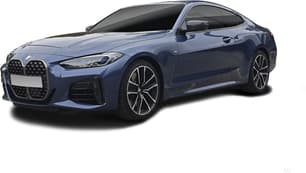
Offered in three grades, this is the M440i xDrive, the 3.0-litre, six-cylinder, all-wheel drive 4 Series Gran Coupe flagship.
It competes with premium all-wheel drive four-doors like Audi’s S5 Sportback, the Jaguar XF P300 R-Dynamic HSE, and the Mercedes-AMG C 43.
A new-generation Mercedes-Benz GLB is just around the corner, so the current model is now on its farewell tour.
When it launched in 2019 it stood out from the crowd as a premium small-to-medium SUV with the flexibility of seven seats. Even now no other premium carmaker offers a car that’s a direct rival to this. You need to look at mainstream options instead that are slightly larger.
A mid-life update that arrived in 2023 brought some minor tweaks including different exterior and interior styling, along with mild-hybrid power for certain variants.
On test here is the entry-level GLB200 which didn’t receive mild-hybrid assistance. Read along to find out whether it’s the pick of the line-up.
The BMW M440i xDrive Gran Coupe manages to combine sleek design with a fun-to-drive personality and surprising practicality. It’s a rapid premium, four-door, five-seater offering extra flair, and in this part of the market, good value. But more than anything else it’s got a cracking in-line six under the bonnet.
The Mercedes-Benz GLB is an oddball. While it isn’t my definition of beauty, it's a surprisingly capable and spacious small-to-medium SUV.
The entry-level GLB200, while comfortable, feels a bit underdone in the engine department. Therefore the mid-spec GLB250 with the more-powerful 2.0-litre turbo and mild-hybrid assistance plus all-wheel drive grip is the better pick.
So, how does this four-door 4 Series differ from a four-door 3 Series? The answer is as plain as the nose on this car’s face.
BMW’s head of design, Adrian van Hooydonk, has been expanding the brand’s signature ‘kidney grille’ in every conceivable direction, and this is the much talked about interpretation adorning all 4 Series models (petrol, hybrid and electric) as well as the M3 sedan.
The new Gran Coupe is longer, wider, and taller than the outgoing model, and the track is broader, front and rear. The wheelbase has also been extended, now a whole 5.0mm longer than the 3 Series.
The DRLs and headlight main beams are LED with laser high beams, immense gills square up the edges of the front clip, while a vent and the strake attached to it stand the car apart. Plus, of course, the doors are frameless.
One niggle, though. I’m not in love with the slender door handles. It’s hard to get a good grip on them, especially in the wet.
Standard 19-inch alloy rims are shod with Pirelli P Zero rubber 245/40 fr / 255/40 rr), the roofline slopes distinctly towards the rear, a lip spoiler on the trailing edge of the tailgate is classic BMW, darkened LED tail-lights wrap around the rear corner, and a diffuser-type panel is flanked by large exhaust apertures.
Our car’s ‘Aventurine Red’ finish is a $3850 option, but to my eyes anyway it looks superb.
Exterior trim including the grille frame, front air intake inserts, mirror upper housing, model designation badges, and tailpipe are finished in ‘Cerium Grey’, which I reckon 99.9 per cent of people will see as black.
The interior will be familiar territory for any current BMW owner, the 12.3-inch digital instrument screen sitting in a compact, hooded binnacle, and partnering with a 10.25-inch multimedia display standing proud of the dash above the broad centre stack.
The seats are trimmed in top-shelf leather with blue contrast stitching, plus the grippy sports wheel is also wrapped in genuine hide.
BMW calls the finish on the main buttons and controls ‘Galvanic’ which translates to a slick silver metallic look and feel. Configurable ambient interior lighting is a nice touch, and the broad console enhances the driver-focused feel, with a sprinkling of carbon-fibre around the centre console and dash lifting the sense of occasion.
Overall, the interior feels clean and classy with an obvious attention to detail.
This isn’t the prettiest car ever. It has the Mazda CX-8 or CX-80 effect where you can tell a smaller car has been stretched and extended to create more interior space. It just looks a little awkward as a result.
The rear section of the GLB in particular is much higher and boxier than the GLA which makes it look rather back-heavy. Thankfully roof rails are standard which toughens the look somewhat.
The facelift that was introduced in 2023 brought an updated front bumper, as well as tweaked LED headlight and tail-light signatures. The changes aren’t wildly different from the original car that launched in 2019 but it’s still fresh enough.
Inside is where this car is starting to look its age. While Mercedes-Benz was one of the first to introduce a wraparound screen set-up combining the digital instrument cluster and touchscreen multimedia system into a single unit, many have copied this and it no longer looks unique.
It doesn’t help that the dual 10.25-inch screens are small now in comparison to newer rivals. It’s standard for a digital instrument cluster to be closer to 12.3-inches in diameter now.
A main interior change with this facelift included the removal of the touchpad controller on the centre console. In its place is now a shallow storage area which doesn’t really serve a purpose.
There’s also a new AMG-style steering wheel as standard which has fiddly gloss black touch sliders that get grimy upon use.
While the changes are welcome, the ageing roots are still present. You can’t escape the blingy touches that just end up looking cheap and tacky.
A key example of this are the air vents which have obnoxious interior ambient lighting in them to try and make the cabin look cool.
I’m also not a huge fan of the star pattern trim on the dashboard and the swathes of stainless steel-looking inlays.
At close to 4.8m long the 4 Series Gran Coupe is a sizeable machine. Up front, the feeling is airy and comfortable, and the rear is surprisingly spacious, especially in light of the car's sloping roofline.
At 183cm I have to fold myself tightly to fit under the low roof, but once inside I have enough room to sit behind the driver’s seat set for my position with more than enough legroom and adequate headroom. Put three full-size adults across the back row, though, and there will be breathing difficulties.
Kids will be fine, however, and individual vents with adjustable temp in the rear was a big plus during a particularly hot test week.
For storage there are generous door bins in the front with room for large bottles, a decent glove box, dual cupholders in the centre console, a reasonable lidded bin (which doubles as a centre armrest), and the wireless device charging bay (forward of the gearshift) makes a handy oddments space when not in use.
In the rear, again the doors feature pockets with room for (medium-size) bottles, there’s a fold down centre armrest with two cupholders, but thanks to the one-piece shells on our test car’s optional M Sport front seats there are no map pockets.
Power and connectivity runs to a USB-A socket and a 12V outlet in the front centre console, as well a USB-C port in the front storage bin, a pair of USB-Cs in the rear, and a 12V outlet in the boot.
Speaking of which, lift the tailgate and with the rear seat upright we were able to fit all three of our suitcases or the beefy CarsGuide pram into the healthy 470-litre (VDA) boot space.
Lower the 40/20/40 split-folding rear seat down and 1290 litres of volume is at your disposal. Plus there are handy bag hooks and tie-down anchors to help secure loose loads.
You can also tow a braked trailer up to 1.8 tonnes (750kg unbraked), but don’t bother looking for a spare of any description, a repair/inflator kit is your only option.
Up front the driver’s seat is comfortable, offering electric adjustability and lumbar support, extendable thigh support and heating. Some extra bolstering on the seat base would be nice though as it’s a little flat for my liking.
While the glossy piano black touch sliders on the steering wheel aren’t the most intuitive, I love holding this leather-wrapped wheel as it straddles the line of being thick enough but not too thick. BMW should take note…
The thin stalks behind the steering wheel are a joy to use and have a nice thwack to them. I appreciate the column-mounted gear selector as this frees up more space on the centre console, though it could be utilised better. More on this in a bit.
The digital instrument cluster offers a range of different themes to select from, though the standard version looks the nicest and offers the most customisation. It’s nice being able to put a full-width map display on the instrument cluster.
The touchscreen multimedia system offers a clean and intuitive interface that’s hard to get lost in. For the most part, however, I ended up using smartphone mirroring. Thankfully this update brought wireless Apple CarPlay and Android Auto.
It’s nice having the row of physical climate control switchgear within easy reach especially as carmakers are now integrating these into the touchscreen interface. Even Mercedes-Benz is guilty of this in its newer cars.
There isn’t a tonne of general storage on the centre console beyond the deep central box which has a split-opening lid. The wireless charger barely fits my iPhone 15 Pro Max, the cupholders are on the small side and the aforementioned storage section where the touch slider once was is useless from a storage standpoint.
Moving to the second row, it’s rather spacious for a small-ish SUV. At a leggy 182cm tall, I have plenty of leg and headroom behind my own driving position.
You’re able to slide and recline each individual seat in the second row to prioritise second-row comfort or allow more space for third-row passengers. It’s needed because third-row space is tight!
Second-row amenities include air vents mounted on the back of the centre console, various storage spaces, two USB-C ports, as well as a fold-down armrest with cupholders. Also if you stare at the back of the centre console it looks very much like a screaming face.
As already mentioned, the third row isn’t the most spacious ever, although this is a small-ish SUV so best not to expect palatial levels of room. It’s likely more for occasional use by children and it’s good to note there is airbag coverage back there.
Amenities are few and far between in the third row, limited to just a few storage spots and a USB-C port on both sides. Unfortunately there are no air vents.
At the back there’s a handsfree power tailgate which is handy if you’ve got your hands full. It opens swiftly, though with all three rows of seating upright there isn’t much room at all. Mercedes-Benz doesn’t even quote a boot capacity figure, but it’s only enough for a bag or two.
Thankfully if you’re not using the third row the benefit of this car is there’s much more boot space than the GLA. Mercedes-Benz claims there’s a generous 565L of boot space, which can further expand to 1800L with the second row folded.
Unfortunately there is no spare wheel in the GLB200 as it has run-flat tyres as standard, though regular tyres with a tyre repair kit is a no-cost option.
We’re in a zone some way North of $100K here with cost-of-entry running to $115,900, before on-road costs. So, as well as the included powertrain, suspension, and safety tech you should rightfully be expecting a lengthy standard features list.
And the M440i Gran Coupe goes toe-to-toe with its heavyweight Euro competition, featuring three-zone climate control air, adaptive cruise control, ‘Laserlight’ headlights, that 12.3-inch ‘BMW Live cockpit Professional’ instrument display and 10.25-inch ‘Control Display’ multimedia touchscreen managing navigation, the 16-speaker/464W harmon/kardon Surround Sound audio system (with Apple CarPlay and Android Auto integration) and a host of other on-board functions.
There’s also the ‘Vernasca’ Black leather trim, an electric glass sunroof, the leather-trimmed sports steering wheel, the electric sports front seats are heated and there’s wireless charging for compatible devices.
The Mercedes-Benz GLB200 is currently priced at $67,600 before on-road costs.
There aren’t many premium seven-seat SUVs that are this compact out there. The closest rivals would be the mid-size Volkswagen Tayron and related Skoda Kodiaq.
But for this price you can easily get something larger like a Kia Sorento, Hyundai Santa Fe or Mazda CX-80. You do have to ditch the premo badge though.
For your money you do get a generous amount of standard equipment. This includes 19-inch alloy wheels, LED headlights, dual 10.25-inch screens, wireless Apple CarPlay and Android Auto, interior ambient lighting, as well as heated front seats with electric adjustment.
However our tester was optioned with a panoramic glass sunroof ($1900) and black leather upholstery ($1539), bringing the as-tested price to $71,039 before on-road costs. This is still around $18,000 off the cheapest GLC.
A nifty reason for opting for this car over the GLA is because there’s a third row of seating. It's not the most spacious row, but when folded there is more boot space. More on this later.
Under the bonnet is BMW’s (B58) all-alloy 3.0-litre twin-scroll turbo intercooled, in-line six-cylinder engine, driving all four wheels via an eight-speed automatic transmission and electronically controlled clutch pack, as well as an electronic limited-slip differential at the rear.
It features high-pressure direct-injection and BMW’s ‘Valvetronic’ system managing air flow to the intake side, to produce 285kW at a relatively high 5800-6500rpm. But the big punch is 500Nm of peak torque from just 1900rpm all the way to 5000rpm.
The M440i is also a mild-hybrid with a 48-volt starter motor-generator and supplementary battery able to give an 8.0kW kick at low engine speeds.
The Mercedes-Benz GLB200 is powered by a 1.3-litre turbocharged four-cylinder petrol engine which produces 120kW and 270Nm.
This engine also features in ‘200’ versions of the A-Class, CLA and GLA, plus versions of it also feature in the Renault Arkana, Captur, Duster, and Kangoo, as well as the Nissan Qashqai and now the new Mitsubishi ASX.
It’s mated to a seven-speed dual-clutch automatic transmission with drive sent to the front wheels only.
Unlike the more powerful GLB250 and AMG GLB35 all-wheel drive trims, the GLB200 is the only model to go without 48V mild-hybrid assistance in Australia. It was originally promised when this facelifted model was announced in 2023.
Mercedes-Benz claims the GLB200 can do the 0-100km/h sprint in 9.3 seconds and top speed is 207km/h.
BMW’s official fuel economy figure for the M440i xDrive Gran Coupe, on the ADR 81/02 - urban, extra-urban cycle, is 8.2L/100km, the 3.0-litre turbo six-cylinder emitting 187g/km of C02 in the process.
Stop/start is standard, and we saw an average of 11.1L/100km over city, B-road and freeway running during a week with the car.
With the 59-litre tank brimmed (with minimum 95RON premium unleaded) that real-world test number translates to a range of around 530km.
Mercedes-Benz claims the GLB200 has a combined fuel consumption of 7.5L/100km.
During our urban and metropolitan-based testing, however, we saw an average of 9.0L/100km according to the trip computer which isn’t great but also not the worst I’ve seen. Expect this figure to balloon out further if you load more people onboard as the engine will have to work harder.
There is a 52L fuel tank which requires a minimum of 95 RON premium unleaded petrol.
Using my as-tested fuel consumption figure, this means the GLB200 has a theoretical range of up to 578km.
BMW says the M440i xDrive Gran Coupe will accelerate from 0-100km/h in 4.7sec, and I reckon the threshold for a properly quick car is sub-five seconds.
The 3.0-litre turbo six develops its peak power of 285kW between a relatively lofty 5800-6500rpm, but the big number is a solid 500Nm punch of pulling power delivered between 1900-5000rpm.
Squeeze the throttle pedal pretty much anywhere in the rev range and the response is glorious. Rapid acceleration accompanied by raucous engine noise and rorty exhaust note (albeit with some synthetic support). Various pops and bangs in the Sport settings add extra entertainment..
The eight-speed auto gets some electric support from the mild-hybrid system to fill the torque gap on up shifts, and the result is a conventional torque-converter transmission that behaves like a dual-clutch.
Shifts are seamless in general driving, and satisfyingly quick in a more aggressive mode, the wheel-mounted paddles dialing up the fun in manual changes.
Suspension is double wishbone front and multi-link rear with the standard ‘Adaptive M Suspension’ built around an adaptive damper set-up.
The change between the ‘Comfort’ setting to the ‘Sport’ or ‘Sport+’ calibration is close to instant and makes a discernible difference, especially in terms of ride comfort.
I found the best ‘Individual Sport’ arrangement to be damping in Comfort, with the steering engine and transmission in Sport. The car flows so beautifully through corners with urgent response from the powertrain.
By all means dial up the suspension if you’re having a real crack, but the car feels superbly balanced, stable and predictable in Comfort (front to rear weight distribution is 50:50).
The electrically-assisted variable-ratio steering is nicely weighted with good road feel, and the grippy sports steering wheel is a nice point of contact.
The xDrive AWD system’s default setting is rear-biased, although it will push most of the drive forward when required. But the RWD feel is unmistakable.
The M440i weighs in at around 1.9 tonnes but feels lighter and more nimble than that figure would typically indicate.
A standard electronically-controlled M Sport limited-slip differential puts the power down confidently. I have a favourite LSD test corner on my regular evaluation drive, a sharply twisting and rising left-hander.
Rolling into it in a low gear before planting the throttle mid-corner, the car simply hunkers down without a hint of fuss (or traction loss) as it rockets out the other side.
Optional M Sport front seats ($2000) provide comfort and firm location in equal measure and in terms of ergonomics BMW knows how to focus on the driver and set-up an efficient environment. Key controls are perfectly positioned and simple to operate.
I have an issue with the ‘Lane Departure Warning’ function, however, which is too quick to intervene and overly intrusive when it does so. I turned the ‘Steering Intervention’ function off. You can dial down steering wheel vibration warnings, too.
The standard M Sport brakes feature big vented rotors front and rear, with fixed four-piston front calipers doing the bulk of the work. They’re strong but don’t bite or release too aggressively. It’s easy to grease in a smooth application.
While this 1.3-litre turbo engine may be sufficient in the smaller A-Class and GLA, it barely scrapes by in the GLB200.
Even with one person onboard the engine has to rev out the first few gears to around 3000rpm to keep up with traffic from the lights. It doesn't have the nicest engine note either.
It doesn’t help that the dual-clutch automatic can be a little vague from a standstill, taking a beat to kick into action. This is most noticeable when doing low-speed manoeuvres or reversing.
Although initial acceleration can be on the thrashy side, rolling acceleration while at speed is a lot more linear and calm thanks to peak torque coming on tap from 2000rpm. This means the car will only downshift when it needs to.
There are a few different drive modes you can select from, but the default ‘Comfort’ mode feels the most natural. ‘Eco’ does quell some of the rev flares during initial acceleration, though the engine feels much more tardy in general.
Linked with these drive modes are the adaptive dampers. This is a very comfortable car, especially on the standard smaller 19-inch alloy wheels as there’s plenty of tyre sidewall to absorb bigger bumps.
Coupled with this is sporty steering that’s direct and makes the car feel nimble despite its 1.7-tonne kerb weight.
It really is the best of both worlds because you get the fun and sporty characteristics from the steering, plus the comfort and supple feeling from the suspension. It’s hard to fault this set-up.
In terms of noise, vibration and harshness (NVH), if you look beyond the sometimes shouty engine, this car is quiet and refined. There’s some tyre roar at higher speeds, but many European vehicles have this trait.
It’s also a benefit that this car is a little older as there aren’t many safety system-related bings and bongs that distract from the cabin ambience.
Active crash-avoidance tech in the M440i xDrive Grand Coupe is impressive with AEB standard, as well as lots of assistants and warnings, namely: ‘Steering and Lane Control Assistant’, ‘Cross Traffic Warning’ (front and rear), ‘Lane Keeping Assistant’ (with ‘Lane Departure Warning’ and ‘Lane Change Warning’), ‘Crossroads Warning’, ‘Evasion Assistant’, and ‘Parking Assistant Plus’ (including ‘3D Surround View and Reversing Assistant’).
If an impact is unavoidable there are six airbags on-board (driver and front passenger front and side, plus side curtains) as well three top tethers and two ISOFIX positions for child seats in the second row.
Plus an ‘Intelligent Emergency Call’ function automatically dials back-to-base if the car has been involved in a crash, and a comprehensive first aid kit is on-board.
The BMW scored a maximum five-star ANCAP assessment in 2019.
The Mercedes-Benz GLB received a five-star ANCAP safety rating based on Euro NCAP testing conducted in 2019.
It received 92 per cent in Adult Occupant Protection, 88 per cent in Child Occupant Protection, 78 per cent in Vulnerable Road User Protection and 76 per cent in Safety Assist.
As standard there are nine airbags, autonomous emergency braking (AEB), blind-spot monitoring, rear cross-traffic alert, lane-keep assist, adaptive cruise control, front and rear parking sensors, as well as a surround-view camera.
A nifty safety feature is the Pre-Safe system which tightens the seatbelts and plays a tone when it detects an imminent crash.
There are ISOFIX child seat anchor points on the outboard second-row seats, as well as on the two third-row seats. All three second-row seats, plus the two third-row seats also have top-tether points.
The M440i Gran Coupe is covered by BMW’s three-year/unlimited km warranty (including paintwork), as well as 12-year/unlimited km anti-corrosion (perforation) cover.
That’s off the premium market pace now with Genesis, Jaguar, and Mercedes-Benz at five years/unlimited km and Lexus set to join them from January 1st, 2022.
That said, roadside assistance is provided for the duration of the main warranty, but it’s worth noting “rattles and squeaks” are only covered for one year.
Service is condition-based, the car telling you when maintenance is required, and a range of service packages are available. The basic plan covering a 4 Series for five years/80,000km comes in at $1750.
The GLB200 is covered by a five-year, unlimited-kilometre warranty, like the rest of the Mercedes-Benz line-up.
Logbook servicing is every 12 months or 25,000km, whichever comes first, which is good if you do a lot of driving.
You can purchase a three-, four- or five-year service package which costs $3495, $4650 and $6185, respectively. With the latter this equals $1237 per service, which is expensive, although it is cheaper than the slightly larger GLC.