What's the difference?
To say the BMW M4 CS is a hot ticket in Australia is something of an understatement.
Consider this. There is an even more expensive one, the M4 CS Edition VR46 – at a cool $346,900 – and it sold out in less than an hour. Now, granted, Australia only got four examples, but still, demand was running hot.
That car makes this one, the regular M4 CS, seem like an absolute steal. It's only $254,900 (yes, the word 'only' is doing a lot of heavy lifting in that sentence), and it shares the same upgrades, and makes the same monstrous power, as the VR46 – for Valentino Rossi’s 46th birthday – only it does it for around $100K less.
See? A bargain. At least, that's how I'd be justifying it to myself if I had a quarter of a million burning a hole in my pocket.
So, this or a Porsche 911? Read on.
I’m family testing the updated Genesis G70 this week, which has seen some tweaks to its technology and safety systems.
The G70’s release also sees the line-up trimmed to one highly-specified Sport Luxury grade, available as a four-cylinder Shooting Brake wagon or the V6 sedan on test here.
It competes with other mid-size sedans like the Audi A4, BMW 3 Series and Mercedes-Benz C-Class. So, how does the G70 handle life with a small family of three? Keep reading to find out!
Brutal, bruising and utterly brilliant, the M4 CS will be an acquired taste due to its no-compromise approach, but those willing to take the leap will find a performance car like few others at their disposal.
The updated Genesis G70 3.3T Sport Luxury is beautiful to look at and drive. It features premium features, trims and great power but the cabin is tight on space. Which makes it a little awkward to use, so this will suit a small family best or families where this may not be the primary mover. That said, I love the after-care program and it suited my small family of three, so it gets an 8.0/10 from us.
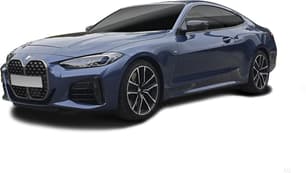
The M4 CS is familiar in all the right ways, but definitely looks significantly jacked up compared to its lesser siblings.
Part of that is the extensive use of carbon everywhere, from its bonnet panels to its roof, front lip, side skirting and boot spoiler. But also because of its super-muscular angles and creases, including the huge dome in its bonnet.
Also exclusive to this M4 CS is the light treatment, with the front LEDs lighting up with yellow highlights the brand says are supposed to be reminiscent of GT racing cars.
At the back, the rear lights are flush with fibre optic lighting, lending a flowing and unique light signature that looks epic at night.
Inside, it's a sea of carbon, with the lightweight racing seats, the dash inserts and the centre console all lined in it. It is a perfectly finished space, though, and one that's also flecked with red, including a 12 o'clock band on the thick-rimmed steering wheel, the seat backs, the contrast stitching and the paddle shifts.
Be warned, though, it takes some acrobatics to climb into or out of the CS. The seat bottoms have these super high edges that double as grab handles, but require some awkward contortions to navigate.
In short, it looks angry, this M4 CS, inside and out.
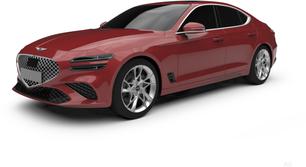
The G70 sedan is absolutely gorgeous to look at and the our test vehicle's 'Kawah Blue' paintwork makes the crisp pleating across the body stand out.
The G70 has a muscular stance, much like its BMW rival, but the rear is softer in its shaping.
The front looks sophisticated with the wide-set LED lights and black air-intake vents. The sporty 19-inch alloy wheels and red calipers behind them hint at what the powerful V6 engine can do.
The interior looks high-end with our test vehicle’s white quilted Nappa leather upholstery and a soft-touch black headliner. The dashboard looks solid and robust but the slick looking 10.25-inch touchscreen multimedia system and digital climate control panel elevate the overall design.
The only thing I didn’t like about the design was the ambient lighting. It’s limited to two panels on the roof and is a little distracting when you drive at night. I think if it was scattered more throughout the cabin, it would be less intrusive.
It all boils down to how you classify practicality in a car like this. I mean, the basic stuff is all there – it's got two doors, four seats and a boot capacity of 440 litres.
It measures 4801mm in length, 1918mm in width and 1399mm in height, and room for front seat riders is good, but less so for anyone you squeeze into the back. There are even ISOFIX points for a child seat.
But if you consider practicality the practical pursuit of performance, then the M4 CS has plenty of perks.
The practicality is hurt a little by the space available for passengers. The front row benefits the most when it comes to head- and legroom but if you’re ferrying passengers in the back seat, you’ll have to scoot your seat forward to accommodate them.
Especially if they’re tall because my knees brush the back of the driver’s seat when it’s in my driving position and I’m only 168cm tall!
The individual storage options throughout the car are okay for the class with the front enjoying a small middle console and glove box, two cupholders and two small drink bottle holders in each door.
The rear gets map pockets, two cupholders in a fold down armrest and two very small storage bins in the doors.
The other amenities are great in both rows and a high-level of comfort will be found for adults with the heat and ventilation functions on the front seats and the heat function on the rear outboard seats.
However, the width of the rear seat and the tall transmission tunnel means the middle seat should be strictly reserved for a kid. Think of the G70 as more of a four-seater if you have adults to carry.
The boot has a 330-litre capacity and it’s not too hard to reach to the very back if items roll that way. The back seat has a 60/40 split and there is a temporary spare tyre underneath the floor.
In terms of technology, you get a USB-A and USB-C port up front, as well as, a 12-volt socket and wireless charging pad to choose from. Rear passengers get two USB-C ports and the boot features another 12-volt outlet.
The 10.25-inch multimedia system looks great and is easy to use with a responsive touchscreen. It also has built-in satellite navigation, wired Apple CarPlay and Android Auto and the system now features over-the-air updates and Genesis Connected Services functionality.
The digital climate panel is responsive and very simple to operate, which is handy when on the go. The 12.3-inch digital instrument cluster is semi-customisable and it’s handy that the 8.0-inch coloured head-up display pulls through satellite navigation directions and traffic sign information.
We're talking a $254,900 entry price for the M4 CS, which – despite my attempts at justification – is a lot. Remember, the regular M4 is $168,700, and the M4 Competition is $186,500, so we're talking a sizeable premium here.
BMW justifies that price increase in two ways. The first is scarcity, with the M4 CS limited to just 50 examples in Australia. And the second is by dialling up every aspect of the M4's performance to terrifying levels.
The engine outputs are up, the weight is 20kg down, there are better brakes, better seats, a louder exhaust, a stiffer chassis – it goes on and on.
We'll get to some of the performance stuff in a moment, but here's what else your money buys you with the M4 CS.
It starts outside with staggered alloys, 19-inch up front and 20-inch at the rear, wrapped in track-ready rubber. There's also hi-po 'M Compound' brakes with red calipers, lightweight carbon racing seats that are heated up front, an Alcantara-trimmed steering wheel, the 'M Carbon' exterior package with carbon bonnet and roof, adaptive 'M Suspension' and a titanium exhaust that howls like the winds of hell.
The less performance-focused stuff is similar enough to the other M4 models including a 12.3-inch centre screen with digital radio, Apple CarPlay and Android Auto, a second 14.9-inch screen that handles your driving data and a head-up display. There's also twin-zone climate control, Merino leather upholstery and ambient interior lighting.
But all of that is secondary, really. This is about performance, specifically of the brutal kind.
The G70 3.3T Sport Luxury sedan on test here is priced at $88,000, before on-road costs, which is $7000 more expensive than the 2.0T Shooting Brake version. That positions it right in the middle of its nearest competitors and you get some fab features included.
The premium items include electric front seats with heat and ventilation functions, heated rear outboard seats, Nappa leather upholstery and other leather trims, a sunroof, a heated leather-wrapped steering wheel and a premium 17-speaker Lexicon by Harman sound system.
The update sees the G70 now have an intelligent speed limit assist feature, the 'Genesis Connected Services' app and over the air updates to its software.
Other standard features include keyless entry, keyless start, remote start from the key fob, a powered tailgate, 19-inch alloy wheels, a temporary spare wheel, dual-zone climate control and extendable sun visors.
BMW has found yet more grunt lurking in its trusty 3.0-litre 'M TwinPower' six-cylinder petrol engine, with the M4 CS now pumping out 405kW and 650Nm.
That's a decent jump from the 390kW and 620Nm served up by the M4 Competition, and a giant leap from the outputs of the 'base' M4 – 353kW and 550Nm.
Predictably, then, the CS is the fastest of the lot, knocking off the run from 0-100km/h in 3.4 seconds, compared to 3.5 and 4.2 in the Competition and M4, respectively. The top speed is also dialled up to 302km/h.
All that power is channeled through an eight-speed automatic and sent to all four wheels on demand, with the help of an 'Active M Differential'.
The G70 3.3T Sport Luxury sedan has a 3.3-litre V6 turbo-petrol engine with a maximum power output of 274kW and 510Nm of torque. The G70 sedan is a rear-wheel drive and features an eight-speed auto transmission.
The V6 engine responds eagerly, being able to do a 0-100km/h sprint time in just 4.7-seconds. Suffice it to say it’s fun to drive.
The M4 CS is fitted with a 59-litre fuel tank, which – given the BMW's official fuel claim of 10.2 litres per hundred kilometres – should deliver a driving range on a full tank of 541 kilometres.
But... BMW also says the regular M4 – you know, the one that makes 52 fewer kilowatts and 55Nm less torque – uses 10.1L/100km, so do with that information what you will.
The compromise for getting all of the power is that she’s a thirsty gal and the official combined cycle fuel consumption figure is 10.4L/100km and my real-world usage came to 10.6L/100km.
However, that’s after mostly doing open-roading – expect the fuel usage to be higher in an urban setting.
Based on the combined cycle and the 60L fuel tank, expect a driving range of around 577km on average. Which means you’ll be filling up more on a longer journey than more efficient sedans.
The hardest and angriest M4 of all time is, perhaps unsurprisingly, hard and angry. This is a race track specialist, but because I don't happen to own one of those, my first experience with the barking (and barking mad) M4 CS was navigating my way back from BMW's inner-city dealership.
Like it or lump it, you're going to read some Porsche comparisons here, because you're talking not too far off base 911 Carrera money, and suddenly I find the two Germans doing battle for a spot in my dream garage.
First things first, the BMW won't be much chop for daily driving for most people. Happily, I have a sickness for uncomfortable sports cars. It tells me that no compromises have been made in the pursuit of punishing performance.
A good thing, too, because the BMW, at city speeds, can be punishing. Everything feels heavy, the seats aren't overly comfortable – especially the hard bits that tend to dig in when cornering – and it stiff-arms its way over road imperfections, that exhaust booming and barking as it does.
Again, I loved it, and you probably will, too. But it's still not the kind of car I'd relish sitting in the morning peak hour rush in.
But escape the confines of the city and the BMW M4 CS suddenly makes a whole heap of sense. The acceleration is genuinely brutal, and wonderfully theatrical, with that quad-tipped titanium exhaust barking and snarling as you rocket towards 100km/h.
The steering is brilliant, with feedback fed to your wrists via that thick-rimmed wheel, and the entire experience feels sharp, super engaging and edgy.
You can push the M4 hard and fast, and I'm certain my limited talents would run out far before the BMW's would, but there's this thrilling sense of peril sparked by the aggression of the experience, that I love.
It's like the magic of a roller-coaster, I guess. Even if you know nothing is going to happen, you never really know, right? And in that lies the magic.
But back to original question, this or a Porsche 911? There's no doubt a Carrera is a better all-rounder, in terms of comfy commuting and race track fun, but this angry M4 is all shouty theatrics, all of the time.
I bloody love it.
The G70 sedan is a lovely car to drive with graceful handling and a good well of power to dip into.
That oomph is there when you need it and it’s as easy to drive in the city as it is on the open-road.
The responsive steering makes the G70 sedan feel nimble and well-balanced in turns, even when you accelerate out of a hair-pin corner.
The suspension is on the firm side and that can lead to a few grunts when you hit bigger bumps but the ride is not unpleasant, even for back-seaters.
The cabin is generally quiet but you can get road/wind noise at higher speeds. It’s not enough to intrude on chatting but you don’t forget it’s there, either.
The G70 sedan is easy to park because it has an outstanding 11m turning circle. The 360-degree camera system is clear and the front and rear parking sensors make light work of a tight car park.
Expect no ANCAP rating here, I'm afraid. But the BMW 4 Series does wear a five-star rating from 2019.
The M4 CS gets six airbags (driver and passenger, side airbags, head airbags), along with what BMW calls its 'Driving Assistant Professional', which bundles active cruise control (with stop and go function), front and rear cross-traffic warning, 'Steering & Lane Control' and 'Lane Keeping with Side Collision Warning'.
The Genesis G70 has a great suite of safety features and it’s almost a case of what doesn’t it have.
But a real highlight is the blind-spot view monitor which pops a video feed of your blind spot onto your instrument cluster. Very handy to have in a city setting!
The G70 has a maximum five-star ANCAP safety rating from testing done in 2018, with the update now featuring 10 airbags, which is fantastic for the class.
Other standard safety features include blind-spot monitoring, blind-spot collision avoidance assist, driver attention warning, forward collision warning, lane keeping aid, lane departure alert, rear cross-traffic alert, rear occupant alert, adaptive cruise control with stop and go function and a tyre pressure monitoring system.
A clear 360-degree camera system as well as front and rear parking sensors also come standard.
The G70 has AEB (operational from 10–180km/h) with pedestrian and cyclist detection.
There are ISOFIX child seat mounts on the rear outboard seats and three top tether anchor points but only two child seats will fit. Front passenger comfort may be compromised for front occupants when a 0-4 rearward facing child seat is installed.
The Genesis after-purchase program is hard to beat and such a treat because you get five years or up to 50,000km complimentary servicing with the G70. How good is that?
The G70 also comes with a five-year/unlimited km warranty and the servicing intervals are every at 12-months or 10,000km, whichever occurs first. The interval could be annoying if you travel a lot but any annoyance will be softened by the fact that the services are free.