What's the difference?
To say the BMW M4 CS is a hot ticket in Australia is something of an understatement.
Consider this. There is an even more expensive one, the M4 CS Edition VR46 – at a cool $346,900 – and it sold out in less than an hour. Now, granted, Australia only got four examples, but still, demand was running hot.
That car makes this one, the regular M4 CS, seem like an absolute steal. It's only $254,900 (yes, the word 'only' is doing a lot of heavy lifting in that sentence), and it shares the same upgrades, and makes the same monstrous power, as the VR46 – for Valentino Rossi’s 46th birthday – only it does it for around $100K less.
See? A bargain. At least, that's how I'd be justifying it to myself if I had a quarter of a million burning a hole in my pocket.
So, this or a Porsche 911? Read on.
It's not often a car is elevated to 'icon' status, cars like the VW Beetle, Porsche 911, Toyota LandCruiser or Ford Mustang - but the Mazda MX-5 has quietly been the best choice for keen drivers who don't want to break the bank with a big sticker price or costly maintenance.
The ND MX-5 has been around since 2015, and while it’s been praised as a return to the original, simple formula of the NA MX-5 from the late 80s and early 90s, it’s getting close to a decade old.
So, a little refresh with some new tech and a mechanical tweak is here to make the roadster feel like a playful pup once more.
And what better place to test that out than a combination of the winding roads of the Adelaide Hills wine region, paired nicely with a main course of track driving at The Bend Motorsport Park?
Brutal, bruising and utterly brilliant, the M4 CS will be an acquired taste due to its no-compromise approach, but those willing to take the leap will find a performance car like few others at their disposal.
Ultimately, the design and tech changes to the ND MX-5 will be the biggest day-to-day advantages of the updated model, because the mechanical changes don’t make themselves hugely obvious on the road.
If you’re into track days, it’s still a satisfying car to hustle as fast as you can, but it’s at its most accessible on winding roads for weekend drives, where the new differential and track DSC mode won’t come into play as much.
But in a world where accessible sports cars are becoming a rarity, there’s only one rear-drive convertible with a sticker price appropriate for financial mortals, and it’s a pretty damn good thing that it’s the ND MX-5.
Note: CarsGuide attended this event as a guest of the manufacturer, with travel, accommodation and meals provided.
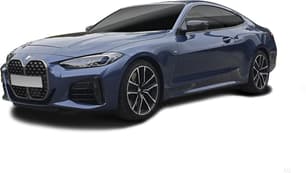
The M4 CS is familiar in all the right ways, but definitely looks significantly jacked up compared to its lesser siblings.
Part of that is the extensive use of carbon everywhere, from its bonnet panels to its roof, front lip, side skirting and boot spoiler. But also because of its super-muscular angles and creases, including the huge dome in its bonnet.
Also exclusive to this M4 CS is the light treatment, with the front LEDs lighting up with yellow highlights the brand says are supposed to be reminiscent of GT racing cars.
At the back, the rear lights are flush with fibre optic lighting, lending a flowing and unique light signature that looks epic at night.
Inside, it's a sea of carbon, with the lightweight racing seats, the dash inserts and the centre console all lined in it. It is a perfectly finished space, though, and one that's also flecked with red, including a 12 o'clock band on the thick-rimmed steering wheel, the seat backs, the contrast stitching and the paddle shifts.
Be warned, though, it takes some acrobatics to climb into or out of the CS. The seat bottoms have these super high edges that double as grab handles, but require some awkward contortions to navigate.
In short, it looks angry, this M4 CS, inside and out.
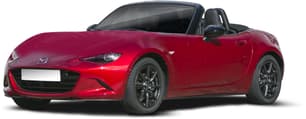
Alright, we’ve all seen ND MX-5s, you don’t need me to tell you about its proportions or explain its design elements to you in too much detail, so I’ll give you the headline changes.
At the front and rear are new pairs of LED head- and tail-lights, respectively… obviously, fitting into the spaces the old ones took up.
The DRLS and reverse lights have come off the bumpers for both, and are now part of the main lights at each end - no more DRLs in the front bumper, and the reverse lights have been replaced by reflectors.
There are new 17-inch wheel designs for the base and GT trim levels, too, and there’s a new colour - Aero Grey.
Inside, it’s a shame that the tan Nappa leather interior of the RF Black Roof can’t be had in a manual roadster, because it’s gorgeous, even though the inside still looks refined enough for a simple sports car in its base cloth trim.
It all boils down to how you classify practicality in a car like this. I mean, the basic stuff is all there – it's got two doors, four seats and a boot capacity of 440 litres.
It measures 4801mm in length, 1918mm in width and 1399mm in height, and room for front seat riders is good, but less so for anyone you squeeze into the back. There are even ISOFIX points for a child seat.
But if you consider practicality the practical pursuit of performance, then the M4 CS has plenty of perks.
One thing Mazda has significantly changed for the ND is the multimedia screen, now a larger 8.8-inch touchscreen running Mazda’s updated software.
It brings the MX-5 up to date without sacrificing simplicity and makes it a little easier to use. The physical dial and buttons for controlling the screen also remain. The USB-C ports are also new.
Oh, and the MX-5 is the first Mazda model to get Connected Services, which is coming to other Mazda models eventually.
Connected Services allows owners to find, lock, and get alerts for their cars from a phone app, even letting them set curfews to notify them if the car is started during certain hours.
Aside from that, another small tweak is the simplified instrument cluster, which aims to be easier to read even when the roof is open and the sun is bright.
The cabin isn’t built to be plush, it’s built for ‘Jinba Ittai’, Mazda’s philosophy that applies most strongly to the MX-5 which means ‘horse and rider as one’.
And trust me, you feel one with the horse- er, car, when there’s not ample room to move. It’s not restrictive, but it’s cosy.
Everything’s quite well-placed and it’s not busy with buttons or features in here though, it’s made for focusing on driving.
One downside is the lack of storage, not even a glovebox, in front of the passenger, and the central storage spot under where your elbow sits is tiny, good for keeping the key fob snug though. Also, the cupholders are able to be removed or swapped between the space behind your elbow, or above the passenger footwell.
There’s also a small storage space between the seats behind where your elbow would sit, though it’s tricky to access while you’re driving.
Then there’s the boot, which is usable for a small amount of luggage at 130 litres in the Roadster and 127L in the RF hardtop.
Finally, as a huge positive, probably the biggest advantage of the ND over any other convertible is how easy it is to open and close the roof in the Roadster. You can do it single-handed, which is great if it starts raining and you’re at a traffic light or able to quickly pull over.
The RF hard-top has a switch that automatically opens and closes the roof section.
We're talking a $254,900 entry price for the M4 CS, which – despite my attempts at justification – is a lot. Remember, the regular M4 is $168,700, and the M4 Competition is $186,500, so we're talking a sizeable premium here.
BMW justifies that price increase in two ways. The first is scarcity, with the M4 CS limited to just 50 examples in Australia. And the second is by dialling up every aspect of the M4's performance to terrifying levels.
The engine outputs are up, the weight is 20kg down, there are better brakes, better seats, a louder exhaust, a stiffer chassis – it goes on and on.
We'll get to some of the performance stuff in a moment, but here's what else your money buys you with the M4 CS.
It starts outside with staggered alloys, 19-inch up front and 20-inch at the rear, wrapped in track-ready rubber. There's also hi-po 'M Compound' brakes with red calipers, lightweight carbon racing seats that are heated up front, an Alcantara-trimmed steering wheel, the 'M Carbon' exterior package with carbon bonnet and roof, adaptive 'M Suspension' and a titanium exhaust that howls like the winds of hell.
The less performance-focused stuff is similar enough to the other M4 models including a 12.3-inch centre screen with digital radio, Apple CarPlay and Android Auto, a second 14.9-inch screen that handles your driving data and a head-up display. There's also twin-zone climate control, Merino leather upholstery and ambient interior lighting.
But all of that is secondary, really. This is about performance, specifically of the brutal kind.
Getting into an MX-5 is now a little more expensive, with the base manual Roadster up by $2310 to now start from $41,520 before on-roads.
The top-spec soft-top GT RS is now $51,640, or $2800 more than before.
Pricing for the RF hard top is also similarly bumped up, a base manual costing $46,250, and the most expensive GT RS at $56,140.
There’s also a Black Roof edition which comes with tan Nappa leather inside, but that’s only available in an automatic RF, which is possibly the biggest downside to the 2024 range.
Base models get cloth seats, while GT and GT RS models get heated leather seats. The GT RS also comes with stiffer Bilstein dampers, Brembo front brakes, a bracing strut between the front suspension towers and a DSC-Track mode. The difference there is noticeable, so it's worth the extra spend for the more keen driver.
The higher overall costs bring updated tech, a new 8.8-inch touchscreen and a new limited slip-diff in manual versions, plus tweaked mechanicals like improved acceleration response and lower steering rack friction.
But they do look a tiny bit different too.
BMW has found yet more grunt lurking in its trusty 3.0-litre 'M TwinPower' six-cylinder petrol engine, with the M4 CS now pumping out 405kW and 650Nm.
That's a decent jump from the 390kW and 620Nm served up by the M4 Competition, and a giant leap from the outputs of the 'base' M4 – 353kW and 550Nm.
Predictably, then, the CS is the fastest of the lot, knocking off the run from 0-100km/h in 3.4 seconds, compared to 3.5 and 4.2 in the Competition and M4, respectively. The top speed is also dialled up to 302km/h.
All that power is channeled through an eight-speed automatic and sent to all four wheels on demand, with the help of an 'Active M Differential'.
Up front, you get one option: a 2.0-litre naturally aspirated four-pot. It makes 135kW and 205Nm, and it’s a delightful little thing, driving the rear wheels only - as it should.
It used to be that the smaller 1.5-litre engine was the more revvy, keen option, rest its soul, but Mazda updated the 2.0-litre to be more eager (and deliver more power) at high revs and basically made the little 1.5-litre redundant.
Anyway, you can have it with a six-speed manual in any variant, or a six-speed automatic in GT guise if you find manual gearboxes difficult or a hassle.
The M4 CS is fitted with a 59-litre fuel tank, which – given the BMW's official fuel claim of 10.2 litres per hundred kilometres – should deliver a driving range on a full tank of 541 kilometres.
But... BMW also says the regular M4 – you know, the one that makes 52 fewer kilowatts and 55Nm less torque – uses 10.1L/100km, so do with that information what you will.
Mazda says the MX-5 uses 6.8L/100km as a manual Roadster, or 7.0L/100km with an automatic gearbox. Or, in the heavier RF 6.9L for a manual and 7.2L for auto.
Not great for a tiny car like this, but pretty good for a sports car!
It’s got a 45-litre fuel tank, takes premium 95 RON or higher, and while it should hypothetically be able to travel more than 600km with its on-paper claims, expect fuel use to sit closer to 8.0L/100km if you’re driving it anything like it deserves.
The hardest and angriest M4 of all time is, perhaps unsurprisingly, hard and angry. This is a race track specialist, but because I don't happen to own one of those, my first experience with the barking (and barking mad) M4 CS was navigating my way back from BMW's inner-city dealership.
Like it or lump it, you're going to read some Porsche comparisons here, because you're talking not too far off base 911 Carrera money, and suddenly I find the two Germans doing battle for a spot in my dream garage.
First things first, the BMW won't be much chop for daily driving for most people. Happily, I have a sickness for uncomfortable sports cars. It tells me that no compromises have been made in the pursuit of punishing performance.
A good thing, too, because the BMW, at city speeds, can be punishing. Everything feels heavy, the seats aren't overly comfortable – especially the hard bits that tend to dig in when cornering – and it stiff-arms its way over road imperfections, that exhaust booming and barking as it does.
Again, I loved it, and you probably will, too. But it's still not the kind of car I'd relish sitting in the morning peak hour rush in.
But escape the confines of the city and the BMW M4 CS suddenly makes a whole heap of sense. The acceleration is genuinely brutal, and wonderfully theatrical, with that quad-tipped titanium exhaust barking and snarling as you rocket towards 100km/h.
The steering is brilliant, with feedback fed to your wrists via that thick-rimmed wheel, and the entire experience feels sharp, super engaging and edgy.
You can push the M4 hard and fast, and I'm certain my limited talents would run out far before the BMW's would, but there's this thrilling sense of peril sparked by the aggression of the experience, that I love.
It's like the magic of a roller-coaster, I guess. Even if you know nothing is going to happen, you never really know, right? And in that lies the magic.
But back to original question, this or a Porsche 911? There's no doubt a Carrera is a better all-rounder, in terms of comfy commuting and race track fun, but this angry M4 is all shouty theatrics, all of the time.
I bloody love it.
It feels like every motoring journo under the sun (literally if the roof is off) owns or has owned an MX-5 of some sort.
And the first time you drive one, you might understand why.
If you spend your days testing and driving a bunch of different cars that aim to be many things at once, it’s refreshing to drive something that aims to be one: fun.
That’s it, the MX-5 feels like it was built to be fun. Not for convenience, not for power, certainly not for the school run.
And fortunately its simplicity remains with this update. All Mazda has done to change the way it drives is attempt to improve the rear limited-slip differential and improve the steering a little by reducing friction in the rack, as well as improve throttle response.
Has any of that changed the way it feels to drive on-road? No, not massively, but the ND was already such a delight that Mazda could have kept this update to purely design and interior tech changes and it would have still been one of the best-value buys around in terms of fun.
The MX-5 still feels relatively softly sprung while still being a dynamic and communicative sports car that’s engaging to drive even at low speeds, and rewarding (or frustrating) to drive fast.
On tight, winding roads, the MX-5 is at home, its soft suspension keeps you humble with its shifting weight and its relatively meagre outputs keep your licence safe.
In fact, despite being slightly compromised as a daily drive, the MX-5 is still plenty of fun even in traffic, there’s something about the satisfying click as the shifter slips into gear, or the little rev matches heading back down through the cogs when approaching a red light.
The 2.0-litre four-pot is a keen unit, and the six-speed manual is light and easy to work with, plus its steering is light without sacrificing road surface feedback - that feedback can quickly turn into cabin noise on a coarse highway which could become a little irritating on a long trip.
But the MX-5 can still be plenty of fun on track, where you’re more likely to get the most out of its new limited-slip differential and Track DSC mode.
It’s equally frustrating and satisfying to hustle the MX-5 around the East Circuit at The Bend in South Australia, where the track is twisty, busy, and unforgiving. Get it wrong, and the MX-5 lurches or slides to let you know you’ve made an error.
Get it right, however, and the little roadster glides through the corners, camber changes and even over apex kerbs smoothly and carrying impressive speed.
Plus, the electronic assistance won’t usually kick-in until you really need it, a welcome change from cars that are constantly trying to keep you from having fun behind the wheel.
Expect no ANCAP rating here, I'm afraid. But the BMW 4 Series does wear a five-star rating from 2019.
The M4 CS gets six airbags (driver and passenger, side airbags, head airbags), along with what BMW calls its 'Driving Assistant Professional', which bundles active cruise control (with stop and go function), front and rear cross-traffic warning, 'Steering & Lane Control' and 'Lane Keeping with Side Collision Warning'.
The ND MX-5 actually scored five stars with ANCAP back in 2016, even though its score has now expired. It’s not obvious how well it would fare under newer, stricter tests, given the small car’s lack of advanced driver assistance - not that that’s a bad thing in the case of a sports car.
Still, for a two-seat convertible, the MX-5 has a decent list of kit to keep you safe including front and side airbags, alerts for driver attention, blind spots, lane departure and rear-cross traffic, parking sensors and a reversing camera, belt pretensioners and side-impact door beams and even automatic Smart City Brake Support.
Mazda’s five-year, unlimited km warranty covers the MX-5, including five years of roadside assist.
Servicing costs are pre-set, with intervals every 12 months or 15,000km up to seven years or 105,000km. They cost between $447 and $638, averaging out at about $544 each.