What's the difference?
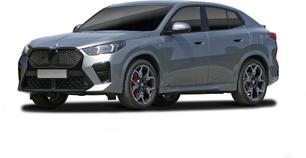
Following its global launch in February this year, the second-generation 'U10' 2024 BMW X2 and iX2 have landed in Australia.
The coupe SUV range comprises four variants with turbo-petrol and pure electric models sitting alongside each other in showrooms with precious few visual differences.
That'll either be a good or bad thing, depending on how much you want to parade your choice to go for current or combustion.
More clear cut is the X2's new – and more sensible – position in BMW's SUV line-up. Rather than a quirky curio that's smaller and less practical than the X1, the 20cm longer gen-two X2 finally makes sense in BMW's X line-up.
To see if the driving experience and build quality live up the shiny new exterior, we've been invited to Tasmania to sample the new car's attributes on typically testing (and picturesque) roads.
While a global pandemic was busy wreaking havoc on the international travel industry, Australians overwhelmingly turned inward to the realm of 4x4s, camper trailers, and campervans to explore the corners of our massive continent.
It’s a trend which has existed here long before the pandemic, though, with local outfits like Trakka already cashing in on the momentum of modified vans to suit all sorts of long-distance tourers, old and new.
It is a ripe time then, for Volkswagen’s own first-party camper creations, to enter the Australian market, as the latest versions of the Caddy, Multivan, and Transporter.
In such a competitive space, though, are there good reasons to consider the Transporter-based California over its home-grown rivals from the likes of Trakka? Let’s take a look.
The second-generation BMW X2 is leagues better than the car it replaces. It now sits nicely in BMW's line-up and offers genuinely tempting electric variants.
This isn't an affordable car by any means but next to rivals from Mercedes-Benz and Volvo, the well-equipped iX2 xDrive30 feels a complete package.
Similarly, the entry-level xDrive20i petrol is a very compelling choice with a comfortable ride and sporty drive.
We'd skip the contrived M35i unless your heart is set on going quickly in a straight line. With the thinking cap on, it's also hard to make a case for the X2 over the objectively better (and more affordable) X1. Then there's the more spacious, powerful, efficient and cheaper Tesla Model Y.
That's not really the point of this car, though. It'll never sell in as many numbers as the X1. Those who love its fastback styling will be pleasantly surprised by the new X2. It does what it says on the tin, marrying the BMW badge with a sporty drive and daring style.
Note: CarsGuide attended this event as a guest of the manufacturer, with travel, accommodation and meals provided.
A van like this is the envy of campgrounds, and with a fully warranted set of cosy extras, it’s ready to roll from day one, too.
As a weekender the California Beach is ideal, and one of its most appealing attributes is how easily it can also be packed up and used for day-to-day duties when you’re not out adventuring on the road.
Keep in mind for longer term touring you’ll need a fair bit of extra kit to make this California as capable as some rivals, and there’s always Trakka waiting for you if you want to spend more coin.
The entire point of the BMW X2 is to grab attention and promote conversation. The X2's new-found success comes mainly from bigger proportions - it's grown 194mm over its predecessor and 54mm longer than X1.
It's 64mm taller and sits on tracks that have been pumped by 21mm. All the changes are built into the latest iteration of BMW/Mini's transverse UKL2 platform.
The result is presence and swagger on the road for the X2. Even the base car grabs attention, while electric iX2 variants get unique closed-off grilles and a different front bumper treatment.
It's the M35i thats most eye-catching, though. A jutting lower spoiler and butch stance highlighted by horizontal kidney grille slats and quad exhaust tips. Our test car was finished with massive (and optional) 21-inch alloy wheels.
As successful as the whole package is, there are fussy elements: the boxy rear end, awkward spoiler and peculiar tail-lights. From some very specific angles there's even a hint of SsangYong Actyon to the proportions.
The iX2 and X2 aren't made to appease everyone, though, so you don't have to love it.
Inside is a different story with elegant simplicity the X2's remit. It's much like an X1 in layout with crisply integrated curved screens running the latest iDrive 'OS9'.
Apple CarPlay was faultless (wireless Android Auto is also included) yet connected navigation makes it easy to rely on BMW's in-house features.
You get 90 days free use of BMW Digital Premium, which includes the ability to download games and apps as well as more advanced connected navigation. After the trial, you'll need to pay monthly ($9.99) or annually ($109) for the services.
The X2's door pulls and handles are particularly nice to interact with, blending visual lightness with reassuring sturdiness.
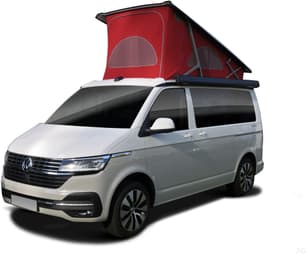
The California Beach does offer an iconic slice of VW’s historic Kombi aesthetic, modernised to its current range. While the two-tone paint is a remarkably expensive option, it does seal the #vanlife deal.
Two-tone paint or not, though, you could do much worse in terms of aesthetics than the Transporter 6.1, which is about as graceful as commercial vehicles come with its now-giant chrome embossed grille, matching painted bodywork, appealing little alloy wheels, and with the LED light package fitted, a contemporary shine profile at night.
The California Beach also hides its status as a camper well, blending in with other people movers and commercial vehicles in traffic with the slight hint given away by its branding and the awning hanging off one side.
The pop-up tent option in our test car is invisible from the outside, and with the seats in their default position, it could be any passenger-oriented van on the road.
More on that later, but the interior, too, brings much of the comfort and aesthetic from the rest of VW’s passenger car range.
Those who want to use this as a multi-role vehicle when they’re not camping will be pleased by its up-to-date interior appointments, with the pragmatic but attractive leather-bound VW wheel shared with other current products, as well as the option of the ever-impressive ‘Digital Cockpit’ dash.
The seats are aesthetically pleasing, with the only giveaway this is a commercial vehicle being the hard plastics with a more rugged pattern across the dash and doors in place of the usual soft materials which adorn Volkswagen passenger cars.
As subtle and sensible as the California may be though, there was no doubt it was instantly recognised at the campground, with owners of other Transporters, Trakkas, and other campervans coming to have a look at a model they clearly knew of.
Despite the X2 living dangerously in the style department, it hasn't sacrificed cabin practicality – at least in the front seat.
A vertical wireless charging pad holds a phone in like a kid on a rollercoaster (important, as you'll read later, because the X2 range has some serious back-road talent) with nearby USB-C plugs for additional charge.
The door bins easily fit a one-litre camping bottle, there's good storage for small bags beneath the floating armrest (which has a very small cubby for keys or mints) and a sizeable glove box.
As you'd expect from a German-built BMW (all X2s hail from Regensburg) build quality is excellent... save for the flimsy indicator stalks. The latest oblong engage with a limp click that's a far cry from the damped thump of older BMWs, such as the E90 3 Series.
The cabin materials are pleasing to touch with quality stitching and soft padding on heavy touch areas. Geometrically patterned trim inserts add some cabin flare and look sturdy as well.
The X2 and iX2's back seat is not as good as the BMW X1's – none of the proverbial thanks, Sherlock.
Under the sloping roof headroom will be acceptable for 175cm adults and knee room is passable. Despite sharing underpinnings between electric and combustion variants there's minimal spatial compromise.
There are ISOFIX ports and top tether anchors for all seating positions. Vents are mounted in the centre console and there is a fold-out armrest with cup holders. Doors open relatively wide for a 'coupe' as well.
Of some concern is the X2's narrow bench; the body-work sculpted appearance of the coupe tail results in lots of shoulder room intrusion. To put it in simple terms, it's best capped at four occupants.
The boot is at least very generous, offering between 525L (iX2) and 560L (X2) of VDA space.
The load bay is long and there is no load lip to lift items over. Seats fold in a 40:20:40 configuration, growing capacity up to 1400L.
Neither the X2 or iX2 is fitted with a spare tyre, so its mobility kits for X2 owners.
Interior space in this camper is one of its key highlights. As a van it has a huge and versatile cargo area behind the front seats, with the fold-down rear row on rails to maximise cargo capacity if need be.
A rear shelf at the back can be used for all your storage needs, with a compact space underneath for securing everything from camping equipment to shopping bags on the day-to-day and there are even little draws underneath the sliding seat row for the storage of small items (it was handy to use these for the awning’s winder and pegs, the luggage net which we weren’t using, and other things you don’t want to lose.
VW doesn’t quote a VDA number for the total luggage space given how versatile the load area is, although it does state there is 4.3 square metres of space in the cabin.
As already mentioned, the key advantage of this camper over others is its ease of use. Setting it up and packing it down is a 10 minute affair, allowing you the flexibility to be ready to camp or explore the local area in a pinch.
The California we tested sits five and even has ISOFIX mounts on the outer rear seats, but for larger families, there’s also a seven-seat option, with the extra seats folding down to make for a larger bedding area.
The awning itself is manually operated with a winder and pop-out legs. The front two seats are ‘captain’s chairs’ which can rotate 180-degrees to face back into the cabin.
It’s a neat and sometimes necessary addition to allow for a seating area if the bed is deployed, but they are a little fiddly to operate.
To swivel them, you need to fully fold the steering column away, move the seat all the way forward, rotate it half way, then move it forward again to clear the wheel in the driver’s position.
Practicality for the driver and front passenger while on the move is excellent, with two sets of huge cutaways in the doors for the storage of objects, cupholders seated atop the dash, a big bay for books or laptops which also houses a 12V outlet, and there are adjustable-height armrests attached to the seats.
The seats and wheel are also very adjustable, and the roof is high allowing plenty of space for people of all heights.
A small issue I ran into was the awkward lack of a place to put my phone. The most obvious location seemed to be the cupholder next to the shift lever, especially since this is where the USB-C connections were located, although it was a bit awkward, and my phone and wallet would easily fall out onto the floor, from where they could simply disappear into the rear of the cabin under acceleration.
The 2024 BMW X2 range spans $75,900 to $92,900 before on-road costs. Surprisingly, it's the M35i that's dearest, rather than the electric iX2 xDrive30 ($85,700).
There's no three-cylinder price leader in the X2 range as there is in the X1 and your body kit choice is M Sport, which explains why, trim-for-trim, the X2 xDrive20 $5000 dearer.
Once you've added the $3000 M Sport pack to the X1 xDrive30, though, you're only $2000 off the X2 for equivalent spec levels.
Some highlights include 'Veganza' artificial leather upholstery (in black, Oyster or Mocha), 19-inch alloy wheels, M Sport kit including adaptive dampers, 'Iconic Glow' illuminated kidney grilles, adaptive LED headlights, head-up display and 10.7-inch touchscreen with BMW's slick ninth-gen operating system – this equipment is shared with the iX2 xDrive30.
The $82,900 (before on-road costs) single-motor iX2 eDrive20 is more basic, missing adaptive cruise control, lane-trace assist, power seat adjust and front seat heating. All EV models include tyre pressure monitoring, acoustic pedestrian warning, 12-month Chargefox subscription, and Mode 2 and 3 charging cables.
Being a BMW there are options on the table. An enhancement pack comprises metallic paint, a sunroof, Harman/Kardon sound system, steering wheel heating and adjustable lumbar support with massage function for $3615 on the iX2 xDrive30 and $4700 on the X2 xDrive20.
Cleverly, BMW has priced the iX2 xDrive30 beneath the luxury car tax threshold – significantly benefiting those looking at buy via a novated lease – even with the enhancement pack and metallic paint. Something Mercedes-Benz hasn't been able to achieve with its $102,900 twin-motor EQA350 rival.
An M Sport Package Pro is available for all variants adding dark finish headlights and extended piano black exterior trim, M Compound brakes, M seatbelts and 20-inch 'style 873' alloy wheels.
That pack is gratis on the flagship M35i xDrive which benefits from a higher 233kW tune of its 2.0-litre turbo-petrol four-cylinder and a torsen limited-slip differential on its front axle.
The pictured M35i was finished in $5000 worth of matte paint, in this case Frozen Pure grey. Portimao blue is also available along with regular metallic paint ($1800).
The exact van we’re looking at for this review is the Volkswagen California Beach TDI340 4Motion.
This means it’s the middle of three variants in the California Beach range, which kicks off from $90,990, before on-road costs, for the base front-wheel drive, $94,990 for this all-wheel drive version we’re testing, or $100,990 for the more powerful TDI450 version.
Our mid-spec also had a long list of attached options, including the Kombi-style two-tone paint ($4050), upgraded interior package which includes microfleece seat trim, heated front seats, and the improved digital dash suite ($3690), an electric pop-up roof ($3050), LED headlights ($2050), adaptive chassis control ($2010), the 'Off-Road Pack' (includes a rear diff lock and downhill assist - $1720), power sliding doors (both sides, $1640), fog lights with cornering function ($770), 'Park Assist' ($460), 'Light Assist' ($320), and the no-cost option of a silver-coloured awning.
The list of extras (valued at a total of $19,760) brought the price as-tested (and still before on-roads) to a substantial $114,750.
In concept then we’re left with a van which has pretty much all the creature comforts of a Volkswagen passenger car with two beds (one in the pop-up roof, the other consisting of the fold-out rear seats).
In isolation, this may seem reasonable for such a custom camping solution, but the issue arrives when you consider competitors.
Trakka’s most direct rival, the Trakkadu, can be had from $137,422 and offers such luxuries not even optionally available on the California Beach, like an improved power system (to support 240V outlets), a kitchenette, fridge, plenty of additional storage, and a water supply.
Your $94,990 California Beach in base form then is essentially a Multivan with an awning, interior shades and lighting, a rear fold-out bed and bench, and a set of two chairs and a table.
While it’s very nice to have custom fit blinds on every window and fully adjustable built-in interior lighting, you’ll then need to go and spend more on a power system and possibly plumbing if you want it to be a truly luxurious long-distance tourer. It’s too bad we miss out on higher-spec vehicles available overseas.
BMW's internal combustion engines are responsive and slick in the X2, while the iX2's well-calibrated electric powertrains deliver pleasingly instant pick-up.
The range kicks off with a heavily revised version of BMW's all-aluminium 'B48' 2.0-litre four-cylinder in xDrive20i tune. It produces 150kW and 300Nm, enough to hit 100km/h in 7.4 seconds from rest.
Like the xDrive20i, the M35i employs a seven-speed dual-clutch transmission driving all four wheels.
Australian M35is are more powerful than European models, developing 233kW and 400Nm for a 0-100km/h sprint in 5.4 seconds. A freer-flowing exhaust is augmented with active sounds for a fruity (if synthetic) note.
BMW offers a pair of electric powertrains with the 150kW front-drive eDrive20 and twin-motor 230kW/494Nm iX2 xDrive30.
We only sampled the more powerful one which features Hans Zimmer-composed sound scapes and an impressive turn of pace, hitting 100km/h in 5.6 seconds (claimed).
It is limited to a 180km/h top speed which may pose an issue on German Autobahns but is no trouble in Australia.
The version of the California Beach we tested for this review was the mid-grade TDI340 4Motion.
This means it is powered by a 2.0-litre, four-cylinder, turbo-diesel engine producing 110kW/340Nm. It’s paired with a seven-speed dual-clutch automatic, and in the case of this model, is capable of driving all four wheels.
It’s not much for power, but with the large amount of torque available, pulls strongly even when loaded up.
While it’s nice to have the all-wheel drive for loose surfaces and the like, clearance is limited so I wouldn’t venture into the rough stuff, even with the optional differential lock.
For those looking to fit further enhancements, or tow, the California Beach’s GVM is 3080kg leaving 623kg for payload, and it can tow 750kg unbraked or 2500kg braked.
Rated at 7.5L/100km (xDrive20i) and 7.8L/100km (M35i), after a 130km jaunt, the M35i's trip computer showed 9.8L/100km.
Premium 95 RON or higher is required and the fuel tank holds 54 litres.
For the iX2 xDrive30, consumption was above the WLTP rating. We saw 18.2kWh/100km on our hilly country route which would equate to 356km from a charge of the 64.8kWh lithium-ion battery battery.
The 417km WLTP driving range figure is at 15.5kWh/100km, we'd expect to get closer to the rated figures in more typical urban and suburban use cases.
Regenerative braking was quite pronounced (there are four setting: Adaptive, Low, Moderate and High) and on a descent into Hobart the xDrive30 managed to boost charge levels from 27 to 29 per cent.
As for regular charging, the iX2 will take DC electricity at 130kW, meaning 29 minutes from 10 to 80 per cent. That interval allows you to roam around 290km between charging stops on a long run.
One great aspect of both iX2 variants are their fast 22kW AC charging capability. It means the iX2 can go from flat-full in under four hours, rather than eight hours on an 11kW wallbox.
Though most owners won't have access to three-phase electricity, this suits public charging – such as at shopping centres or destinations – very well.
Another boon is BMW's inclusion of both Mode 2 and Mode 3 charging cables and a 12-month ChargeFox subscription.
Home wallbox installation isn't included in the deal (Lexus offers this with its UX300e) though BMW does offer the service at a cost for those who want it.
The California Beach TDI340 4Motion has an official combined fuel consumption figure of 7.5L/100km and a relatively large 80-litre fuel tank, allowing for a healthy cruising range for those more distant camping locations.
Our camping journey (a roughly 600km return trip) meant the California travelled mostly freeway kilometres on our week with the car, and it produced an overall figure of 7.4L/100km. It takes diesel and also has a 13-litre AdBlue tank.
The previous-generation X2 always felt a bit more Audi or Volkswagen than BMW in the way it went down a road.
This latest iteration has a secure, dynamic balance more in-keeping with the blue-and-white roundel and is far more impressive than its predecessor.
We spent our first leg in the performance-oriented M35i. The punchy engine, front-biased AWD and slick transmission felt just right in the sporty small SUV.
It sits 15mm lower than the other variants on differently tuned springs and adaptive dampers.
The M35i holds onto the tarmac like a limpet with minimal body roll at very high limits partly thanks to the efficiency-oriented 245/35R21 Continental Eco Contact 6 Q tyres.
Yet this comes at the cost of adjustability. With such tight rebound damping in Sport and Sport Plus modes, the M35i's body is too tied down. Even in Comfort, the M35i hopped and fidgeted over Tasmania's broken tarmac, a trait not aided by the 21-inch alloys.
We would have preferred more build-up in the steering weight, too, given the sporting intentions. That chubby wheel rim does its best to remove any sensation of feedback, too.
BMW's iDrive is mostly fantastic except when it comes to changing drive modes, which you need to do fairly regularly in the M35i.
More than just normal – or Personal here – there's configurable Sport and Efficiency modes. There's also Digital Art and other less useful options.
Thankfully, the xDrive20 is much sweeter. Even optioned up with the 20-inch alloy wheels the ride is a lot more agreeable and well-suited to Tasmania's lumpy roads.
All the damper modes were usable with Sport providing welcome extra support without being too strict. Turning into corners felt more natural in the xDrive20 thanks to a bit more body roll which helps communicate grip levels.
The xDrive20i did feel low on grunt after the M35i and iX2 xDrive30 but that was only in a direct comparison - grunt levels were plenty once accustomed. We did miss the M35i's front limited-slip differential on loose surfaces, but it wasn't a deal breaker.
Seeing that the iX2 xDrive30's kerb weight was 325kg higher than the M35i (2020kg) set alarm bells going initially. That's a lot of extra weight for a 'small SUV' to be carrying around, and is beyond a Tesla Model Y Long Range (1979kg).
The iX2 uses the same kinematics and suspension components as the petrol cars but in completely retuned states. Encouragingly, the result is rather excellent.
You do notices the weight when pushing through patchily surfaced corners. The iX2 bobbles and hops occasionally as you approach the damper's limits, but to their credit they never gave up.
That light steering – which is frustrating in the M35i – aids to disguise the xDrive30's extra mass, too. As all X2's are front-biased AWD models, they never quite reach the dynamic heights of BMW's Cluster Architecture models.
Still, grunt is prodigious and, although it's officially slower than the M35i, the xDrive30's rolling response is predictably excellent. BMW has done a great job calibrating the regenerative braking, too.
I found Moderate was my preference, and because the brake pedal blends caliper and regenerative forces you lose precious little range from not having it jacked all the way up.
The iX2 is quiet inside, too. There's almost no wind intrusion and tyre roar is kept to a bare minimum inside, especially impressive given that the M35i sends quite some road noise into the cabin.
Returning through Hobart's outer suburbs, we notice some shortcomings. The iX2's high bonnet, low-set seating position and letterbox rear glass with protruding rear lip spoiler mean visibility is compromised. The X1 doesn't suffer from such issues.
That's the cost of visual flare and the excellent 360-degree camera and head-up display help to alleviate guesswork and keep eyes on the road.
The M35i didn't feel the most complete on the road. If you're chasing a sporty coupe statement at this kind of price, the BMW 230i coupe is a great driver's car.
Instead, you're better to spend money on either the xDrive20i or iX2 xDrive30 with some choice options and enjoy a slick coupe SUV driving experience.
One of the California's more appealing features is the way its camping features can be minimised. Unlike some fit-outs which feature built-in fittings, once you pack the rear bed away and fold everything up, it makes for an appealing five-seat van for driving around in day-to-day traffic.
The diesel engine offers a rugged soundscape but plenty of pulling power once you overcome a moment of turbo-lag for cargo, people and equipment, and visibility is great out the front and sides.
The dual clutch transmission behaved well in my time with the van, although like many cars which use this transmission it can occasionally cost you a second at an intersection as it combines with the stop-start system to make for a moment of delay.
The California is a relatively easy van to park and live with when you’re not out on the road, and features a nice organic steering tune to give you plenty of confidence in the corners, bolstered by the addition of all-wheel drive in the van we tested.
The ride when empty is quite rough, like many vans in this segment. With the diesel engine, this can make for a bit of a noisy experience on coarse-chip freeways, and especially gravel roads. Potholes can also be cringe-inducing.
As always one of the biggest advantages of VW commercial products is how closely they can be specified to VW’s passenger vehicles.
With the right option boxes ticked, for example, our car had the very welcome digital dash, and the multimedia suite.
While not the latest fully touch unit you can experience in cars like the Golf 8, it has the welcome addition of tactile shortcut buttons and dials for ease-of-use while driving.
With the fold-away roof, the California also isn’t bigger than a regular Transporter van. At 1990mm high it should fit in most parking lots and garages.
The BMW X2 and iX2 are yet to be rated by ANCAP or Euro NCAP.
The X1 and its electric cousin scored five star ratings in 2022 under a less stringent set of tests.
Standard safety equipment includes seven airbags, frontal AEB with day/night pedestrian and cyclist detection, blind-spot monitoring, adaptive cruise control, speed sign detection, lane-departure warning, lane-keep assist and driver attention monitoring.
Systems such as anti-lock brakes, electronic bake force distribution and electronic stability control are all standard.
The California has a decent set of standard safety inclusions, like city-speed auto emergency braking (it’s important to note this is not the usual freeway-speed system which ships on most VW passenger cars), blind spot monitoring with rear cross traffic alert, driver attention alert, and adaptive cruise control.
It doesn’t have lane support systems, but does additionally score tyre pressure monitoring (good for those gravel trails), front and rear parking sensors and a decent rear view camera, hill start assist, and even crosswind assist.
In terms of more passive safety items it scores only driver and passenger front and side airbags, something to keep in mind when transporting passengers in the rear.
For touring it’s hard not to recommend the optional LED headlights for those poorly-lit and far-flung roads, and thankfully the California comes with a full-size steel spare should you end up with a flat in the middle of nowhere.
For a commercial-based vehicle the safety suite is not bad, but when compared to a passenger vehicle, it could do better.
Since 2022, BMW has backed all of its cars with a five-year/unlimited kilometre warranty.
You’ll need to service the iX2 ands X2 based on condition, rather than kilometres traveled. The multimedia system will prompt you when it's time to visit a workshop.
You can pay upfront for service plans with BMW: a five-year servicing package will cost you $3171 for the petrol X2s, while the iX2 is $2186 for six years.
The California Beach is covered by a five year and unlimited kilometre warranty like the rest of the Volkswagen passenger car range, which includes one year of roadside assistance.
The prime advantage of buying a first-party Volkswagen camper is the entire vehicle is covered by this warranty, as opposed to needing to deal with two warranties if you were to buy from a brand like Trakka.
There is also the option of a five or three year service plan. At the time of writing, the five year service plan was running at the price of a three year plan, valued at $1850 for this 4Motion variant, or just $370 a year for the life of the warranty.
This is a claimed saving of $2302 over the cost of regular scheduled maintenance. Visits to the workshop are required once every 12 months or 15,000km, whichever comes first.