What's the difference?
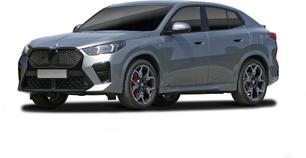
Following its global launch in February this year, the second-generation 'U10' 2024 BMW X2 and iX2 have landed in Australia.
The coupe SUV range comprises four variants with turbo-petrol and pure electric models sitting alongside each other in showrooms with precious few visual differences.
That'll either be a good or bad thing, depending on how much you want to parade your choice to go for current or combustion.
More clear cut is the X2's new – and more sensible – position in BMW's SUV line-up. Rather than a quirky curio that's smaller and less practical than the X1, the 20cm longer gen-two X2 finally makes sense in BMW's X line-up.
To see if the driving experience and build quality live up the shiny new exterior, we've been invited to Tasmania to sample the new car's attributes on typically testing (and picturesque) roads.
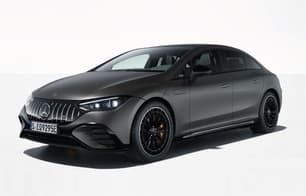
Mercedes-Benz has released an all-electric sedan which is the equivalent of its iconic E-Class.
It has the looks and technology to rival any EV on the market but what about the practicality for a family? Will this be the luxury electric sedan families have been hoping for?
I've been driving it for a week with my little family of three to find out.
The second-generation BMW X2 is leagues better than the car it replaces. It now sits nicely in BMW's line-up and offers genuinely tempting electric variants.
This isn't an affordable car by any means but next to rivals from Mercedes-Benz and Volvo, the well-equipped iX2 xDrive30 feels a complete package.
Similarly, the entry-level xDrive20i petrol is a very compelling choice with a comfortable ride and sporty drive.
We'd skip the contrived M35i unless your heart is set on going quickly in a straight line. With the thinking cap on, it's also hard to make a case for the X2 over the objectively better (and more affordable) X1. Then there's the more spacious, powerful, efficient and cheaper Tesla Model Y.
That's not really the point of this car, though. It'll never sell in as many numbers as the X1. Those who love its fastback styling will be pleasantly surprised by the new X2. It does what it says on the tin, marrying the BMW badge with a sporty drive and daring style.
Note: CarsGuide attended this event as a guest of the manufacturer, with travel, accommodation and meals provided.
The Mercedes-Benz EQE350 4Matic is an electric sedan that will comfortably house your family. My son really liked this one, the ambient lighting in particular!
It has enough power to satisfy the drivers out there and a driving range that will make you feel at ease. But the boot is small and this car will suit families whose kids are out of the pram stage best. I really like the safety and standard features on the EQE but the ongoing costs are a bit expensive for an EV.
The entire point of the BMW X2 is to grab attention and promote conversation. The X2's new-found success comes mainly from bigger proportions - it's grown 194mm over its predecessor and 54mm longer than X1.
It's 64mm taller and sits on tracks that have been pumped by 21mm. All the changes are built into the latest iteration of BMW/Mini's transverse UKL2 platform.
The result is presence and swagger on the road for the X2. Even the base car grabs attention, while electric iX2 variants get unique closed-off grilles and a different front bumper treatment.
It's the M35i thats most eye-catching, though. A jutting lower spoiler and butch stance highlighted by horizontal kidney grille slats and quad exhaust tips. Our test car was finished with massive (and optional) 21-inch alloy wheels.
As successful as the whole package is, there are fussy elements: the boxy rear end, awkward spoiler and peculiar tail-lights. From some very specific angles there's even a hint of SsangYong Actyon to the proportions.
The iX2 and X2 aren't made to appease everyone, though, so you don't have to love it.
Inside is a different story with elegant simplicity the X2's remit. It's much like an X1 in layout with crisply integrated curved screens running the latest iDrive 'OS9'.
Apple CarPlay was faultless (wireless Android Auto is also included) yet connected navigation makes it easy to rely on BMW's in-house features.
You get 90 days free use of BMW Digital Premium, which includes the ability to download games and apps as well as more advanced connected navigation. After the trial, you'll need to pay monthly ($9.99) or annually ($109) for the services.
The X2's door pulls and handles are particularly nice to interact with, blending visual lightness with reassuring sturdiness.
Love it or leave it, the swoopy design of the EQE sedan is decidedly modern with a shiny black grille that features a repeated Mercedes-Benz star motif and the aerodynamic covers on the 20-inch alloy wheels.
The nose is snubby and dips down too low for it to look sexy but the rear earns some design points with its elegant proportions, 3D ‘helix’ LED lights and cute spoiler.
The chrome accents around the windows and the illuminated flush door handles add some pizzazz, too.
I’m not a massive fan of its exterior looks but the interior is gorgeous! The dashboard features an 12.8-inch touchscreen multimedia system and a 12.3-inch digital instrument panel that pull your focus with their crystal-clear graphics but they need to, because the dashboard has a whole lotta empty space which looks a tad boring.
The side air vents are styled like jet turbines but are a little finicky to manoeuvre.
The black suede-like headliner creates a plush aesthetic but when you open the panoramic sunroof, the cabin is downright airy.
The door panels, which double as a grab handle, house the window and side mirror controls and its super handy to have the seat-configurator and memory functions on the door itself, rather than the side of the seat. This positioning makes them much easier to see!
Mercedes has added LED ambient-strip lighting around a lot of the interior, including the front seats, which has a massive wow factor at night time.
The ambient lighting can be adjusted up to 64-ways and also features a dynamic element where the lights pulse (under certain selections) when you accelerate.
Despite the X2 living dangerously in the style department, it hasn't sacrificed cabin practicality – at least in the front seat.
A vertical wireless charging pad holds a phone in like a kid on a rollercoaster (important, as you'll read later, because the X2 range has some serious back-road talent) with nearby USB-C plugs for additional charge.
The door bins easily fit a one-litre camping bottle, there's good storage for small bags beneath the floating armrest (which has a very small cubby for keys or mints) and a sizeable glove box.
As you'd expect from a German-built BMW (all X2s hail from Regensburg) build quality is excellent... save for the flimsy indicator stalks. The latest oblong engage with a limp click that's a far cry from the damped thump of older BMWs, such as the E90 3 Series.
The cabin materials are pleasing to touch with quality stitching and soft padding on heavy touch areas. Geometrically patterned trim inserts add some cabin flare and look sturdy as well.
The X2 and iX2's back seat is not as good as the BMW X1's – none of the proverbial thanks, Sherlock.
Under the sloping roof headroom will be acceptable for 175cm adults and knee room is passable. Despite sharing underpinnings between electric and combustion variants there's minimal spatial compromise.
There are ISOFIX ports and top tether anchors for all seating positions. Vents are mounted in the centre console and there is a fold-out armrest with cup holders. Doors open relatively wide for a 'coupe' as well.
Of some concern is the X2's narrow bench; the body-work sculpted appearance of the coupe tail results in lots of shoulder room intrusion. To put it in simple terms, it's best capped at four occupants.
The boot is at least very generous, offering between 525L (iX2) and 560L (X2) of VDA space.
The load bay is long and there is no load lip to lift items over. Seats fold in a 40:20:40 configuration, growing capacity up to 1400L.
Neither the X2 or iX2 is fitted with a spare tyre, so its mobility kits for X2 owners.
Mercedes uses the term ‘saloon’ for its sedans and this term highlights the space each passenger will enjoy in the EQE sedan! There is plenty of head and legroom up front and you don’t feel like you’re on top of your co-pilot, either.
The electric front seats are comfortable with their adjustable lumbar control and extendable under-thigh support. The kinetic function on both also make longer journeys an absolute pleasure.
The rear seats are well-padded and you get limo-like legroom but the swoopy roofline does cut into the headspace. I’m comfortable enough with my 168cm (5'6") height but someone with a few inches over six-foot may not be.
You’re spoiled for choice when it comes to individual storage options with large middle and centre consoles, the latter can be made even larger because the two cupholders are retractable.
There is a massive shelf underneath them that has a handy elastic strap for larger items, like a handbag. The glove box is on the shallow side but both doors have a drink bottle holder and storage bin.
In the rear, individual storage is also decent with two map pockets, two retractable cupholders in the fold-down armrest, as well as a drink bottle holder and storage bin in each door.
The other amenities in the rear are good with a couple of reading lights and directional air vents. I would have preferred to have seen climate control, too, but there’s enough here to satisfy.
The technology looks high-end but is relatively simple to operate once you get used to the Mercedes-Benz operating system.
The touchscreen multimedia screen has haptic feedback, which just means it vibrates when you touch it, and built-in satellite navigation with an augmented reality feature.
The digital instrument panel is customisable and the coloured head-up display is easy to see.
It is simple to connect to the wireless Apple CarPlay and there is also wired Android Auto.
Charging options are fantastic throughout the car with four USB-C ports and a wireless charging pad to choose from up front.
However, it’s annoying to use the charging pad if you’re also using the cupholders as its awkward to try and get a phone in and out of the housing. In the rear there are another two USB-C ports.
For the class, the boot isn’t massive at 430L and the wheels do cut into the width but it’s been big enough for my shopping errands.
You get a tyre puncture repair kit in the EQE sedan and I like the way you can electrically fold the rear seats if you need extra storage space. Having the hands-free powered boot lid is very convenient.
The 2024 BMW X2 range spans $75,900 to $92,900 before on-road costs. Surprisingly, it's the M35i that's dearest, rather than the electric iX2 xDrive30 ($85,700).
There's no three-cylinder price leader in the X2 range as there is in the X1 and your body kit choice is M Sport, which explains why, trim-for-trim, the X2 xDrive20 $5000 dearer.
Once you've added the $3000 M Sport pack to the X1 xDrive30, though, you're only $2000 off the X2 for equivalent spec levels.
Some highlights include 'Veganza' artificial leather upholstery (in black, Oyster or Mocha), 19-inch alloy wheels, M Sport kit including adaptive dampers, 'Iconic Glow' illuminated kidney grilles, adaptive LED headlights, head-up display and 10.7-inch touchscreen with BMW's slick ninth-gen operating system – this equipment is shared with the iX2 xDrive30.
The $82,900 (before on-road costs) single-motor iX2 eDrive20 is more basic, missing adaptive cruise control, lane-trace assist, power seat adjust and front seat heating. All EV models include tyre pressure monitoring, acoustic pedestrian warning, 12-month Chargefox subscription, and Mode 2 and 3 charging cables.
Being a BMW there are options on the table. An enhancement pack comprises metallic paint, a sunroof, Harman/Kardon sound system, steering wheel heating and adjustable lumbar support with massage function for $3615 on the iX2 xDrive30 and $4700 on the X2 xDrive20.
Cleverly, BMW has priced the iX2 xDrive30 beneath the luxury car tax threshold – significantly benefiting those looking at buy via a novated lease – even with the enhancement pack and metallic paint. Something Mercedes-Benz hasn't been able to achieve with its $102,900 twin-motor EQA350 rival.
An M Sport Package Pro is available for all variants adding dark finish headlights and extended piano black exterior trim, M Compound brakes, M seatbelts and 20-inch 'style 873' alloy wheels.
That pack is gratis on the flagship M35i xDrive which benefits from a higher 233kW tune of its 2.0-litre turbo-petrol four-cylinder and a torsen limited-slip differential on its front axle.
The pictured M35i was finished in $5000 worth of matte paint, in this case Frozen Pure grey. Portimao blue is also available along with regular metallic paint ($1800).
There are three models for the EQE sedan and our test model is the mid-spec 350 4Matic grade, which will cost you $144,900, before on-road costs. It manages to slide into being the most affordable compared to its rivals and it has a tonne of features.
Front occupants enjoy creature comforts like heated and electrically-adjustable front seats that feature four-way lumbar support, extendable under-thigh support, as well as, three-position memory function. They also have a ‘kinetic’ function which I liken to gentle stretching.
Premium items include a panoramic sunroof, black headliner, dual-zone climate control, AMG floor mats, 360-degree view camera system, Burmester 3D sound system, hands-free powered boot lid and electrically folding rear seats (access to the controls are via the boot lid).
The built-in satellite navigation also features an augmented reality feature, which shows dynamic directions overlaid on a video feed. Some might call this gimmicky but it does help navigating a city with all of the little laneways!
On the exterior you get 20-inch alloy wheels with aerodynamic covers and a glossy black grille that features a repeated Mercedes-Benz star motif.
There are a few cool lighting features on the EQE like the Mercedes-Benz logo projected from the side mirrors, a 64-way coloured ambient lighting system and something that Mercedes calls ‘Digital Light’ – which are LED HD adaptive projector-like headlights.
BMW's internal combustion engines are responsive and slick in the X2, while the iX2's well-calibrated electric powertrains deliver pleasingly instant pick-up.
The range kicks off with a heavily revised version of BMW's all-aluminium 'B48' 2.0-litre four-cylinder in xDrive20i tune. It produces 150kW and 300Nm, enough to hit 100km/h in 7.4 seconds from rest.
Like the xDrive20i, the M35i employs a seven-speed dual-clutch transmission driving all four wheels.
Australian M35is are more powerful than European models, developing 233kW and 400Nm for a 0-100km/h sprint in 5.4 seconds. A freer-flowing exhaust is augmented with active sounds for a fruity (if synthetic) note.
BMW offers a pair of electric powertrains with the 150kW front-drive eDrive20 and twin-motor 230kW/494Nm iX2 xDrive30.
We only sampled the more powerful one which features Hans Zimmer-composed sound scapes and an impressive turn of pace, hitting 100km/h in 5.6 seconds (claimed).
It is limited to a 180km/h top speed which may pose an issue on German Autobahns but is no trouble in Australia.
The 350 4Matic is an all-wheel drive with two electric motors that have a combined power output of 215kW and a massive 765Nm of torque. The lithium-ion battery has a large 90.5kWh capacity.
The 350 4Matic has a 0-100km/h sprint time of only 6.3-seconds but it feels gusty and you get a tummy-sucking sensation when you have to put your foot down.
Rated at 7.5L/100km (xDrive20i) and 7.8L/100km (M35i), after a 130km jaunt, the M35i's trip computer showed 9.8L/100km.
Premium 95 RON or higher is required and the fuel tank holds 54 litres.
For the iX2 xDrive30, consumption was above the WLTP rating. We saw 18.2kWh/100km on our hilly country route which would equate to 356km from a charge of the 64.8kWh lithium-ion battery battery.
The 417km WLTP driving range figure is at 15.5kWh/100km, we'd expect to get closer to the rated figures in more typical urban and suburban use cases.
Regenerative braking was quite pronounced (there are four setting: Adaptive, Low, Moderate and High) and on a descent into Hobart the xDrive30 managed to boost charge levels from 27 to 29 per cent.
As for regular charging, the iX2 will take DC electricity at 130kW, meaning 29 minutes from 10 to 80 per cent. That interval allows you to roam around 290km between charging stops on a long run.
One great aspect of both iX2 variants are their fast 22kW AC charging capability. It means the iX2 can go from flat-full in under four hours, rather than eight hours on an 11kW wallbox.
Though most owners won't have access to three-phase electricity, this suits public charging – such as at shopping centres or destinations – very well.
Another boon is BMW's inclusion of both Mode 2 and Mode 3 charging cables and a 12-month ChargeFox subscription.
Home wallbox installation isn't included in the deal (Lexus offers this with its UX300e) though BMW does offer the service at a cost for those who want it.
The 350 4Matic has an official energy consumption figure of 17.6kWh. My average sat round 16.9kWh and that is after a lot of open road driving. Happy with that.
With a driving range of up to 590km, I didn’t feet any range anxiety!
The charging port is a Type 2 CCS which will accept up to 170kW on DC, which means you can charge it from 10 - 80 per cent in 33 minutes. On an 11kW system, you can see that time jump to just under 10hrs.
The previous-generation X2 always felt a bit more Audi or Volkswagen than BMW in the way it went down a road.
This latest iteration has a secure, dynamic balance more in-keeping with the blue-and-white roundel and is far more impressive than its predecessor.
We spent our first leg in the performance-oriented M35i. The punchy engine, front-biased AWD and slick transmission felt just right in the sporty small SUV.
It sits 15mm lower than the other variants on differently tuned springs and adaptive dampers.
The M35i holds onto the tarmac like a limpet with minimal body roll at very high limits partly thanks to the efficiency-oriented 245/35R21 Continental Eco Contact 6 Q tyres.
Yet this comes at the cost of adjustability. With such tight rebound damping in Sport and Sport Plus modes, the M35i's body is too tied down. Even in Comfort, the M35i hopped and fidgeted over Tasmania's broken tarmac, a trait not aided by the 21-inch alloys.
We would have preferred more build-up in the steering weight, too, given the sporting intentions. That chubby wheel rim does its best to remove any sensation of feedback, too.
BMW's iDrive is mostly fantastic except when it comes to changing drive modes, which you need to do fairly regularly in the M35i.
More than just normal – or Personal here – there's configurable Sport and Efficiency modes. There's also Digital Art and other less useful options.
Thankfully, the xDrive20 is much sweeter. Even optioned up with the 20-inch alloy wheels the ride is a lot more agreeable and well-suited to Tasmania's lumpy roads.
All the damper modes were usable with Sport providing welcome extra support without being too strict. Turning into corners felt more natural in the xDrive20 thanks to a bit more body roll which helps communicate grip levels.
The xDrive20i did feel low on grunt after the M35i and iX2 xDrive30 but that was only in a direct comparison - grunt levels were plenty once accustomed. We did miss the M35i's front limited-slip differential on loose surfaces, but it wasn't a deal breaker.
Seeing that the iX2 xDrive30's kerb weight was 325kg higher than the M35i (2020kg) set alarm bells going initially. That's a lot of extra weight for a 'small SUV' to be carrying around, and is beyond a Tesla Model Y Long Range (1979kg).
The iX2 uses the same kinematics and suspension components as the petrol cars but in completely retuned states. Encouragingly, the result is rather excellent.
You do notices the weight when pushing through patchily surfaced corners. The iX2 bobbles and hops occasionally as you approach the damper's limits, but to their credit they never gave up.
That light steering – which is frustrating in the M35i – aids to disguise the xDrive30's extra mass, too. As all X2's are front-biased AWD models, they never quite reach the dynamic heights of BMW's Cluster Architecture models.
Still, grunt is prodigious and, although it's officially slower than the M35i, the xDrive30's rolling response is predictably excellent. BMW has done a great job calibrating the regenerative braking, too.
I found Moderate was my preference, and because the brake pedal blends caliper and regenerative forces you lose precious little range from not having it jacked all the way up.
The iX2 is quiet inside, too. There's almost no wind intrusion and tyre roar is kept to a bare minimum inside, especially impressive given that the M35i sends quite some road noise into the cabin.
Returning through Hobart's outer suburbs, we notice some shortcomings. The iX2's high bonnet, low-set seating position and letterbox rear glass with protruding rear lip spoiler mean visibility is compromised. The X1 doesn't suffer from such issues.
That's the cost of visual flare and the excellent 360-degree camera and head-up display help to alleviate guesswork and keep eyes on the road.
The M35i didn't feel the most complete on the road. If you're chasing a sporty coupe statement at this kind of price, the BMW 230i coupe is a great driver's car.
Instead, you're better to spend money on either the xDrive20i or iX2 xDrive30 with some choice options and enjoy a slick coupe SUV driving experience.
With the amount of power the 350 4Matic model has, it’s no wonder I enjoy driving it! The motor is responsive and the car doesn’t shift around when you have to put your foot down, either.
The EQE handles beautifully on the road where it feels stable and sure of itself. It tackles corners without breaking a sweat and the steering is crisp.
The ride comfort is high quality with suspension that smooths out bumps without feeling floaty. The cabin space is quiet even at higher speeds.
There are three levels of regenerative braking – none, normal or strong – ‘strong’ enables a one-pedal driving experience.
It’s responsive enough that you’re confident using it in stop/start city traffic but it wigs me out how the brake pedal moves by itself when activated!
I have kept the level at the default ‘normal’ setting but do tend to turn it off whenever I need to reverse because it can cause a ‘bunny hop’ effect at lower speeds.
The EQE is super easy to park with a clear 360-degree camera system, as well as, front and rear parking sensors.
The BMW X2 and iX2 are yet to be rated by ANCAP or Euro NCAP.
The X1 and its electric cousin scored five star ratings in 2022 under a less stringent set of tests.
Standard safety equipment includes seven airbags, frontal AEB with day/night pedestrian and cyclist detection, blind-spot monitoring, adaptive cruise control, speed sign detection, lane-departure warning, lane-keep assist and driver attention monitoring.
Systems such as anti-lock brakes, electronic bake force distribution and electronic stability control are all standard.
The EQE comes jammed pack with safety features and I think the 'Pre-Safe' systems are cool.
For example, a pre-crash audio tone will transmit through the speaker system when an imminent collision is detected. It elicits a reaction from your inner ear that dampens sound when the accident occurs.
Other features that come standard, are LED daytime running lights, forward collision warning, rear cross-traffic alert, lane keeping aids, lane departure warning, intelligent seat belt reminders, front and rear parking sensors, 360-degree view reversing camera, traffic sign recognition, driver fatigue monitor, and adaptive cruise control with stop and go functionality.
The EQE also has rear collision emergency stop and stolen vehicle tracking. The autonomous emergency braking with car, pedestrian, and rear detection is operational from 7.0-80km/h (up to 250km/h for car detection).
The EQE achieved a maximum five-star ANCAP safety rating from testing done in 2022. There are a whopping 10 airbags, including a front centre airbag and drivers knee bag.
Back seat passengers also get side chest airbags, whereas its usual to only see these on the front row.
Families will be happy to see ISOFIX child seat mounts on the rear outboard seats and three top tethers, but two seats will fit best. There’s plenty of room for front passengers when you install a 0-4 rearward facing child seat.
Since 2022, BMW has backed all of its cars with a five-year/unlimited kilometre warranty.
You’ll need to service the iX2 ands X2 based on condition, rather than kilometres traveled. The multimedia system will prompt you when it's time to visit a workshop.
You can pay upfront for service plans with BMW: a five-year servicing package will cost you $3171 for the petrol X2s, while the iX2 is $2186 for six years.
On the EQE you’ll enjoy a five-year/unlimited km warranty and the battery is covered by a 10-year or up to 250,000km warranty (whichever occurs first) – which is better than most.
You can pre-purchase either a three-, four-, or five-year servicing plan and the five-year plan costs a flat $3555, or an average of $711 per service.
That’s quite expensive for an EV and the servicing intervals are more in line with a fuel-based car than an EV at every 12-months or 15,000km, whichever occurs first.