What's the difference?
The BMW 7 Series is Munich’s flagship, the car that fans of the blue and white roundel respect as peak plush motoring.
Now, for the seventh 7 Series, BMW has brought electric power to the table in the form of the i7 in order to stay ahead of the curve.
It’s still joined by a petrol-powered variant here in Australia, the 740i, which is a mild hybrid and shares a lot of the luxury specifications of the i7 - including a properly impressive rear seat theatre screen.
But is it forward-thinking enough to fend off the likes of the Mercedes EQS?
Without a whole lot of fanfare BMW has slipped yet another model into its Australian line-up.
Sitting alongside existing coupe and convertible variants, the new 4 Series Gran Coupe follows the template established by the previous gen version.
A sports luxury four-door with a sleek, fastback twist, it provides a more adventurous alternative to its close 3 Series cousin.
Offered in three grades, this is the M440i xDrive, the 3.0-litre, six-cylinder, all-wheel drive 4 Series Gran Coupe flagship.
It competes with premium all-wheel drive four-doors like Audi’s S5 Sportback, the Jaguar XF P300 R-Dynamic HSE, and the Mercedes-AMG C 43.
While the new 7 Series won’t visually appeal to everyone, nor is it at the forefront of spirited driving dynamics, it’s hard to argue that it isn’t fit for purpose.
Its rear theatre screen and lounge layout might seem gimmicky at first, but it’s difficult to think of a more comfortable way to be transported on wheels short of putting a chassis under your loungeroom. Even then, you’d have to ask someone for a massage.
This is one of those cases where a car becoming larger isn’t such a bad thing, and BMW should feel like it’s achieved, seemingly, what it set out to do in building an electric limousine that doesn’t fall short in range or dynamics.
If BMW can bring this level of refinement down to its more affordable models, its electric future is looking promising.
Note: CarsGuide attended this event as a guest of the manufacturer, with meals provided.
The BMW M440i xDrive Gran Coupe manages to combine sleek design with a fun-to-drive personality and surprising practicality. It’s a rapid premium, four-door, five-seater offering extra flair, and in this part of the market, good value. But more than anything else it’s got a cracking in-line six under the bonnet.
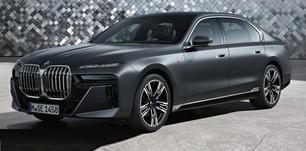
BMW freely calls the new 7 Series “monolithic” in its press material, and it’s hard to argue. The seventh-generation of its luxo limo is bigger in every dimension, and with a higher bonnet and bootlid, the car is convincingly imposing even when parked. Even more so in black.
From the front, the 7 Series clearly has a new face compared to its predecessor, with split headlights now an indicator of BMW’s luxury oriented models - the incoming XM SUV features the same.
Its LED daytime running lights feature Swarovski crystals, while the grille surround illuminates while the vehicle is parked and on. It’s currently unable to be illuminated while driving to comply with Australia’s laws.
It’s perhaps less elegant and more aggressive than previous generations, but that doesn’t mean there won’t be those who approve. It’s certainly emotive, especially when compared to the side and rear of the car.
The side profile of the 7 requires quite a few steps back from the car to really take in - it’s almost 5.4 metres long - though it's hard to hide the size of a car that allows its rear passengers to almost lay down.
From the rear, the 7 Series is probably at its most uninspiring, which is a reverse from the interior where the front feels more minimalistic than some of its rivals like the Mercedes-Benz S-Class.
BMW has used crystalline geometric shapes throughout the cabin, and the front ‘interaction bar’ is perhaps the best example.
In keeping with the minimalism, its screen sits in an almost freestanding style out from the dash, with no physical buttons seen around it.
So, how does this four-door 4 Series differ from a four-door 3 Series? The answer is as plain as the nose on this car’s face.
BMW’s head of design, Adrian van Hooydonk, has been expanding the brand’s signature ‘kidney grille’ in every conceivable direction, and this is the much talked about interpretation adorning all 4 Series models (petrol, hybrid and electric) as well as the M3 sedan.
The new Gran Coupe is longer, wider, and taller than the outgoing model, and the track is broader, front and rear. The wheelbase has also been extended, now a whole 5.0mm longer than the 3 Series.
The DRLs and headlight main beams are LED with laser high beams, immense gills square up the edges of the front clip, while a vent and the strake attached to it stand the car apart. Plus, of course, the doors are frameless.
One niggle, though. I’m not in love with the slender door handles. It’s hard to get a good grip on them, especially in the wet.
Standard 19-inch alloy rims are shod with Pirelli P Zero rubber 245/40 fr / 255/40 rr), the roofline slopes distinctly towards the rear, a lip spoiler on the trailing edge of the tailgate is classic BMW, darkened LED tail-lights wrap around the rear corner, and a diffuser-type panel is flanked by large exhaust apertures.
Our car’s ‘Aventurine Red’ finish is a $3850 option, but to my eyes anyway it looks superb.
Exterior trim including the grille frame, front air intake inserts, mirror upper housing, model designation badges, and tailpipe are finished in ‘Cerium Grey’, which I reckon 99.9 per cent of people will see as black.
The interior will be familiar territory for any current BMW owner, the 12.3-inch digital instrument screen sitting in a compact, hooded binnacle, and partnering with a 10.25-inch multimedia display standing proud of the dash above the broad centre stack.
The seats are trimmed in top-shelf leather with blue contrast stitching, plus the grippy sports wheel is also wrapped in genuine hide.
BMW calls the finish on the main buttons and controls ‘Galvanic’ which translates to a slick silver metallic look and feel. Configurable ambient interior lighting is a nice touch, and the broad console enhances the driver-focused feel, with a sprinkling of carbon-fibre around the centre console and dash lifting the sense of occasion.
Overall, the interior feels clean and classy with an obvious attention to detail.
If the word ‘practicality’ brings to mind simplicity, the 7 Series might require you to have a bit of a mental reset. If it means plenty of space and a long list of elements to keep you comfortable, you’d be closer to the money.
While it’s visually restrained in some ways, the space accessible to the driver is thought out reasonably well, as you’d expect from a car costing more than a quarter-million.
The front seats certainly aren’t the main event, but the Merino leather and cashmere wool combination seats are far from uncomfortable, with the heating, cooling, and massage functions accessible from the central multimedia screen.
The controls for those, as well as functions like the climate control, are easily accessible, though could probably be even easier with a physical climate control panel.
Controls for the individual vents, and even the glovebox are found along the BMW interaction bar, which can (frustratingly) reflect light thanks to its crystalline design, meaning it’s hard to see while driving on a sunny day.
Similarly, while the centre console where the main control dial for BMW’s 'iDrive' isn’t far removed from previous versions, it’s less tactile and requires a look sometimes to see what’s being pressed. Here, too, sunlight can reflect (this time off the dial) and make it more distracting.
Fortunately, the steering wheel controls remain physical buttons, and they’re laid out in a way that previous BMW owners or drivers will find familiar.
The 7 Series also now leans more heavily on voice activation, so if the lack of physical climate controls or the multimedia screen is a little distracting, much can be achieved by actually asking the car with a “hey, BMW… ”.
There’s a large storage unit in the centre console, as well as two cupholders and a phone charging platform in front of the multimedia controls.
The rear seats, especially the one behind the front passenger, are where the 7 Series begins to feel its worth. If you’re buying one with the intention of being the driver 100 per cent of the time, you’re missing a trick.
The ability for the front passenger seat to shift forward and maximise legroom while the rear seat reclines into a lounge position is nothing new, limousine sedans have been able to do this for years, but the 7 Series takes it to another level.
Not only is there plenty of space for even the tallest of humans to stretch out, but the positioning and angle of the huge 31.3-inch theatre screen is great, even if it impedes the driver’s rear view, and the ability to use it as a touchscreen for some functions means less need for the handy but sometimes fiddly door-mounted control screen.
If you plan on playing games, the controls (and the fact you’re likely in a moving car) can make it a little difficult, but the small control panel is overall easy to use and well-placed.
The cushioned armrest that folds down in place of a middle passenger is comfortable, features a phone charging pad and pop-out cupholders, as well as a storage space under the armrest.
Finally, the boot space in the BMW 7 Series is far from small, with the electric i7 offering 500 litres (VDA) of space, while the 740i boasts 540 litres thanks to its lack of battery.
At close to 4.8m long the 4 Series Gran Coupe is a sizeable machine. Up front, the feeling is airy and comfortable, and the rear is surprisingly spacious, especially in light of the car's sloping roofline.
At 183cm I have to fold myself tightly to fit under the low roof, but once inside I have enough room to sit behind the driver’s seat set for my position with more than enough legroom and adequate headroom. Put three full-size adults across the back row, though, and there will be breathing difficulties.
Kids will be fine, however, and individual vents with adjustable temp in the rear was a big plus during a particularly hot test week.
For storage there are generous door bins in the front with room for large bottles, a decent glove box, dual cupholders in the centre console, a reasonable lidded bin (which doubles as a centre armrest), and the wireless device charging bay (forward of the gearshift) makes a handy oddments space when not in use.
In the rear, again the doors feature pockets with room for (medium-size) bottles, there’s a fold down centre armrest with two cupholders, but thanks to the one-piece shells on our test car’s optional M Sport front seats there are no map pockets.
Power and connectivity runs to a USB-A socket and a 12V outlet in the front centre console, as well a USB-C port in the front storage bin, a pair of USB-Cs in the rear, and a 12V outlet in the boot.
Speaking of which, lift the tailgate and with the rear seat upright we were able to fit all three of our suitcases or the beefy CarsGuide pram into the healthy 470-litre (VDA) boot space.
Lower the 40/20/40 split-folding rear seat down and 1290 litres of volume is at your disposal. Plus there are handy bag hooks and tie-down anchors to help secure loose loads.
You can also tow a braked trailer up to 1.8 tonnes (750kg unbraked), but don’t bother looking for a spare of any description, a repair/inflator kit is your only option.
Given we’re in the realm of models where the price difference between two variants could pay for an entire new city car, what value means shifts a little bit.
The BMW 7 Series comes in two variants for the seventh generation, starting at $268,900 for the petrol-powered 740i, and $297,900 for the electric i7.
Previously, it was possible to get into the BMW 740i for $198,900 after BMW lowered the price of the sixth generation car.
However, the new 7 Series is larger and has more packed into it, with both variants highly specified and mostly differing in price due to their drivetrains and some more minor creature comforts.
The 740i starts with an already impressive list of standard features, with 20-inch M alloy wheels, remote start, a tyre pressure monitor, rear-wheel steering, 'crystal' headlights and an illuminated grille surround, a panoramic glass roof, heated seats and a massage seat for the driver with Merino leather, a 20-speaker Bowers & Wilkins sound system, as well the option to select the M Sport or M Sport Pro pack at no extra cost.
The more expensive i7 xDrive60 gains, on top of that, 21-inch wheels, active roll stabilisation, automatic opening and closing doors, multifunction seats with heating, cooling, and massage in the rear, plus a 39-speaker sound system and the impressive 31.3-inch theatre screen.
The i7 also comes with a BMW third-gen wallbox, home and public charging cables, and a five-year ChargeFox subscription. It also gains a six-year service package over the five included with the 740i.
If the i7’s extra features are tempting, but its drivetrain isn’t, 740i buyers can opt for a 'Connoisseur Lounge' pack for $27,900 which adds the auto doors, multifunction seats, rear theatre screen, and a 40-speaker sound system.
We’re in a zone some way North of $100K here with cost-of-entry running to $115,900, before on-road costs. So, as well as the included powertrain, suspension, and safety tech you should rightfully be expecting a lengthy standard features list.
And the M440i Gran Coupe goes toe-to-toe with its heavyweight Euro competition, featuring three-zone climate control air, adaptive cruise control, ‘Laserlight’ headlights, that 12.3-inch ‘BMW Live cockpit Professional’ instrument display and 10.25-inch ‘Control Display’ multimedia touchscreen managing navigation, the 16-speaker/464W harmon/kardon Surround Sound audio system (with Apple CarPlay and Android Auto integration) and a host of other on-board functions.
There’s also the ‘Vernasca’ Black leather trim, an electric glass sunroof, the leather-trimmed sports steering wheel, the electric sports front seats are heated and there’s wireless charging for compatible devices.
The BMW 740i is powered by a 3.0-litre turbocharged in-line six-cylinder petrol engine, as is the way with many of BMW’s larger cars. It’s also a mild hybrid, incorporating a 48-volt electric starter/motor combination.
The 740i makes 280kW between 5200-6250rpm, and 520Nm between 1850-5000rpm, which is transferred to the rear wheels via an eight-speed automatic transmission.
The electric i7 xDrive60 is the flagship model, with its dual-motor all-wheel drive powertrain good for 400kW and 745Nm, allowing for a claimed 0-100km/h time of 4.7 seconds - 0.7s faster than the 740i.
Under the bonnet is BMW’s (B58) all-alloy 3.0-litre twin-scroll turbo intercooled, in-line six-cylinder engine, driving all four wheels via an eight-speed automatic transmission and electronically controlled clutch pack, as well as an electronic limited-slip differential at the rear.
It features high-pressure direct-injection and BMW’s ‘Valvetronic’ system managing air flow to the intake side, to produce 285kW at a relatively high 5800-6500rpm. But the big punch is 500Nm of peak torque from just 1900rpm all the way to 5000rpm.
The M440i is also a mild-hybrid with a 48-volt starter motor-generator and supplementary battery able to give an 8.0kW kick at low engine speeds.
BMW Australia hasn’t yet specified local figures for fuel consumption or energy efficiency for either variant of the 7 Series at the time of our review, but the international specifications for both i7 xDrive60 and 740i give a relatively accurate guide.
BMW claims the electric i7 has a power consumption of between 19.6 and 18.4kWh/100km, which means its 101.7kWh battery allows a range of between 591 and 625km according to the brand.
It’s claimed to charge from 10 per cent to full in less than 5.5 hours with a 22kW AC wallbox, or in 34 minutes to reach 80 per cent using DC fast charging at 195kW.
The petrol powered 740i will use between 7.0 and 8.0 litres per 100km, according to BMW, which equates to between 183 and 159g/km of CO2.
BMW’s official fuel economy figure for the M440i xDrive Gran Coupe, on the ADR 81/02 - urban, extra-urban cycle, is 8.2L/100km, the 3.0-litre turbo six-cylinder emitting 187g/km of C02 in the process.
Stop/start is standard, and we saw an average of 11.1L/100km over city, B-road and freeway running during a week with the car.
With the 59-litre tank brimmed (with minimum 95RON premium unleaded) that real-world test number translates to a range of around 530km.
BMW hopes for two things for the new 7 Series: one, that it’s the best car to be driven in, and two, that it’s the best car to drive.
While one of those things could be argued to be true, we suspect there are some engineers in BMW’s M department who would be frustrated at the thought of a more-than 2.6-tonne limo being called better to drive than a car half that size with a manual gearbox.
But, perhaps unsurprisingly, the BMW 7 Series is rather refined from the driver’s seat, especially on roads where the speed limit is high and the corners are long.
The two variants Australia has available, the i7 xDrive60 and the 740i, differ in their drivetrains as mentioned above, and the dynamics of each are slightly different.
The all-wheel drive electric i7, despite its extra heft (the 740i is almost 600kg lighter) the EV feels more nimble thanks to its immediate torque delivery and higher outputs give it more flexibility in dynamic driving.
The lower centre of gravity, even with the extra weight, helps the electric i7 hold its own against the turbo six-powered 740i.
Both variants come standard with BMW’s rear-wheel steer system, or ‘Integral Active Steering’, which is vital to providing the agility needed for keeping the 7 Series in shape on tight roads, where it tightens the turning circle below 60km/h, though its 3215mm wheelbase does a lot to keep it feeling stable.
Above 60km/h, the rear-wheel steering improves stability further by turning slightly with the front wheels as opposed to against them, allowing for smoother flowing cornering and highway lane changes.
In either case, the 7 Series is easy to drive, with the steering able to be set to Comfort regardless of the drivetrain’s intensity (Sport and Comfort are the only options), which leaves the wheel feeling lighter.
The ride, whether from the front or the back, is impressive, even when being chauffeured through rough backroads.
The 7 Series, despite not being engineered specifically for Australia’s sometimes shockingly pockmarked roads, manages to soak up impacts before they transfer from the tyre into the seats, and that goes for the sound and road noise, too.
Unfortunately, our launch test drive was hampered by some roadworks out of BMW’s control, so stay tuned for a more in-depth drive soon.
BMW says the M440i xDrive Gran Coupe will accelerate from 0-100km/h in 4.7sec, and I reckon the threshold for a properly quick car is sub-five seconds.
The 3.0-litre turbo six develops its peak power of 285kW between a relatively lofty 5800-6500rpm, but the big number is a solid 500Nm punch of pulling power delivered between 1900-5000rpm.
Squeeze the throttle pedal pretty much anywhere in the rev range and the response is glorious. Rapid acceleration accompanied by raucous engine noise and rorty exhaust note (albeit with some synthetic support). Various pops and bangs in the Sport settings add extra entertainment..
The eight-speed auto gets some electric support from the mild-hybrid system to fill the torque gap on up shifts, and the result is a conventional torque-converter transmission that behaves like a dual-clutch.
Shifts are seamless in general driving, and satisfyingly quick in a more aggressive mode, the wheel-mounted paddles dialing up the fun in manual changes.
Suspension is double wishbone front and multi-link rear with the standard ‘Adaptive M Suspension’ built around an adaptive damper set-up.
The change between the ‘Comfort’ setting to the ‘Sport’ or ‘Sport+’ calibration is close to instant and makes a discernible difference, especially in terms of ride comfort.
I found the best ‘Individual Sport’ arrangement to be damping in Comfort, with the steering engine and transmission in Sport. The car flows so beautifully through corners with urgent response from the powertrain.
By all means dial up the suspension if you’re having a real crack, but the car feels superbly balanced, stable and predictable in Comfort (front to rear weight distribution is 50:50).
The electrically-assisted variable-ratio steering is nicely weighted with good road feel, and the grippy sports steering wheel is a nice point of contact.
The xDrive AWD system’s default setting is rear-biased, although it will push most of the drive forward when required. But the RWD feel is unmistakable.
The M440i weighs in at around 1.9 tonnes but feels lighter and more nimble than that figure would typically indicate.
A standard electronically-controlled M Sport limited-slip differential puts the power down confidently. I have a favourite LSD test corner on my regular evaluation drive, a sharply twisting and rising left-hander.
Rolling into it in a low gear before planting the throttle mid-corner, the car simply hunkers down without a hint of fuss (or traction loss) as it rockets out the other side.
Optional M Sport front seats ($2000) provide comfort and firm location in equal measure and in terms of ergonomics BMW knows how to focus on the driver and set-up an efficient environment. Key controls are perfectly positioned and simple to operate.
I have an issue with the ‘Lane Departure Warning’ function, however, which is too quick to intervene and overly intrusive when it does so. I turned the ‘Steering Intervention’ function off. You can dial down steering wheel vibration warnings, too.
The standard M Sport brakes feature big vented rotors front and rear, with fixed four-piston front calipers doing the bulk of the work. They’re strong but don’t bite or release too aggressively. It’s easy to grease in a smooth application.
The new BMW 7 Series hasn’t been crash tested by ANCAP, nor does it seem likely it will be, given the small number that are likely to be sold here.
But the car itself isn’t short on safety features, and BMW has a good recent history of scoring the maximum five stars for its cars.
The 7 Series features front and side airbags for driver and front passenger, curtain airbags for both front and rear seats, crash sensors, and a tyre pressure indicator.
Of course, the standards like active cruise, AEB, and sensors for collision warnings are all standard, plus BMW also offers active roll stabilisation as an option, which uses 48-volt motors to steady the car and account for the road surface and body roll through corners.
Active crash-avoidance tech in the M440i xDrive Grand Coupe is impressive with AEB standard, as well as lots of assistants and warnings, namely: ‘Steering and Lane Control Assistant’, ‘Cross Traffic Warning’ (front and rear), ‘Lane Keeping Assistant’ (with ‘Lane Departure Warning’ and ‘Lane Change Warning’), ‘Crossroads Warning’, ‘Evasion Assistant’, and ‘Parking Assistant Plus’ (including ‘3D Surround View and Reversing Assistant’).
If an impact is unavoidable there are six airbags on-board (driver and front passenger front and side, plus side curtains) as well three top tethers and two ISOFIX positions for child seats in the second row.
Plus an ‘Intelligent Emergency Call’ function automatically dials back-to-base if the car has been involved in a crash, and a comprehensive first aid kit is on-board.
The BMW scored a maximum five-star ANCAP assessment in 2019.
BMW offers a five year, unlimited kilometre warranty and that extends to both variants of the 7 Series.
BMW also offers servicing packs for its new cars, though the pricing for each group of models excluded the 7 and 8 Series and its M cars.
Given the most expensive servicing pack listed is the BMW X7’s $2800 five-year, 80,000km pack, expect anything similar for the 7 Series to cost more.
In terms of when servicing is required, BMWs are condition-based, meaning the car’s own systems detect whether something like an oil change or part replacement is required, and provides that data to your BMW service centre to help calculate an estimate for work needed, ahead of time.
The M440i Gran Coupe is covered by BMW’s three-year/unlimited km warranty (including paintwork), as well as 12-year/unlimited km anti-corrosion (perforation) cover.
That’s off the premium market pace now with Genesis, Jaguar, and Mercedes-Benz at five years/unlimited km and Lexus set to join them from January 1st, 2022.
That said, roadside assistance is provided for the duration of the main warranty, but it’s worth noting “rattles and squeaks” are only covered for one year.
Service is condition-based, the car telling you when maintenance is required, and a range of service packages are available. The basic plan covering a 4 Series for five years/80,000km comes in at $1750.